多元配置FOF

Search documents
FOF发行创新高!多策略FOF为什么值得关注?
Xin Lang Cai Jing· 2025-12-30 08:11
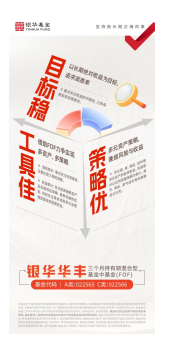
Core Viewpoint - The issuance of new FOF (Fund of Funds) shares reached 78.581 billion units by December 10, 2025, surpassing the total of the past three years, with multi-strategy FOFs gaining significant popularity due to their diversified asset allocation strategies aimed at controlling drawdowns while seeking certain returns [1][16]. Group 1: FOF Market Performance - Over 90% of FOFs in the market had a positive annual net asset value growth rate, with an average of 11.69% as of November 28, 2025 [4][19]. - Multi-strategy FOFs exhibited a one-year Calmar ratio of 2.54, outperforming other FOFs which had a Calmar ratio of 2.41, indicating better risk-return efficiency [4][19]. - The performance of various FOF categories in terms of Calmar ratio is as follows: - Equity FOF: 1.34 - Equity Hybrid FOF: 2.08 - Bond Hybrid FOF: 3.17 - Balanced Hybrid FOF: 2.35 - Bond Fund FOF: 3.66 [5][20]. Group 2: Silver Hua Fund Performance - The Silver Hua Fund (FOF) achieved a return of 3.34% since its inception, while its benchmark return was -0.69%, highlighting its resilience in a challenging market environment [6][20]. - The fund adopts a long-term absolute return mindset, focusing on a multi-asset strategy that includes stocks, bonds, commodities, and QDII, aiming for high win rates and low to medium volatility [9][21]. Group 3: Market Trends and Strategies - The continuous decline in domestic interest rates has led to a convergence of returns on low-risk assets, increasing investor demand for diversified income sources, which FOFs can effectively meet [14][26]. - In light of the complex and variable market conditions anticipated for 2026, experts emphasize the need for enhanced risk awareness and preparation for uncertainties, suggesting that multi-asset and multi-strategy FOF investments may be an effective way to improve investment success rates [15][26].

国泰海通|基金评价:高质量发展时代公募基金行业回顾与展望
国泰海通证券研究· 2025-10-30 11:48
Group 1: Core Views - The public fund industry in China is entering a new stage of high-quality development, characterized by profound changes in fund products, companies, sales models, and environmental patterns [1][2] - The future opportunities for different types of public fund products vary, with a focus on active equity funds, passive equity funds, fixed income funds, and innovative products like REITs [1] Group 2: Public Fund Development Trends - Active equity funds will see more standardized benchmark indices, shifting the assessment focus from relative rankings to excess returns [1] - Passive equity funds have rapidly developed over the past two years, with index replication funds reducing fees to benefit investors, while enhanced index products, though currently small in scale, show promising future growth [1] - In fixed income funds, active bond funds and fixed income plus products are thriving in a low-interest-rate environment, and bond index funds are also entering a rapid growth phase [1] - Innovative products such as REITs are accelerating issuance, and multi-asset allocation funds of funds (FOFs) remain a blue ocean market [1] Group 3: Fund Company Development Outlook - The public fund company landscape shows a clear "Matthew Effect," where larger companies can maintain their strengths while smaller firms may benefit from specialized development [2] - The trend in investment research systems is moving towards integration, with a shift from creating star fund managers to building company-wide investment research brands [2] - AI is expected to permeate various aspects of fund company management, talent development, and investment research capabilities [2] Group 4: Public Fund Sales Environment Outlook - The sales model is transitioning from a focus on short-term scale to prioritizing long-term client interests and quality service [2] - The fund sales industry is undergoing ecological restructuring centered around advisory services, with a dual focus on buyer advisory transformation and diversified asset allocation [2] - The emergence of institutional direct sales platforms is anticipated, which will test the differentiated research service capabilities of distribution agencies [2] - Potential market dynamics include a strong market concentration, a dual-driven sales environment of direct and indirect sales, a combination of diversification and digitalization, and a new landscape of high-quality development [2]

公募FOF持仓曝光:重仓ETF渐成趋势
2 1 Shi Ji Jing Ji Bao Dao· 2025-10-29 13:09
Core Insights - ETFs are becoming a significant focus for equity FOFs, with many top-performing FOFs heavily investing in ETF products [1][2][3] Group 1: Performance of Equity FOFs - The top-performing FOF, Guotai Preferred Navigation One-Year Holding FOF, reported a return rate of 68% year-to-date, outperforming the second-best FOF by approximately 10 percentage points [2] - This FOF's top ten holdings included 8 ETFs, covering sectors such as gold, new energy vehicle batteries, rare earths, and innovative pharmaceuticals [2] - Other high-performing equity FOFs also showed a strong preference for ETFs, with the top ten holdings of Bohai Huijin Preferred Progress Six-Month Holding FOF, ICBC Smart Progress One-Year FOF, and CCB Intelligent Selection Three-Month Holding FOF including 9, 10, and 10 ETFs respectively [3][4] Group 2: Market Trends and Strategies - The trend of increasing ETF allocations among equity FOFs is evident, with managers actively increasing their holdings in ETFs related to sectors with growth potential, such as new energy and technology [7] - The rise in ETF popularity is attributed to the advantages of index investing, including lower management fees and high transparency, which help FOFs reduce overall investment costs and improve efficiency [7] - Despite strong performance, some equity FOFs did not attract significant net subscriptions, indicating a potential disconnect between performance and investor interest [8] Group 3: Market Expansion and Challenges - The public FOF market is expanding, with 515 FOF products and a total scale of 187.7 billion yuan as of September, reflecting a growth of approximately 5% since June [9] - The emergence of multi-asset allocation FOFs, which aim to diversify investments across low-correlated assets, has contributed to this growth [9] - Multi-asset strategies present new challenges for research teams, requiring expertise across various markets and the ability to manage risks associated with different asset types [10]
公募FOF三季报陆续披露 指数化配置渐成趋势
Zheng Quan Shi Bao Wang· 2025-10-26 23:07
Core Insights - The trend of index-based allocation in public FOFs (funds of funds) is becoming increasingly evident, with some FOFs having 9 out of their top 10 holdings in ETFs [1] Group 1: Market Trends - The latest reports as of October 25 indicate a strong demand for FOF products, leading to the introduction of diversified allocation FOFs and ETF-FOF innovations [1] - The inclusion of index funds provides more options for FOF allocations, but it also raises the bar for fund managers' allocation capabilities [1]
FOF指数化配置渐成趋势 部分产品10只重仓基9只为ETF
Zheng Quan Shi Bao· 2025-10-26 22:34
Core Insights - The trend of index-based allocation in public FOFs (funds of funds) is becoming increasingly evident, with many FOFs heavily investing in ETFs [1][3] - The demand for diversified FOF products and ETF-FOF innovations is rising, reflecting a shift in investment strategies [4][5] - The growing complexity and variety of index funds require enhanced asset allocation capabilities from fund managers [6][7] Group 1: FOF Investment Trends - As of October 25, 2023, many FOFs have a significant portion of their top holdings in ETFs, with some FOFs having up to 9 out of 10 top holdings as ETFs [1][2] - Notable examples include the Jianxin FOF and Wanjiayou FOF, which have multiple ETFs among their top holdings, indicating a strong preference for index funds [2][3] - A report from Huatai Securities predicts that by the end of 2024, 90.73% of public FOFs will have allocated to ETFs [3] Group 2: New Product Innovations - The market is seeing the introduction of new FOF products, such as multi-asset allocation FOFs and ETF-FOFs, to meet investor demand [4][5] - As of October 25, 2023, there are 7 multi-asset allocation FOFs established in 2025, which include provisions for index funds [4] - The ETF-FOF products are designed to allocate over 80% of their non-cash underlying assets to ETFs, reflecting a strategic response to market demand [5] Group 3: Challenges and Requirements - The rise of index-based allocation increases the complexity of asset management, necessitating higher asset allocation skills from fund managers [6][7] - Fund managers are expected to develop capabilities in multi-asset allocation and to identify arbitrage opportunities, which are essential for achieving excess returns [6][7] - Challenges include market volatility affecting asset rotation strategies and potential liquidity issues with certain ETFs, which could lead to homogenization of ETF-FOF products [7]
10只重仓基金9只是ETF,FOF指数化配置趋势持续凸显
券商中国· 2025-10-25 13:28
Core Viewpoint - The trend of index-based allocation in public FOFs (Fund of Funds) is becoming increasingly prominent, with a significant preference for ETFs (Exchange-Traded Funds) over actively managed funds [1][4][7]. Group 1: FOF Holdings and Trends - As of October 25, 2023, many FOFs have shifted their top holdings to ETFs, with 9 out of 10 top funds in some cases being ETFs, indicating a clear trend towards index-based investment strategies [1][3]. - The report highlights that 90.73% of public FOFs are expected to allocate to ETFs by the end of 2024, with approximately 9.2% of FOF holdings being ETFs by mid-2025 [4][6]. - Notably, among the 37 FOFs that disclosed their third-quarter reports, 11 had ETFs as their largest holding, with 5 of these ETFs having a holding value exceeding 10% of the fund's net asset value [4]. Group 2: Product Innovation and Demand - In response to strong demand, new products such as multi-asset allocation FOFs and ETF-FOFs are being introduced, reflecting the evolving landscape of fund offerings [2][5]. - The emergence of multi-asset FOFs, which allow for a mix of active and passive investments, is evident, with recent launches indicating a growing trend towards diversified investment strategies [5][6]. - The ETF-FOF products are designed to allocate over 80% of their non-cash assets to ETFs, showcasing a significant shift towards passive investment strategies [5][6]. Group 3: Managerial Challenges and Opportunities - The proliferation of index funds presents both opportunities and challenges for fund managers, as they must enhance their asset allocation capabilities to navigate a more complex investment landscape [7][8]. - Fund managers are increasingly focusing on diverse asset classes, including equities, fixed income, commodities, and overseas investments, to create optimal portfolios that outperform traditional strategies [7]. - However, challenges such as market volatility and liquidity issues in certain ETFs may complicate asset rotation strategies, necessitating innovative approaches to maintain competitive advantages [8].