
多模态大语言模型

Search documents
新股消息 | 合合信息(688615.SH)二次递表港交所
智通财经网· 2025-12-29 13:13
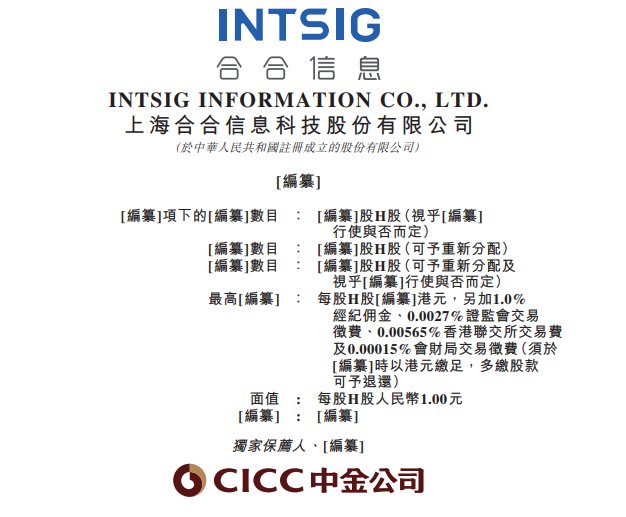
智通财经APP获悉,据港交所12月29日披露,上海合合信息科技股份有限公司(688615.SH)向港交所主 板提交上市申请,中金公司为其独家保荐人。该公司曾于今年6月26日向港交所递交过上市申请。 据招股书,自成立以来,合合信息始终致力以AI技术创新赋能,向全球亿级用户及多元化行业企业客 户提供产品。凭借超过18年的人工智能研究与应用实践积累,合合信息已成为全球文本智能技术领域的 领军者,其核心驱动力来自多模态大语言模型。该模型能够同步处理文本、图像、视频等多种形式的数 据输入,并生成多样化的输出模态,从而实现信息抽取、文档解析与修复、图像增强等多元化的AI功 能。该公司的业务已覆盖全球超过200个国家和地区。 根据灼识咨询,在2024年全球C端效率类AI产品MAU(月活跃用户数)上亿的企业中,按相应产品的收入 计,合合信息位居中国第一名、全球第五名,并保持强劲的增长态势。 ...

新股消息 | 合合信息二次递表港交所
Zhi Tong Cai Jing· 2025-12-29 13:11
智通财经APP获悉,据港交所12月29日披露,上海合合信息科技股份有限公司(688615.SH)向港交所主 板提交上市申请,中金公司为其独家保荐人。该公司曾于今年6月26日向港交所递交过上市申请。 据招股书,自成立以来,合合信息始终致力以AI技术创新赋能,向全球亿级用户及多元化行业企业客 户提供产品。凭借超过18年的人工智能研究与应用实践积累,合合信息已成为全球文本智能技术领域的 领军者,其核心驱动力来自多模态大语言模型。该模型能够同步处理文本、图像、视频等多种形式的数 据输入,并生成多样化的输出模态,从而实现信息抽取、文档解析与修复、图像增强等多元化的AI功 能。该公司的业务已覆盖全球超过200个国家和地区。 根据灼识咨询,在2024年全球C端效率类AI产品MAU(月活跃用户数)上亿的企业中,按相应产品的收入 计,合合信息位居中国第一名、全球第五名,并保持强劲的增长态势。 ...
智驾芯片算法专家交流
2025-08-07 15:03
Summary of Key Points from the Conference Call Industry and Company Overview - The conference call primarily discusses advancements in the autonomous driving chip technology by Huawei, focusing on the new generation of chips and their implications for the automotive industry. Core Insights and Arguments 1. **Next-Generation Chip Performance**: Huawei's new generation chips will offer 500-800 TOPS computing power, utilizing a single-chip solution to replace the dual-chip approach, which addresses transmission limitations and reduces costs, with expected pricing slightly above $10,000, lower than dual-chip solutions [1][4] 2. **Chip Architecture**: The vehicle-side chip architecture is based on the Da Vinci architecture, optimized for integer operations rather than floating-point operations, leading to significant cost differences [1][5] 3. **Algorithm Transition**: Huawei's autonomous driving algorithms are transitioning from a two-stage structure to an end-cloud collaborative Vivo framework, enhancing generalization capabilities in complex scenarios [1][13] 4. **Data Quality Importance**: High-quality data labeling and engineering are crucial for improving training outcomes, with simulation-generated high-quality scenarios being a key method [16] 5. **Chip Development Plans**: The next MDG1,000 chip will significantly enhance computing power and bandwidth, moving from 100 GB/s to 200-280 GB/s, with a focus on integrated storage and computing [2] 6. **Single vs. Dual Chip Advantages**: The new single-chip solution offers advantages over dual-chip configurations, including cost efficiency and improved performance in various driving conditions [3][4] 7. **L3 and L4 Autonomous Driving Plans**: L3 level autonomous driving is expected to launch by the end of this year or early next year, while L4 level technology is in testing, with plans for gradual rollout in high-value models [11][32] 8. **Sensor Fusion Strategy**: Huawei emphasizes a multi-sensor fusion approach, integrating lidar, cameras, and radar to enhance perception and safety in complex driving environments [22][23] Additional Important Content 1. **Market Positioning**: Huawei's focus is on specific automotive applications, contrasting with competitors like NVIDIA, which cater to a broader range of customer needs [9] 2. **Regulatory Challenges**: Current regulations do not fully support L3 capabilities, impacting the public declaration of such features despite the technology being ready [28][31] 3. **Future Technology Integration**: The fifth-generation lidar is set to be introduced this year, with plans for integration into mass-produced models, although actual deployment may vary based on hardware configurations [29][30] 4. **Performance Metrics**: The current multi-modal large language model parameters are around 1 billion, significantly lower than competitors like Tesla, which has models with parameters in the tens of billions [14][19] This summary encapsulates the key points discussed in the conference call, highlighting Huawei's advancements in autonomous driving technology and the implications for the automotive industry.
新技术带来发展新优势(一周科技观察)
Ren Min Ri Bao· 2025-06-15 21:42
Group 1 - An innovative team consisting of a private enterprise and two universities in Zhejiang has developed a coating technology for perovskite solar cell materials, achieving stable mass production of square meter-level perovskite components [1] - The research results were published in the journal "Science," highlighting the increasing capability of private enterprises in innovation and their role as leaders in emerging industries [1] - CATL, a global leader in power batteries, announced its vision to become a zero-carbon technology company, aiming for carbon neutrality in all battery factories by the end of the year [1] Group 2 - The new rice variety "Huahang Xiangyin Zhen," developed by South China Agricultural University, has gained popularity among farmers due to its high yield and disease resistance, with a breeding cycle reduced to 4 years from the traditional 8 to 10 years [2] - An international team of scientists has developed a new nanoparticle carrier for gene drugs, which can deliver treatments directly to lung lesions, potentially benefiting patients with lung cancer and cystic fibrosis [2] - Research from the Chinese Academy of Sciences has confirmed that multimodal large language models can spontaneously form object concept representation systems similar to human cognition, paving the way for advancements in artificial intelligence [2] Group 3 - The theory of embodied intelligence is gaining attention in fields like artificial intelligence and robotics, with a focus on developing humanoid robots that can perform precise operations through tactile feedback [3] - A joint research team from Peking University and Beijing General Artificial Intelligence Research Institute has created a "fully tactile robotic bionic hand," enhancing the ability of robots to learn and make decisions through interaction with their physical environment [3] - The concept of embodied intelligence may enable artificial intelligence to complete a wider range of tasks, moving towards general artificial intelligence [3]

以多模态数智技术助力高等教育改革
Xin Hua Ri Bao· 2025-05-30 00:00
Group 1 - New quality productivity is driven by technological innovation, characterized by high-tech content, high operational efficiency, and high-quality development, aligning with advanced productivity forms in the new development concept [1] - Higher education plays a crucial role in cultivating new quality productivity, serving as a key arena for nurturing innovative talent and supporting national strategies [1] - The "Education Strong Nation Construction Plan Outline (2024-2035)" emphasizes digital education as a breakthrough, advocating for a comprehensive transformation in educational concepts, teaching models, and governance [1] Group 2 - Constructivist learning theory underpins the creation of multimodal learning environments, which are essential for nurturing new quality productivity talent [2] - Multimodal learning environments enhance knowledge construction through multisensory interactions, supported by digital learning spaces [2] - The integration of multimodal large language models is reshaping learning resources and cognitive interaction patterns [2] Group 3 - Generative AI provides a technical paradigm for constructing multimodal environments, enabling intelligent generation of teaching resources [3] - Teachers can transform abstract concepts into concrete multimodal materials, enhancing interdisciplinary teaching and learning experiences [3] - This multimodal conversion aligns with constructivist theories, supporting the cultivation of innovative talent suited for new quality productivity [3] Group 4 - Educational neuroscience technology empowers multimodal learning analysis, creating opportunities for data value extraction in educational digital transformation [4] - Traditional analysis frameworks are limited, but advancements in non-invasive physiological measurement technologies extend analysis dimensions to physiological mechanisms [4] - Educational neuroscience integrates cognitive neuroscience, psychology, and education, forming a technical system for multimodal data collection [4] Group 5 - Educational neuroscience-driven multimodal learning analysis overcomes limitations of subjective reporting by objectively recording learning responses [5] - It enables millisecond-level dynamic monitoring of neural activities, constructing high-precision learning state profiles [5] - The technology reveals implicit cognitive dimensions, providing scientific cognitive diagnostic tools for nurturing innovative talent [5] Group 6 - Generative AI innovates multimodal learning evaluation, offering a comprehensive solution from feedback diagnosis to predictive intervention [6] - Traditional evaluation systems face challenges of lag and one-dimensionality, but AI can provide more accurate assessments [6] - Research indicates that AI technologies can outperform humans in tasks like paper grading and code diagnostics [6] Group 7 - Generative AI's predictive evaluation capabilities enhance the effectiveness, precision, and reliability of multimodal learning assessments [7] - Multi-agent systems can autonomously generate personalized learning paths and conduct pre-evaluations of learning tasks [7] - This innovative evaluation paradigm creates a closed-loop system of "evaluation-feedback-optimization," providing solutions for talent evaluation in new quality productivity development [7] Group 8 - New quality productivity and higher education form a mutually empowering closed loop, with the former providing strategic support for educational digital transformation [8] - Higher education integrates data elements and intelligent technologies, contributing to talent cultivation, scientific research innovation, and industrialization [8] - This creates a value chain of "education nurturing talent - talent driving innovation - innovation empowering industry," promoting high-quality digital transformation [8]