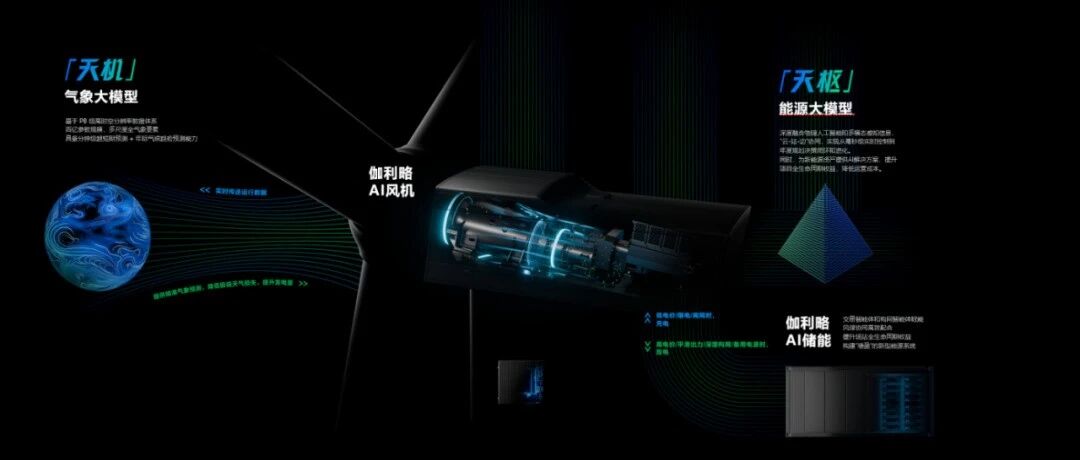
天机气象大模型

Search documents
专访远景科技孙捷:打造零碳园区,需依托新型能源系统等三大体系
2 1 Shi Ji Jing Ji Bao Dao· 2026-01-28 11:59
Core Viewpoint - The construction of national-level zero-carbon parks is a transformative initiative aimed at reshaping industrial forms, upgrading park functions, and transitioning to green development, with a focus on utilizing clean energy and surrounding green power sources [1][2]. Group 1: Zero-Carbon Park Construction - The first batch of national-level zero-carbon parks includes six parks, such as Cangdong Economic Development Zone in Hebei and Shenyang Sino-German High-end Equipment Manufacturing Industrial Park in Liaoning, which are required to complete construction by 2027 [1]. - The construction of zero-carbon parks necessitates collaboration among park management, enterprises, and professional service institutions [1][2]. - The zero-carbon park concept encourages the use of clean energy and aims to supply green electricity directly to the parks through wind, solar, and energy storage [2][3]. Group 2: Three Major Systems - The zero-carbon industrial park relies on three major systems: a new energy system focused on zero-carbon, a zero-carbon digital management system, and a green industrial cluster [3]. - The new energy system emphasizes a high proportion of renewable energy and direct green electricity supply, integrating renewable generation, energy storage, and grid management [3]. - The digital management system utilizes AI and IoT technologies to track and manage energy consumption and carbon emissions in real-time [3][5]. Group 3: Implementation of Indicators - The clean energy ratio in the Ordos zero-carbon industrial park has reached 100%, with 80% of electricity sourced from local wind and solar projects [4]. - The park is developing models to incorporate new indicators such as waste heat and pressure utilization rates into its management platform [4]. - The AI model is being enhanced to optimize resource utilization across various dimensions, including solid waste and industrial water [5]. Group 4: Green Electricity Direct Connection - The green electricity direct connection policy allows for point-to-point supply of green electricity to parks or enterprises, with a limit of 20% electricity being fed back to the grid [6][7]. - The company is exploring new models for green electricity direct connection in various provinces, with some projects already listed for public notice [6]. - The choice between green electricity direct connection and source-network-load-storage projects impacts investment returns, as the latter does not allow for electricity to be fed back to the grid [7]. Group 5: Regional Challenges and Strategies - Different regions face varying challenges in establishing zero-carbon parks, with eastern coastal areas experiencing more significant obstacles compared to the resource-rich northwest [8][9]. - Traditional energy regions must develop zero-carbon parks and provide green electricity to retain and upgrade local industries [8][9]. - Strategies for high-challenge areas include promoting local green electricity supply systems, exploring cross-regional green electricity trading, and maximizing energy efficiency through recycling and resource utilization [9].
赵何娟对话张雷:能源成本再降50%,AI时代才会真正到来|2025 T-EDGE
Xin Lang Cai Jing· 2025-12-29 13:39
Core Insights - The dialogue emphasizes the critical relationship between energy systems and the development of artificial intelligence (AI) in both China and the United States, highlighting that different energy frameworks will significantly impact AI growth [2][3][6] Energy and AI Development - Zhang Lei, chairman of Envision Technology Group, argues that AI represents a form of energy phenomenon, requiring substantial energy to create and maintain order in a universe that tends toward disorder [3][10] - The current "AI energy crisis" reflects a gap between existing energy capacities and the future demands of AI, prompting a need for increased energy supply to support AI advancements [5][6] Comparison of Energy Systems - The U.S. faces a structural mismatch between its aging energy infrastructure and the explosive growth in AI demand, with 90% of its computing power relying on natural gas, which is projected to peak by 2035 [5][6][10] - In contrast, China benefits from a robust renewable energy sector and efficient grid infrastructure, although it still requires a new energy system that aligns perfectly with AI needs [6][10] Future Energy Requirements - To support the AI era, energy costs must decrease by 50% to 80%, as current fossil fuel resources are limited and becoming more expensive [7][18] - Renewable energy sources, such as solar and wind, are seen as essential for achieving the necessary energy cost reductions and sustainability [18][19] AI's Energy Consumption - AI is expected to become the primary energy-consuming sector, with its energy demands growing exponentially as models become more complex [14][15] - The energy requirements for AI training and operation are projected to increase significantly, necessitating a shift towards more efficient energy systems [15][20] Investment Opportunities - The dialogue suggests that companies in the energy sector should focus on integrating AI with energy systems to create sustainable and efficient solutions, which could lead to significant investment opportunities [37][39] - Companies that can adapt to the evolving energy landscape and leverage AI for optimizing energy consumption will likely have a competitive advantage [39][40]


赵何娟对话张雷:能源成本再降50%,AI时代才会真正到来|2025 T-EDGE 全球对话
Sou Hu Cai Jing· 2025-12-29 04:48
Core Insights - The discussion emphasizes the critical relationship between artificial intelligence (AI) and energy consumption, highlighting the need for a sustainable energy system to support the future of AI [4][6][12] - The concept of "AI energy anxiety" is introduced, suggesting that the current energy demands of AI are outpacing existing infrastructure, particularly in the U.S. [6][10][30] - The future of AI is seen as dependent on a transition from fossil fuels to renewable energy sources, which must be optimized for cost and efficiency to meet the growing energy demands of AI [9][20][21] Group 1: AI and Energy Demand - AI's rapid growth is leading to a structural mismatch in energy supply, particularly in the U.S., where the electrical grid is outdated and unable to handle the increased load from AI data centers [6][10][30] - The U.S. relies heavily on natural gas for its computing power, which is projected to peak around 2035, raising concerns about the sustainability of AI development [7][11][30] - In contrast, China is positioned to leverage its advanced renewable energy infrastructure to meet AI's energy needs, although it still requires a more tailored energy system for optimal AI performance [7][12][30] Group 2: Future Energy Systems - The future energy system must be characterized by sustainability, integration, and mutual enhancement, with AI playing a crucial role in optimizing energy consumption and production [9][12][42] - A significant reduction in energy costs (by 50% to 80%) is necessary for AI to thrive, necessitating a shift towards renewable energy sources that can provide abundant and low-cost energy [9][20][21] - The integration of AI with energy systems is expected to create a new paradigm where energy production and consumption are dynamically managed to support AI's exponential growth [23][24][42] Group 3: Investment Opportunities - Companies that can effectively integrate AI with energy systems will likely emerge as leaders in the market, as the demand for efficient energy solutions grows [39][41] - The energy sector is seen as a critical area for investment, particularly in companies that can navigate the complexities of future energy systems and provide sustainable solutions [39][41] - The potential for renewable energy to provide a stable and low-cost energy supply is highlighted as a key factor for the success of AI technologies in the coming years [20][21][39]

未来能源系统什么模样?张雷这样判断
中国能源报· 2025-10-27 11:32
Core Viewpoint - The energy industry is transitioning from traditional "material assets" to future "AI assets" driven by physical artificial intelligence, which will reshape competition and operational efficiency in the sector [1][5]. Group 1: Future Energy Systems - The future energy system will evolve from simple equipment stacking to an ecosystem of intelligent agents, capable of safely operating while integrating more green electricity to support low-cost, high-quality clean energy for economic development [3][4]. - Artificial intelligence will play a crucial role in constructing future energy systems, moving from being a tool to becoming a central entity that enhances decision-making and operational efficiency [5][10]. Group 2: Market Innovations and Applications - The successful completion of the world's first green ammonia fuel bunkering operation at Dalian Port marks a milestone in global green shipping, showcasing the complete value chain from green electricity to ammonia fuel for shipping [7][9]. - The Chifeng Zero Carbon Hydrogen Energy Industrial Park serves as a training ground for energy models, providing a closed-loop system that generates vast amounts of data and enhances global perception [9][12]. Group 3: AI's Role in Energy Sector - AI is transforming the energy sector by enabling companies to manage market risks and optimize asset value, shifting the focus from mere production to value-based competition [10][12]. - The concept of "physical artificial intelligence" integrates AI with physical laws and knowledge graphs, enhancing the reliability of AI applications in energy systems and addressing challenges faced by traditional AI models [12][13]. Group 4: China's Competitive Advantage - China possesses significant market demand, complex energy systems, a complete industrial chain, and practical capabilities, positioning it to lead in the development of physical artificial intelligence and energy models globally [12].
远景发布“能源大模型” 张雷提出“物理人工智能”将重构能源系统
Zheng Quan Ri Bao Wang· 2025-10-20 06:15
Core Insights - The core argument presented by Zhang Lei, Chairman of Envision Technology Group, is that artificial intelligence (AI) is evolving from a mere tool to a主体, fundamentally transforming the energy sector into an "intelligent agent" ecosystem rather than just a collection of physical assets [1][2][4] Group 1: AI's Role in Energy Systems - AI is seen as a revolutionary force that can handle the increasing complexity and market uncertainties associated with high proportions of renewable energy in the grid [2][3] - The concept of "Physical AI" is introduced, which integrates AI with physical laws and knowledge graphs, enhancing its reliability in real-world applications [2][3] Group 2: Technological Advancements - Envision has made significant breakthroughs in large models, particularly with the "Tianji" meteorological model, which improves medium to long-term weather forecasting accuracy, crucial for the reliable operation of renewable energy [3] - The "Tianshu" energy model, capable of real-time control through advanced algorithms, is successfully applied to optimize energy trading and asset investment decisions [3] Group 3: Future Competitiveness - The future competitiveness of energy companies will shift from traditional metrics like installed capacity to the scale of "AI assets" [3][4] - The industry is urged to focus on the intelligence of their models and the scale of their AI capabilities, marking a significant transition from physical to intelligent assets [3]
重磅!远景发布行业首个伽利略AI风机
中国能源报· 2025-10-20 04:33
Core Viewpoint - Envision Energy has launched the Galileo AI Wind Turbine, which aims to address major pain points in the wind power industry by providing more flexible and precise power generation strategies and higher reliability, marking a new phase in the application of physical artificial intelligence in the sector [1][3]. Summary by Sections Addressing Industry Pain Points - The Galileo AI Wind Turbine offers a validated solution to three major pain points in the wind power industry: inaccurate forecasting (power/load/consumption/electricity price), poor turbine performance, and high safety and quality risks. The implementation of the "Tianshu" energy model intelligent control platform has led to over a 20% increase in revenue for wind farms equipped with AI compared to those without [3][4]. Enhancing Forecast Accuracy - The "Tianji" meteorological model utilizes advanced computing power and a model with over 10 billion parameters to achieve significant breakthroughs. It integrates multi-modal data from satellites, radar, and ground stations, along with data from over 800 GW of global energy assets, to generate precise forecasts for the next 15-30 days within just three minutes [5][6]. Improving Power Generation Capability - The core of the Galileo AI Wind Turbine is a neural network with over 100 million parameters, functioning as a "super brain" for the turbine. This system, supported by high-performance chips, enables real-time online reasoning to handle complex, non-linear problems that traditional control logic struggles with. The intelligent control platform allows for real-time adjustments and self-healing capabilities, enhancing overall efficiency [7][8]. Increasing Warning Accuracy - The development of a high-fidelity digital twin platform is crucial for improving warning accuracy in the wind power sector. By leveraging AI computing power and extensive operational data, the integration of multi-modal information has significantly enhanced prediction accuracy. For instance, early detection of blade failures through sound and strain monitoring has improved maintenance scheduling, resulting in substantial operational gains [9][10]. Future of AI in Wind Power - The transition from traditional wind turbines to intelligent systems capable of understanding weather changes and market dynamics represents a significant evolution in the industry. The potential for further advancements in artificial intelligence applications within wind power remains vast [11].