
中美AI竞赛

Search documents
赵何娟对话张雷:能源成本再降50%,AI时代才会真正到来|2025 T-EDGE 全球对话
Sou Hu Cai Jing· 2025-12-29 04:48
Core Insights - The discussion emphasizes the critical relationship between artificial intelligence (AI) and energy consumption, highlighting the need for a sustainable energy system to support the future of AI [4][6][12] - The concept of "AI energy anxiety" is introduced, suggesting that the current energy demands of AI are outpacing existing infrastructure, particularly in the U.S. [6][10][30] - The future of AI is seen as dependent on a transition from fossil fuels to renewable energy sources, which must be optimized for cost and efficiency to meet the growing energy demands of AI [9][20][21] Group 1: AI and Energy Demand - AI's rapid growth is leading to a structural mismatch in energy supply, particularly in the U.S., where the electrical grid is outdated and unable to handle the increased load from AI data centers [6][10][30] - The U.S. relies heavily on natural gas for its computing power, which is projected to peak around 2035, raising concerns about the sustainability of AI development [7][11][30] - In contrast, China is positioned to leverage its advanced renewable energy infrastructure to meet AI's energy needs, although it still requires a more tailored energy system for optimal AI performance [7][12][30] Group 2: Future Energy Systems - The future energy system must be characterized by sustainability, integration, and mutual enhancement, with AI playing a crucial role in optimizing energy consumption and production [9][12][42] - A significant reduction in energy costs (by 50% to 80%) is necessary for AI to thrive, necessitating a shift towards renewable energy sources that can provide abundant and low-cost energy [9][20][21] - The integration of AI with energy systems is expected to create a new paradigm where energy production and consumption are dynamically managed to support AI's exponential growth [23][24][42] Group 3: Investment Opportunities - Companies that can effectively integrate AI with energy systems will likely emerge as leaders in the market, as the demand for efficient energy solutions grows [39][41] - The energy sector is seen as a critical area for investment, particularly in companies that can navigate the complexities of future energy systems and provide sustainable solutions [39][41] - The potential for renewable energy to provide a stable and low-cost energy supply is highlighted as a key factor for the success of AI technologies in the coming years [20][21][39]


FOF和资产配置月报:风险逐级探明,布局春季行情-20251224
Huaxin Securities· 2025-12-24 08:09
- The report does not contain any specific quantitative models or factors for analysis. It primarily focuses on macroeconomic trends, asset allocation strategies, and market observations[1][2][4]. - The report discusses the performance of various asset classes, including equities, bonds, commodities, and currencies, but does not provide detailed quantitative factor construction or modeling processes[10][11][12]. - It highlights the seasonal effects and market trends, such as the spring rally in Hong Kong and A-shares markets, but does not delve into quantitative factor testing or modeling[38][39][63]. - The report mentions a rotation timing model for high-growth and dividend strategies, which uses indicators like term spreads, social financing growth, CPI, PPI, U.S. bond rates, and fund flows. However, it does not provide detailed formulas or construction processes for these indicators[59]. - The rotation strategy achieved an annualized return of +17.54%, outperforming the benchmark by +11.77%, with a current allocation recommendation of 60% dividend and 40% growth[59]. - Seasonal effects are noted, such as small-cap stocks outperforming in February and March, while large-cap stocks dominate in April and December[63]. - The report provides market sentiment analysis, including institutional buying intentions and external capital flows, but does not include quantitative factor testing or modeling[51][54]. - Industry performance is discussed, with a focus on sectors like TMT, AI, and industrial metals, but no quantitative models or factors are detailed[64][67]. - The report includes valuation metrics for indices like the S&P 500, Nasdaq, and Shanghai Composite, but does not provide quantitative factor construction or testing[26][47][48]. - The report does not contain specific quantitative models or factors for analysis, nor does it provide formulas or detailed construction processes for any mentioned strategies or observations[1][2][4].
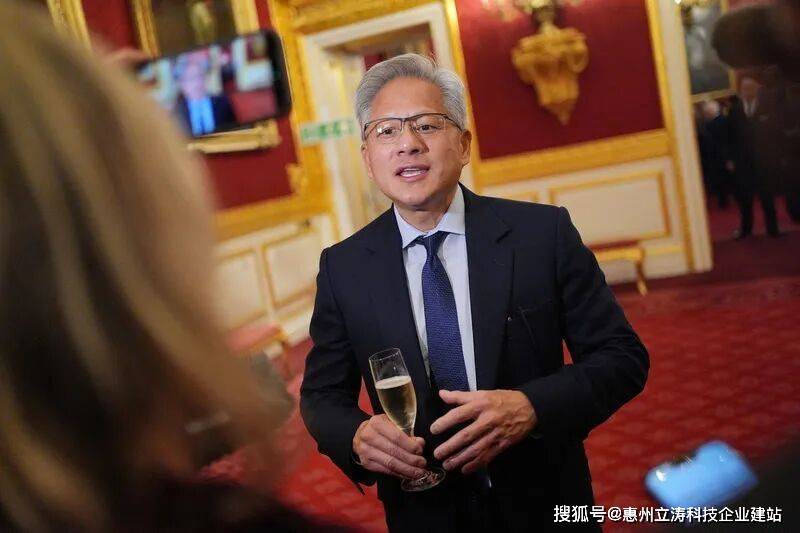
黄仁勋放话"中国AI将赢美国"?这波预测靠谱吗?
Sou Hu Cai Jing· 2025-11-07 14:15
Core Viewpoint - Jensen Huang, CEO of Nvidia, stated that "China will win the AI race against the US," sparking significant discussion in the tech community. This prediction may reflect a deeper understanding rather than mere commercial flattery, especially given Nvidia's struggles due to US sanctions affecting its business in China [2]. Group 1: China's Strengths in AI - Huang highlighted China's "execution capability and scale advantage," which many US tech companies acknowledge. Chinese AI firms are known for their rapid implementation from algorithm development to application, leveraging a vast data pool from a population of 1.4 billion [2]. - The competition in AI is characterized by three key battlegrounds: the chip war, talent acquisition, and application scenarios. Chinese companies are rapidly developing domestic chips like Huawei's Ascend and Cambricon, narrowing the performance gap with US counterparts [4]. Group 2: Talent and Application Landscape - China produces eight times more STEM graduates annually than the US, and an increasing number of overseas Chinese scientists are returning to develop their careers domestically. However, top AI talent remains concentrated in US tech giants, a situation unlikely to change in the short term [4]. - In terms of application, China leads in sectors such as security, finance, and healthcare, while the US maintains an edge in foundational research and original algorithms. This dynamic has led to a humorous comparison of the two countries' AI focuses [4]. Group 3: The Nature of the AI Competition - The AI race is not a zero-sum game; rather, it reflects parallel development paths where China excels in application and the US in foundational research. This scenario is reminiscent of the smartphone era, where both iOS and Android thrived, ultimately benefiting global users [5]. - Huang's prediction may be influenced by commercial interests but highlights a trend where technological isolation by one nation cannot halt the global momentum of AI. A future scenario of a "dual powerhouse" between China and the US is likely, similar to the current state of the semiconductor industry [5]. Group 4: Value Creation in AI - The competition in AI is not about who crosses the finish line first, but rather about who can create more value. The strengths of Chinese companies in "rapid iteration and large-scale application" complement the US focus on "original research and ecosystem development," suggesting that there may be no clear loser in this race [7].
今天A股真的够硬
表舅是养基大户· 2025-02-24 13:31
而这个美丽优先政策, 你把它视作德州政策的放大版就行了 ,反正这位德州州长也是共和党保守派,一丘之貉,政策也是一脉相承的。 而彼时是什么惨状呢?消息传来后,A股5000多家上市公司,当天跌幅3%以上的占70%,跌幅5%以上的有1400家,然后再看看今天,你就说硬 不硬吧? 所以,可以看到,此时的心气,和彼时的心气,确实已经完全不同了。 今天表面看有点像股债双杀,但实际上,仅仅是债券吃了一碗大面而已,债券的事下半部分再说。 先说A股,今天成交额继续破2万亿,上涨的股票超过50%,wind全A跌幅不到0.1%, 而之所以说今天A股非常硬 ,主要是因为咱们这边开盘 前,有个实质上比较huge的外围利空。 那就是太平洋对岸,周五出台的 America First Investment Policy,为了文章的安全,我就把它翻译为" 美丽优先 政策 " 吧。 我带大家回忆一下, 去年11月21日,德州州长 ,发布了多项行政命令,限制对咱的投资,并要求州政府所属机构审查在华投资,大家应该多少 有点印象吧?忘了也没事,咱每天写公众号,一搜就能搜到当天的文章,《 找了一下今天大跌的原因 》,里面有提到,可以进去回顾一下。 不 ...