
定制AI芯片

Search documents
剑指千亿美元,博通AI芯片营收暴涨,能否撕开英伟达算力护城河?
3 6 Ke· 2026-03-06 07:48
Core Insights - The global AI chip market is currently dominated by Nvidia, which leads the AI data center chip market due to its CUDA ecosystem. However, major tech companies are increasing their investment in self-developed chips and customized chips through Broadcom to diversify their supply and reduce reliance on Nvidia [1][3]. Group 1: Broadcom's AI Chip Revenue Growth - Broadcom's customized AI chips are significantly impacting Nvidia's market position, with AI chip revenue expected to exceed $100 billion by 2027. In Q1 of FY2026, Broadcom reported revenue of $19.311 billion, a 29% year-over-year increase, with net profit rising 34% to $7.349 billion. AI chip revenue doubled, reaching $8.4 billion, a 106% increase year-over-year [2][4]. - Broadcom's CEO noted that the strong demand for customized AI accelerators and AI network products is driving this growth, with expectations for AI semiconductor revenue to reach $10.7 billion in Q2 [2][4]. Group 2: Market Dynamics and Competition - The AI chip landscape is changing, with Broadcom positioned as a strong competitor to Nvidia. Nvidia's data center revenue reached $193.7 billion in FY2026, a 68% increase, benefiting from a surge in demand for computing power since the launch of ChatGPT [3][5]. - Major tech companies are increasing capital expenditures to secure high-performance chips from Nvidia, leading to supply shortages. Companies like Google, Meta, OpenAI, and Anthropic are exploring customized chips from Broadcom to reduce dependency on Nvidia [3][5]. Group 3: Future Projections and Market Trends - Broadcom's AI revenue is projected to reach $120 billion by 2027, with some analysts estimating it could exceed $200 billion. The ongoing expansion of AI infrastructure spending among large tech firms is expected to drive the global semiconductor market towards a trillion-dollar scale [2][4][6]. - The demand for customized AI chips is expected to grow rapidly, with Broadcom's ASIC chips being recognized for their competitive advantages in the AI market. This shift towards customized solutions is anticipated to disrupt Nvidia's dominance in the AI chip sector [5][6].


华尔街日报:甲骨文、博通财报,市场预期越高,砸盘砸的越狠
美股IPO· 2025-12-14 11:57
Core Viewpoint - The market experienced a significant sell-off triggered by disappointing earnings guidance from Broadcom and rumors of delays in Oracle's projects, raising questions about the market's patience regarding promised AI returns [1][9][10] Group 1: Market Reaction - Broadcom's stock plummeted by 12%, dragging down the Philadelphia Semiconductor Index by 5%, marking its largest drop in months [1][5] - The sell-off extended to the AI supply chain, affecting companies like Nvidia and CoreWeave, with Nvidia's stock dropping by 3.2% [5][14] - The sell-off also impacted the bond market, with a notable increase in yield premiums for Oracle's bonds, indicating reduced risk appetite among investors [7][16] Group 2: Company-Specific Issues - Broadcom reported record sales of $18 billion but failed to meet Wall Street's high expectations for AI business revenue, leading to a sharp decline in its stock [9][10] - Oracle's disappointing earnings report and rumors of delays in data center construction for OpenAI raised concerns about the pace of AI infrastructure development, further shaking investor confidence [12][14] - Oracle's stock fell by 4.5% on Friday, contributing to a cumulative decline of 13% for the week, as analysts viewed it as a bellwether for the broader AI sector [12][14] Group 3: Broader Market Implications - The sell-off highlighted the critical importance of AI narratives in the current market, suggesting that investor patience may be waning regarding expected returns from AI investments [9][18] - Some analysts argue that the rapid reversal in market sentiment underscores the central role of AI trading, while others view the prevailing anxiety as a healthy caution signal indicating potential for further market growth [18]


甲骨文(ORCL.US)、博通(AVGO.US)财报:市场预期越高,砸盘砸的越狠
智通财经网· 2025-12-14 02:54
Core Insights - The AI-driven market enthusiasm faced a harsh reality check following negative news from chip giant Broadcom and cloud service provider Oracle, leading to a significant sell-off in AI-related stocks [1][3][5] Group 1: Market Reaction - On December 12, a wave of selling hit AI-related stocks, with Broadcom's shares plummeting by 12%, dragging down both the S&P 500 and Nasdaq Composite indices by over 1% [1][3] - Oracle's stock also fell by more than 4%, contributing to a broader decline in the AI supply chain, with the Philadelphia Semiconductor Index dropping 5%, marking its worst single-day performance in nearly two months [3][13] Group 2: Company-Specific Developments - Broadcom reported record sales of $18 billion but failed to meet Wall Street's high expectations for AI business revenue forecasts, leading to an 11% drop in its stock price [6][10] - Oracle's disappointing earnings report and news of potential delays in data center construction for OpenAI raised concerns about the pace of AI infrastructure development, further shaking investor confidence [10][11] Group 3: Broader Market Implications - The sell-off extended beyond Broadcom and Oracle, affecting major beneficiaries of the AI boom, such as Nvidia, which saw a 3.2% decline, and other chip-related companies experiencing drops exceeding 10% [13][15] - The bond market also reacted, with investors demanding higher yield premiums for Oracle's bonds, indicating increased risk perception in the AI sector [5][15] Group 4: Diverging Market Perspectives - The recent market turmoil highlighted the critical importance of AI narratives, raising questions about investor patience regarding promised AI returns [7][17] - Some analysts view the current anxiety over high valuations and spending in the AI sector as a healthy caution signal, suggesting that the market may still have room for growth [17]
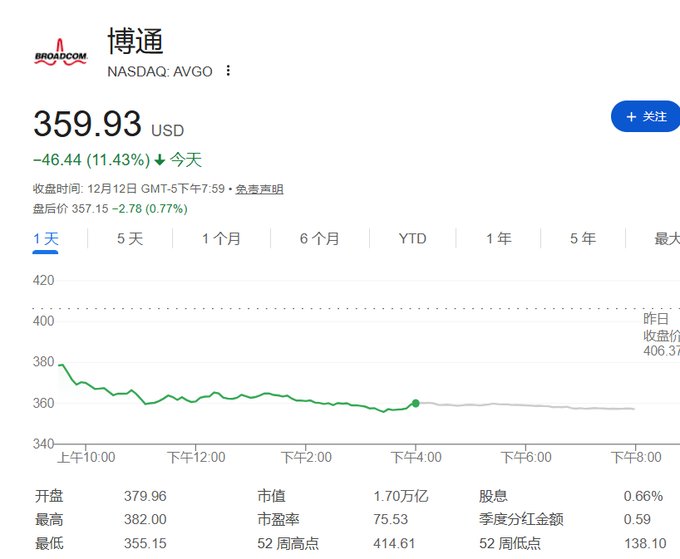
甲骨文、博通财报:市场预期越高,砸盘砸的越狠
Hua Er Jie Jian Wen· 2025-12-14 02:27
Core Insights - The AI-driven market enthusiasm faced a harsh reality check following negative news from chip giant Broadcom and cloud service provider Oracle, leading to a significant sell-off in AI-related stocks [1][7][11] - Broadcom's stock plummeted by 12%, dragging down both the S&P 500 and Nasdaq Composite indices by over 1%, while Oracle's shares fell by more than 4% [1][3] Market Impact - The sell-off quickly spread to the entire AI supply chain, with the Philadelphia Semiconductor Index dropping by 5%, marking its worst single-day performance in nearly two months [3] - Major tech stocks, particularly the "Magnificent Seven" (Mag7), underperformed compared to the other 493 companies in the S&P 500, indicating widespread market panic [5] Company-Specific Developments - Broadcom reported record sales of $18 billion but failed to meet Wall Street's high expectations for AI business revenue forecasts, leading to an 11% drop in its stock price [7][8] - Oracle's disappointing earnings report and news of potential delays in data center construction for OpenAI raised concerns about the pace of AI infrastructure development, resulting in a 4.5% decline in its stock price [11][13] Broader Market Reactions - The sell-off affected not only tech stocks but also energy-related stocks, indicating a broader market impact [15] - Bond market reactions included a significant increase in yield premiums for Oracle's bonds, reflecting reduced investor confidence in the AI sector [16] Investor Sentiment - The market's reaction highlights the critical importance of AI narratives, raising questions about investor patience regarding promised AI returns [8][18] - Some analysts view the current anxiety over AI valuations and spending as a healthy caution signal, suggesting potential for further market growth [18]
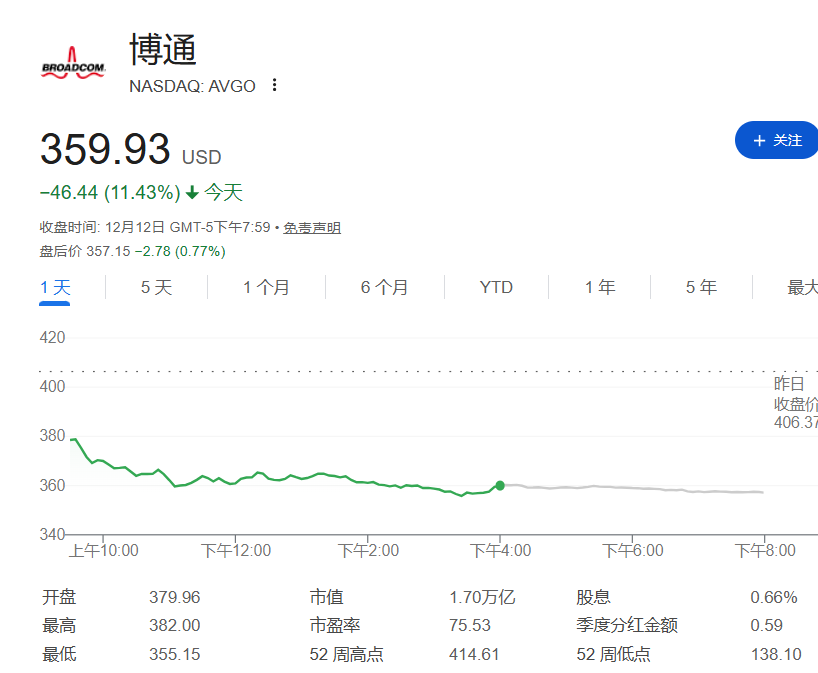
股票投资者寻找下一个AI赢家
Xin Lang Cai Jing· 2025-12-04 15:46
Core Viewpoint - Marvell Technology (MRVL) is highlighted as a potential winner in the AI chip market by 2026 due to its custom AI chips, while smaller AI companies are suggested as diversified investment options [1]. Group 1 - Analysts emphasize Marvell Technology's potential success in the AI sector driven by its tailored AI chip offerings [1]. - There is a mention of various smaller AI companies that could serve as alternative investment opportunities for diversification [1].
软银曾虑收购Marvell,将其与ARM合并打造芯片巨头
Hua Er Jie Jian Wen· 2025-11-06 04:36
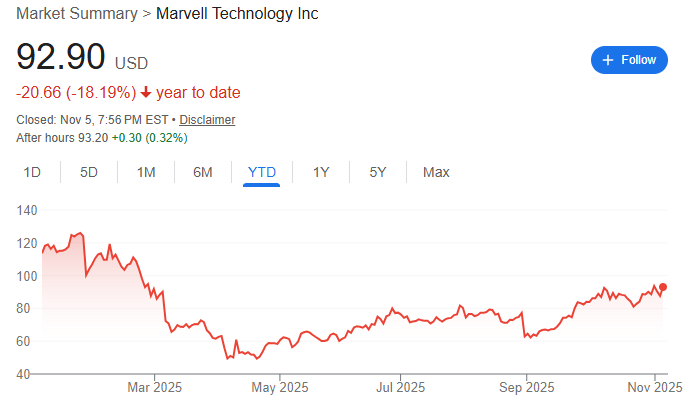
Group 1 - SoftBank explored a potential acquisition of Marvell Technology to merge it with ARM, aiming to create a semiconductor giant in the AI race [1][2] - Marvell's stock price rose by 13% in after-hours trading following the news, despite a year-to-date decline of 18%, with a current market capitalization of approximately $80 billion [2][3] - The AI chip market is experiencing significant growth, driven by the demand for data center construction, providing strong motivation for SoftBank's strategic positioning [4] Group 2 - SoftBank's interest in acquiring Marvell has been ongoing for years, but significant obstacles remain, including a potential transaction price near $100 billion and stringent regulatory scrutiny [5] - The integration of management teams between ARM and Marvell poses challenges, with differing ages and experiences of their CEOs [5] - Marvell has faced challenges in its custom chip business, reporting record revenues of $2 billion in the last quarter, but also experiencing a severe stock drop due to unmet revenue forecasts [7]

AI资本开支太狂热了?高盛:这才到哪呢
华尔街见闻· 2025-10-20 09:24
Group 1 - The core viewpoint of the article is that the current scale of AI investment is sustainable and not overheated, indicating a robust macro story for AI infrastructure development [1][3][6] - Goldman Sachs' latest report suggests that AI-related investments currently account for less than 1% of the US GDP, which is significantly lower than historical peaks in other technology cycles [7] - The report anticipates that productivity gains from AI will generate $8 trillion in capital income for US companies, far exceeding the total current and foreseeable AI investment [2][7] Group 2 - Since mid-2023, there has been a significant acceleration in AI infrastructure investment, with an estimated $300 billion in revenue growth for US companies in AI-related infrastructure by 2025 [4] - The report highlights two main reasons supporting continued AI capital expenditure: significant productivity improvements and increasing demand for computing power [5] - It is projected that the application of generative AI will enhance US labor productivity by 15% over the next decade, with AI applications showing potential productivity increases of 25-30% [5]



Broadcom Becomes Latest Chipmaker to See Its Stock Jump on a Deal with OpenAI. Is It Too Late to Buy the Stock?
The Motley Fool· 2025-10-16 08:05
Core Viewpoint - Broadcom has announced a partnership with OpenAI to develop and deploy custom AI accelerators, marking a significant step in the AI chip market, although OpenAI is not the $10 billion customer previously speculated by Broadcom [1][7]. Group 1: Partnership Details - Broadcom and OpenAI will collaborate to create 10 gigawatts of custom AI accelerators, utilizing Broadcom's networking and Ethernet technology [2][3]. - OpenAI's aggressive expansion includes commitments to over 30 gigawatts of power capacity from various partners, significantly increasing its computing power [4]. Group 2: Market Position and Opportunities - The partnership positions Broadcom as a key player in the custom AI chip market, with potential revenue opportunities from major tech companies like Alphabet, Meta Platforms, and ByteDance, estimated between $60 billion to $90 billion by fiscal 2027 [6]. - Broadcom's custom chips could help OpenAI reduce costs and enhance performance, aligning with the anticipated shift in the AI market towards inference [5]. Group 3: Financial Outlook - Broadcom's stock is currently trading at a high forward price-to-earnings (P/E) ratio of over 38.5, but has a price/earnings-to-growth (PEG) ratio below 0.8, indicating potential undervaluation [9]. - The OpenAI deal could generate significant revenue, potentially exceeding $100 billion annually as new custom chips are deployed [9].
博通100亿美金的神秘客户,另有其人?
半导体行业观察· 2025-10-14 01:01
Core Insights - OpenAI is not the $10 billion mystery client mentioned by Broadcom in its September earnings call, as clarified by Broadcom's president Charlie Kawwas [1] - OpenAI and Broadcom are collaborating to develop and deploy a custom AI accelerator with a capacity of 10 terawatts over the next four years [2][3] - OpenAI's valuation stands at $500 billion, making it the most valuable startup globally, with over 800 million weekly active users [4] Group 1: Partnership Details - OpenAI and Broadcom have been working together for 18 months and plan to deploy custom chip racks starting in late next year, with the project expected to be completed by 2029 [2] - The new agreement is valued at several billion dollars, although specific financial terms have not been disclosed [3] - Broadcom's stock rose nearly 10% following the announcement of this partnership [3] Group 2: Market Context and Implications - OpenAI has signed several multi-billion dollar agreements with companies like AMD, Nvidia, and CoreWeave to enhance its computing capabilities [1] - The demand for AI products is rapidly increasing, prompting OpenAI to seek new large data centers globally to meet this demand [5] - OpenAI aims to build 250 terawatts of new computing capacity by 2033, which could cost over $1 trillion at current standards [5][6] Group 3: Financial Performance and Projections - Broadcom's CEO indicated that a $10 billion custom AI chip order has boosted the company's revenue forecast for AI products next year [2] - OpenAI is projected to generate $13 billion in revenue this year, necessitating exponential sales growth to cover its computing expenses [3] - The AI infrastructure spending wave is expected to require $2 trillion annually by 2030, surpassing the combined revenues of major tech companies [6]
OpenAI与博通(AVGO.US)达成合作,共同开发首款自研AI处理器
智通财经网· 2025-10-13 14:01
Core Insights - OpenAI has announced a strategic partnership with Broadcom to develop custom AI processors to meet the increasing demand for computational power, with Broadcom's stock rising over 9% following the announcement [1] - The collaboration will lead to a custom chip cluster with a computing capacity of 10 GW, equivalent to the power consumption of 8 million American households or the full capacity of five Hoover Dams [1] - OpenAI's CEO emphasized that this partnership is a crucial step in building the infrastructure needed to unlock AI's potential [1] Company Developments - OpenAI will lead the chip design, while Broadcom will develop and deploy the chips starting in the second half of 2026, with full deployment expected by the end of 2029 [2] - This partnership builds on existing joint development and supply agreements between the two companies [2] - Broadcom has become a key beneficiary of the generative AI boom, with its stock price increasing nearly sixfold since the end of 2022 [1] Industry Context - The collaboration reflects the tech industry's ongoing investment in AI chips, driven by exponential growth in computational demand as companies compete to build AI systems that meet or exceed human intelligence [1] - OpenAI joins other cloud giants like Google and Amazon in designing its own chips to reduce reliance on Nvidia's high-cost, supply-constrained processors [2] - Despite these efforts, analysts believe that custom chips will struggle to challenge Nvidia's dominant position in the short term due to past delays and performance issues faced by companies like Microsoft and Meta [2]