
小白梨拿铁

Search documents
行业演变与爆品趋势解码:2026茶咖新风向
益普索· 2026-04-01 09:35
Investment Rating - The report indicates a positive investment outlook for the beverage industry, particularly in the tea and coffee segments, highlighting strong growth potential and market expansion opportunities [8][30][66]. Core Insights - The ready-to-drink beverage market in China is experiencing robust growth, driven by increased consumer demand for high-quality products and innovative offerings [8][30]. - The tea market is projected to reach a scale of 302 billion yuan by 2025, with a compound annual growth rate (CAGR) of 8.4% from 2022 to 2025 [9][30]. - The coffee market is expected to grow to 198.7 billion yuan by 2025, with a CAGR of 10.7% during the same period [9][66]. - There is a significant shift in consumer behavior, with ready-to-drink beverages transitioning from social symbols to everyday consumption items, leading to increased purchase frequency [9][30]. - The report emphasizes the importance of health trends, with consumers increasingly favoring low-sugar, low-fat, and natural ingredients, prompting brands to upgrade their raw materials [9][30]. Summary by Sections 1. Overview of Ready-to-Drink Beverage Market - The ready-to-drink beverage market is expanding, characterized by a strong supply-demand dynamic, with increased store networks and product innovations enhancing consumer experiences [8]. - By 2025, the number of new chain tea and coffee stores is expected to reach 38,000 and 33,000 respectively, indicating a recovery trend in the market [9]. 2. Tea Market Trends - The tea industry is entering a new phase of high-quality development, with a market size nearing 302 billion yuan and a 6.5% year-on-year growth expected in 2025 [30][32]. - The number of chain tea stores is projected to grow, but the industry is also witnessing a significant increase in store closures, indicating a market consolidation [35][36]. 3. Coffee Market Trends - The coffee market is rapidly expanding, with 33,000 new stores expected to open in 2025, representing a 2.06 times increase compared to 2024 [66]. - The penetration of coffee in lower-tier cities is increasing, with the proportion of stores in these areas rising from 37% in 2023 to 43% in 2025 [68]. 4. Consumer Preferences and Trends - Health and innovation are driving consumer preferences, with a notable shift towards products that emphasize health benefits and unique flavors [23][24]. - The report highlights the growing popularity of local ingredients and innovative product offerings, such as salty milk tea and fruit-based beverages, which are gaining traction among consumers [50][53]. 5. Brand Strategies and Market Dynamics - Leading brands are focusing on overseas expansion, with over 15,000 overseas stores and a strategic shift towards local supply chains and cultural adaptation [10][12]. - The report notes a significant concentration of market share among top brands, with a growing disparity between leading and smaller brands, leading to a "Matthew Effect" in the industry [20][22].



瑞幸爆款方法论:解构、组合、拼乐高
东京烘焙职业人· 2025-12-03 08:33
Core Viewpoint - Luckin Coffee has established a systematic capability for generating hit products, achieving over 50% year-on-year revenue growth and a monthly active user base exceeding 110 million, with nearly 30,000 stores [5][6][12]. Product Structure - In 2023, Luckin Coffee launched 102 new products, with 8 of them achieving sales exceeding 100 million cups. The company plans to introduce 114 new products in 2024 and 119-140 in 2025, indicating a consistent high frequency of new product launches [6][12]. - The product development process is based on a modular system, allowing for efficient combination and testing of various components, which increases the likelihood of creating successful products [11][17]. Supply Chain - Luckin's supply chain is highly standardized, allowing for low-cost experimentation with new products. This structure enables the company to absorb failures without significant financial impact, contrasting with traditional brands that face high costs for product failures [15][18]. - The centralized production of key flavors and liquid structures reduces the complexity at the store level, streamlining the product launch process [15][18]. Organizational Structure - The organizational structure of Luckin Coffee is flat and project-based, facilitating parallel collaboration across departments. This contrasts with traditional beverage brands that have hierarchical structures, which slow down the product development process [12][13]. - Decision-making is driven by data rather than individual judgment, allowing for rapid adjustments based on real-time sales feedback [13][21]. Data System - Luckin Coffee employs a data-driven approach to identify consumer preferences and trends, using metrics such as repurchase rates and customer feedback to guide product development [10][21]. - The company views new products as experiments rather than expressions of brand identity, focusing on market validation rather than brand storytelling [19][22]. Trend Identification - Trends are defined by quantifiable variables that can be monitored in real-time, allowing Luckin to adapt quickly to changing consumer preferences [21][22]. - The company’s approach to product development is iterative, relying on continuous testing and feedback to refine offerings and align with consumer demand [22][24].


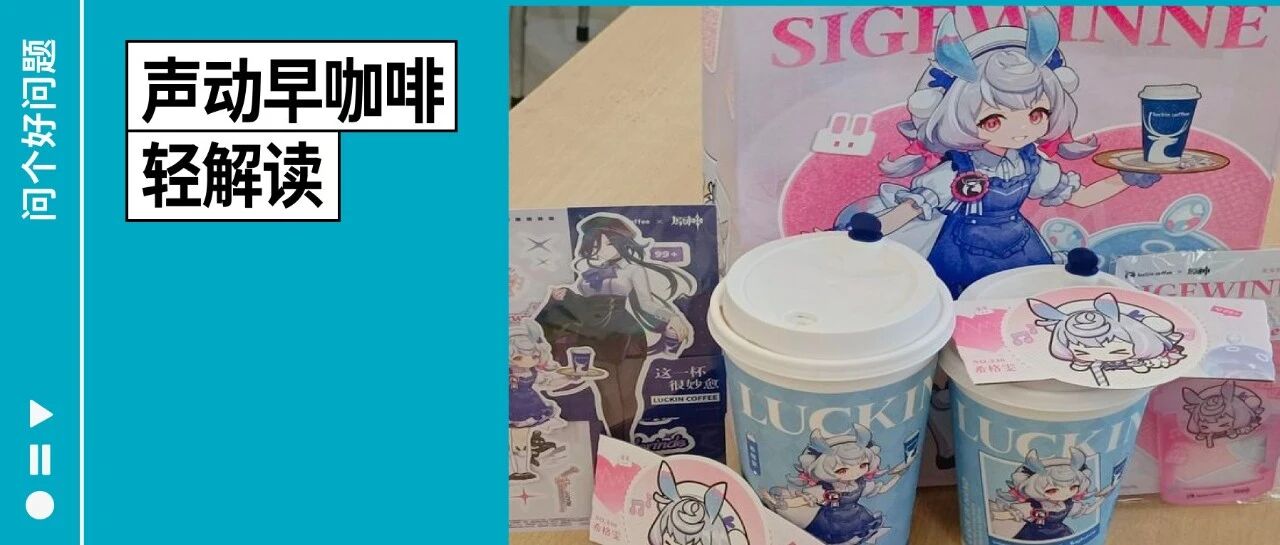
从王者、崩铁到疯狂动物城,二次元联名为何成为咖啡行业标配?| 声动早咖啡
声动活泼· 2025-11-24 09:04
Core Insights - The article discusses the rising trend of collaboration between coffee brands and anime/game IPs, highlighting the marketing strategies and consumer engagement involved in this phenomenon [3][4][5]. Group 1: Collaboration Trends - The collaboration trend in the beverage industry has shifted from occasional marketing tactics to a daily operational norm, particularly in coffee brands, with Luckin Coffee leading the charge with approximately 90 collaborations this year [4][5]. - Luckin Coffee has engaged in over 50 collaborations with anime, game, or cartoon characters, accounting for at least 40% of their total collaborations [4]. Group 2: Market Dynamics - The increase in store density among coffee chains has diluted customer traffic, making it challenging for brands to attract consumers solely through new product launches [5][6]. - The competition has intensified, leading brands to seek innovative ways to increase customer visit frequency, as traditional new product strategies have become less effective [6]. Group 3: Marketing Effectiveness - Collaborating with established anime or game IPs offers a cost-effective marketing strategy compared to traditional celebrity endorsements, as these collaborations can drive customer traffic and sales more directly [7][8]. - For instance, a collaboration with the game "Black Myth: Wukong" resulted in over 100,000 sales on the first day, showcasing the potential impact of such partnerships [7][8]. Group 4: Consumer Engagement - The emotional value associated with anime and game characters drives consumer purchases, as young consumers are motivated by the emotional connections they have with these characters [11]. - The Z generation, being the primary consumers of anime content, aligns well with the target demographic of coffee chains, enhancing the effectiveness of these collaborations [11]. Group 5: Challenges and Concerns - Rising marketing costs are a significant concern, with collaboration fees for top IPs exceeding millions, leading to increased financial pressure on brands [12]. - The frequency of collaborations with the same IP can dilute their effectiveness, causing consumer fatigue and reducing the overall impact of marketing efforts [12][13]. - There are higher expectations for the quality and creativity of the products associated with anime IPs, and failure to meet these expectations can lead to negative perceptions among fans [13].
单季度净收入破百亿,瑞幸咖啡如何构建全国零售网络?
晚点LatePost· 2024-10-31 12:03
遍布全国的咖啡零售网络正在成型。 随着咖啡越来越成为中国居民的消费日常,咖啡市场的竞争也正在步入一个新阶段:头部品牌加速跑马圈 地、争抢点位不断拓店;价格战越打越热,主流竞争价位下探到 10-15 元。 内卷加速的竞争红海里,瑞幸始终保持了增长态势。 从咖啡的消费场景来看,瑞幸以到店自提和外带居多;而瑞幸大量的点位通常以写字楼、商圈、社区等人 流密集的地方为主,不一定在非常显眼的位置,但却能够覆盖周边的外卖和自提需求,为用户营造一种 "人在哪里,咖啡店就在哪里" 的便于购买的消费环境。 门店网络持续扩张,背后依托的是瑞幸的数字化能力。这让瑞幸能以极低单店成本逆势跑出规模加速度, 反过来摊薄门店成本,实现每一杯咖啡的极致性价比。 优衣库也有类似的做法,将线上线下打通之后,线下门店也成了线上销售的提货点。优衣库在中国线上销 售约占区域营收的四分之一,是全球范围内线上成交占比最大的市场。优衣库希望通过将顾客从门店引导 至电商,再从电商引导至门店,帮助扩大整体销售额。 瑞幸咖啡 CEO 郭谨一曾多次说,数字化能力是瑞幸的核心优势之一,也是瑞幸与传统餐饮企业最显著的 区别。有了后端的数字化系统作为依托,瑞幸的门店也是一 ...