小麻花

Search documents
9国使节的津门"盲盒":从天津港到泥人张,他们打开了什么?
Xin Lang Cai Jing· 2026-02-05 12:01
Core Viewpoint - Tianjin is emerging as a vital hub for international trade and cultural exchange, particularly with countries like South Korea, Mongolia, and Colombia, showcasing its potential for economic collaboration and cultural integration [1][3][13]. Group 1: Economic Cooperation - The cargo volume from South Korea to Tianjin has been steadily increasing, with the efficiency of the Sino-Korean shipping route doubling [3]. - By 2026, South Korea is expected to remain one of Tianjin's most significant trade partners and sources of foreign investment [3]. - The establishment of direct shipping routes to Latin America has facilitated the import of Colombian coffee and fresh produce, with Colombia becoming the third-largest source of coffee imports for China [7]. Group 2: Cultural Exchange - The "Luban Workshop" in Tianjin serves as a bridge connecting vocational education and international collaboration, with 37 workshops established in 31 countries focusing on high-speed rail and artificial intelligence [5]. - Various cultural activities, such as traditional Chinese performances and hands-on experiences with local crafts, have been highlighted during the visit of foreign diplomats, emphasizing the rich cultural heritage of Tianjin [9][11]. - The visit of diplomats from nine countries reflects a growing interest in cultural and educational exchanges, with plans for future collaborations in various fields [13]. Group 3: Diplomatic Engagement - The presence of diplomats from countries like Mongolia, Greece, and Turkey indicates a strengthening of international relations, with discussions on potential partnerships in vocational education and cultural events [5][13]. - The Turkish ambassador expressed a desire to celebrate the Spring Festival with Chinese friends, highlighting the cultural ties and mutual respect between nations [13]. - The engagement of diplomats in local cultural experiences demonstrates a commitment to fostering deeper connections and understanding between Tianjin and the international community [11][13].



苏州稻香村2026年货攻略:美味与健康并存,国潮与经典共享
Zhong Guo Shi Pin Wang· 2026-01-13 07:29
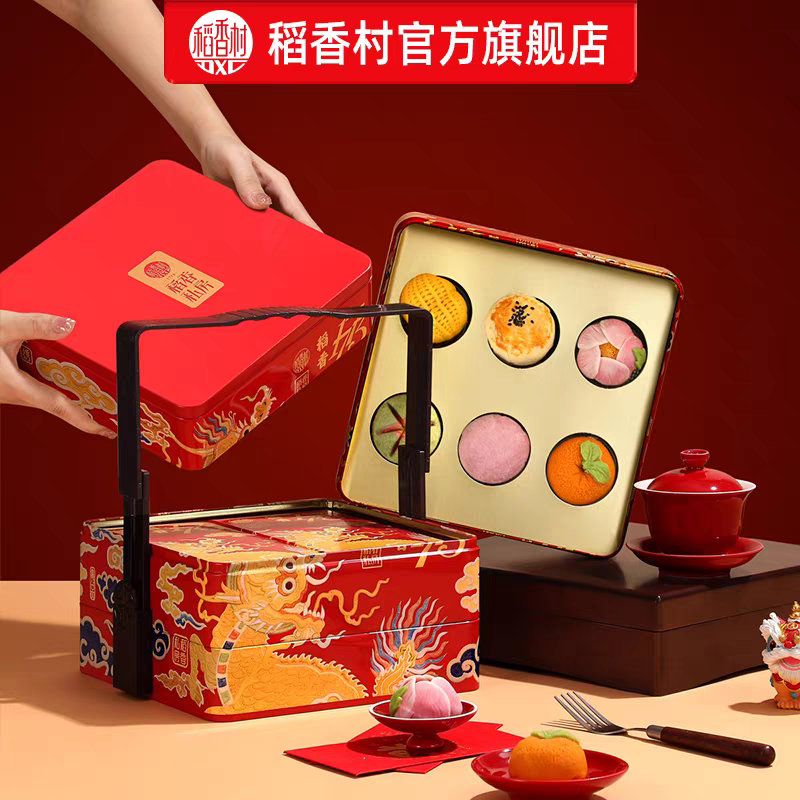
Core Viewpoint - The article highlights the offerings of Suzhou Daoxiangcun, a time-honored brand established in 1773, which is providing a variety of traditional Chinese New Year gift boxes that reflect the essence of Suzhou-style pastries and Jiangnan culture, catering to the festive season and family gatherings [1][18]. Product Offerings - The gift boxes include a range of products such as classic Suzhou pastries, healthy low-sugar options, and trendy garden-themed items, showcasing the elegance of Jiangnan and the festive spirit of the New Year [1][18]. - Specific products mentioned include: - Traditional pastry tin featuring 13 types of pastries, including the orange and peach-flavored peach mountain cake and the two-color lotus flower puff, emphasizing craftsmanship and traditional flavors [4][6]. - The "Fortune Cake" box containing 8 pastries symbolizing good luck and prosperity, such as the fortune bag-shaped cake and the "Everything Goes Smoothly" cake [6][8]. - The "Golden Fortune Gift Box" designed with a red and gold theme, containing 9 types of pastries suitable for the Spring Festival, combining aesthetics and cultural significance [8][9]. Health-Conscious Options - The "Low-Sugar Gift Box" features 10 types of pastries made with low-sugar techniques, allowing consumers to enjoy traditional flavors without the guilt, catering to health-conscious individuals [16][18]. - The "Good Year Gift Box" combines pastries and nuts, offering a balanced selection for all ages, including low-sugar peach crisps and nutrient-rich cashews [14][16]. Cultural Significance - The products are designed to evoke nostalgia and cultural heritage, with each pastry representing a piece of memory and tradition, appealing to consumers' emotional connections to the New Year [4][18]. - The brand emphasizes the integration of traditional craftsmanship with contemporary needs, ensuring that each gift box carries the elegance of Jiangnan and the warmth of New Year blessings [18].
安徽阜阳:小麻花带来乡村振兴好日子
Xin Lang Cai Jing· 2026-01-02 19:32
Core Viewpoint - The development of the food processing industry in Fangji Town, Fuyang City, Anhui Province, is revitalizing the local economy and encouraging population return through the establishment of modern food enterprises and supportive government initiatives [1][2][3] Group 1: Local Industry Development - Fangji Town is experiencing a transformation from traditional family workshops to modern food enterprises, focusing on local specialties like fried dough twists and fried dough sticks [1] - The establishment of companies such as Anhui Mingkang Food Co., Ltd. has led to increased employment opportunities for local residents, particularly women and returning youth [1][2] - The local food industry is not only providing income but also fostering family reunification, as workers can now earn a stable income close to home [2] Group 2: External Support and Market Expansion - External assistance has broadened the industrial space, with the Anhui Provincial Government pairing 20 state-owned enterprises with underdeveloped towns to support local industries [2] - Anhui Jiaokong Group's collaboration with Fangji Town has facilitated the marketing of local products through its highway service areas, generating approximately 100 million yuan in sales for local agricultural products [2] - Improved transportation infrastructure, including new highways, has significantly reduced travel time to urban centers, enhancing logistics efficiency for local food products [2] Group 3: Long-term Planning and Government Support - The local government is promoting the establishment of a food industry park to transition from a scattered industry to a more organized and planned approach [3] - The food industry park will cover an area of 150 acres and include facilities such as a display center and experience store, aimed at achieving large-scale and intensive production [3] - The Anhui Provincial Government is prioritizing green food as a key industry cluster, providing financial support and incentives to local businesses [3]
免签政策助力!黑龙江黑河早市成“国际化大集”
Sou Hu Cai Jing· 2025-12-20 08:50
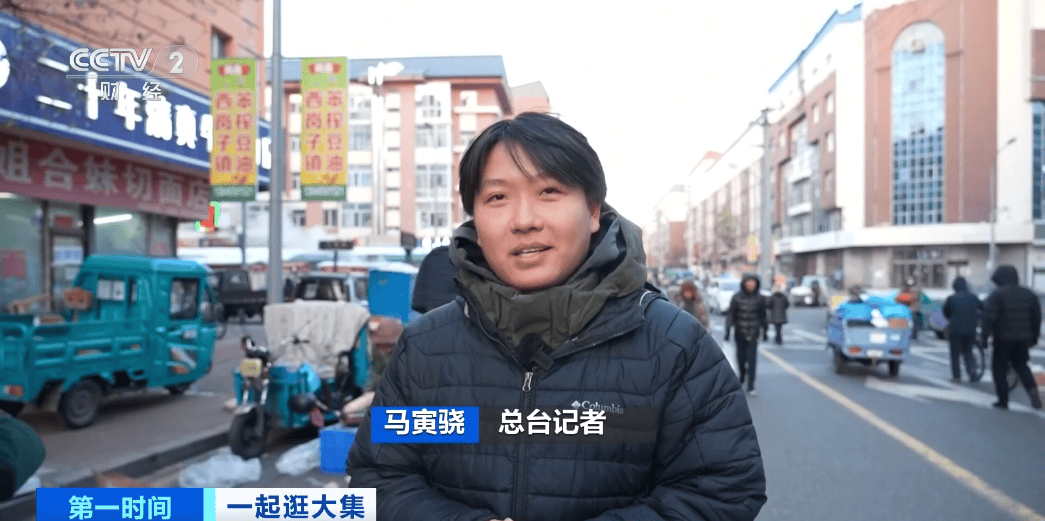
Group 1 - The core viewpoint of the article highlights the vibrant atmosphere of the Heihe morning market, which remains popular even in freezing temperatures, showcasing its international appeal [1] - The market offers a wide variety of products, including frozen goods, fresh meat, cooked food, snacks, and winter clothing, indicating a diverse consumer base [3] - Unique to the Heihe market are its frozen products, such as shrimp, chicken, and fish, which are essential for winter trading, reflecting the local adaptation to cold weather [4] Group 2 - Russian tourists frequent the Heihe morning market, with some visiting twice a week, attracted by the affordable prices of local snacks, such as buns priced at 2 RMB compared to 150 RUB (approximately 13 RMB) in Russia [6] - The implementation of the visa-free policy for Russian tourists has expanded their consumption patterns beyond traditional tourism to include shopping, beauty, medical, and wellness services [8] - There has been a shift in the consumption behavior of Russian tourists from organized group tours to more spontaneous leisure activities, indicating a change in travel preferences [8]
雪王“入冬”, 罪在“天宫”?
3 6 Ke· 2025-10-21 23:45
Core Viewpoint - The article discusses the contrasting performance of the tea beverage brand Mixue Ice City, highlighting its strong financial results amidst challenges posed by rising lemon prices and competitive pressures in the market [3][4][11]. Financial Performance - Mixue Ice City reported a revenue of 14.87 billion yuan and a net profit of 2.72 billion yuan for the first half of 2025, outperforming competitors like Bawang Tea and Guming [3]. - Forecasts suggest that Mixue's revenue could reach 29.7 billion yuan in 2025, reflecting a steady growth of 20% year-on-year [3]. Supply Chain and Raw Material Challenges - The brand's success is attributed to its robust supply chain and competitive pricing, particularly for its lemon-based products, which account for 15%-20% of its revenue [4][7]. - Extreme weather conditions have severely impacted lemon production, with some regions experiencing a yield reduction of 30%-60%, leading to a surge in wholesale lemon prices to 15 yuan per kilogram, nearly doubling year-on-year [7][9]. Competitive Landscape - Mixue Ice City faces significant pressure from competitors who primarily use a different variety of lemon (fragrant lemon), which has not seen the same price increases as the yellow lemon used by Mixue [9][10]. - The ongoing "takeout war" has eroded Mixue's price advantage, as competitors offer substantial discounts, making it challenging for Mixue to maintain its market position [12]. Strategic Responses - In response to the lemon crisis, Mixue has diversified its product offerings by incorporating fragrant lemons into new products, thereby alleviating some supply chain pressures [10][11]. - The brand is leveraging its IP, "Snow King," to enhance customer engagement and loyalty through innovative marketing strategies, including blind box promotions and emotional branding [13][15]. Expansion into New Markets - Mixue is expanding into new product categories, including coffee and fresh beer, to capture a broader consumer base and diversify its revenue streams [18][21]. - The launch of its coffee brand, "Lucky Coffee," has seen rapid expansion, with over 8,200 locations globally, and aims to penetrate first-tier cities [19][21]. Conclusion - The challenges posed by rising lemon prices and competitive dynamics have prompted Mixue Ice City to adapt its strategies, focusing on emotional branding, product diversification, and market expansion to sustain its growth trajectory [21].

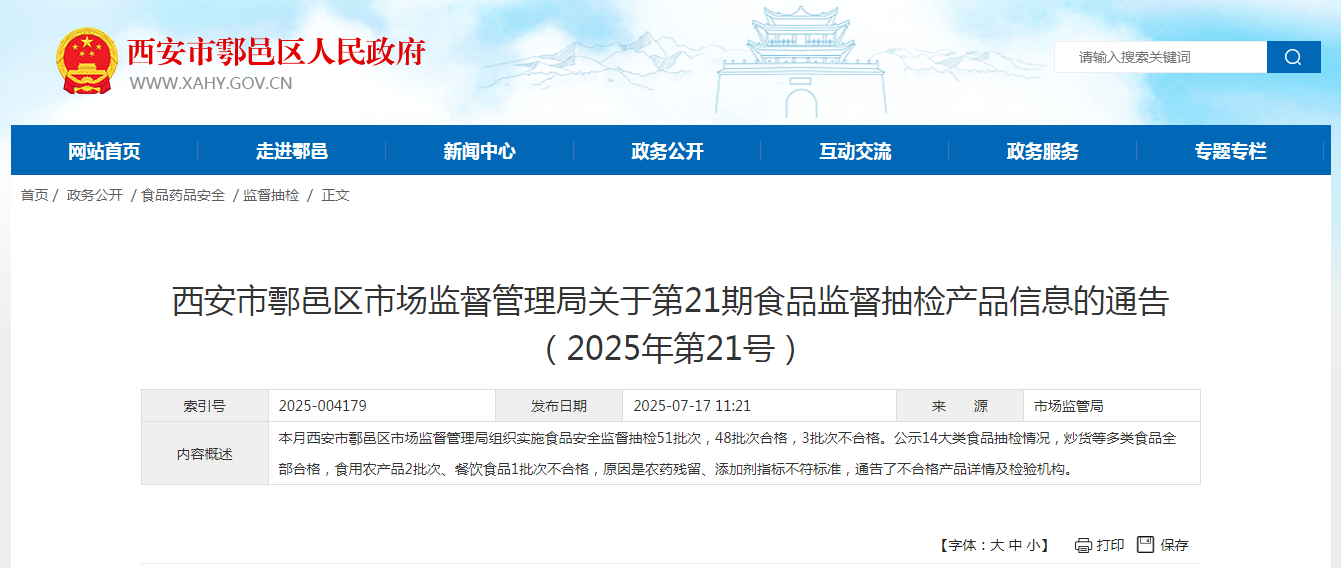
西安市鄠邑区市场监督管理局关于第21期食品监督抽检产品信息的通告(2025年第21号)
Zhong Guo Zhi Liang Xin Wen Wang· 2025-07-24 08:31
Overall Situation - The Xi'an Huyi District Market Supervision Administration conducted a food safety supervision sampling of 51 batches, with 48 batches passing and 3 batches failing [2][3] - The sampling covered 14 categories of food, including nuts, sugar, convenience foods, vegetable products, frozen drinks, pastries, bean products, grain products, edible oils, alcoholic beverages, and fruit products, all of which passed [2][3] - The main reasons for the failures were pesticide residues and non-compliance with food safety national standards regarding food additives [2][3] Non-compliant Products - The non-compliant products included: 1. Disinfected bowls from a restaurant with a result of 0.019 mg/100 cm² for anionic synthetic detergent, which should not be detected [3] 2. Ginger purchased from a supermarket with a pesticide residue of 0.62 mg/kg for dichlorvos, exceeding the standard of ≤0.02 mg/kg [3] 3. Yam purchased from the same supermarket with a result of 0.462 mg/kg for carbendazim and its manganese salt, exceeding the standard of ≤0.3 mg/kg [3] Compliant Products - All tested batches of various food categories, including nuts, sugar, convenience foods, vegetable products, frozen drinks, pastries, bean products, grain products, edible oils, alcoholic beverages, and fruit products, were compliant [2][3] - Specific compliant products included: - Canola oil from Weinan Chang'an Flower Oil Co., 5L per barrel [5] - Small liquor peanuts from Heze Suiyuan Food Co., 360g per package [5]