
布拉莫斯导弹

Search documents
刘宗义:攻下美国牵手欧盟,但印度的“雄心”不止于此
Sou Hu Cai Jing· 2026-02-04 05:10
Group 1 - India has successfully negotiated two significant trade agreements within a week, one with the EU covering approximately 2 billion people and another with the US, which includes substantial tariff reductions [1][2][4] - The EU will reduce tariffs on 96.6% of Indian exports, while India will gradually lower tariffs on 97% of EU imports, aiming to cover nearly 99% of India's export value [1][4] - The US agreement will see comprehensive tariffs on Indian goods drop from 50% to 18%, with India committing to eliminate tariffs and non-tariff barriers on US goods and to purchase $500 billion worth of US products [1][2][4] Group 2 - Key factors influencing India's shift from high tariff barriers include pressure from the US, which is India's largest export market, and the need to expand export markets amid declining economic growth [2][4] - The Indian economy has faced challenges, including a decline in GDP growth and reduced foreign investment, prompting the need for further market openness [4][5] - India's recent trade agreements indicate a strategic pivot towards the West, moving away from previous reliance on RCEP and focusing on partnerships with the EU and the US [4][5][7] Group 3 - The agreements are expected to benefit India's economy by increasing exports, particularly in mid to low-end manufacturing sectors, and attracting European investment and technology [14][15] - India aims to balance market openness with domestic protection, learning from China's economic development experience to enhance competitiveness [15][16] - The potential for deepened India-EU cooperation could lead to the emergence of an India-EU economic corridor, impacting global trade dynamics and posing challenges to initiatives like China's Belt and Road [19]

印度陆军节阅兵首次在军营外举行 摩托车“开挂”亮相
Xin Jing Bao· 2026-01-15 10:09
Core Viewpoint - The 78th Army Day parade in India was held for the first time in a public urban area outside of military camps, showcasing various military displays and innovations [1] Group 1: Event Highlights - The parade featured 27 performers demonstrating motorcycle stunts such as "human pyramid," "wings of flight," and "big turntable" [1] - The Indian Army showcased advanced technology including robotic dogs and all-terrain vehicles, along with the domestically developed BrahMos missile [1] - A women's marching contingent from the National Cadet Corps made its debut during the parade [1] Group 2: Cultural Aspects - The event included a performance by young men drumming while wearing sunglasses and shirtless, adding a cultural flair to the military display [1]
俄乌冲突后普京首访印度,聚焦能源与防务合作
Xin Lang Cai Jing· 2025-12-05 04:13
Core Points - The visit of Russian President Putin to India on December 4 marks the first visit since the outbreak of the Russia-Ukraine conflict, aiming to strengthen the "special and privileged strategic partnership" between Russia and India [1][5] - The 23rd India-Russia summit is expected to result in the signing of approximately 10 intergovernmental and departmental documents, along with over 15 commercial agreements and memorandums [1][4] Energy Cooperation - Energy cooperation is anticipated to be a prominent topic at the summit, including Indian investments in Russia's Far East and the expansion of civil nuclear cooperation [5][6] - For Russia, expanding energy cooperation with India demonstrates its substantial market presence despite Western sanctions, while India benefits from purchasing oil at favorable prices and potentially reselling processed oil for profit [2][5] - Following U.S. sanctions on Russian oil, India's imports of Russian oil are expected to drop to a three-month low in December [2][5] Defense Cooperation - Defense cooperation is another key area of focus, with India expected to push for the expedited delivery of two additional S-400 air defense systems, following the receipt of three systems under a $5.4 billion agreement from 2018 [6][7] - Discussions may also include collaboration on the S-500 air defense system, joint production of Su-30MKI fighter jets and T-90 tanks, and upgrades to the BrahMos missile project [7] - Despite diversifying military hardware procurement, Russia remains India's largest supplier, with ongoing interest in selling the Su-57 stealth fighter to India [7]
普京与莫迪举行私人晚宴
Xin Lang Cai Jing· 2025-12-05 03:45
Core Viewpoint - The visit of Russian President Putin to India marks a significant moment in strengthening the "special and privileged strategic partnership" between Russia and India amidst the ongoing Russia-Ukraine conflict and the deteriorating US-India relations [1][5][6]. Group 1: Diplomatic Engagement - Modi welcomed Putin at the Palam Air Force Base, breaking from tradition, and hosted a private dinner to set the tone for their discussions [1][3][8]. - The informal one-on-one meeting between Modi and Putin is considered a key aspect of the visit, focusing on urgent bilateral and international issues [3][10]. - The visit is expected to culminate in the signing of approximately 10 intergovernmental and departmental documents, along with over 15 business agreements and memorandums [4][11]. Group 2: Economic and Trade Relations - The discussions will include a significant focus on defense cooperation, particularly regarding the S-400 missile system, Su-57 fighter jets, and potential collaborations on the S-500 system and BrahMos missile upgrades [4][11]. - India aims to reduce its trade deficit with Russia and secure broader market access for Indian goods, indicating a strong commercial intent behind Putin's visit [12]. - The visit is anticipated to enhance social ties beyond traditional sectors like defense and energy, including increased people-to-people exchanges [12]. Group 3: Geopolitical Context - The backdrop of the visit includes the ongoing Russia-Ukraine conflict and the cooling of US-India relations, with external pressures from Western nations on India regarding its ties with Russia [6][13]. - The visit is seen as a test of India's ability to maintain a delicate balance between its relationships with Russia and the United States [5][14]. - The geopolitical implications of the visit highlight India's independent stance in global politics, as it navigates complex international dynamics [5][12].
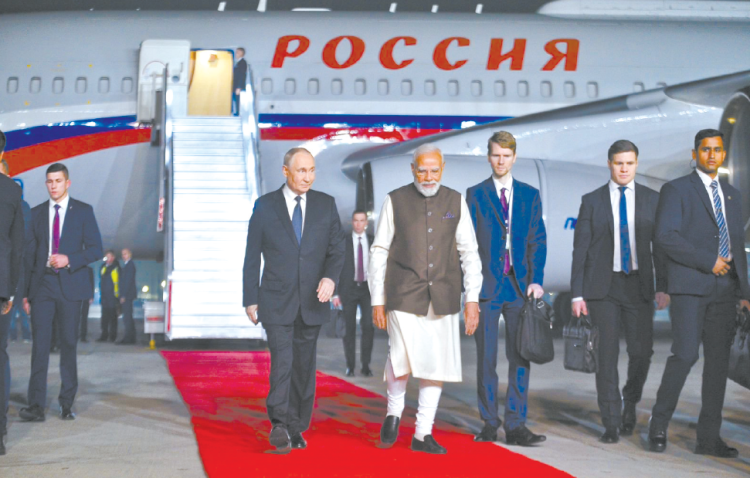
美国紧盯武器交易,莫迪陷入“微妙平衡”,普京俄乌冲突后首访印度
Huan Qiu Shi Bao· 2025-12-04 22:58
Core Points - The visit of Russian President Putin to India is significant as it marks his first visit to India since the outbreak of the Russia-Ukraine conflict, aiming to strengthen the "special and privileged strategic partnership" between Russia and India [1][6] - The meeting is overshadowed by the complexities of US-India relations, with analysts describing Modi's position as a "tightrope walk" between the two major powers [1][7] Group 1: Meeting Arrangements - Modi welcomed Putin at the Palam Air Force Base, breaking from tradition, and hosted a private dinner to reciprocate the hospitality shown during Modi's visit to Russia last year [1][2] - The formal activities of the visit are scheduled for December 5, including a welcoming ceremony and various bilateral discussions [4] Group 2: Expected Outcomes - Approximately 10 intergovernmental and departmental documents, along with over 15 business agreements and memorandums, are expected to be signed during the visit [5] - A significant joint statement will outline future cooperation in political, security, economic, financial, transportation, energy, education, and cultural sectors, including a development plan for economic cooperation until 2030 [5] Group 3: Defense Cooperation - Defense cooperation is a focal point, with discussions anticipated on the S-400 missile system, Su-57 fighter jets, and potential collaboration on the S-500 missile system [5] - India aims to balance its trade with Russia and is looking to expand market access for Indian goods, especially in light of the large business delegation accompanying Putin [5] Group 4: Geopolitical Context - The visit highlights the stability of the Russia-India strategic partnership amidst Western attempts to isolate Russia, indicating that Russia maintains strong international ties [6] - The backdrop of the visit includes tensions in US-India relations, particularly regarding tariffs and sanctions related to oil imports from Russia [7][8]

多方角力下的东南亚将何去何从
Zhong Guo Qing Nian Bao· 2025-06-11 23:01
Group 1 - Southeast Asia's strategic importance is highlighted due to its unique geographical position and rapid economic development, making it a focal point for global powers [2][3] - French President Macron's visit to Vietnam, Indonesia, and Singapore marks his first trip to Southeast Asia since taking office, emphasizing France's defense cooperation with these nations [2][3] - The U.S. military presence in the South China Sea has increased significantly, with approximately 1,000 reconnaissance flights and 706 days of ocean monitoring activities reported in 2024 [3] Group 2 - The U.S. aims to strengthen alliances in Southeast Asia, with the Philippines proposing a defense dialogue mechanism similar to the Quad [4][5] - India's economic growth positions it as a significant player in the region, with bilateral trade with ASEAN reaching $122.67 billion in the 2023-2024 fiscal year [5] - The historical context of Western colonialism in Southeast Asia continues to influence current geopolitical dynamics and defense relationships [7][8] Group 3 - The arms market in Southeast Asia is a key focus for Western powers, with France and the U.S. actively promoting military sales during diplomatic visits [9][10] - Southeast Asian nations face challenges in meeting increased defense spending demands, with many countries struggling to allocate sufficient budgets for military procurement [10][11] - Regional stability and economic cooperation with China are seen as vital interests for Southeast Asian countries, countering Western attempts to escalate tensions [11][12]
飙升近13000点!巴基斯坦股市大涨至熔断
21世纪经济报道· 2025-05-12 06:00
Group 1 - The core viewpoint of the article highlights the significant rise in the Pakistani stock market, with the Karachi KSE100 index increasing by over 12% and the KSE30 index rising by over 9% on May 12 [1] - Concurrently, the Indian stock market also experienced a notable increase, with the SENSEX30 index rising by 2.7% [1] Group 2 - The article discusses the details of Pakistan's military operation named "Copper Wall," which was initiated in response to attacks from India on May 6 [3] - Pakistan targeted 26 military objectives in India and Indian-controlled Kashmir, causing substantial damage to Indian military facilities, including air force bases and missile storage [4] - The operation involved precise strikes using guided missiles and artillery, along with comprehensive cyber attacks aimed at crippling India's military infrastructure [5] - Pakistan's military response was characterized as precise and restrained, aiming to avoid civilian casualties [6] - Pakistan reported the downing of 84 Indian drones during the conflict, with minimal damage to its own aircraft [7] - Pakistan clarified that it had never proactively requested a ceasefire and only responded to India's request after the conflict escalated [8] - Indian officials confirmed that both sides suffered aircraft losses during the conflict, although specific numbers were not disclosed [10][12]

印空军官员:印巴飞机在冲突中均有损失!巴公布“铜墙铁壁”行动细节:袭击印26个军事目标、实施全面网络攻击
Mei Ri Jing Ji Xin Wen· 2025-05-12 03:06
Group 1 - The recent conflict between India and Pakistan has resulted in aircraft losses on both sides, with India confirming the downing of several Pakistani planes [1][2] - Pakistan's military operation, named "Copper Wall," targeted 26 military objectives in India, causing significant damage to Indian military bases and facilities, including the destruction of S-400 defense systems and missile storage [3][4] - Pakistan claims to have shot down 84 Indian drones that invaded its airspace, while only one Pakistani aircraft was slightly damaged by Indian missiles [3][4] Group 2 - Both countries have agreed to a comprehensive ceasefire, effective from May 10, with military communication established to facilitate the agreement [4][6] - Following the ceasefire announcement, Pakistan's Civil Aviation Authority declared the reopening of its airspace and the resumption of all flights [6]
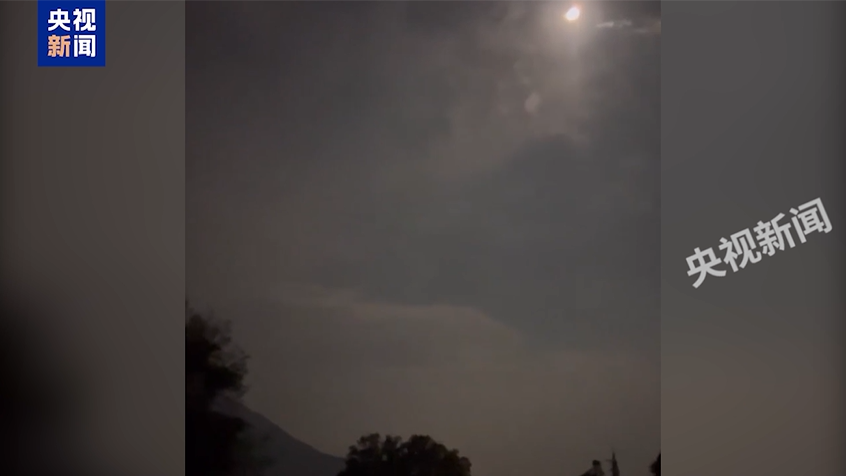
整理:印巴冲突最新局势跟踪(5月10日)
news flash· 2025-05-10 00:59
Conflict Progress - Pakistan military reported hitting Indian BrahMos missile launch sites, with attacks on Indian Pathankot Air Force Base and Udhampur Air Station [1] - Indian attacks have resulted in 33 fatalities on the Pakistani side [3] - Witnesses reported multiple missiles in the night sky over Jammu region, controlled by India [3] - Pakistan Air Force confirmed that one of the five Indian aircraft shot down was downed by ground-air defense systems [3] - Pakistan claimed successful interception of Indian missiles, ensuring the safety of all air force assets [3] - Pakistan officially launched military operations in response to ongoing provocations from India, closing all airspace [3] Diplomatic Efforts - Indian military spokesperson accused Pakistan of using commercial flights as cover [3] - Pakistani military spokesperson stated there will be no de-escalation of relations with India [3] - Saudi minister arrived in Pakistan, possibly attempting to ease tensions between India and Pakistan [3] - G7 urged India and Pakistan to initiate direct dialogue for a peaceful resolution [3]