
武装无人机

Search documents
中国军贸产品在中东地区前景探析:空天有清音第2期
Changjiang Securities· 2026-03-09 06:01
Investment Rating - The report maintains a "Positive" investment rating for the industry [2]. Core Insights - The Middle East region has a significant demand for military imports from China, driven by geopolitical conflicts and resource needs [11][12]. - China's military trade products in the Middle East have comparative advantages, including transparency in export principles and the absence of political conditions [38][41]. - The trend is shifting from purchasing individual military equipment to acquiring complete systems, indicating a deepening strategic cooperation between Middle Eastern countries and China [26][28]. Summary by Sections 1. Demand for Military Imports in the Middle East - The Middle East is a geopolitical hotspot, with ongoing conflicts and resource competition driving military import needs [11]. - The region accounts for approximately 27% of global military imports, with China holding a mere 1.2% market share [12]. 2. Types of Military Equipment Needed - Key military products imported from China include armed drones, air defense systems, and fire support systems [25]. - Countries like Saudi Arabia and the UAE are primary customers, focusing on advanced military technologies [24][25]. 3. Comparative Advantages of Chinese Military Products - China's military exports are characterized by transparency and fewer political conditions compared to Western countries [38]. - The recent success of Chinese military technology in real combat scenarios enhances its attractiveness in the international market [34].

从汽车业挖人!德国军工业带动招聘潮 能挽救经济吗?
Di Yi Cai Jing· 2026-01-13 15:35
Group 1 - The German defense industry has seen a recruitment surge, with employment increasing by nearly one-third over the past four years, reflecting a significant shift in Germany's defense spending and strategy due to geopolitical changes [1] - As of now, the largest defense companies in Germany employ approximately 83,000 people globally, up from 63,000 before the Russia-Ukraine conflict, marking a 30% increase [1] - The German government has signed weapon contracts worth €207 billion since 2022, with €83 billion signed in the last year alone, significantly higher than the €23 billion in 2021 [2] Group 2 - The German defense budget is set to increase to approximately €108 billion by the end of 2024, with plans to reach €152.8 billion by 2029, which would account for 3.5% of the GDP [2] - Rheinmetall, a key player in the defense sector, has seen its workforce grow from about 15,400 in 2021 to 23,500 currently, with expectations to reach 70,000 in three years [3] - Startups in the German defense sector are also thriving, with companies like Helsing experiencing an 18-fold increase in employees over four years, transitioning from AI software to hardware production [3] Group 3 - Despite the growth in the defense sector, the ability to recruit from the struggling automotive industry has been limited, with companies like Hensoldt and Arx Robotics only hiring a small number of employees from that sector [5] - The German economy is projected to grow by only 0.2% to 0.3% in 2025, indicating challenges in stimulating domestic demand despite increased defense spending [6] - The reliance on exports remains high, with exports accounting for approximately 45% of Germany's GDP, a unique structure among EU member states [6]
从汽车业挖人!德国军工业带动招聘潮,能挽救经济吗?
Di Yi Cai Jing· 2026-01-13 12:04
Group 1 - The German defense industry has seen a significant increase in employment, with a nearly one-third growth in workforce over the past four years, driven by geopolitical changes and a large-scale defense initiative launched by Germany [1][3] - As of now, the defense sector employs approximately 83,000 people globally, up from 63,000 before the Russia-Ukraine conflict, reflecting a 30% increase [1] - The German government has signed weapon contracts worth €2.07 trillion since 2022, with €83 billion signed in the last year alone, a substantial increase from €23 billion in 2021 [3] Group 2 - The largest employer in the German defense sector is the European Aeronautic Defence and Space Company (EADS), which has around 38,000 employees, with over half based in Germany [4] - Rheinmetall, the second-largest employer, has seen its workforce grow from approximately 15,400 in 2021 to 23,500 currently, with expectations to reach 70,000 in three years [4] - Startups in the defense sector are also thriving, with companies like Helsing experiencing an 18-fold increase in employees over the past four years [4] Group 3 - The German Defense Industry Association (BDSV) anticipates accelerated growth in the coming years as procurement processes are expedited, allowing companies to better plan their capacities [5] - Despite the interest from defense manufacturers in hiring from the struggling automotive sector, the data suggests that the defense industry's expansion may not fully compensate for the decline in the automotive industry [6] - The German economy is projected to grow by only 0.9% in 2026, with concerns about the government's focus on defense spending at the expense of social governance and environmental initiatives [7]

特朗普,“签大单”!
第一财经· 2025-05-16 06:21
Core Viewpoint - The article discusses President Trump's recent Middle East visit, highlighting the signing of over $1 trillion in commercial agreements with Saudi Arabia, Qatar, and the UAE, aimed at strengthening economic cooperation and attracting investments to the U.S. [1][4] Group 1: Investment Commitments - Saudi Arabia committed to investing $600 billion in the U.S. over the next four years, although Trump sought to increase this to $1 trillion [4] - Qatar signed agreements worth over $243.5 billion, including a $96 billion deal for Boeing aircraft [4] - The UAE reached agreements exceeding $200 billion, covering aircraft purchases and energy projects [4] Group 2: Strategic Goals - Trump's visit aimed to enhance U.S.-Gulf relations and alleviate domestic political pressures by showcasing significant investment commitments [1][5] - The agreements are seen as a response to Trump's personality and political needs, reflecting Gulf leaders' understanding of his character [1][5] Group 3: Skepticism on Implementation - Analysts express doubts about the actual realization of the announced investment figures, suggesting they may be inflated or based on prior commitments [7][8] - Historical context indicates that previous agreements, such as the $350 billion deal from Trump's 2017 visit, have not been fully realized [7][8] - Economic data shows that U.S. exports to Saudi Arabia from 2017 to 2020 totaled only $92 billion, raising questions about the feasibility of the $600 billion commitment [8]
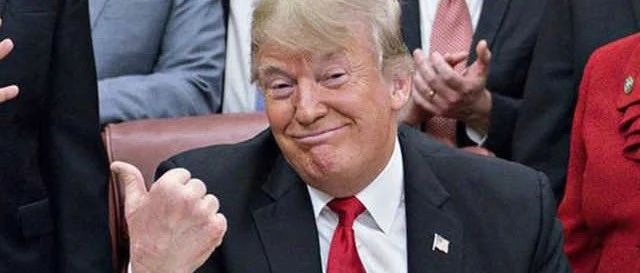
特朗普中东行一路“签大单”,超千亿美元协议能否最终落实?
Di Yi Cai Jing· 2025-05-16 05:58
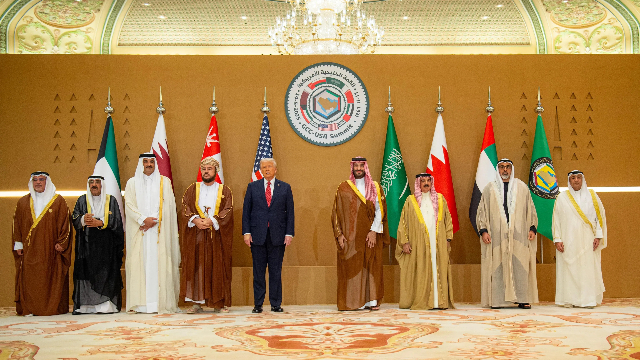
Group 1 - The core viewpoint of the articles highlights the potential for high-value agreements signed by the U.S. with Gulf countries to become "unfinished projects" rather than actualized investments [1][5] - During President Trump's visit to the Middle East, over $1 trillion in commercial agreements were signed with Saudi Arabia, Qatar, and the UAE, covering sectors such as defense, aviation, energy, and artificial intelligence [1][3] - The visit aimed to strengthen economic cooperation between the U.S. and Gulf nations, with a focus on attracting increased investments from these countries [1][4] Group 2 - Saudi Arabia committed to a $600 billion investment over four years, although Trump sought to increase this to $1 trillion [3][5] - Qatar signed agreements worth over $243.5 billion, including a $96 billion deal for Boeing aircraft [3] - The UAE reached agreements exceeding $200 billion, involving aircraft purchases and oil and gas project expansions [3] Group 3 - There are concerns regarding the actual implementation of these agreements, with skepticism about the inflated figures presented by Trump [5][6] - Historical context shows that previous agreements, such as a $350 billion deal from Trump's 2017 visit to Saudi Arabia, have not been fulfilled [5][6] - The actual foreign direct investment (FDI) from Saudi Arabia in the U.S. is significantly lower than the promised amounts, indicating that many figures may be more aspirational than realistic [6]

印空军官员:印巴飞机在冲突中均有损失!巴公布“铜墙铁壁”行动细节:袭击印26个军事目标、实施全面网络攻击
Mei Ri Jing Ji Xin Wen· 2025-05-12 03:06
Group 1 - The recent conflict between India and Pakistan has resulted in aircraft losses on both sides, with India confirming the downing of several Pakistani planes [1][2] - Pakistan's military operation, named "Copper Wall," targeted 26 military objectives in India, causing significant damage to Indian military bases and facilities, including the destruction of S-400 defense systems and missile storage [3][4] - Pakistan claims to have shot down 84 Indian drones that invaded its airspace, while only one Pakistani aircraft was slightly damaged by Indian missiles [3][4] Group 2 - Both countries have agreed to a comprehensive ceasefire, effective from May 10, with military communication established to facilitate the agreement [4][6] - Following the ceasefire announcement, Pakistan's Civil Aviation Authority declared the reopening of its airspace and the resumption of all flights [6]

巴基斯坦:印度一战机被击落,飞行员被俘!
Zhong Guo Ji Jin Bao· 2025-05-10 03:36
Group 1 - An Indian Air Force fighter jet was shot down near Sialkot, Pakistan, and the pilot was captured [1] - Pakistan's military reported airstrikes on multiple Indian air force bases, including locations in Gujarat, Ambala, and Jalandhar [3] - Pakistan's Prime Minister convened an emergency meeting with military and political leaders following the escalation [4] Group 2 - Explosions were reported in Indian-administered Kashmir, with claims of drone attacks from Pakistan targeting various locations, including civilian areas [5] - Pakistan's military stated that their operation "Copper Wall" targeted key Indian military facilities, resulting in damage and casualties [5]