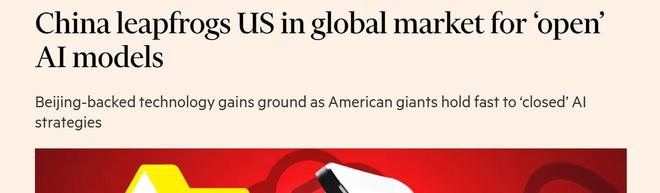
开源人工智能模型

Search documents
国际论道丨破圈出海 中国品牌加速登陆全球市场
Ren Min Ri Bao Hai Wai Ban· 2026-01-26 03:07
Group 1 - The core viewpoint is that Chinese brands are rapidly expanding globally, establishing a new image through innovative product design, marketing strategies, and cultural output [1][2][10] - The perception of Chinese products has shifted positively, especially among younger generations in the U.S., leading to a historical high in consumption of Chinese-made goods [2][12] - Chinese tea and beverage brands are successfully entering the U.S. market, with several brands expanding their presence and establishing operations in Southeast Asia and Australia [4][5] Group 2 - Chinese automotive brands have significantly increased their market share in Kazakhstan, rising from approximately 2% in 2020 to 34.5% in the first nine months of 2025 [5] - The global cosmetics market is witnessing a rise in Chinese brands, driven by strong domestic demand and successful international expansion [5][6] - Chinese brands are competing not only on price but also on quality and creativity, with a notable increase in global trust and influence over the past six years [6][11] Group 3 - The innovative capabilities of Chinese companies are being recognized globally, with a growing number of products showcasing advanced technology and design [7][10] - Chinese brands are increasingly focusing on localizing their operations and hiring local employees to enhance cultural integration and reduce friction [8][10] - The transition from merely selling products to building ecosystems marks a significant evolution in the strategy of Chinese brands in global markets [10][11] Group 4 - The global sales network established by Chinese e-commerce platforms and the effective use of social media for targeted marketing are accelerating the globalization of Chinese brands [11] - The cultural perception of China is evolving, with a growing recognition of Chinese creativity and influence in global trends [12] - China's rise in the global soft power index reflects its increasing influence, suggesting that future cultural phenomena may emerge from Chinese cities [12]


美媒哀叹:美国屈辱世纪,才刚刚开始
Xin Lang Cai Jing· 2026-01-21 22:51
Core Insights - The article discusses the rising influence of China in technology and manufacturing, suggesting that "Chinese attributes" may become the new norm unless these sectors lose their dominance [1][3][4]. Group 1: Perception of China - There is a noticeable shift in the perception of China among many Americans, especially the younger generation, who are increasingly embracing Chinese technology, brands, and cities [1][4]. - Social media trends reflect a longing for Chinese culture and products, with users sharing moments they describe as "very Chinese" [1][3]. Group 2: Comparison with the U.S. - Critics often highlight China's significant investments in clean energy and urban infrastructure to underscore the shortcomings of U.S. climate policies and housing issues [2][7]. - China is viewed not just as a country but as a symbol that exposes the flaws in American society, particularly during a time of perceived decline in the U.S. [2][7]. Group 3: Dependency on Chinese Products - Many Americans have become acutely aware of their dependency on Chinese exports, particularly during trade tensions that revealed the sourcing of American brand products from China [3][8]. - The rise of Chinese applications like TikTok and platforms like Dhgate has enabled direct communication with Chinese manufacturers, bypassing traditional retail channels [3][8]. Group 4: Cultural Integration - The integration of Chinese products into daily life is evident, with items like smartphones, laptops, and even popular toys being manufactured in China [2][7]. - Language barriers are diminishing due to advancements in translation technology, making it easier for international users to engage with Chinese content [3][8].
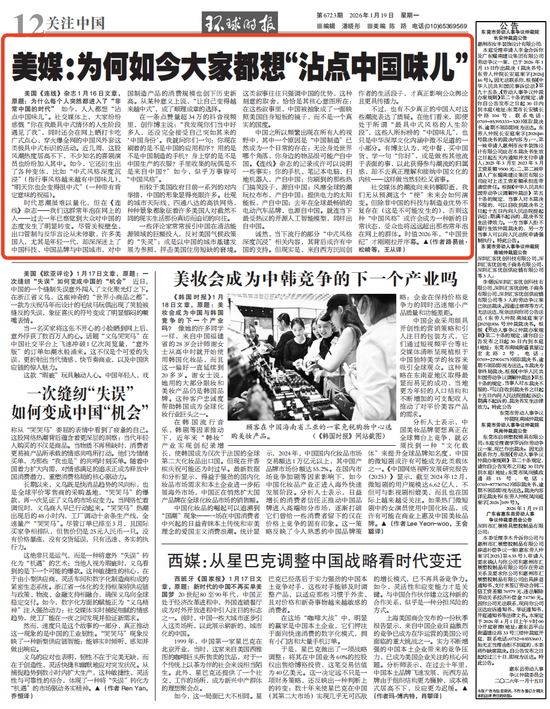
美媒:为何如今大家都想“沾点中国味儿”
Xin Lang Cai Jing· 2026-01-19 03:36
Group 1 - The article discusses a growing trend among Americans, particularly the younger generation, to embrace "Chinese style" in various aspects of life, including fashion and food [1][4] - Despite ongoing trade barriers and anti-China rhetoric, there is a notable increase in American interest in Chinese technology, brands, and urban development, leading to a historic high in consumption of Chinese-made products [1][4] - Social media plays a significant role in this trend, with influencers highlighting the prevalence of Chinese products in daily life, prompting individuals to reflect on their own "Chinese identity" [2][9] Group 2 - The article notes that China's image is increasingly positive compared to the U.S. government's domestic policies, with many Americans expressing admiration for China's infrastructure and advancements in clean energy [2][9] - Critics often use China's achievements as a benchmark to highlight shortcomings in U.S. policies, particularly in areas like climate change and housing shortages, framing China as a mirror reflecting American deficiencies [2][9] - The ubiquity of "Made in China" products is emphasized, with examples ranging from electronics to popular cultural items, indicating that Chinese manufacturing is a daily reality for consumers worldwide [3][9] Group 3 - There is a distinction made between superficial engagement with Chinese culture and a deeper understanding of its rich heritage, with some individuals criticized for only adopting surface-level elements of "Chinese style" [10] - The article suggests that unless China's technological and manufacturing advantages diminish, the trend of embracing "Chinese style" is likely to become a lasting aspect of global culture [4][10] - The concept of a "Chinese century" is introduced, indicating that the current trend is just the beginning of a broader cultural shift [4][10]
从“开源引领”到“应用出海”
Ren Min Ri Bao· 2026-01-06 09:29
Group 1 - The core viewpoint of the articles highlights that China's self-developed open-source AI models have reached a global download share of 17.1%, surpassing the United States for the first time, indicating a systemic leap in the overall strength of China's AI industry [1] - According to the China Academy of Information and Communications Technology, the scale of China's AI industry is projected to exceed 900 billion RMB in 2024, with a year-on-year growth of 24%. By September 2025, the number of AI companies in China is expected to exceed 5,300, accounting for 15% of the global total [1] - The transition of China's AI technology is moving from "open-source leadership" to "application overseas," expanding from single tool applications to a comprehensive technology ecosystem covering algorithms, platforms, and industry solutions [1] Group 2 - The transformation is closely related to the deep implementation of China's "AI+" initiative, driven by both policy guidance and market demand, enabling Chinese AI companies to integrate technology with application scenarios effectively [2] - Chinese AI products are expanding from internet applications to core sectors of the real economy, such as urban governance, smart energy, transportation logistics, and high-end manufacturing, aligning closely with global digitalization needs [2] - Chinese AI companies are not just exporting products or services but are empowering local industries through technology, enhancing smart upgrades in various sectors [2] Group 3 - The global expansion of Chinese AI technology addresses production and living challenges, with applications like industrial drones equipped with AI visual systems significantly improving response times for forest fire prevention and power line inspections [3] - In regions with dispersed populations or complex terrains, lightweight AI pest identification applications are providing small farmers with diagnostic and prevention advice, enhancing quality of life and social resilience [3] - China's advantages in AI extend beyond technological innovation and application promotion to active participation in global governance and international cooperation, emphasizing principles such as human-centered approaches and collaborative governance [3] Group 4 - Looking ahead, Chinese AI companies are expected to integrate more openly, innovatively, and reliably into the global innovation network, contributing Chinese wisdom in rule-making, risk governance, and capacity building [4] - The commitment to building a peaceful, secure, open, cooperative, and orderly cyberspace community is emphasized as part of China's strategic layout for AI development [4]
事关人工智能,中国这项数据首超美国
Ren Min Ri Bao· 2026-01-06 06:58
Core Insights - China's self-developed open-source AI models have reached a global download share of 17.1%, surpassing the United States for the first time, indicating a systemic leap in the overall strength of China's AI industry [1] - The scale of China's AI industry is projected to exceed 900 billion RMB in 2024, with a year-on-year growth of 24%, and the number of AI companies in China is expected to surpass 5,300 by September 2025, accounting for 15% of the global total [1] Industry Development - The transformation in China's AI sector is closely linked to the implementation of the "AI+" initiative, driven by both policy guidance and market demand, leading to a deep integration of technology and application scenarios [2] - Chinese AI products are expanding from internet applications to core sectors of the real economy, such as urban governance, smart energy, logistics, and high-end manufacturing, aligning with global digitalization needs [2] Global Application and Impact - Chinese AI technology is not only expanding its applications but also effectively addressing production and living challenges in various regions, such as using industrial drones for forest fire prevention and power line inspections in Southern Europe and Latin America [3] - The lightweight AI pest identification applications are providing diagnostic and prevention advice to small farmers in Africa and South Asia, enhancing quality of life and social resilience [3] International Cooperation - China is actively participating in global governance and international cooperation in the AI field, emphasizing principles such as human-centered approaches, fairness, and collaborative governance [3] - The adoption of a resolution at the 78th United Nations General Assembly, proposed by China to strengthen international cooperation in AI capacity building, reflects global recognition of China's approach [3] Future Outlook - Looking ahead, Chinese AI companies are expected to integrate more openly, innovatively, and reliably into the global innovation network, contributing to rule-making, risk governance, and capacity building [4]
从“开源引领”到“应用出海”(国际观澜)
Ren Min Ri Bao· 2026-01-05 22:33
Core Insights - China's self-developed open-source AI models have reached a global download share of 17.1%, surpassing the United States for the first time, indicating a systemic leap in the overall strength of China's AI industry [1] - The scale of China's AI industry is projected to exceed 900 billion RMB in 2024, with a year-on-year growth of 24%, and the number of AI companies in China is expected to surpass 5,300 by September 2025, accounting for 15% of the global total [1] Industry Development - The transformation in China's AI sector is closely linked to the implementation of the "AI+" initiative, driven by both policy guidance and market demand, leading to a deep integration of technology and application scenarios [2] - Chinese AI products are expanding from internet applications to core sectors of the real economy, such as urban governance, smart energy, transportation logistics, and high-end manufacturing, aligning with global digitalization needs [2] Global Expansion - Chinese AI technology is not only expanding its applications but also effectively addressing production and living challenges in regions with dispersed populations or complex terrains, such as Southern Europe and Latin America [3] - The use of Chinese industrial drones equipped with AI visual systems has significantly improved response times for forest fire prevention and power line inspections, enhancing safety for remote communities [3] International Cooperation - China is actively participating in global governance and promoting international cooperation in AI, adhering to principles such as human-centeredness, fairness, and collaborative governance [3] - The unanimous adoption of a resolution on strengthening international cooperation in AI capacity building at the 78th United Nations General Assembly reflects international recognition of China's proposals [3] Future Outlook - Looking ahead, Chinese AI companies are expected to integrate more openly and innovatively into the global innovation network, contributing Chinese wisdom in areas such as rule-making, risk governance, and capacity building [4]
澳媒:“真正的产业政策让中国科技领先”
Huan Qiu Wang Zi Xun· 2025-12-08 22:45
Core Viewpoint - China continues to dominate in various global technology and engineering sectors, showcasing its advancements in multiple fields, including artificial intelligence, advanced materials, defense, space, robotics, transportation, energy, environment, biotechnology, and vaccines [1]. Group 1: Technological Leadership - China leads in 7 out of 8 categories of artificial intelligence, all 13 categories of advanced materials and manufacturing technologies, all 7 categories of defense, space, robotics, and transportation, 9 out of 10 categories in energy and environment, and 5 out of 9 categories in biotechnology, genetics, and vaccines [1]. - The recent China International High-tech Achievements Fair in Shenzhen highlighted China's technological prowess, featuring a vast exhibition area of 400,000 square meters, showcasing humanoid robots and flying cars [1]. Group 2: Infrastructure and Policy - China has made significant investments in national industrial policies, focusing on new infrastructure projects such as 5G networks, smart cities, and industrial digital transformation [2]. - The country has shifted from a traditional innovation model to a new approach where the government coordinates interactions among academia, enterprises, and financial institutions towards unified technological goals [2]. - The government identifies technological objectives, analyzes necessary breakthroughs, and provides funding for both basic and applied research to facilitate technology transfer to enterprises, aiding in product development and commercialization [2].
研究:中国开源人工智能模型全球下载份额首超美国
Huan Qiu Wang Zi Xun· 2025-11-28 03:22
Core Insights - China has surpassed the United States in the global open-source AI model market, gaining a critical advantage in technology application worldwide [1][4] Group 1: Market Share - Chinese research teams have increased their share of new open-source model downloads to 17% over the past year [3] - This figure exceeds the 15.8% download share of major U.S. tech companies such as Google, Meta, and OpenAI, marking the first time Chinese teams have outperformed their U.S. counterparts in this metric [4] Group 2: Strategic Approaches - The push for open-source model releases in China contrasts sharply with the "closed" strategies adopted by most large U.S. tech companies [4]