情感咨询服务

Search documents
中消协揭“情感经济”套路,建议推进情感咨询服务规范化建设
Sou Hu Cai Jing· 2026-02-05 12:35
2月5日,中国消费者协会发布了2025年全国消协组织受理投诉热点分析。分析指出,"孤独经济"带火情 感消费,诱导式焦虑营销有待规范。 案例显示,2025年11月30日,消费者反映,其于2025年4月在某视频平台看到广州某文化传播有限公司 发布的情感咨询视频。5月初,消费者支付599元费用,被拉入微信群进行语音"授课",但相关课程内容 空泛,且群内频繁发布不雅图片。短期服务结束后,该公司以"名额有限"等话术,诱导消费者报名"关 门弟子"课程,消费者于5月8日支付2999元。随后,该公司再次向消费者推荐更高价课程,称可"进一步 提升情感能力"。消费者在急于改善个人情感状况的情况下,于6月8日再次支付8888元。 消费者反映,该公司的相关服务以发送录制视频为主,课程内容质量较低,存在重复使用早期课程的情 况,且未对消费者的具体情感问题进行针对性分析或提供解决方案,仅要求其自行观看视频学习。截至 投诉时,消费者在该公司累计消费12486元。服务期间,相关"导师"及咨询人员从未主动了解消费者情 感状况,沟通回应敷衍。消费者认为该公司存在虚假宣传、诱导消费、服务与合同约定不符等问题,投 诉要求退款。 对此,消协建议相关部 ...
情绪消费的“增长点”绝不是升级焦虑
Xin Lang Cai Jing· 2025-12-22 17:13
Core Insights - The article discusses the emergence of "emotional economy" as a trend in consumer behavior, highlighting a shift from "cost-performance" to "emotional value" among younger consumers [1][2] - It emphasizes the dual nature of emotional consumption, where it can provide comfort and joy but can also lead to anxiety-driven marketing practices that exploit consumer emotions [2][3] Group 1: Emotional Consumption Trends - The term "谷子(经济)" represents the emotional economy, indicating a growing trend where consumers prioritize emotional satisfaction over mere cost [1] - Products like trendy toys and virtual goods serve as emotional outlets for young consumers, fulfilling their psychological needs and contributing to new economic growth [1][2] Group 2: Negative Marketing Practices - Some businesses exploit consumer anxiety by creating a sense of urgency around products, such as limited edition blind boxes and exaggerated claims in the beauty industry [2] - This leads to a misperception among young consumers that happiness is directly tied to spending, resulting in financial and emotional burdens [2] Group 3: Recommendations for Stakeholders - To realign emotional consumption with its original intent, consumers should develop rational spending habits and be cautious of marketing traps [3] - Businesses are encouraged to focus on genuine emotional support rather than exaggerated marketing tactics, while regulatory bodies should address misleading advertising and price inflation [3] - The core strength of emotional consumption lies in authentic human care, which can transform it into a sustainable and heartwarming force [3]
情绪消费快速兴起 诱导消费现象突出
Bei Jing Shang Bao· 2025-08-06 09:38
Group 1 - In the first half of 2025, the National Consumer Association received 995,971 consumer complaints, a year-on-year increase of 27.23%, resolving 509,655 cases and recovering economic losses of 452 million yuan for consumers [1] - The rise of emotional consumption has led to various issues that require regulatory attention, including substandard products lacking basic information and safety warnings, posing significant consumer safety risks [1] - Induced consumption is prevalent, with some businesses exploiting consumer emotional needs through ambiguous language to encourage high spending [1] Group 2 - The National Consumer Association suggests that multiple departments collaborate to establish guidelines for regulating emotional consumption, clarifying regulatory scopes and enhancing category-specific oversight [2] - Recommendations include setting industry standards for emotional consumption services, covering entry conditions, personnel qualifications, service processes, pricing standards, after-sales responsibilities, contract terms, and personal information protection [2] - Platforms are advised to implement features like "reward limits" and "immersion reminders" to prevent excessive consumer spending in online emotional companionship and interactive services [2]
六问情感咨询机构:是否涉嫌诱导消费?设置霸王条款?
Nan Fang Du Shi Bao· 2025-03-24 08:17
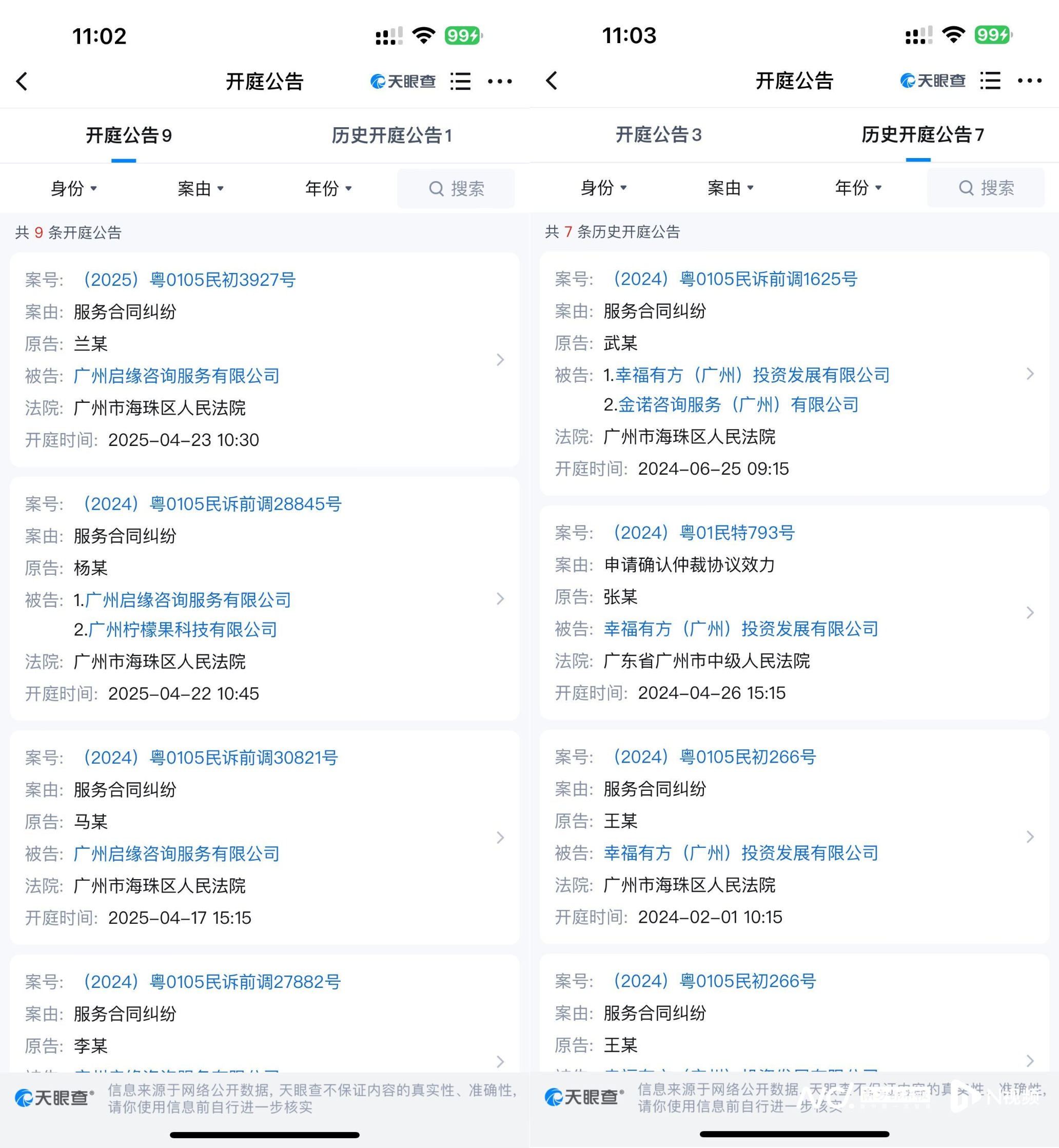
Core Viewpoint - The article investigates the potential issues within emotional consulting agencies, including allegations of misleading advertising, consumer inducement, and unethical practices in service delivery [2][4][7]. Group 1: Industry Practices - Numerous consumers reported experiences of inducement and false promises while seeking emotional consulting services, spending thousands to tens of thousands of yuan without satisfactory results [2][4]. - The agencies involved collected extensive personal information from consumers and their partners, including work units, social media accounts, and property details, raising concerns about ethical practices [2][25]. - Many of the companies lack the necessary qualifications for psychological consulting, with only one out of six identified companies having relevant credentials [3][4]. Group 2: Misleading Advertising - Consumers claimed that agencies implied or promised successful relationship repairs, which may constitute false advertising if not explicitly stated in contracts [8][9]. - Some agencies, like Happiness Youfang, allegedly suggested high success rates for their services, which could mislead consumers into purchasing upgrades [9][12]. Group 3: Consumer Inducement - Agencies reportedly encouraged consumers to frequently upgrade their services, suggesting that failure to do so could hinder their chances of success [13][14]. - Responses from agency representatives indicated that they do not engage in coercive sales tactics, but consumer testimonies suggest otherwise [14][15]. Group 4: Ethical Concerns - The practice of "dual service," where therapists engage both partners without full disclosure, raises ethical questions regarding consent and confidentiality [17][21]. - The "separation of third parties" service offered by some agencies, which involves creating conflict to break up relationships, is viewed as unethical and contrary to professional standards [22][24]. Group 5: Information Collection - Agencies collected extensive personal data, which may violate the principle of minimal necessity in data protection laws, as much of the information gathered was not directly relevant to the services provided [25][26]. - Concerns were raised about the necessity and relevance of the information collected, with suggestions that it exceeded what was required for service delivery [26]. Group 6: Contractual Issues - Many contracts included clauses that favored the agencies, such as requiring consumer consent for contract termination while lacking clear terms regarding the agency's responsibilities [27][28]. - Legal experts indicated that such contractual terms could be deemed invalid due to the imbalance of rights and obligations between the parties involved [30].