
拇指相机

Search documents
巨头把影石往死里打
半佛仙人· 2026-03-28 09:09
Core Viewpoint - The article emphasizes the importance of competition in the industry, suggesting that intense rivalry among companies ultimately benefits consumers, as it drives innovation and better products [3][4]. Group 1: Competition Dynamics - The article argues that when companies compete fiercely, it leads to better products and services for consumers, as businesses strive to outperform each other [3][4]. - It highlights that large companies, once they dominate the market without competition, tend to become complacent and less innovative, acting more like rent-seekers [3][4]. - The presence of new competitors is essential for keeping established companies in check and ensuring they continue to innovate [4][6]. Group 2: Industry Reactions - The article discusses the recent controversies surrounding the company YingShi, noting that its significant market share and rapid growth have provoked strong reactions from competitors [6][10]. - YingShi's revenue reached a historical high, with Q4 revenue growth exceeding 100%, and it holds a 66% market share in panoramic cameras and 57% in thumb cameras, indicating its strong position in the market [6][10]. - The article mentions that YingShi has filed an average of 140 new technology and design patents annually over the past decade, showcasing its commitment to innovation [9][10]. Group 3: Legal and Strategic Maneuvers - The article points out that the lawsuits faced by YingShi are not necessarily about winning but are intended to intimidate potential talent and create obstacles for the company [13][14]. - It suggests that the competitive landscape has become aggressive, with established companies resorting to legal tactics rather than direct competition, indicating that they feel threatened by YingShi's advancements [14][15]. - The article concludes that true competition should be about product superiority, and the ongoing legal battles are a sign that competitors cannot match YingShi's innovation and market presence [15][17]. Group 4: Consumer Benefits - The article asserts that competition leads to market vitality, which ultimately benefits consumers through better products and lower prices [17][18]. - It emphasizes that as long as competition persists, companies will be compelled to invest in research and development, ensuring continuous improvement in offerings [18].


影石刘靖康:大疆起诉我们,完全能理解巨头被抢市场的心态
凤凰网财经· 2026-03-23 11:58
Core Viewpoint - The CEO of YingShi, Liu Jingkang, asserts that the patents involved in the lawsuit are the result of the company's internal innovation and expresses confidence in responding to the legal challenges posed by GoPro and DJI. He highlights the competitive nature of the market and the similarities between their products and those of competitors [1][3]. Group 1 - YingShi has filed numerous patent applications, some of which involve former DJI employees, indicating a strategic approach to innovation [3]. - The company acknowledges the lawsuits from GoPro and DJI as understandable reactions from larger companies facing market share loss, while also noting that many features of DJI's products have been reported as remarkably similar to theirs [3]. - Last year, YingShi's analysis revealed that DJI's patents overlap with 11 hardware/structure, 8 software methods, 6 control methods, and 3 accessory patents, yet YingShi has not initiated any lawsuits against them [3]. Group 2 - YingShi prioritizes research and development over legal battles due to limited resources, focusing on differentiated innovation to expand market share and provide consumers with more choices [3]. - The market has seen an overall growth of over 80%, with new players entering and increasing their sales, while YingShi achieved its highest revenue growth in Q4 of the previous year [3]. - Despite the legal challenges, YingShi invested over 10 million USD to successfully defend against the GoPro lawsuit, reflecting their commitment to protecting their legal rights [3].

影石创新:所涉337调查终结,未对公司生产经营造成实质性影响
Bei Ke Cai Jing· 2026-02-27 10:29
Core Viewpoint - The final ruling of the US 337 investigation concluded in favor of YingShi Innovation, with the US International Trade Commission (ITC) determining that all six patent infringement claims made by GoPro were unfounded [1][2]. Group 1: Investigation Outcome - The ITC upheld the initial ruling, stating that five of the six patent claims were either not infringed or the related patents were invalid [2]. - For the remaining design patent, YingShi's new design was confirmed by the ITC as not constituting infringement [2]. Group 2: Impact on Company Operations - YingShi stated that the 337 investigation did not have a substantial impact on its production and operations, allowing the company to continue importing and selling its existing products in the US without restrictions [1]. - The company incurred over $10 million in legal costs due to the investigation, which highlights the financial burden such legal battles can impose on companies [3]. Group 3: Company Performance and Strategy - YingShi reported a total revenue of 9.858 billion yuan for the year 2025, reflecting a year-on-year growth of 76.85%, attributed to market expansion and increased R&D investment [3]. - In 2025, YingShi launched several new products, including AI smartphone stabilizers and panoramic drones, with R&D expenditures reaching 1.649 billion yuan, focusing on core areas such as custom chips and strategic projects [4].
xTool冲刺港股IPO:业绩增速骤降后,激光雕刻离“破圈”还有多远?
Hua Er Jie Jian Wen· 2026-02-06 11:53
Core Viewpoint - xTool Innovate Limited, a Chinese hard-tech company, is leveraging the creator economy of the short video era to drive its growth, with projected revenues exceeding 2 billion yuan in 2024 [1]. Group 1: Company Overview - xTool specializes in laser engraving and cutting, achieving a market share of 35.1% in 2024, leading the personal creative tools segment [3]. - The company has adopted a unique business model by selling directly through its official online store, contributing over 1.086 billion yuan in revenue in the first three quarters of 2025, accounting for more than 60% of total revenue [5]. - xTool's gross margin reached 56% in the first three quarters of 2025, comparable to top global tech hardware manufacturers like Apple [5]. Group 2: Market Dynamics - The rise of xTool is closely tied to the popularity of short videos, transforming traditional laser engraving processes into visually appealing content [3]. - The company has successfully lowered the operational barriers for users, allowing them to create by simply uploading designs [4]. - Despite its success, xTool faces challenges in expanding its user base beyond niche markets, as its core customers remain primarily DIY enthusiasts and hobbyists [9]. Group 3: Growth Potential and Challenges - xTool's future growth is expected to be driven by the increasing installed base of devices, with over 405,000 connected devices reported by September 2025, which could lead to recurring revenue from consumables [5]. - However, the company must overcome the challenge of low-frequency usage of its products among general consumers, which could lead to underutilization and hinder repeat purchases of consumables [6]. - The competitive landscape includes not only similar device manufacturers but also the risk of price competition from generic consumables available in the market [7]. Group 4: Comparison with Industry Peers - xTool is often compared to another Shenzhen-based company, Insta360, which has successfully transitioned from a niche market to a broader consumer base, achieving consistent revenue growth of over 50% annually from 2021 to 2024 [10]. - In contrast, xTool's revenue growth has shown signs of slowing down, with a drop from a 69.97% increase in 2024 to 18.57% in the first three quarters of 2025 [10]. - The disparity in market penetration and audience expansion between xTool and Insta360 highlights the challenges xTool faces in achieving similar growth trajectories [10].
刘靖康的那一克黄金
3 6 Ke· 2025-12-27 07:44
Core Insights - The article discusses the dynamic between Liu Jingkang, the founder of Insta360, and Luo Yonghao, highlighting their contrasting yet complementary approaches to innovation and entrepreneurship [2][26]. Group 1: Company Background - Liu Jingkang is portrayed as a successful entrepreneur with a background in technology, having founded Insta360 and recently listed the company on the STAR Market [2][3]. - Luo Yonghao, known for his previous ventures and current activities in live streaming, represents an older generation of entrepreneurs who have faced significant challenges [2][3]. Group 2: Innovation Philosophy - The article emphasizes the importance of maintaining a bold and unconventional approach in business, as encapsulated in Insta360's slogan "Think Bold" [2][39]. - Liu Jingkang's early experiences, including hacking into university systems, reflect a mindset of pushing boundaries and seeking validation through audacious actions [3][4][6]. Group 3: Market Strategy - Liu Jingkang's strategy for Insta360 involved identifying gaps in the market overlooked by competitors like GoPro, focusing on user-friendly products that simplify the filming process [10][11]. - The introduction of the 360-degree camera allowed users to capture footage without needing to worry about framing, thus lowering the barrier to entry for amateur videographers [11][12]. Group 4: Competitive Landscape - The article outlines Liu Jingkang's strategic approach of surrounding competitors rather than directly competing with them, creating a larger market by addressing unmet consumer needs [16][17]. - The discussion includes the challenges posed by DJI in the drone market, highlighting the risks associated with entering a highly competitive field [19][20]. Group 5: Future Outlook - Liu Jingkang's vision extends beyond current products, aiming to innovate in the drone space despite the risks, as he believes it is essential for the company's long-term growth and capability development [21][24]. - The article concludes with a reflection on the evolving nature of photography in the age of AI, suggesting that while AI may change the landscape, there will always be a demand for authentic experiences and memories [28][32][33].
把“未来产业”提前布局到千亿级赛道 “数”读经济向“新”攀高背后的科创含量
Yang Shi Wang· 2025-11-27 05:50
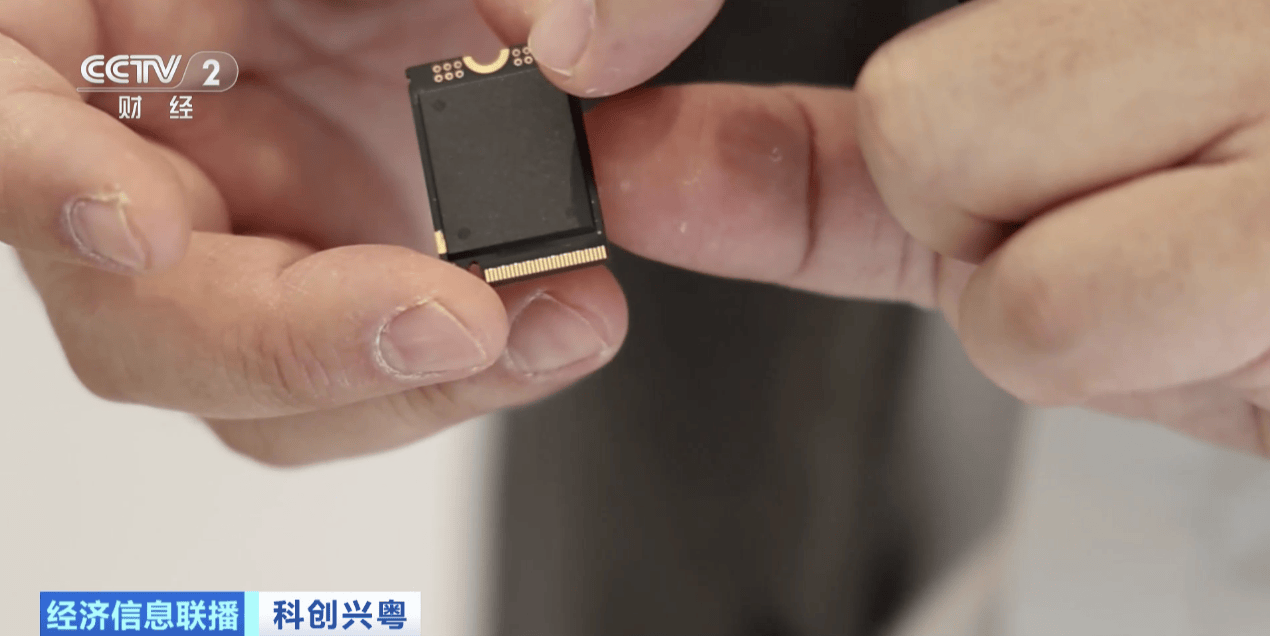
Economic Overview - Guangdong Province's GDP reached 10 trillion 517.698 billion yuan in the first three quarters of 2025, with a year-on-year growth of 4.1%, maintaining the highest economic total in the country [1] - The advanced manufacturing and high-tech manufacturing sectors saw value-added growth of 5.4% and 6.4% respectively [1] Listed Companies - As of November 25, 2025, Guangdong has 887 listed companies in A-shares, ranking first in the country, with 28 companies valued over 100 billion yuan and 3 over 1 trillion yuan [2] - The total revenue of these companies reached 8.03 trillion yuan, with a net profit attributable to shareholders of 636.073 billion yuan [2] - The electronics, computer, electric power, and machinery manufacturing sectors account for 399 companies, representing 44.98% of Guangdong's A-share companies, indicating a strong innovation focus [2] New Listings - Guangdong added 18 new listed companies by November 25, 2025, with 11 in the electronics, computer, electric power, and machinery manufacturing sectors [4] Innovation Ecosystem - Guangdong has fostered a robust innovation and entrepreneurship environment since the reform and opening up, producing 28 A-share companies with a market value exceeding 100 billion yuan [4] - The integration of physical spaces, such as the Shenzhen Qianhai headquarters and the Zhuhai manufacturing base, enhances efficiency and creates a high-performance supply chain network across the Greater Bay Area [6] R&D Investment - Jiangbolong, a company producing high-end main control chips, has achieved a cumulative production of over 100 million units, reflecting the rapid increase in domestic production capabilities [7] - The company "Yingshi Innovation," which focuses on smart imaging, went public on the Sci-Tech Innovation Board in June 2025, reaching a market value of 700 billion yuan on its first day and 1 trillion yuan two months later, showcasing rapid product innovation and development [9] - Yingshi Innovation invested over 1 billion yuan in R&D in the first three quarters of 2025, highlighting the importance of sustained R&D investment for product innovation [9] Robotics Industry - The robotics industry in Guangdong is demonstrating strong cluster effects, with a complete chain from R&D to industrialization present in Shenzhen's "Robot Valley" [10] - Continuous and stable R&D investment is crucial for the growth of technology companies in this sector [10] Financial Ecosystem - Guangdong is committed to creating a virtuous cycle of "technology-industry-finance," promoting multi-level capital market financing for enterprises [12] - From 2020 to 2024, the total R&D expenses of Guangdong's A-share listed companies grew at a compound annual growth rate of over 12%, with R&D expenses reaching 242.853 billion yuan in the first three quarters of 2025, a nearly 10% year-on-year increase [13] Future Development Plans - Shenzhen's recent action plan aims to cultivate 20 more companies with a market value of over 100 billion yuan by 2027, focusing on mergers, acquisitions, and industrial collaboration to position for future industries [14] - The Shenzhen Municipal Financial Office emphasizes attracting patient capital to high-tech sectors, enhancing financial services to support the real economy [16]
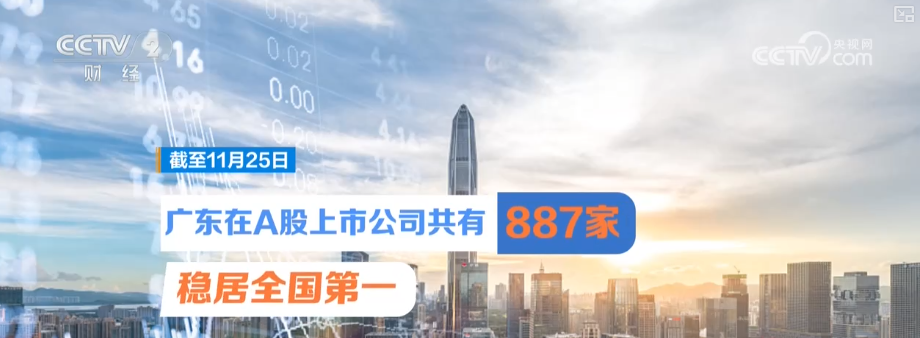
28家千亿市值企业扎根广东!金融与科技共促企业创新成长
Sou Hu Cai Jing· 2025-11-26 15:18
Core Insights - Guangdong has become a hub for innovation and entrepreneurship, producing 28 A-share companies with a market value exceeding 100 billion yuan, reflecting its role as a backbone of China's manufacturing industry and a window into its innovation ecosystem [1] Group 1: Innovation and Market Competitiveness - The development of high-end main control chips, previously dominated by foreign manufacturers, has seen a significant increase in domestic production, with Jiangbolong's self-developed main control chip production surpassing 100 million units [3] - The completion of the Shenzhen-Zhongshan Link has enhanced connectivity between Shenzhen's headquarters and manufacturing bases in the Pearl River West Bank, facilitating a highly efficient supply chain network across the Greater Bay Area [5] - A mature industrial ecosystem in Guangdong allows for rapid commercialization of innovations, enabling companies to transform laboratory breakthroughs into market-ready products [7] Group 2: Company Growth and R&D Investment - Yingstone Innovation, a downstream smart imaging company, achieved a market capitalization of over 700 billion yuan on its debut on the Sci-Tech Innovation Board, reaching 1 trillion yuan within two months, showcasing rapid growth within ten years of establishment [9] - Continuous product iteration at Yingstone requires substantial and stable R&D investment, with over 1 billion yuan allocated for R&D in the first three quarters of 2025, highlighting the importance of talent and funding for innovation [13] - The robotics industry in Guangdong is demonstrating strong cluster effects, with a complete chain from R&D to mass production facilitated by the robust industrial ecosystem in Shenzhen's "Robot Valley" [14] Group 3: Financial Ecosystem and Future Growth - From 2020 to 2024, the total R&D expenditure of A-share listed companies in Guangdong has seen a compound annual growth rate exceeding 12%, with R&D expenses reaching 242.85 billion yuan in the first three quarters of 2025, reflecting a nearly 10% year-on-year increase [16] - Shenzhen's recent action plan aims to cultivate 20 more companies with a market value of 100 billion yuan by 2027, focusing on mergers, acquisitions, and industrial collaboration to position future industries in high-value sectors [18] - The Shenzhen Municipal Financial Office emphasizes attracting patient capital to high-tech sectors, enhancing financial services to support the growth of technology-driven companies and improve the quality of service to the real economy [20]
与大疆交锋升级!影石回应市场份额下降
第一财经· 2025-11-04 15:45
Core Viewpoint - The article discusses the competitive landscape between Insta360 and DJI in the panoramic camera market, highlighting significant changes in market share and financial performance, particularly focusing on the impact of price competition and strategic investments in R&D [3][4]. Market Share Analysis - Recent reports indicate a drastic decline in Insta360's global market share in the panoramic camera segment, dropping from 92% in Q2 to 49% in Q3, while DJI's share rose to 43% [4]. - Another report from Frost & Sullivan shows differing market share figures, with Insta360 and DJI at 75% and 17.1% respectively in Q3, indicating discrepancies in data sources [4]. Price Competition - DJI's entry into the panoramic camera market has intensified price competition, with its new camera priced starting at 2999 yuan, prompting Insta360 to offer discounts on its products [5]. - Insta360's response to this price competition emphasizes the potential for market expansion and the importance of collaborative efforts to increase overall market size [5]. Financial Performance - Insta360 reported a 92.64% year-on-year revenue growth in Q3, but net profit decreased by 15.9%, attributed to increased R&D expenses which rose by 164.81% to 524 million yuan [5]. - The company views net profit as a dynamic variable influenced by various factors, including R&D investments and marketing strategies, rather than a sign of financial distress [5]. Strategic Investments - The company is investing heavily in custom chip development to enhance product performance, which is crucial for handheld imaging devices [6]. - Insta360 is also exploring the drone market, with plans to trial its Antigravity panoramic drone in select regions, although revenue contributions from this segment remain uncertain [6]. Future Outlook - The company aims to strategically enter new markets while ensuring adequate technological preparation, focusing on long-term growth rather than short-term market capture [6].


影石创新(688775):影石创新3Q2025业绩点评
CAITONG SECURITIES· 2025-10-30 09:24
Investment Rating - The investment rating for the company is "Accumulate" (maintained) [2] Core Views - The company reported a revenue of 6.611 billion yuan for the first three quarters of 2025, representing a year-on-year increase of 67.18%, while the net profit attributable to shareholders was 0.792 billion yuan, a decrease of 5.95% year-on-year [7] - The company achieved a revenue of 2.94 billion yuan in Q3 2025, marking a year-on-year growth of 92.64%, with a net profit of 0.272 billion yuan, down 15.9% year-on-year [7] - The company has a strong presence in the market, ranking first in multiple categories during the Double Eleven shopping festival, driven by a diverse product lineup [7] - The company is expected to release the "Yingling Antigravity" panoramic drone in Q4, which is anticipated to open a new growth avenue [7] - Revenue forecasts for 2025-2027 are 9.2 billion, 11.96 billion, and 15 billion yuan respectively, with net profits of 1 billion, 1.5 billion, and 2.06 billion yuan [7] Financial Performance - The company's revenue for 2023 is projected at 3.636 billion yuan, with a growth rate of 78.2%, and net profit of 0.830 billion yuan, reflecting a growth rate of 103.7% [6][8] - For 2024, revenue is expected to reach 5.574 billion yuan, with a growth rate of 53.3%, and net profit of 0.995 billion yuan, with a growth rate of 19.9% [6][8] - The company’s gross margin for Q3 2025 was 47.64%, down 6.69 percentage points year-on-year [7] Research and Development - R&D expenses increased significantly, with a year-on-year growth of 127.02% in the first three quarters of 2025, primarily due to investments in strategic projects such as chip customization and drones [7] Market Position - The company has maintained a leading position in the market, particularly in the action camera segment, and has successfully launched multiple new products to meet market demand [7]
OPPO、vivo杀进手持影像赛道,大疆慌不慌?
Di Yi Cai Jing· 2025-09-30 12:48
Core Insights - The entry of smartphone giants OPPO and vivo into the handheld imaging market is expected to disrupt the current competitive landscape dominated by DJI and other established players [1][2] - The handheld imaging market is currently concentrated, with DJI holding a significant market share, but the competition is intensifying with the arrival of new entrants [1][2] Market Dynamics - The global smart imaging device market is highly concentrated, with the top three players (Insta360, DJI, and GoPro) holding a combined market share of 78.9% [1] - Insta360's market share is projected to grow from 28.4% in 2023 to 35.6% in 2024, while DJI's share is expected to decline from 19.1% to 13.2% [2] Competitive Landscape - OPPO and vivo have initiated new product lines targeting the handheld imaging segment, with plans to launch products by 2026 [1][2] - The entry of these smartphone manufacturers is driven by the growing demand for video equipment, particularly for live streaming [4] Supply Chain Considerations - The cost structure of handheld smart imaging devices shows that 58.5% of the material cost is attributed to camera modules, indicating a significant overlap in the supply chains of smartphones and imaging devices [5] - The strong supply chain capabilities of OPPO and vivo, with over 200,000 offline stores, provide them with a competitive advantage in reaching consumers [5] Technical Challenges - OPPO and vivo face technical challenges in adapting smartphone imaging technology to handheld devices, which have different usage scenarios and requirements [6] - DJI has a substantial technological advantage due to its decade-long R&D efforts, creating strong barriers for new entrants [6] Market Performance - OPPO's market share in the smartphone sector has seen fluctuations, with a decline of 9.8% year-on-year in Q2 2024, indicating potential challenges in maintaining its position [7] Strategic Responses - DJI is responding to the competitive threat by expanding its product line, including the launch of its first panoramic camera and the Nano handheld imaging device [8] - The competition for core raw materials like DSP chips and CMOS sensors is expected to intensify, favoring established players with larger procurement volumes [8]
