捷达新能源车型

Search documents
当场“接招”回应诉求28项
Si Chuan Ri Bao· 2025-10-23 21:57
Core Insights - The meeting in Chengdu focused on addressing urgent concerns from the smart connected vehicle industry, with government officials providing immediate solutions and timelines [1][2] - Chengdu's automotive industry has shown significant growth in 2023, with revenues reaching 118.34 billion and production increasing by 26.4%, particularly in the electric vehicle sector, which saw a production increase of 259.2% [2] - A structured follow-up mechanism was established to ensure that the 28 specific requests from various automotive companies are addressed effectively [3][4] Group 1: Industry Growth - Chengdu's automotive industry achieved revenues of 118.34 billion and a production volume of 629,000 vehicles in the first nine months of 2023, marking a year-on-year revenue growth of 19.6% and production growth of 26.4% [2] - The production of new energy vehicles reached 173,000 units, reflecting a remarkable year-on-year increase of 259.2%, with revenues from this segment totaling 20.08 billion, up 80.9% [2] Group 2: Government Support and Initiatives - The Chengdu government is actively facilitating the transition of traditional fuel vehicles to new energy models, with commitments to support promotional policies for fuel vehicles to allow more time for upgrades [2] - A "1+7+365" service mechanism was introduced to ensure continuous support for the automotive industry, including regular face-to-face meetings and a dedicated service window for addressing issues [4] Group 3: Industry Collaboration - Major automotive companies, including FAW-Volkswagen and FAW-Toyota, expressed the need for deeper collaboration with ride-hailing platforms and taxi companies to enhance market penetration [2] - The Chengdu government has committed to organizing specialized matchmaking events to assist companies in expanding their market presence [2][3]
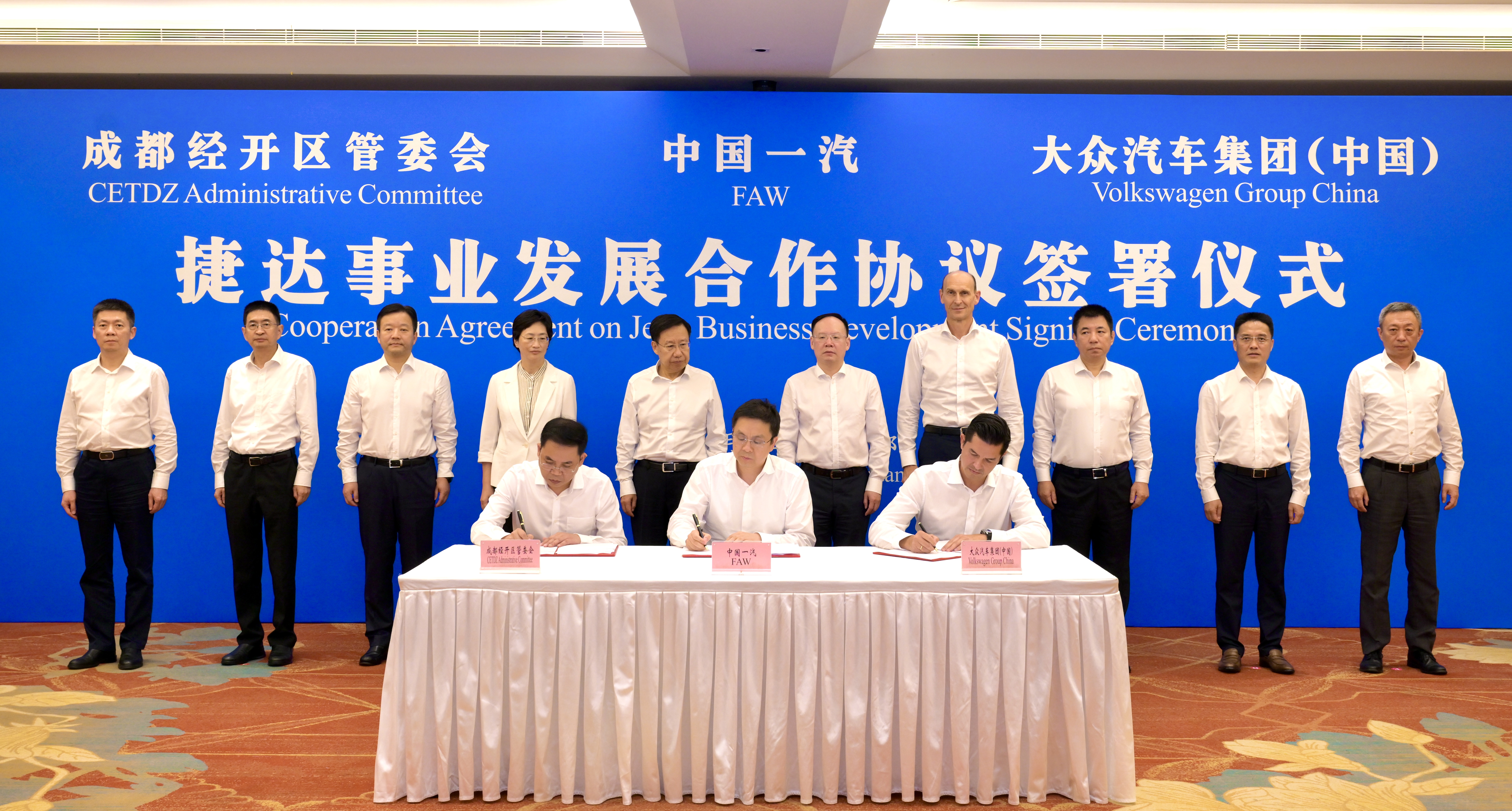
捷达品牌将成立新公司 计划2028年前推出5款全新商品
Zhong Guo Zhi Liang Xin Wen Wang· 2025-09-01 04:47
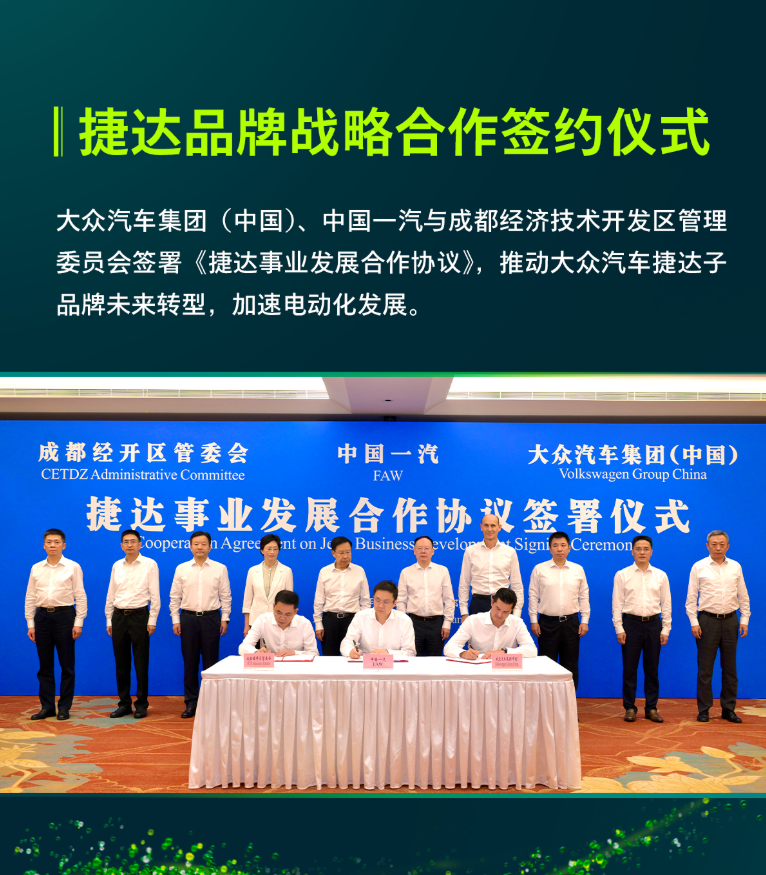
Core Points - A cooperation agreement has been signed between China FAW, Volkswagen Group (China), and Chengdu Economic and Technological Development Zone Management Committee to establish a new company for the Jetta brand, with plans to launch five new models by 2028, including four electric vehicles, the first of which is expected to be released in 2026 [1][3] Group 1 - The new company will fully integrate existing Jetta resources and introduce local capital as new investors, allowing Jetta to continue operating as a sub-brand of Volkswagen while maximizing synergies with Volkswagen Group and FAW-Volkswagen [3] - By 2028, Jetta aims to launch four electric models targeting the entry-level market, featuring competitive electrification, digitalization, and advanced driver-assistance systems (ADAS) [3] - The establishment of the new company aims to leverage regional industrial synergies to accelerate Jetta's electrification process and enhance operational efficiency [5] Group 2 - The cooperation agreement outlines a significant transformation in both the development path of the Jetta brand and the joint venture model [5] - By 2030, the goal for the new Jetta company is to create a trillion-level industrial value chain encompassing research and development, production, supply, and sales, thereby increasing Jetta's market influence in the Sichuan automotive industry [5]

引入本地投资、推4款新能源车型 大众汽车捷达品牌将成立新公司
Zhong Guo Jing Ying Bao· 2025-08-30 16:37
Core Insights - The signing of the "Jetta Business Development Cooperation Agreement" marks the establishment of a new Jetta brand company, with plans to launch four entry-level electric vehicles by 2028 [2][3] - The new Jetta brand company will operate under the Volkswagen Group while maximizing synergies with FAW-Volkswagen [2][4] - The compact vehicle segment is expected to capture about half of the electric vehicle market by 2030, with entry-level models around 100,000 yuan being a significant growth driver [2] Group 1 - Jetta plans to introduce its first electric model in 2026, featuring competitive electric, digital, and advanced driver assistance systems (ADAS) [3] - Volkswagen Group aims to cover the mainstream segment of the electric vehicle market through Jetta's electrification strategy, targeting a broader customer base [3][4] - The Jetta brand's product planning is part of Volkswagen Group's largest electric vehicle initiative in China, with approximately 50 new energy vehicles planned by 2030 [4] Group 2 - The establishment of the new Jetta brand company represents a new paradigm of localized operations for joint ventures in the "Joint Venture 3.0" era [4] - The Jetta brand will leverage local R&D and supply chain systems to gain greater autonomy and operational flexibility, enabling quicker market responses [4][5] - The partnership is seen as a response to China's high-level opening-up policy and aims to enhance local operational efficiency and self-research capabilities [5]
成立捷达品牌新公司 大众汽车集团加速推进电动化布局
Zhong Guo Jin Rong Xin Xi Wang· 2025-08-29 15:23
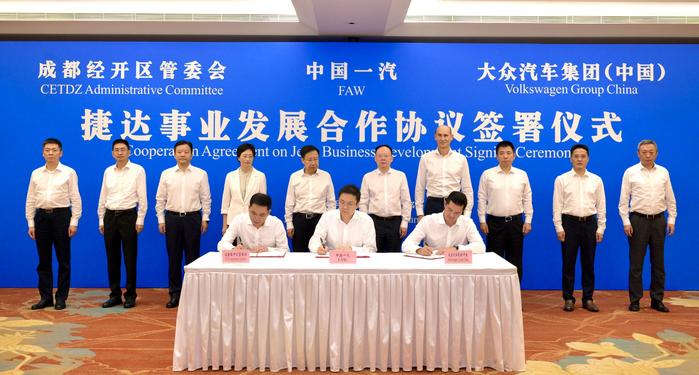
Core Insights - Volkswagen Group (China) has signed a cooperation agreement with China FAW and Chengdu Economic and Technological Development Zone to establish a new company for the Jetta brand, aiming to launch four entry-level electric vehicles by 2028 [1][3][4] Group 1: Electric Vehicle Strategy - The new Jetta brand will focus on the entry-level electric vehicle market, which is expected to grow significantly, with compact models projected to capture about 50% of the electric vehicle market by 2030 [3][4] - The first model is planned for launch in 2026, featuring electric and digital functionalities tailored for the entry-level market, along with advanced driver-assistance systems (ADAS) [4][5] Group 2: Market Positioning - Jetta has a strong legacy in China, having served over 5 million users, and aims to leverage this brand trust to transition into the electric vehicle era [3][6] - The strategy aligns with the growing consumer demand for high-quality, cost-effective, and intelligent mobility solutions in China [3][5] Group 3: Operational Framework - The new Jetta company will be based in Chengdu, integrating existing resources and local investments to enhance operational efficiency and market responsiveness [6][7] - The collaboration aims to create a billion-level industrial value chain by 2030, solidifying Jetta's position in the automotive ecosystem of Sichuan Province and Southwest China [6][7] Group 4: Broader Implications - This initiative is part of Volkswagen Group's broader strategy to introduce approximately 50 new energy vehicles in China by 2030, including 30 fully electric models [5][6] - The partnership reflects a commitment to localize operations and enhance technological capabilities, contributing to the high-quality transformation of the automotive industry in the region [7]

燃油老将转身:捷达瞄准十万级新能源市场,四款新车在路上
Guan Cha Zhe Wang· 2025-08-29 04:37
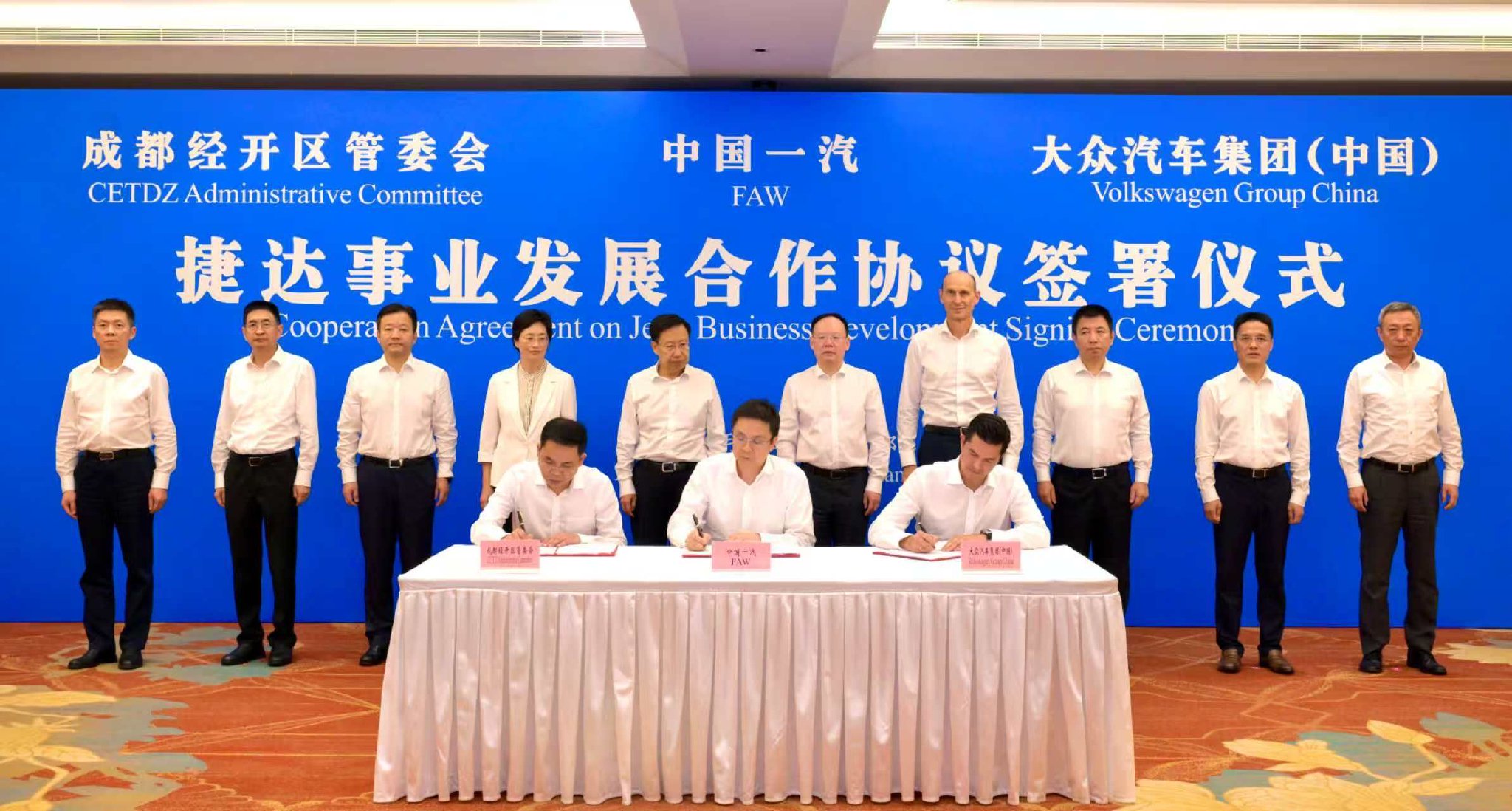
Core Insights - Jetta brand plans to launch four new energy vehicles by 2028, with the first model expected to be released in 2026 [1][4] - The initiative is part of a broader strategy by Volkswagen Group (China) to capitalize on the growing entry-level electric vehicle market in China [2][3] - The compact vehicle segment is projected to account for about half of the new energy vehicle market by 2030, with entry-level models around 100,000 yuan being key growth drivers [3] Company Strategy - Volkswagen Group (China) aims to electrify the Jetta brand, introducing dedicated technology solutions for the entry-level market [2][4] - The Jetta brand's product plan is a significant part of Volkswagen's largest-ever new energy product push in China, with plans to launch around 50 new energy vehicles by 2030, including approximately 30 pure electric models [4] - A new company will be established to support the electrification transition, integrating existing resources and attracting local investment to enhance market responsiveness [5] Market Expansion - Jetta plans to expand into overseas markets, starting with Central Asia, leveraging China's manufacturing advantages and competitive products [4][5] - The new Jetta company aims to create a trillion-level industrial value chain covering research, production, supply, and sales by 2030 [5]
政企协同创新模式,捷达加速布局智能电动赛道
Xin Lang Cai Jing· 2025-08-29 02:24
Core Viewpoint - China is embracing a new round of development opportunities through a higher level of institutional opening-up, particularly in the automotive industry, which is crucial for high-quality manufacturing and the implementation of the "dual circulation" development pattern [1] Group 1: Partnership and Collaboration - The partnership between China FAW, Volkswagen Group (China), and Chengdu Economic and Technological Development Zone represents a significant step in China's high-level opening-up and international capacity cooperation [1][3] - This collaboration breaks traditional joint venture models by enabling resource integration and advantage complementarity through government-enterprise synergy [3] Group 2: Product Development and Innovation - The Jetta brand plans to launch five new models by 2028, with four being new energy vehicles, the first of which is expected to be released in 2026 [4] - The first Jetta electric vehicle will feature FAW-Volkswagen's self-developed SOA electronic and electrical architecture, showcasing the brand's commitment to smart mobility and innovation [4] Group 3: Localized Operations and Autonomy - The new Jetta company will integrate existing resources and leverage local R&D and supply chain systems, enhancing its decision-making autonomy and operational flexibility [5] - This localized independent operation model allows Jetta to respond more quickly to market demands and optimize products for the Chinese market [5] Group 4: Economic Impact and Employment - Chengdu Economic and Technological Development Zone has established a complete automotive industry ecosystem, housing 12 vehicle manufacturers and over 300 key component suppliers [6] - The Jetta brand aims to create a billion-level automotive industry ecosystem, which is expected to generate tens of thousands of jobs in the region [6] Group 5: Talent Acquisition and Retention - The Chengdu government offers incentives for high-end talent, including a 5% salary reward for management positions earning over 400,000 yuan annually and subsidies for master's and doctoral graduates [7] - There is a significant demand for operational staff, with salaries for automotive operators reaching 6,000-7,000 yuan per month and specialized engineering positions offering up to 30,000 yuan [7] Group 6: Strategic Vision and Market Expansion - The collaboration serves as a model for localized operations in the automotive industry, leveraging foreign technology while utilizing local government resources for mutual benefit [9] - Jetta's strategy of "deepening local operations and radiating overseas" aligns with the overall development trend of China's automotive industry and aims to inject new momentum into Chengdu as a key node in the "Belt and Road" initiative [9]
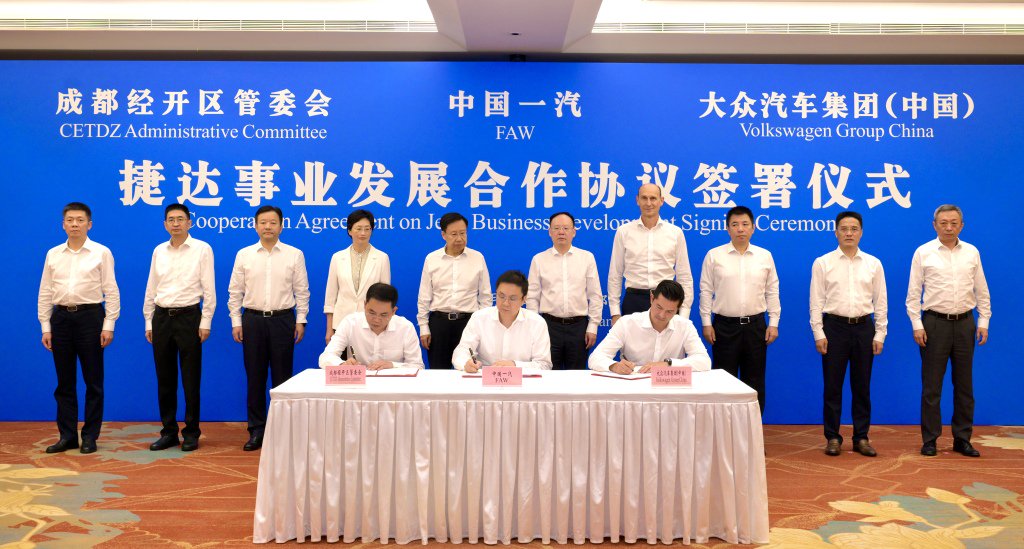
大众汽车携手中国一汽推进捷达电动化转型 加速布局入门级智能电动出行市场
Zheng Quan Ri Bao Wang· 2025-08-29 01:46
Group 1 - The core viewpoint of the news is that Volkswagen Group, in collaboration with China FAW Group and Chengdu Economic and Technological Development Zone, has signed a cooperation agreement to launch four new energy vehicles under the Jetta brand by 2028, targeting the entry-level market [1][2] - The first model is expected to be launched in 2026, featuring competitive electric, digital, and advanced driver-assistance systems (ADAS) while maintaining strong price competitiveness [2] - Volkswagen Group plans to introduce approximately 50 new energy vehicles in China by 2030, including around 30 pure electric models, marking its largest scale of new energy product push in China [2] Group 2 - Chengdu is recognized as a key automotive hub in Southwest China, with a strong new energy vehicle industry cluster, playing a significant role in the electrification transformation of China's automotive industry [3] - A new Jetta company will be established to integrate existing resources and attract local investment, enhancing regional industrial synergy and speeding up market response [3] - The goal for the new Jetta company is to create a trillion-yuan industry value chain by 2030, further deepening the brand's integration within the automotive ecosystem in Sichuan Province and solidifying its position as a leading enterprise in the region [3]
一汽、大众合作再升级:捷达成立新公司 引入成都投资
Zhong Guo Jing Ji Wang· 2025-08-28 13:22
Core Insights - FAW Group, Volkswagen Group (China), and Chengdu Economic and Technological Development Zone have signed a cooperation agreement to advance the Jetta brand's electrification and enhance its entry-level smart electric vehicle market strategy [1][2] - The Jetta brand plans to launch five new models by 2028, including four electric vehicles, with the first model expected to debut in 2026 [1][3] - Volkswagen aims to cover the mainstream segment of the new energy vehicle market in China, with a target of introducing approximately 50 new energy vehicles by 2030, including around 30 pure electric models [2][3] Company Strategy - The new company for the Jetta brand will integrate existing resources and local investments to enhance regional industrial synergy and market responsiveness [1] - Volkswagen Group emphasizes a "For China, In China" strategy, aiming to leverage local development capabilities and advanced technologies to meet diverse consumer needs in the entry-level electric vehicle market [2] - The Jetta brand's electrification is part of Volkswagen's broader strategy to achieve a leading position in the new energy vehicle market in China [2][3] Market Positioning - The compact vehicle segment is projected to capture about half of the new energy vehicle market in China by 2030, with entry-level models priced around 100,000 yuan expected to drive significant growth [3] - The establishment of a billion-level industrial value chain for the new Jetta company aims to strengthen its position as a leading player in the automotive industry in Sichuan Province and the Southwest region [3]

大众联手一汽、成都成立新公司,捷达电动转型剑指千亿产业链
Zhong Guo Qi Che Bao Wang· 2025-08-28 12:42
Core Viewpoint - The signing of the "Jetta Business Development Cooperation Agreement" marks a strategic partnership between Volkswagen Group (China), FAW Group, and Chengdu Economic and Technological Development Zone to establish a new Jetta brand company, aiming to develop Jetta into a leading enterprise in Sichuan's automotive industry while promoting its electrification transformation [4][5][8]. Group 1: Company Strategy and Development - The new Jetta brand company will integrate existing resources and attract local investment to enhance its market position in Sichuan [4][5]. - Jetta plans to launch its first new energy vehicle by 2026 and aims to have four entry-level new energy models by 2028, focusing on the entry-level market segment [4][6]. - The establishment of the Jetta brand company reflects Volkswagen Group's commitment to deepening its "In China, For China" strategy and innovating joint venture cooperation models [8][9]. Group 2: Market Position and Product Planning - The compact car segment is expected to account for about half of China's new energy vehicle market by 2030, with entry-level models priced around 100,000 yuan being key growth drivers [6]. - Jetta's electrification strategy aims to leverage its historical success in the affordable fuel vehicle market, having sold over 5 million units in China [6][10]. - Volkswagen Group plans to introduce approximately 50 new energy vehicles in China by 2030, including around 30 pure electric models, creating a comprehensive product matrix from entry-level to luxury vehicles [6][10]. Group 3: Collaboration and Innovation - The partnership with FAW Group and local authorities aims to enhance local operational efficiency and strengthen research and development capabilities, contributing to the high-quality transformation of Sichuan's automotive industry [7][9]. - The new Jetta company will adhere to Volkswagen's global standards while allowing local teams the flexibility to make decisions, improving market responsiveness to consumer needs [9]. - Volkswagen Group has invested over 3.5 billion euros in Hefei to establish an intelligent connected vehicle innovation center, focusing on local customer demands through collaborations with domestic companies [10].