数字化管理系统

Search documents
卢斌观察:农业科技驱动的长期结构趋势
Sou Hu Cai Jing· 2025-12-27 10:47
Core Insights - The modernization of agriculture in China is being driven by advancements in land resource utilization, core germplasm research capabilities, and agricultural digital infrastructure, forming a new framework for the agricultural technology system [1] - The comprehensive utilization of saline-alkali land is being promoted through collaborative innovation of new varieties, technologies, and systems, transforming "white deserts" into "high-efficiency farmland," which is crucial for food security and presents new structural opportunities in the agricultural technology industry [1] Group 1 - The Yellow River Delta Agricultural High-tech Industry Demonstration Zone is a key area gathering research forces from breeding, ecological restoration, agricultural machinery, and smart agriculture, serving as a testing ground for salt-tolerant varieties and a platform for the transformation of agricultural technology achievements [1] - Research teams have made breakthroughs in breeding, overcoming the bottleneck of achieving both high yield and quality, and have developed new varieties of soybeans, rice, and wheat suitable for saline-alkali land [1] - The trend of agricultural technology deeply integrating into production is evident, with systematic technology integration promoting soil quality improvement [1] Group 2 - Researchers have been conducting targeted experiments to enhance the stress resistance, yield, and regional adaptability of plants in saline-alkali areas, leading to significant yield increases for certain salt-tolerant soybean varieties [3] - The agricultural provinces like Shandong are leveraging smart agriculture technologies to elevate the value of traditional industries, incorporating intelligent greenhouses, water-saving irrigation, pest monitoring, and digital management across the entire production chain [3] - The application of advanced equipment and real-time feedback from big data and IoT systems in production has improved planting precision and enhanced the competitiveness of agricultural products in the market [3] Group 3 - The changes in the agricultural technology industry chain are generating increasing demand for market observation, with users seeking a systematic understanding of the structural factors, policy directions, and cyclical characteristics behind agricultural technology innovation [5] - Professional investment advisory firms are positioned to provide clearer industry insights based on public data and logical analysis of industry trends, particularly in the context of agricultural technology driving new productive forces [5] - The company, as a licensed securities advisory institution, emphasizes compliance and objective analysis in its investment advisory services, focusing on agricultural technology and other structural industries [5]


为企业铺就数字化之路
Liao Ning Ri Bao· 2025-12-18 01:45
Core Insights - The articles highlight the significant impact of digital transformation on manufacturing companies in the Yingkou Free Trade Zone, emphasizing improvements in production efficiency and cost reduction through the adoption of digital management systems [1][2][3] Group 1: Digital Transformation Benefits - Yingkou Forging Machine Tool Co., Ltd. has implemented a digital management system that allows employees to access production data via mobile devices, resulting in a nearly 10% increase in production efficiency [1] - The introduction of a digital management system at Xianghong Automatic Automobile Repair Equipment (Liaoning) Co., Ltd. has led to improved production efficiency and reduced energy costs, allowing for better oversight of operations [2] - The digital management system has reportedly increased production efficiency by over 15%, improved equipment utilization by over 5%, and shortened production cycles by 11% [3] Group 2: Support for Digital Economy - The Yingkou Free Trade Zone is establishing an Industrial Internet Digital Empowerment Center to provide comprehensive services, including digital diagnostics and training, to over 100 companies [2] - The Yingkou Free Trade Zone has developed policies to support digital transformation, focusing on optimizing digital infrastructure and attracting quality digital economy enterprises [3] - A practical training base has been established to educate students in logistics, supply chain, and electrical engineering, promoting the integration of talent, industry, and innovation [3]
中企“出海”面临系统重构,如何规避合规风险
第一财经· 2025-12-16 05:14
Core Viewpoint - Chinese enterprises are undergoing a transformation in their internationalization process, evolving from low-value manufacturing to product export and now to brand globalization, which presents new challenges in compliance and market adaptation [3]. Group 1: System Reconstruction and Core Logic Changes - The shift in internationalization requires a comprehensive "system reconstruction" across three dimensions: moving from "single store output" to "platform-driven," from "experience-based decision-making" to "data-driven decision-making," and from "individual operations" to "ecosystem collaboration" [5]. - Companies must ensure smooth flows of capital, information, and logistics in foreign markets, which demands enhanced platform coordination and compliance capabilities [5]. - The current logic of "going global" emphasizes high value through brand and innovation, integrating cultural elements and local adaptations rather than relying solely on low-cost manufacturing [6][7]. Group 2: Compliance Risk Management - The challenges faced by Chinese companies in international markets vary significantly by region, with compliance and operational hurdles being prominent [9]. - For instance, regulatory requirements in the U.S. have extended the approval and renovation periods for new stores, while markets like Malaysia and Thailand allow for quicker expansion but present their own local operational challenges [9][10]. - Successful international expansion hinges on adapting management practices to local conditions and leveraging digital tools to optimize supply chains [10]. Group 3: Digitalization and Market Adaptation - The need for a unified digital management system is critical for managing consumer behavior, cash flow, and supply chain operations across different markets [11]. - The penetration of online ordering and electronic payments in Southeast Asia remains low, complicating the integration of local payment systems for cross-border operations [11]. - New Chinese retail and restaurant brands are leveraging their inherent digital capabilities and robust supply chain systems to establish themselves as potential global leaders [12].

出海进入“深水区”,数字变革引领中国品牌全球化启动全方位“系统重构”
Guo Ji Jin Rong Bao· 2025-12-14 03:44
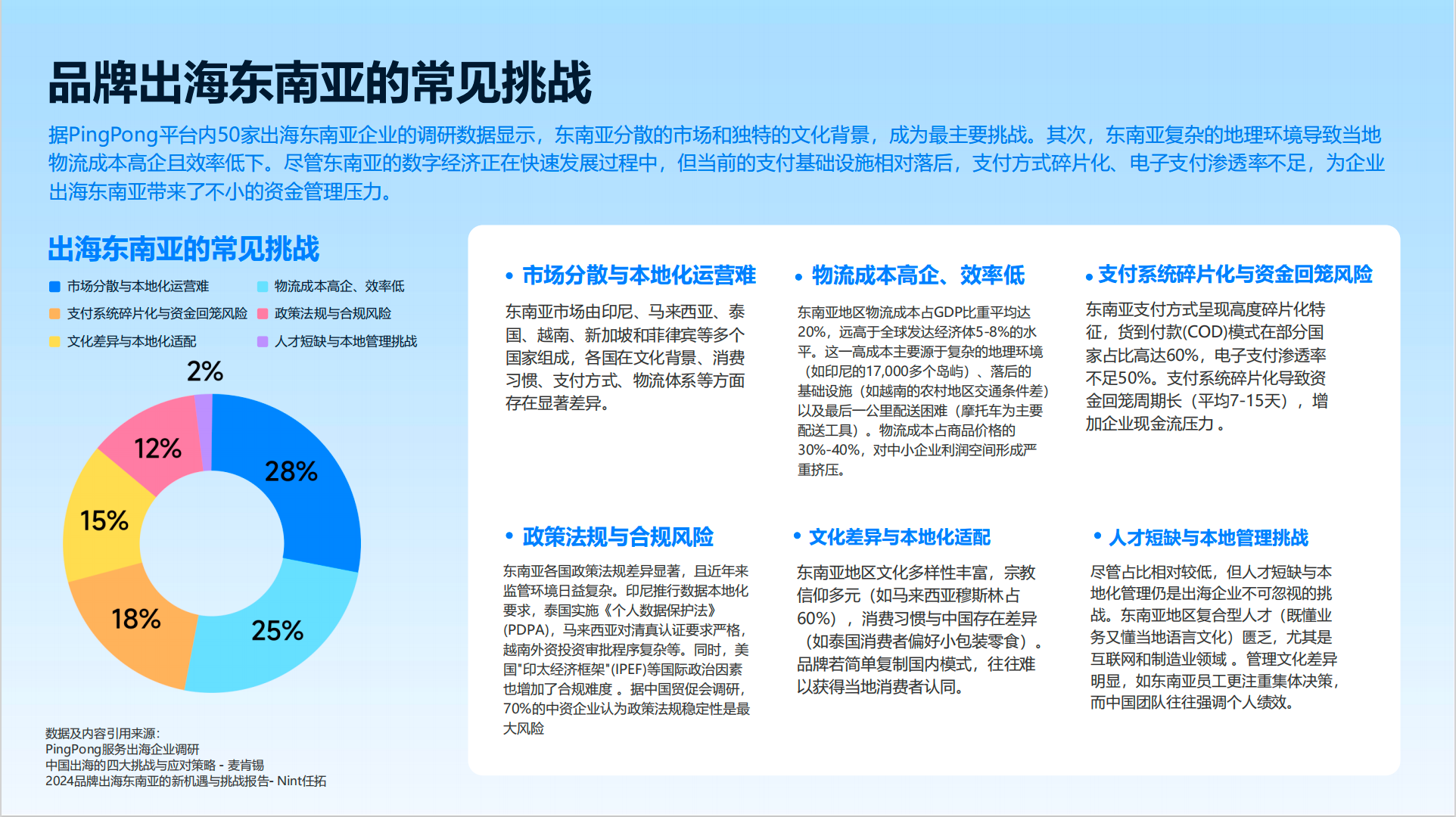
Group 1 - The core viewpoint is that the globalization of Chinese brands is transitioning from superficial competition in products and marketing to deeper challenges in technology empowerment and compliance infrastructure [1] - The restaurant and retail chain industry is moving from a simple sales model (1.0) and single-store output (2.0) to a digitally-driven model (3.0), where digital infrastructure is crucial for scaling [1] - Key challenges for restaurant brands in global expansion include unified POS systems, global supply chain data integration, and cross-border team collaboration management [1] Group 2 - Southeast Asia presents significant challenges due to diverse cultural backgrounds, consumption habits, payment methods, and logistics systems across countries [3] - Regulatory and compliance risks are heightened in Southeast Asia, with countries like Indonesia enforcing data localization and Thailand implementing personal data protection laws [3][4] - The penetration rates for online ordering and electronic payments in Southeast Asia are low, with local brands still relying heavily on cash payments, complicating cross-border operations for chain brands [4] Group 3 - A global digital management system can provide data insights across consumer purchasing behavior, cash flow management, and supply chain management, facilitating brand expansion and localization [4] - PingPong plans to invest in optimizing digital payment infrastructure focused on efficiency and security, enhancing global trade digital infrastructure to empower Chinese brands [4]
厦门紧抓“家门口”金砖盛会机遇,厦企加速“出海”
Sou Hu Cai Jing· 2025-09-18 04:45
Group 1 - The adoption of electric tapping knives and autonomous rubber tapping robots is addressing labor shortages and management difficulties in the natural rubber harvesting industry in BRICS countries [2] - The BRICS Forum showcased innovations in smart manufacturing, industrial design, and digital industries, emphasizing the importance of collaboration and knowledge sharing among member countries [2][3] - Nigeria is focusing on a new industrial policy that integrates digital technology transfer, research cooperation, renewable energy, and talent development, highlighting the significance of innovation in transforming industries [3] Group 2 - Industrial design is crucial for product innovation and collaboration in manufacturing among BRICS nations, with suggestions to integrate design resources and market channels for effective results [3][4] - Chinese companies are leading in technological innovation, with examples such as the development of an industrial drone system and a smart passenger service system that enhances efficiency and has potential for significant market application [4] - BRICS countries account for approximately 30% of the global economy and nearly half of the world's population, emphasizing their role in driving innovation and economic growth [4] Group 3 - Xiamen enterprises are leveraging the BRICS summit to enhance their global presence, focusing on digitalization and smart solutions in the stone industry to improve production efficiency [5] - Xiamen Stone City Group is implementing a digital twin factory in Saudi Arabia, utilizing AI algorithms and automated production lines to address industry challenges [5] - Xiamen Golden Dragon Bus Company has exported nearly 70,000 buses to BRICS countries, showcasing its commitment to high-quality products and innovative cooperation [6] Group 4 - Since the BRICS summit in Xiamen in 2017, the city's trade with BRICS nations has significantly increased, with total import and export values reaching 662.72 billion yuan by July 2025 [6]

聚焦多条产业链,《济南优势工业产品目录》将持续扩充
Qi Lu Wan Bao Wang· 2025-06-16 14:36
Core Viewpoint - Jinan is enhancing its industrial supply to boost consumption by focusing on 13 iconic industrial chains and 34 key industrial chains, expanding the "Jinan Advantage Industrial Product Directory" to promote quality supply [1][2] Group 1: Industrial Product Directory - The "Jinan Advantage Industrial Product Directory" has been published six times since its first release in 2020, showcasing 3,997 advantageous industrial products from 978 enterprises across 11 major fields [1] - The directory includes various sectors such as electronic information (210 enterprises), machinery and equipment (394 enterprises), metallurgy and metals (116 enterprises), food and beverages (83 enterprises), chemicals and new materials (77 enterprises), and more [1] Group 2: Selection Standards - The selection criteria emphasize "qualification recognition, compliance preconditions, and dynamic management," focusing on new industrial products and quality enterprises to ensure market advantage and social responsibility [2] - The directory promotes innovative products that integrate AI, IoT, and big data technologies, including advanced items like bionic robots and digital management systems [2] Group 3: Promotion Channels - Promotion of the directory is conducted through various channels, including the "Qianhui Enterprise" online platform, media outlets, and social media, as well as offline events and exhibitions, distributing nearly 10,000 copies to assist enterprises in market expansion [2] Group 4: Future Plans - Jinan will continue to focus on the 13 iconic industrial chains and 34 key industrial chains, enhancing the selection of "chain boutique" products and improving supply-demand matching and market promotion efforts [2]
养老院“闯三关”:消防、预付款监管和现金流
经济观察报· 2025-06-16 10:36
Core Viewpoint - The current competition in the elderly care industry is intense, leading companies to focus on maintaining existing scale while waiting for market conditions to improve before seeking further expansion opportunities [1][5]. Market Conditions - Investment enthusiasm for expansion among elderly care institutions has decreased, with some small and medium-sized institutions and large real estate projects seeking to sell [2]. - In the first half of the year, elderly care institutions faced tightening cash flow and declining profit margins, alongside adapting to regulatory challenges [3]. Regulatory Environment - Many elderly care facilities underwent intensive fire safety inspections, requiring significant investments in infrastructure upgrades to meet safety standards [4]. - The transition to a strong regulatory model for prepayment systems has increased cash flow pressure on institutions, as fees must now be managed in a tripartite account [4][12]. Financial Challenges - The tightening of prepayment regulations has led to cash flow impacts, particularly for small and non-chain institutions, which may face risks of funding shortages [14]. - Many elderly care institutions are struggling to reach the breakeven point, with occupancy rates in Beijing reported at only 38%, necessitating a minimum of 50% for profitability [10]. Technological Advancements - Companies like Jiurucheng are investing in digital management systems, with approximately 60 million yuan allocated to enhance operational efficiency and standardization [6][21]. - The introduction of artificial intelligence technologies is being explored to improve operational efficiency and reduce long-term costs, despite initial investments [20][21]. Workforce Development - The industry is actively recruiting young talent to ensure long-term sustainability, with management programs being established to nurture new employees [19][20]. - The lack of management personnel in the elderly care sector presents significant growth opportunities for young professionals [19].