
实体经济与数字经济融合

Search documents
乘势而上 攻坚决胜 上海未来五年这样干!
Xin Lang Cai Jing· 2026-02-07 12:33
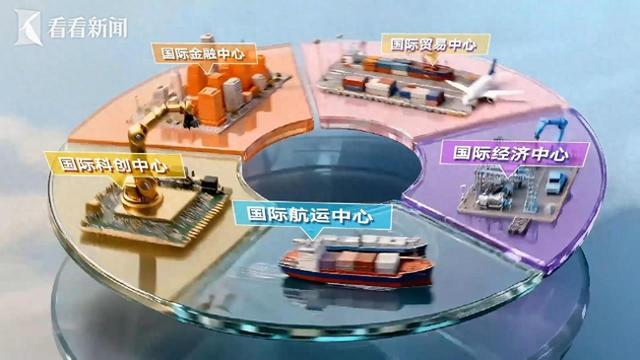
Core Viewpoint - The Shanghai Municipal People's Congress has approved the 15th Five-Year Plan, marking the beginning of a comprehensive implementation phase for Shanghai's development blueprint over the next five years. The economic growth target is set at around 5% during this period, with a focus on enhancing the core functions of five major centers: economy, finance, trade, shipping, and technology innovation [1][16]. Economic Development - Shanghai aims to enhance the overall competitiveness of its modern industrial system, targeting an annual growth rate of over 10% for the manufacturing output of three leading industries: integrated circuits, biomedicine, and artificial intelligence during the 15th Five-Year Plan [3]. - The total output value of strategic emerging industries in Shanghai's manufacturing sector is expected to exceed 50% of the total industrial output by 2030 [3]. Financial Sector - Shanghai plans to explore the pilot launch of RMB foreign exchange futures trading and actively promote the establishment of an international financial asset trading platform, aiming for a total financial market transaction volume exceeding 450 trillion yuan by 2030 [5]. International Trade - The city will strengthen its hub functions and expand offshore trade, with a target of achieving an average annual offshore trade volume of over 100 billion USD in the next five years [7]. - Shanghai aims to collaborate in building a world-class port and airport cluster in the Yangtze River Delta, with a goal of reaching a 55% water-to-water container transfer ratio at Shanghai Port by 2030 [7]. Technological Innovation - The plan emphasizes enhancing original innovation and tackling key core technologies, particularly in fields such as embodied intelligence biomanufacturing and brain-computer interfaces, while accelerating the development of disruptive technologies like photonic chips and controlled nuclear fusion [9]. Social Development - The plan includes specific measures to improve residents' well-being, such as increasing the proportion of nursing beds in elderly care institutions to over 75% and enhancing support for childbirth and parenting services [11][20]. - Shanghai aims to provide 250,000 to 270,000 units of affordable rental housing to attract talent and reduce living costs [13]. Cultural and Tourism Development - The city will focus on cultivating its cultural brand and aims to become a world-renowned tourist city, targeting over 50 million inbound tourists by 2030 [14]. Summary of Goals - The GDP growth target is set at around 5%, with a focus on maintaining the industrial value-added ratio above 20% and ensuring that strategic emerging industries account for over 50% of the total [16]. - The digital economy's core industry is expected to contribute around 20% to the regional GDP by 2025, up from 14% [18].

山西省人大代表王渊:支持临汾打造省级传统产业数字化赋能示范区
Xin Lang Cai Jing· 2026-02-03 11:31
Core Viewpoint - The proposal to establish Linfen City as a "provincial-level traditional industry digital empowerment demonstration zone" aims to enhance the integration of the real economy and digital economy, creating replicable and promotable regional transformation experiences [1][3]. Group 1: Digital Transformation in Linfen - Linfen City has made significant progress in digital transformation within traditional industries, particularly in coal, metallurgy, and equipment manufacturing, with companies like Huaxiang Group and Jinnan Steel leading the way [3]. - Huaxiang Group has implemented the "HBS Intelligent Manufacturing Transformation System," which has notably improved operational efficiency and profitability, establishing a differentiated core competitiveness [3]. - By 2025, Huaxiang Group expects to host over 500 visits from enterprises both within and outside the province, indicating a growing recognition of Linfen as a hub for intelligent manufacturing [3]. Group 2: Benefits of the Demonstration Zone - The establishment of the demonstration zone will allow Linfen to systematically summarize experiences in policy guidance, ecological construction, enterprise implementation, and effectiveness evaluation, creating a comprehensive methodology for digital empowerment in traditional industries [4]. - This initiative is expected to attract high-tech enterprises and talent in the digital field, further enhancing the local industry's high-quality development and providing a reference model for similar resource-based regions and old industrial bases across the country [4].


去年陕西民营经济增加值占比50.3%
Sou Hu Cai Jing· 2026-01-24 00:25
Core Insights - By 2025, the added value of the private economy in Shaanxi is projected to reach 50.3%, an increase of 0.8 percentage points compared to 2024 [2] - Over 80% of the province's industrial enterprises above designated size are private enterprises [2] - The government has awarded procurement contracts worth 694.07 billion yuan to small and medium-sized enterprises, accounting for 78.3% of the total contract amount [2] Support Policies - Shaanxi has implemented various supportive policies for private enterprises, including tax reductions for small-scale taxpayers and individual businesses, as well as VAT deductions for certain sectors [2] - The province offers loan interest subsidies for new private investment projects and encourages the transformation and upgrading of traditional industries [2][3] - Policies also include support for professional technical talent evaluation and reduced utility costs for childcare services [2] Facilitation Measures - The province has relaxed conditions for establishing collective households and included talent markets in the establishment scope to facilitate personnel settlement [3] - Reforms have been made to streamline land supply and registration processes, enhancing efficiency for businesses during migration registration [3] - The government has introduced a "one-stop" service for business licenses and permits, simplifying the approval process for eligible enterprises [3] Investment Scenarios - The first batch of 22 application scenarios covers key areas such as industry application, social governance, and cultural heritage protection, with 16 scenarios having defined investment budgets or partial funding [4] - These scenarios include significant projects like the "Chang'an Twelve Hours" immersive cultural performance complex, which has a total planned investment of 300 million yuan [4] - The investment in these scenarios is expected to yield substantial economic and social benefits, with nearly 900 million yuan involved [4]
权威发布|人工智能产业亮点纷呈
Ren Min Ri Bao· 2026-01-22 06:21
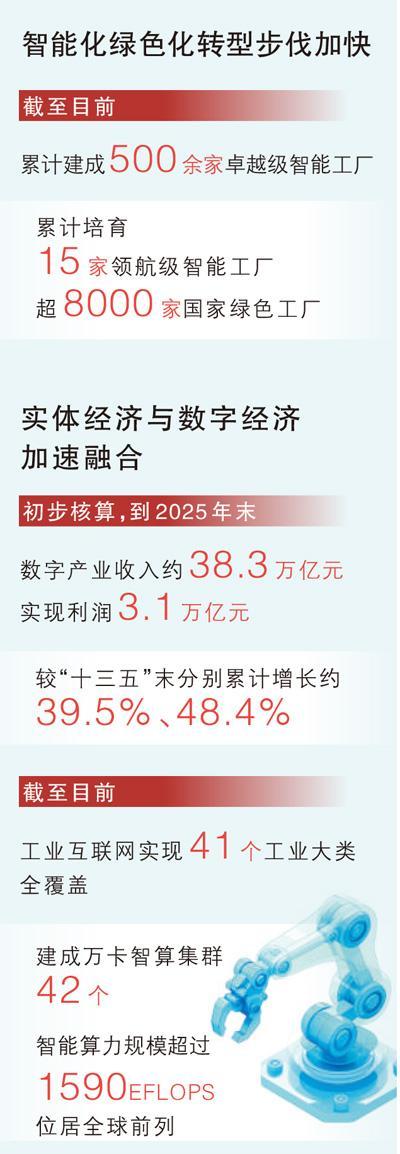
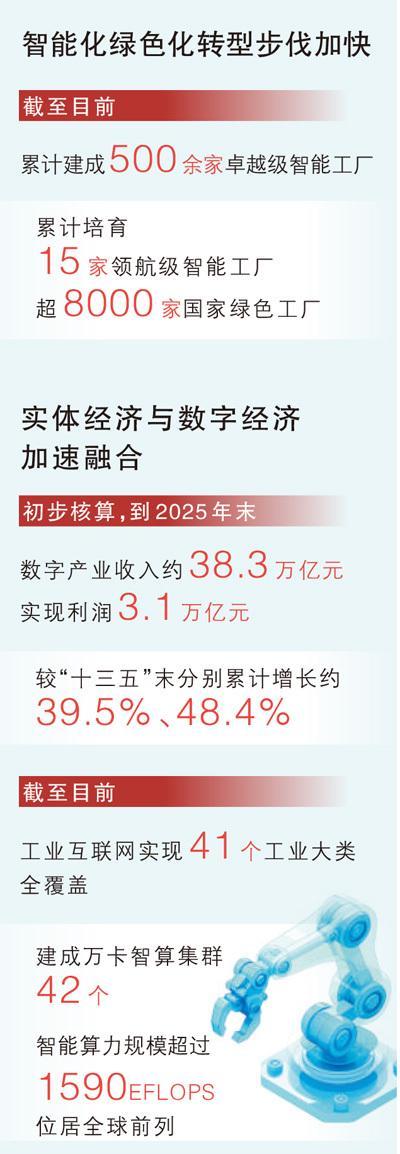
Group 1: Industrial Transformation and Development - The pace of intelligent and green transformation is accelerating, with over 500 exemplary smart factories and 15 leading smart factories established, alongside more than 8,000 national green factories [1][8] - By the end of 2025, the industrial added value of large-scale industries is expected to grow by 5.9% year-on-year, with the manufacturing sector maintaining a stable share of GDP and remaining the largest globally for 16 consecutive years [5] - The integration of new production capabilities is driving high-quality industrial development, with significant advancements in materials and technologies such as perovskite materials, permanent magnet materials, and advanced computing [6][7] Group 2: Digital Economy and Industrial Internet - The digital economy is projected to generate approximately 38.3 trillion yuan in revenue and 3.1 trillion yuan in profit by the end of 2025, reflecting growth rates of 39.5% and 48.4% compared to the end of the 13th Five-Year Plan [11] - The industrial internet has achieved full coverage across 41 industrial categories, with over 1 billion industrial devices connected to key platforms [2][11] - The establishment of 42 intelligent computing clusters and over 483.8 million 5G base stations supports the deep integration of the digital economy with the real economy [11][12] Group 3: Consumer Goods and Market Dynamics - The consumer goods industry is expected to see a 3.7% year-on-year increase in added value by 2025, accounting for 26.1% of all large-scale industries [13] - Efforts to optimize supply and demand have led to the launch of various promotional activities, resulting in the introduction of numerous innovative products across different sectors [13][14] - The brand strategy aims to enhance domestic consumption, with initiatives to promote traditional crafts and create new consumption scenarios [13][14]
工业和信息化领域对经济增长贡献超四成 人工智能产业亮点纷呈
Ren Min Ri Bao· 2026-01-22 00:02
Core Insights - In 2025, China's industrial added value is expected to grow by 5.9% year-on-year, with the manufacturing sector maintaining a stable share of GDP, and the manufacturing scale likely to remain the largest globally for 16 consecutive years [1] Group 1: Industrial and Economic Growth - The industrial and information technology sectors are projected to contribute over 40% to economic growth [1] - The added value of integrated circuits and electronic materials increased by 26.7% and 23.9% respectively, while industrial robot production rose by 28% [3] - New energy vehicle sales reached 16.49 million units, marking a year-on-year growth of 28.2% [3] Group 2: Technological Advancements - The global AI technology is accelerating innovation and integration across various industries, with significant advancements in materials like perovskite and permanent magnet materials [2] - New products such as intelligent robots and biomanufacturing products are rapidly entering the market, supported by new scenarios like "5G+" and "industrial internet+" [2] Group 3: Smart and Green Transformation - The first batch of 15 leading factories has been showcased, achieving an average production efficiency increase of 29% and a reduction in product defect rates by 47% [4] - The average renewable energy utilization rate for national green computing facilities is expected to exceed 70% by 2025 [5] Group 4: Digital Economy Integration - By the end of 2025, China's digital industry revenue is projected to reach approximately 38.3 trillion yuan, with profits of 3.1 trillion yuan, reflecting growth rates of 39.5% and 48.4% respectively compared to 2020 [6] - The number of connected industrial devices has surpassed 100 million, with significant improvements in production capacity and quality due to the integration of digital technologies [7] Group 5: Consumer Goods Sector - The added value of the consumer goods industry is expected to grow by 3.7% year-on-year, accounting for 26.1% of total industrial output [8] - Initiatives to enhance supply and meet consumer demand have led to the release of numerous innovative products and the establishment of a quality safety traceability system for infant formula [8][9]
人工智能产业亮点纷呈
Xin Hua Wang· 2026-01-21 23:41
Core Insights - The Chinese industrial economy is projected to achieve a year-on-year growth of 5.9% in industrial added value by 2025, with manufacturing's contribution to GDP remaining stable and maintaining its position as the world's largest manufacturing sector for 16 consecutive years [1] Group 1: AI Industry Development - The global AI technology is accelerating innovation and integration across various sectors, with China's AI industry showing significant vitality and innovation since the 14th Five-Year Plan [2] - High-quality innovative results are emerging, including advancements in perovskite materials, permanent magnet materials, and power batteries, with technologies like quantum computing and brain-computer interfaces expanding into new fields [2] Group 2: Competitive Industries - Key industries such as integrated circuits and electronic materials have seen substantial growth, with added value increasing by 26.7% and 23.9% respectively, while industrial robot production rose by 28% [3] - New energy vehicle sales reached 16.49 million units, marking a year-on-year increase of 28.2% [3] Group 3: Smart and Green Transformation - The initiative aims to create "Chinese models" of smart manufacturing, with 15 pilot factories showcasing high efficiency and quality, achieving an average production efficiency increase of 29% and a reduction in defect rates by 47% [4] - AI has penetrated over 70% of operations in these pilot factories, leading to the development of over 6,000 vertical models and the application of more than 1,700 key smart manufacturing equipment and industrial software [4] Group 4: Digital Economy Integration - By the end of 2025, China's digital industry revenue is expected to reach approximately 38.3 trillion yuan, with profits of 3.1 trillion yuan, reflecting growth rates of 39.5% and 48.4% compared to the end of the 13th Five-Year Plan [6] - The industrial internet has achieved comprehensive coverage, with over 100 high-level 5G factories leading globally, resulting in a 25% increase in average capacity and a 21% improvement in product quality [7] Group 5: Consumer Goods Industry - The consumer goods industry is projected to grow by 3.7% by 2025, accounting for 26.1% of total industrial output, with efforts focused on expanding domestic demand and optimizing supply [8] - Initiatives to enhance product quality and brand strategy are underway, including the launch of 93 consumer brands and 43 regional brands, aimed at boosting domestic consumption [8] Group 6: Industry Upgrading Foundations - Implementation of digital transformation plans for various sectors, including textiles and food, is being prioritized to strengthen the consumer goods industry's unique clusters [9]
人工智能产业亮点纷呈(权威发布)
Ren Min Wang· 2026-01-21 22:32
Group 1: Industrial Transformation and Growth - As of now, over 500 exemplary smart factories have been established, with 15 leading smart factories cultivated and more than 8,000 national green factories built [1] - By the end of 2025, the digital industry revenue is expected to reach approximately 38.3 trillion yuan, with profits of 3.1 trillion yuan, representing cumulative growth of about 39.5% and 48.4% compared to the end of the 13th Five-Year Plan [6] - The industrial internet has achieved full coverage across 41 industrial categories, with the establishment of 42 smart computing clusters [1] Group 2: High-Quality Development and Innovation - By 2025, the added value of large-scale industrial enterprises is projected to grow by 5.9% year-on-year, with the manufacturing sector's contribution to GDP remaining stable [2] - New production capabilities are leading to high-quality development, with significant advancements in materials and technologies such as perovskite materials, permanent magnet materials, and power batteries [2] - The production efficiency of leading factories has improved by an average of 29%, and the defect rate of products has decreased by 47% [4] Group 3: Market Expansion and Consumer Goods - The consumer goods industry is expected to see a 3.7% year-on-year increase in added value by 2025, accounting for 26.1% of total industrial output [8] - A series of promotional activities have been organized to enhance the supply of quality products, including the release of 35 bio-manufacturing products and 1,321 innovative textile products [8][9] - The strategy to enhance brand development is being implemented, with the selection of 93 national consumer brands and 43 regional brands to stimulate domestic consumption [8]
江苏组建首支数据“主力军团”
Xin Hua Ri Bao· 2026-01-14 21:05
Core Insights - Jiangsu Province has officially announced the first batch of data enterprises included in the cultivation list, with a total of 2,110 operating entities recognized, marking a new phase in the standardized and scaled development of the data industry [1][2] Group 1: Data Enterprise Cultivation - The initiative aims to clarify the status of data enterprises in Jiangsu and focus on nurturing high-quality data companies that are ecologically driven, industry-leading, and characteristic of Jiangsu [1] - The 2,110 enterprises span six core areas: data resources, data technology, data services, data applications, data security, and data infrastructure [1] Group 2: Industry Development Trends - The data industry in Jiangsu shows a clear trend of "full-domain collaboration, full-chain coverage, and precise empowerment," with enterprises from all 13 districts included in the cultivation list [1] - Suzhou, Nanjing, and Wuxi account for 58% of the total enterprises, forming core growth poles for the data industry [1] - The selected enterprises cover multiple key industries, illustrating the main line of "data empowering the real economy" [1] - The enterprise layout across the entire industry chain is taking shape, with a diverse range of enterprise types fully covering the data industry chain [1] - Among the included enterprises, 54% are above designated size, and 39% of these enterprises have data business revenue accounting for over 80% of their total revenue [1] Group 3: Support and Services - Jiangsu will enhance dynamic management and tracking services for these data enterprises, offering activities such as supply-demand matching, intelligent computing support, financing services, and value innovation [2] - The focus is on supporting enterprises in technological, model, and scenario innovations, aiming to cultivate a group of nationally influential benchmark enterprises [2] - The initiative seeks to promote collaborative development among upstream and downstream enterprises in the industry chain and facilitate the deep integration of the real economy with the digital economy [2]
开创中国式现代化建设新局面
Xin Lang Cai Jing· 2026-01-04 19:01
Group 1 - The core viewpoint emphasizes that China's economic development advantages will become more prominent during the "14th Five-Year Plan" period, aiding in overcoming challenges and seizing opportunities [1] - The "14th Five-Year Plan" period is crucial for achieving the goal of building a modern socialist country by 2035, despite facing complex and uncertain external and internal challenges [1][2] - The overall trend of China's economic situation remains positive, and leveraging various advantages will help overcome difficulties and achieve the goals set for the "14th Five-Year Plan" [1][2] Group 2 - The external environment presents significant challenges, including uncertainties in international trade and potential disruptions from developed countries' policies on high-end technologies [2] - However, the current external uncertainties also create new opportunities, particularly in the context of a new wave of technological revolution and industrial transformation [2] Group 3 - Internally, the "14th Five-Year Plan" period must address issues of unbalanced and insufficient development, which have persisted since the reform and opening-up [3] - Key internal challenges include insufficient effective demand, difficulties in transitioning from old to new growth drivers, and pressures on employment and income growth [3] Group 4 - China's advantages during the "14th Five-Year Plan" include the socialist system's strengths, a large-scale market, a complete industrial system, and abundant talent resources [5][6][7] - The socialist system allows for concentrated efforts on major issues and effective resource allocation, while the large market supports the expansion of emerging industries [5][6] - A complete industrial system enhances resilience against external shocks and supports the development of new industries, while a rich talent pool provides necessary support for high-quality development [6][7] Group 5 - The need for comprehensive reforms to enhance economic dynamism and activate potential is emphasized, focusing on creating a high-level socialist market economy [7] - Establishing a unified national market and improving mechanisms for high-quality economic development are critical for modernizing the industrial system [7][8] Group 6 - Building a supportive innovation system is essential for enhancing the overall effectiveness of the national innovation framework, including reforms in education and technology [8] - The focus is on aligning talent development with industry needs and improving the efficiency of technology transfer and innovation [8]
守牢底线促高水平发展——贯彻落实市委全会精神系列评论⑤
Jie Fang Ri Bao· 2025-12-31 01:47
Group 1 - The core viewpoint emphasizes the importance of balancing development and security, with a focus on enhancing urban governance and building a resilient city in Shanghai [1][2] - The 14th Five-Year Plan highlights the need for a new security framework to support a new development pattern, advocating for efficient governance and risk management [2] - The necessity of high-quality development as a foundation for security is underscored, with a call for Shanghai to leverage its "five centers" and promote technological innovation [3] Group 2 - The article stresses the importance of digitalization and precision in urban management to enhance governance efficiency in large cities like Shanghai [2] - It discusses the need for a modern industrial system centered on the real economy, avoiding excessive financialization and promoting the integration of the digital economy [3] - The focus on maintaining a stable and predictable environment for development is crucial, with an emphasis on risk prevention and the establishment of a high-standard business environment [3]