
斑节虾

Search documents
盒马网购虾煮熟后出现蓝色液体?专家解读三种可能
Feng Huang Wang Cai Jing· 2026-01-21 12:41
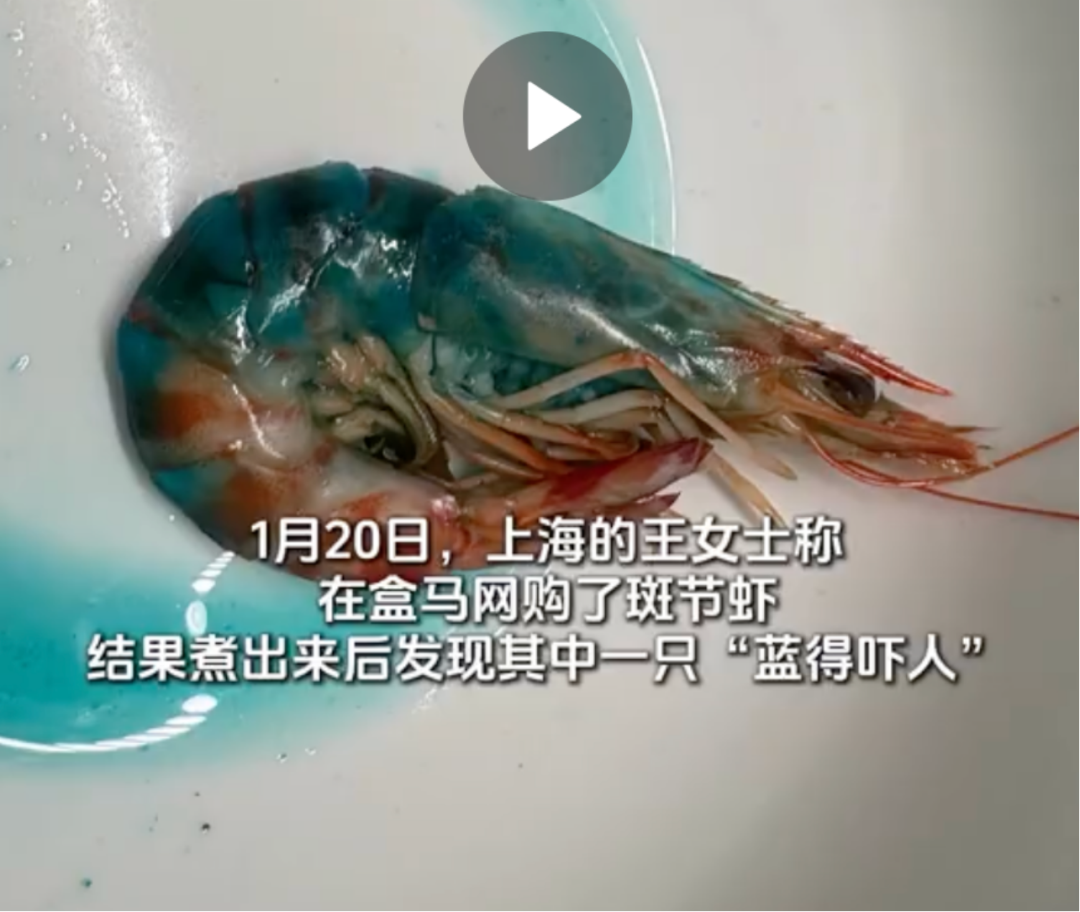
Group 1 - Recent incident involving Hema where a consumer found blue particles in cooked shrimp purchased online, raising food safety concerns [1] - Hema's customer service attributed the blue color to factors related to the shrimp's breeding environment, claiming it does not affect edibility [1] - The consumer plans to send the shrimp sample for testing, and Hema has promised to cover costs if safety issues are confirmed [1] Group 2 - Expert analysis suggests three potential causes for the blue substance in shrimp: related to hemocyanin, algae consumption, or fluorescent bacterial contamination [3] - The most likely cause is the oxidation of hemocyanin, which does not pose a safety risk and does not affect core nutrition [3] - Algal and fluorescent bacterial contamination are considered less probable, with distinct characteristics that can help in identification [3]

盒马网购虾煮熟后出现蓝色液体?专家解读三种可能
凤凰网财经· 2026-01-21 12:34
Core Viewpoint - The incident involving blue particles found in cooked shrimp purchased from Hema raises concerns about food safety, prompting a consumer to seek further testing despite the company's assurances regarding the product's safety [1][2]. Group 1: Incident Details - A consumer, Ms. Wang, discovered blue particles in a cooked shrimp and contacted Hema's customer service, which attributed the discoloration to factors related to the shrimp's farming environment, claiming it does not affect edibility [1]. - Ms. Wang has retained a sample of the shrimp for testing and Hema has promised to cover costs and follow up if any safety issues are detected [2]. Group 2: Expert Analysis - According to food safety expert Wang Silu, there are three potential reasons for the blue discoloration in cooked shrimp: 1. Related to hemocyanin, where copper ions may not fully detach during cooking, leading to the formation of blue shrimp proteins, which are generally safe to eat [4]. 2. Associated with algae, where high levels of blue-green algae consumed by the shrimp may leave residual blue color, which can be removed by rinsing [4]. 3. Linked to fluorescent bacterial contamination, which is rare and typically accompanied by foul odors and slime, indicating spoilage [4]. - Overall, the most likely cause of the blue color is the oxidation of hemocyanin, which does not pose a safety risk and does not significantly affect the shrimp's nutritional value [5].
冲上热搜!斑节虾煮熟变“蓝”了是非法添加?专家辟谣:疑似藻类或饲料
Xin Lang Cai Jing· 2026-01-21 12:21
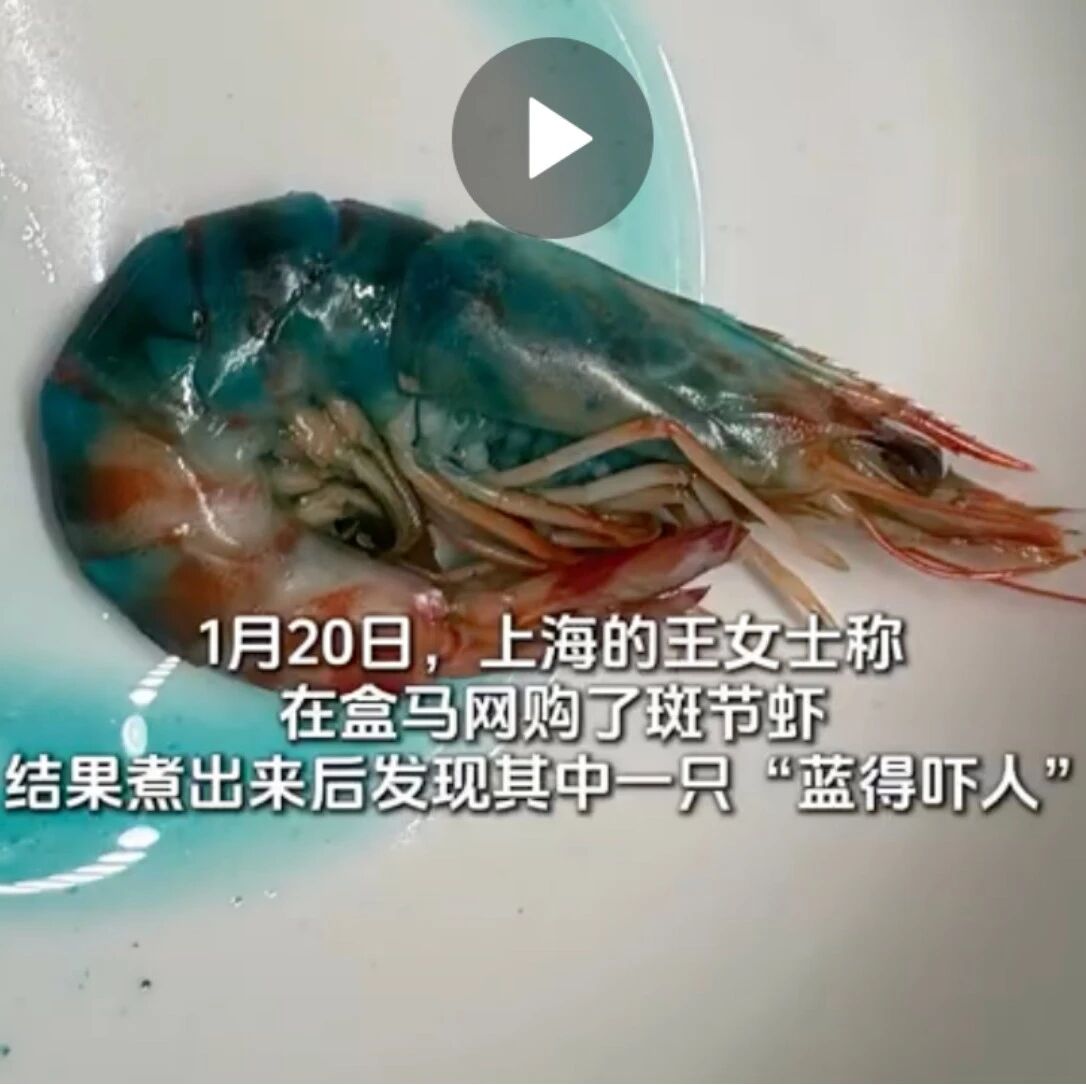
Group 1 - The incident involving a blue shrimp purchased online has sparked significant discussion regarding the potential causes of this phenomenon, with various experts attributing it to environmental factors or feed-related issues [1][4][8] - Experts suggest that the blue coloration observed in the shrimp is likely due to a combination of factors, including the shrimp's natural blood color, stress conditions, and possible metabolic differences, rather than chemical contamination [4][7][9] - The occurrence of blue shrimp is not seen as a systemic issue but rather an isolated incident, indicating that it may be linked to specific environmental conditions or individual shrimp health [4][8][9] Group 2 - The importance of scientific communication and public education on food safety has been emphasized, with experts recommending that media and social platforms play a role in disseminating accurate information to counteract misinformation and public panic [11]
从黄金海岸线到国家储备林
Jin Rong Shi Bao· 2026-01-20 02:12
Group 1 - The coastal city of Fangchenggang in China has a favorable ecological environment and rich marine biodiversity, which has led to the implementation of biodiversity financial standards [1] - Fangchenggang is focusing on developing a modern shrimp farming industry, with Hai Zhi Heng Aquaculture Co., Ltd. primarily cultivating whiteleg shrimp and banana shrimp [1] - The company has adopted a factory farming model since 2018, utilizing a water circulation system and IoT smart control to optimize feeding and reduce pollution [1] - In early 2024, the company invested over 23 million yuan to expand its capacity by building a new 28-acre high-level pool greenhouse, which initially strained its liquidity [1] - Guilin Bank Fangchenggang Branch provided a tailored financing solution, issuing a loan of 2.5 million yuan to alleviate the company's financial pressure and support its transition to factory farming [1] Group 2 - The Fangchenggang National Reserve Forest Base is primarily used for cultivating eucalyptus and other broadleaf tree industrial raw materials [2] - Under the guidance of the People's Bank of China Fangchenggang Branch, the Agricultural Development Bank Fangchenggang Branch launched a "sustainable forestry + biodiversity" credit support program, providing a total credit of 700 million yuan to the reserve forest base [2] - By November 2025, the Agricultural Development Bank Fangchenggang Branch had disbursed 510 million yuan in loans to support the construction of the national reserve forest base, promoting a shift from traditional resource utilization to a comprehensive model of ecological restoration and rural revitalization [2]
肥美又新鲜!海南三亚近海捕捞渔船回港,海鲜购销两旺
Sou Hu Cai Jing· 2025-08-22 09:00
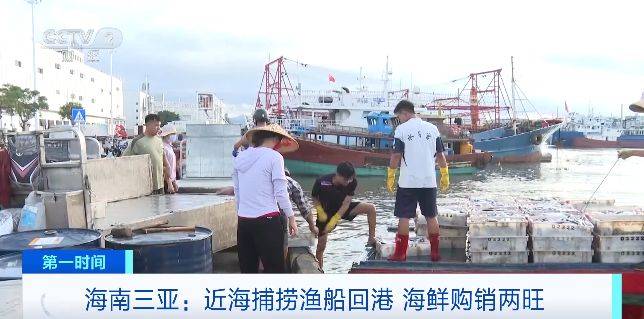
Core Insights - The end of the fishing moratorium in the South China Sea has led to an influx of fresh seafood in Sanya, Hainan, with active market transactions observed [1][3]. Group 1: Fishing Operations - Fishing boats are returning to the port with significant catches, with one fisherman reporting a haul of approximately 2,000 to 3,000 pounds, including 500 to 600 pounds each of mackerel and ribbonfish [5]. - The current market at the fishing port features a variety of seafood, including pomfret, mackerel, ribbonfish, red shrimp, and squid, which will be distributed to major seafood markets for sale [7][13]. Group 2: Market Activity - The seafood market is bustling, with fish traders and wholesalers assessing the quality and freshness of the catch, leading to quick sales of premium products [5]. - Seafood distributors are actively selling to various regions, with significant shipments going to Guangdong and Fujian provinces, often dispatched on the same day [11].
辣椒、海鲜、葡萄丰富百姓“菜篮子+果盘子” 产业振兴链接“大市场”
Yang Shi Wang· 2025-08-21 11:18
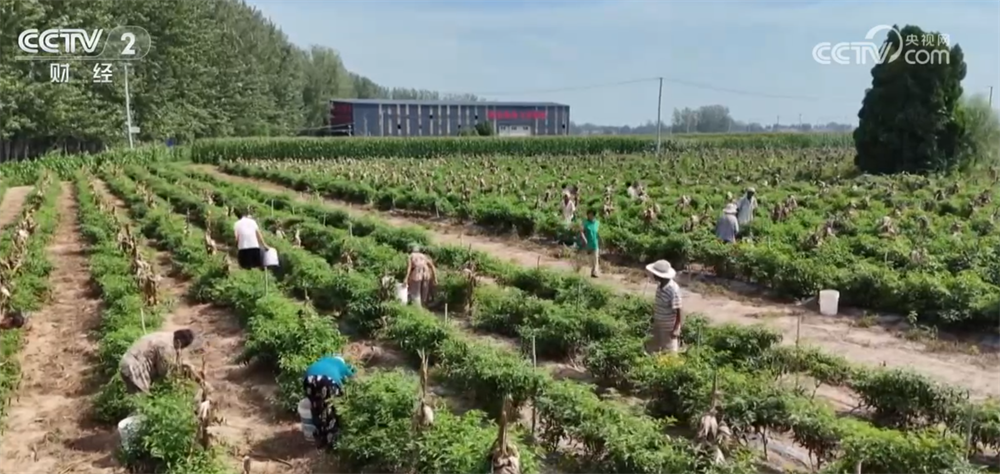
Group 1: Chili Pepper Harvest - The chili pepper harvest season is in full swing in northern China, particularly in Hebei and Shandong provinces, with farmers actively picking fresh peppers [1][6] - In Shandong's Heze city, 400 acres of "Meiren" peppers have matured and are being harvested, showcasing a busy scene among local farmers [1][4] - The total area planted with chili peppers in Jizhou, Hebei, is 65,800 acres, with an expected annual production of 600,000 tons and an estimated annual output value exceeding 4 billion yuan [8] Group 2: Grape Harvest - In Jiangsu's Jurong, 50,000 acres of grapes have entered the harvest season, with farmers starting early morning picking and sorting activities [7][11] - The initial sorting of grapes is followed by detailed sorting and packaging based on different supermarket requirements, with over 20,000 jin supplied daily to major supermarkets [10] Group 3: Seafood Market - The fishing season has opened in Xiamen, Fujian, leading to a surge in fresh seafood availability, attracting many consumers [12] - Prices for various seafood have decreased post-fishing season, with examples including small yellow croaker priced at 60 yuan per jin and large white pomfret at 80 yuan per jin, which is a reduction of over ten yuan compared to the closed season [15] - The daily wholesale volume of fresh seafood, including crabs and various fish, exceeds 4,000 jin, with prices for some items dropping by around 30% [19]
金枪鱼吸睛 深圳国际渔业博览会成交近7亿元
Zheng Quan Shi Bao Wang· 2025-05-19 10:26
Group 1 - The 2025 Shenzhen International Fisheries Expo featured 13 deep-sea fishing companies showcasing large bluefin tuna, attracting significant visitor engagement and participation [1][3] - The event included over 10 live fish-cutting shows, enhancing the interactive experience for attendees [3] - A total of 36 public auction sessions were held, resulting in the sale of 1,900 tons of fish with a transaction value of 60 million yuan [6] Group 2 - The expo attracted exhibitors from 20 countries and regions, highlighting various seafood delicacies such as Russian king crab and Argentine red shrimp [6] - Major domestic companies like Zhongshui Fisheries and Zhonglu Ocean participated, showcasing high-quality products and modern fishing achievements [6] - The event facilitated trade negotiations with a total intended transaction value of 12 billion yuan and actual transaction value nearing 700 million yuan, drawing nearly 100,000 visitors [8] Group 3 - Multiple cooperation agreements were signed, including one between the Guangdong Ocean Fisheries Association and Shenzhen Dachanwan Port Investment Development Co., Ltd., aimed at promoting the Shenzhen International Tuna Trading Center project [7]
