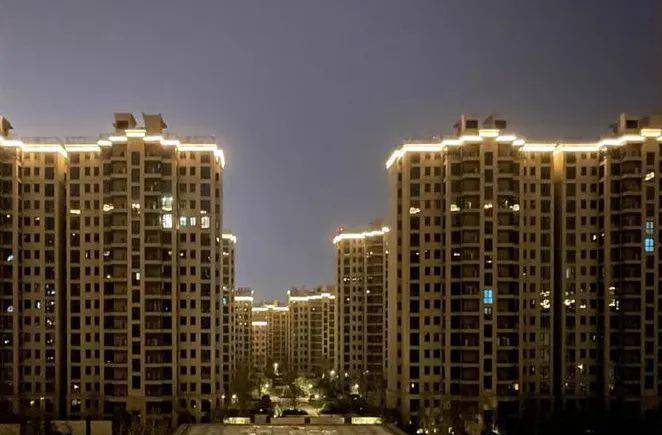
普通住宅

Search documents
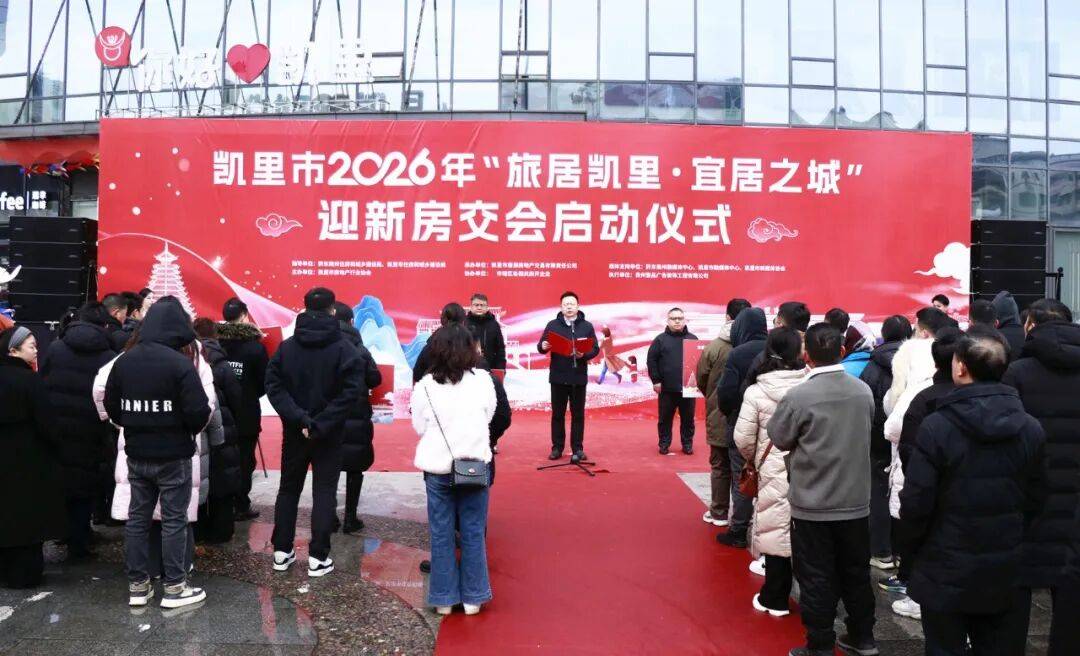
凯里市2026年“旅居凯里·宜居之城”迎新房交会举行
Sou Hu Cai Jing· 2026-02-09 19:22
Core Viewpoint - The event "Travel and Live in Kaili: A Livable City" aims to showcase urban development achievements and facilitate effective communication between real estate companies and consumers, promoting a stable and healthy real estate market to meet the public's desire for better living conditions [1] Group 1: Event Overview - The event featured a warm-up performance, the official launch of a Spring Festival home-buying discount campaign, and interactive activities such as free lottery draws and project promotions by real estate companies [3] - The event adheres to the principle of "government setting the stage, enterprises performing, and the public benefiting," integrating high-quality housing resources across the city, including ordinary residences, villas, and apartments, while leveraging special Spring Festival purchase incentives [3][6] Group 2: Industry Adaptation and Participation - In recent years, the real estate industry in Kaili has actively adapted to new conditions, adjusting development strategies to enhance urban quality, improve urban functions, and better living environments [6] - Sixteen real estate companies participated in the event, and the discount activities will run from the event date until March 31, with the organizing unit responsible for monitoring the implementation of the purchase discount policies to protect buyers' rights [6] Group 3: Economic Impact - The housing fair not only showcases the achievements and unique charm of "Travel and Live in Kaili" but also aims to attract more individuals from various sectors to invest in Kaili, contributing to urban construction and development, and injecting new momentum into the high-quality development of Kaili's economy and society [7]

票选 | 2025年度全国十大高端作品
克而瑞地产研究· 2025-12-24 09:20
Core Viewpoint - The 2025 National Top Ten Works selection process has commenced, with public voting starting from December 19 to December 25, 2023, following expert evaluations [1][3]. Group 1: Voting Process - The public voting channel for the 2025 annual evaluation of Chinese real estate products is officially open from December 19 to 25, 2023 [3]. - Each participant can vote once per category using the same WeChat ID, with a maximum of ten projects allowed per category [12]. Group 2: Evaluation Framework - The evaluation process includes expert reviews, public voting, and assessment models, with results to be announced in early January 2026 [11]. - The "Product Power 100" initiative has been ongoing since 2018, focusing on enhancing product quality and addressing housing pain points [11]. Group 3: Featured Projects - Various high-end, light luxury, and quality residential projects have been shortlisted, showcasing diverse architectural styles and product types [15][17][19][21][24][26][28][30][32][34][36][38][40][42][44][46][48][50][52][54].

地产观潮丨租金回报率持续回升“买房收租”是否划算?
Zheng Quan Shi Bao· 2025-11-20 12:54
Core Viewpoint - The rental yield in major cities is rising, surpassing bank deposit rates and approaching mortgage rates, prompting property owners to reconsider their strategies regarding renting versus selling [1][2][4]. Rental Yield Trends - The rental yield in key cities has reached 2.08% in the first half of 2025, with first-tier cities like Beijing, Shanghai, Guangzhou, and Shenzhen showing yields of 1.52%, 1.73%, 1.68%, and 1.52% respectively as of October 2025, up from lower figures earlier in the year [1][2]. - In Shenzhen, a property owner reported a rental yield of approximately 2.6% for a two-bedroom apartment, indicating a shift in market dynamics where rental income may be more favorable than selling [2][3]. Market Dynamics - The proportion of transactions involving properties priced below 3 million yuan has remained high, exceeding 25% for four consecutive months, suggesting sustained interest in lower-priced housing [3]. - Industry experts indicate that the current rental yields exceeding bank deposit rates signal a potential stabilization in the real estate market, particularly in first-tier and core second-tier cities [4][6]. Investment Considerations - Analysts suggest that while some properties may offer attractive rental yields, buyers should consider various factors such as market conditions, rental income, and property prices before making investment decisions [6][7]. - Recommendations for potential investors include focusing on properties in central urban areas, near public transport, and considering smaller, newer units or older properties that can be renovated to increase value [7].
上海高端住宅遭疯抢,25套豪宅一日售罄,普通住宅却无人理会
Sou Hu Cai Jing· 2025-10-28 00:31
Core Viewpoint - The Shanghai real estate market is experiencing significant differentiation, with high-end luxury properties in high demand, while ordinary residential projects face a more subdued market environment [1][3][18]. Group 1: High-End Residential Market - The high-end residential sector in Shanghai is witnessing a surge in interest, prompting multiple developers to launch premium projects, which are receiving considerable buyer attention and achieving impressive sales figures [1][4][6]. - Notable sales include the Jinling Huating Phase II project, which sold 120 units in one day at an average price of 20.5 million yuan per unit, totaling 9.843 billion yuan in sales [7][9]. - The recent performance of the Gaofuyun Jing project, which sold 25 ultra-high-end units in one day, further underscores the robust demand in this segment, with total sales reaching between 3 billion to 4 billion yuan [9][11]. Group 2: Ordinary Residential Market - In contrast, the ordinary residential market is experiencing a downturn, with many areas showing lackluster transaction volumes and a prevalent wait-and-see attitude among buyers [3][16]. - Data from Shanghai Zhongyuan Real Estate Research Institute indicates that since October, some regions have continued to see low transaction levels, with only mid-range improvement products maintaining some level of sales continuity [16][18]. Group 3: Market Dynamics and Future Outlook - The disparity between the high-end and ordinary residential markets reflects a broader trend of resource concentration in core areas and quality products as the real estate market transitions from an expansion phase to a more stable phase [16][21]. - The high-end market's current success highlights the demand from high-net-worth individuals for quality assets, while ordinary residential properties face inventory pressure during this industry adjustment period [18][23]. - The future of the market may hinge on the ability of projects with core competitiveness to maintain their positions, as increased competition among developers in the high-end segment is anticipated [19][21].
东莞普通住宅价格标准调整,最高不超过31005元/平方米
Nan Fang Du Shi Bao· 2025-08-29 10:08
Core Viewpoint - Dongguan's housing price standards for ordinary residential properties have been adjusted for the second time, with a maximum price of 31,005 yuan per square meter for first and second-tier towns, while third and fourth-tier towns see slight increases in their price standards [1][3]. Summary by Category Price Standards - The new price standards for ordinary residential properties in Dongguan will be effective from September 1, 2025, based on the average transaction prices in the first half of 2025 [3]. - First-tier standard includes areas like Songshan Lake High-tech Zone and Nancheng Street, with a price cap of 38,482 yuan per square meter [3]. - Second-tier standard includes towns such as Humen and Fenggang, with a price cap of 31,005 yuan per square meter [3]. - Third-tier standard includes towns like Daling Mountain and Liaobu, with a price cap of 24,401 yuan per square meter [3]. - Fourth-tier standard includes towns such as Shijie and Shatian, with a price cap of 18,849 yuan per square meter [3]. Adjustments - Notable adjustments include Liaobu moving from second-tier to third-tier, and Dongguan City moving from second-tier to fourth-tier [3]. - Several towns, including Shijie and Shatian, have been downgraded from third-tier to fourth-tier [3]. Tax Implications - The ordinary residential price standards are primarily used for assessing land value tax on real estate developers selling ordinary residential properties [4]. - These standards do not affect personal transactions involving the purchase or sale of residential properties, including second-hand homes, nor do they impact related taxes and loans [4].

Day4 | 2025上半年中国房企产品测评入围项目展示
克而瑞地产研究· 2025-06-11 10:09
Core Viewpoint - The "2025 Mid-Year China Real Estate Product Evaluation" has officially entered the project display phase, with the initial shortlisted projects announced on June 3. The evaluation will combine expert reviews and online voting to determine the top projects in various categories [1][12]. Group 1: Evaluation Process - The evaluation process started in late April and has received enthusiastic participation from enterprises and industry experts [1]. - The final awards will include categories such as "Top Ten High-End/Light Luxury/Quality Works" and "National Good House Comprehensive Award" [1]. Group 2: Shortlisted Projects - High-end shortlisted projects include "Hangzhou Hangxu Mansion" and "Kangjiang Qiantang" [1]. - Light luxury shortlisted projects feature "Shanghai Poly Haishangyin" and "Xi'an Boyue Wanjing" [4]. - Quality shortlisted projects include "Chengdu Zhonghuan Tianshen" and "Nanning Jiangnan Runfu" [7][8]. Group 3: Industry Focus - Since 2018, the industry has focused on changes in product strength, evolving from "product strength" to "product system" and "customer demand" research [12]. - The evaluation aims to promote valuable and replicable products and concepts within the industry, enhancing overall product strength [12].



花30万在宁波买公寓住值得吗?网友:你看中的这个小区出租率蛮高的!
Sou Hu Cai Jing· 2025-05-04 14:30
Core Viewpoint - The article discusses the challenges and considerations surrounding the investment in 40-year leasehold apartments, highlighting their appeal to young people and investors, while also addressing the associated risks and drawbacks [1][3][16]. Group 1: Property Characteristics - 40-year leasehold apartments are perceived as less favorable compared to 70-year residential properties due to ownership duration [1]. - These apartments often have higher utility costs due to commercial water and electricity rates, which can significantly increase living expenses over time [1]. - Many apartments lack essential kitchen facilities, such as gas lines and exhaust systems, which detracts from their appeal for quality living [1]. Group 2: Target Demographics - The primary residents of these apartments are typically young individuals or those seeking rental investments [3]. - The flexible layout of these apartments allows for various modifications, making them suitable for small businesses or studios, but this also complicates safety management [3]. Group 3: Investment Considerations - Investors must carefully consider their motivations for purchasing these apartments, whether for personal residence or as an investment, as this will influence their decision-making process [3]. - The liquidity of these properties is often lower than that of standard residential homes due to factors like ownership structure and tax implications, leading to concerns about future resale [3][16]. - The article reflects on a specific case where a young professional contemplates purchasing a 300,000 yuan apartment as a transitional living space, illustrating the indecision many face regarding housing options [3]. Group 4: Market Dynamics - The current high property prices make 40-year leasehold apartments an attractive option for young buyers seeking affordable housing solutions [16]. - However, concerns about property value retention and liquidity persist, as potential buyers weigh the risks against the benefits of lower entry costs [16]. - The article emphasizes the importance of understanding personal needs and market conditions when making property investment decisions, suggesting that clarity in one's objectives can help mitigate uncertainties [27].