
智能消费电子

Search documents
台湾富士康预测一季度业绩表现强劲
Xin Lang Cai Jing· 2026-02-05 09:07
专题:聚焦美股2025年第四季度财报 富士康周四公布 1 月营收同比增长35.5%,同时预告一季度业绩将表现强劲。 公司在声明中表示:"AI 服务器机柜出货量持续增长,智能消费电子业务表现亦超预期。" 作为英伟达最大的服务器制造商,富士康补充称:"本季度业绩表现预计优于过去五年同期水平",但未 进一步详细说明。 专题:聚焦美股2025年第四季度财报 富士康周四公布 1 月营收同比增长35.5%,同时预告一季度业绩将表现强劲。 公司在声明中表示:"AI 服务器机柜出货量持续增长,智能消费电子业务表现亦超预期。" 作为英伟达最大的服务器制造商,富士康补充称:"本季度业绩表现预计优于过去五年同期水平",但未 进一步详细说明。 责任编辑:郭明煜 责任编辑:郭明煜 ...
中国大陆薪酬报告2026-Michael Page-China
Sou Hu Cai Jing· 2026-01-20 06:09
今天分享的是:中国大陆薪酬报告2026-Michael Page-China 报告共计:42页 2026年中国大陆就业市场薪酬与趋势总结 2026年中国大陆就业市场保持谨慎态势,企业聚焦效能提升与可持续增长,人才战略向高质量专业人才倾斜,运营优化与数字化转型成 为重要投入方向,推动先进制造、人工智能、绿色能源等领域高技术人才需求上涨,通才型岗位机会相对减少。 行业需求呈现差异化特征。银行与金融服务领域,AI相关应用、创新药产业链、新消费等板块投资热度较高,财富管理、并购与募资相 关岗位需求旺盛,具备跨境交易经验和资本运作能力的人才受青睐。工程与制造行业迈向工业5.0,数字化、自动化技术深度融入全流 程,化学材料复合改性、原创设计等领域人才需求提升,海外技术专家引进与本土化融合成为挑战。 财务与会计领域,数据驱动决策凸显FP&A专业人士价值,数字化工具应用推动财务流程优化,企业出海与港股IPO带动全球税务、投资 者关系等岗位需求。医疗与生命科学行业,复合型人才、具备全球多中心临床试验能力及熟悉海外注册法规的人才备受重视,创新型企 业合作与医保改革深化了对相关专业人才的需求。 人力资源与行政助理领域,具备跨文化管 ...


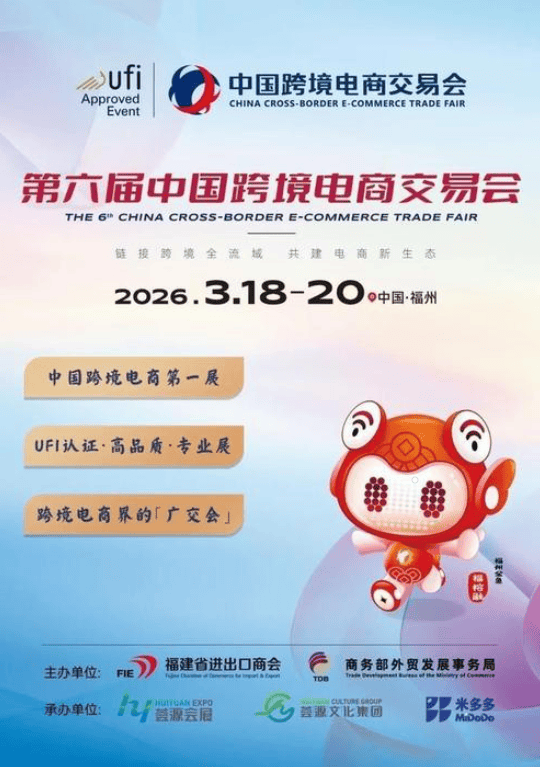
海丝起点,跨境新篇 ——2026福州全球电商产业生态大会
Sou Hu Cai Jing· 2025-10-10 02:53
Core Insights - The Fuzhou Global E-commerce Industry Ecosystem Conference in 2026 will merge historical significance with future digital trends, showcasing the evolution of global trade through digital economy [1][3] Group 1: Event Details - The conference is scheduled for March 18-20, 2026, at the Fuzhou Strait International Conference and Exhibition Center [3] - It will feature over 80 foreign trade industrial resources and nine core exhibition areas, highlighting China's manufacturing competitiveness [6] Group 2: Digital Economy and Innovation - Fuzhou, as a key starting point of the ancient Maritime Silk Road, is leveraging its digital economy to reshape the global trade landscape, with a focus on Quanzhou's 740 billion digital economy scale [3][6] - The event will present smart manufacturing innovations, such as the "lighthouse factory" in Ningde, which produces a battery every 1.7 seconds [3] Group 3: Cross-Border E-commerce and Collaboration - The conference will facilitate a one-stop channel for international platforms like Amazon and TikTokShop, integrating logistics and payment services [6] - Initiatives such as the launch of the Minjiang Digital Trade Corridor aim to enhance cross-border logistics efficiency [6] Group 4: Thought Leadership and Knowledge Sharing - A high-level forum will release the "2026 China Cross-Border E-commerce Development Blue Book," discussing emerging market opportunities under the RCEP framework [7] - Topics will include AI-driven foreign trade growth and the transformation of smart logistics, with a special focus on the "Digital Heritage of the Maritime Silk Road" [7] Group 5: Future Prospects and Strategic Initiatives - The conference will introduce a cross-border ecosystem alliance and computing power service packages to support traditional enterprises in their digital transformation [10] - Efforts will be made to promote Chinese brands globally, using Fujian as a strategic hub for international market expansion [10]
国常会审议通过重磅文件,释放关键信号
2 1 Shi Ji Jing Ji Bao Dao· 2025-07-31 14:52
Core Viewpoint - The Chinese government is advancing the "Artificial Intelligence +" initiative to promote large-scale commercialization of AI applications, leveraging the country's comprehensive industrial system, large market scale, and rich application scenarios to foster innovation and application synergy [1][2][4]. Group 1: AI Development and Infrastructure - China has established a complete AI technology industrial system covering foundational, framework, model, and application layers, with continuous improvements in computing power and performance [1][2]. - The AI data collection and processing industry is thriving, and algorithm innovations are rapidly evolving, leading to active innovation in smart consumer electronics and industrial intelligent terminals [1][2]. Group 2: Economic Integration and New Momentum - The "Artificial Intelligence +" initiative is seen as a key measure for cultivating new momentum and updating old momentum in China's economy, particularly in enhancing production efficiency and optimizing operational processes in traditional industries [3][4]. - AI technologies are expected to accelerate breakthroughs in basic research and drive the rapid rise of emerging industries such as biopharmaceuticals, intelligent manufacturing, and smart driving, serving as a new engine for economic growth [3][4]. Group 3: Policy Support and Future Directions - The 2024 government work report includes "Artificial Intelligence +" for the first time, emphasizing the need to deepen the research and application of big data and AI, and to support the widespread application of large models [2]. - The government aims to better integrate digital technology with manufacturing and market advantages, promoting the development of new intelligent terminals and smart manufacturing equipment [2].

深入实施“人工智能+”行动,国常会审议通过重磅文件
2 1 Shi Ji Jing Ji Bao Dao· 2025-07-31 14:48
Core Viewpoint - The Chinese government is advancing the "Artificial Intelligence +" initiative to promote large-scale commercialization of AI applications, leveraging the country's comprehensive industrial system, large market scale, and rich application scenarios to foster innovation and application synergy [1][3]. Group 1: Government Initiatives - The State Council, led by Premier Li Qiang, has approved the "Artificial Intelligence +" action plan, emphasizing the need for AI to integrate deeply into various sectors of economic and social development [1]. - The government aims to enhance the AI innovation ecosystem by improving computing power, algorithms, and data supply, while also increasing policy support and talent development [1][4]. Group 2: Industry Development - China has established a complete AI technology industry system covering foundational, framework, model, and application layers, with continuous improvements in AI infrastructure and rapid algorithm innovation [2]. - AI applications are increasingly penetrating high-digitization industries such as finance, healthcare, and transportation, indicating a shift towards deeper integration of AI in the real economy [2]. Group 3: Economic Impact - The "Artificial Intelligence +" initiative is seen as a crucial measure for fostering new economic drivers and updating traditional ones, particularly in sectors like biopharmaceuticals, intelligent manufacturing, and smart driving [3]. - The initiative is expected to enhance productivity and operational efficiency in traditional industries, facilitating their transition towards high-end, intelligent, and green practices [3][4].
新消费:当情绪价值成为“刚需”
淡水泉投资· 2025-06-12 00:16
Core Viewpoint - The article discusses the evolution of consumer behavior in China, emphasizing the shift from basic survival needs to emotional and experiential consumption, driven by economic development and demographic changes [4][5][15]. Group 1: New Consumption Trends - The concept of "new consumption" has gained traction, with examples like a rising cosmetics brand achieving a valuation exceeding $10 billion within four years of its establishment [3]. - Consumers are increasingly focused on emotional satisfaction and self-fulfillment, moving beyond mere product functionality [4]. - The 95 post-90s generation has become a significant consumer force, with annual spending reaching approximately 8-9 trillion yuan, accounting for nearly 50% of sales during major shopping events [5]. Group 2: Emotional Consumption Drivers - The transition to an "atomized" social structure has led to the rise of emotional consumption and the single economy, as traditional social ties weaken [5]. - The COVID-19 pandemic and geopolitical uncertainties have heightened the demand for emotional consumption, with the market for concerts expected to grow from 12 billion yuan in 2019 to 45 billion yuan by 2024 [15]. - Emotional consumption has shifted from being optional to essential, as consumers seek to maintain psychological well-being in uncertain times [15]. Group 3: Brand Power and Market Dynamics - The success of a consumption model relies on the ability of companies to manage brand power, which is increasingly influenced by product quality and distribution channels [10]. - The shift from traffic dividends to content dividends means that strong product quality is essential for gaining market share in a fragmented channel environment [12]. - The capital market views assets that can be priced based on emotional value as scarce growth opportunities, less affected by economic cycles and geopolitical risks [18]. Group 4: Challenges and Future Outlook - The core driver of new consumption is consumer passion, which translates into strong purchasing intent and high repurchase rates [19]. - However, sustaining this passion is challenging; only brands that can elevate their products to art and cultivate a loyal customer base will thrive in the long term [19].

富士康:预计2025年智能消费电子的收入将与去年持平(与之前预测相同)。
news flash· 2025-05-14 06:26
Group 1 - The core viewpoint is that Foxconn expects its revenue from smart consumer electronics to remain flat in 2025 compared to the previous year, consistent with earlier forecasts [1]