
朝天椒

Search documents
科技赋能循环农业 鄂尔多斯牧区升级
Huan Qiu Wang· 2026-01-30 01:45
Group 1 - The article highlights the transformation of traditional farming practices in Inner Mongolia, shifting towards technology-driven, refined agricultural and livestock management, creating new economic opportunities [1] - The "Unified Breeding and Shared Prosperity" model is being implemented, where companies provide feed, technology, and guaranteed purchase prices to herders, resulting in improved meat quality and higher prices for sheep [2] - Smart farming technologies, such as intelligent collars for cattle, are being utilized to monitor health and optimize feeding, leading to increased milk production and enhanced beef quality [2] Group 2 - The establishment of a complete ecological cycle in livestock farming is emphasized, where waste is converted into organic fertilizer, supporting the growth of cash crops and renewable energy production [3] - The integration of various agricultural sectors, such as whiskey production and black donkey farming, demonstrates a model of resource synergy that enhances value across the supply chain [3] - The implementation of "contract farming" in villages stabilizes income for farmers by securing buyers before planting, significantly reducing market risks [4][5] Group 3 - The development of a comprehensive agricultural service system by village cooperatives enhances efficiency and supports collective economic growth, benefiting local public welfare [5] - The successful transition to high-value crops, such as chili peppers, showcases the potential for increased profitability through modern agricultural practices [6] - Economic indicators reveal that the primary industry in Ordos City achieved a value of 5.24 billion yuan, with a year-on-year growth of 5.5%, and the per capita disposable income for rural residents is projected to reach 30,478 yuan, growing by 5.8% [6][7] Group 4 - The article concludes with a vision of a sustainable and prosperous future for farmers, characterized by improved living conditions and a harmonious relationship between ecological health and economic development [7]

“农”墨重彩绘新卷——宁县“十四五”时期农业产业发展综述
Xin Lang Cai Jing· 2026-01-22 00:44
Core Viewpoint - The agricultural industry in Ning County has shown significant growth during the "14th Five-Year Plan" period, focusing on modern agricultural development and rural revitalization, with a strong emphasis on food security and the establishment of a complete industrial chain [5][7]. Group 1: Agricultural Production and Economic Growth - Grain production has steadily increased, with a total output of 252,000 tons and a planting area of 770,000 acres [7]. - The agricultural output value for 2024 is projected to reach 2.32 billion yuan, marking a 23.07% increase compared to the end of the "13th Five-Year Plan" [5]. - The per capita disposable income of rural residents rose from 11,509.34 yuan in 2021 to 14,178.04 yuan in 2024, an increase of 24.6% [5]. Group 2: Agricultural Infrastructure and Technology - Ning County has implemented a comprehensive approach to agricultural production, including the integration of planting, storage, processing, and sales, resulting in an annual output value exceeding 1 billion yuan from 12 "grain head and food tail" enterprises [7]. - The county has invested in high-standard farmland construction and improved agricultural infrastructure, enhancing the efficiency of water and soil resource utilization [7][14]. - The mechanization rate of major crops reached 88.25% by the end of 2024, an increase of 8.99 percentage points from the end of the "13th Five-Year Plan" [14]. Group 3: Industry Development and Specialization - Ning County has established a 12 billion yuan "six major industries" chain, focusing on regional layout and the integration of primary, secondary, and tertiary industries [9]. - The apple industry serves as a key pillar for wealth generation, with an orchard area of 250,000 acres and an output value exceeding 4 billion yuan [9]. - The county has developed various agricultural projects, including vegetable production, mushroom cultivation, and traditional Chinese medicine, contributing to increased income for over 2,000 households [10][11]. Group 4: Environmental and Rural Development - The county has undertaken initiatives to improve rural living conditions, including the removal of waste and the construction of high-quality toilets, with over 160,000 issues addressed [12]. - Agricultural pollution management has improved, with the resource utilization rate of livestock waste rising from 82.3% in 2021 to 92.05% in 2024 [13]. - The implementation of the "Technology Strong County" strategy has led to the promotion of new varieties and technologies, enhancing agricultural productivity [14].

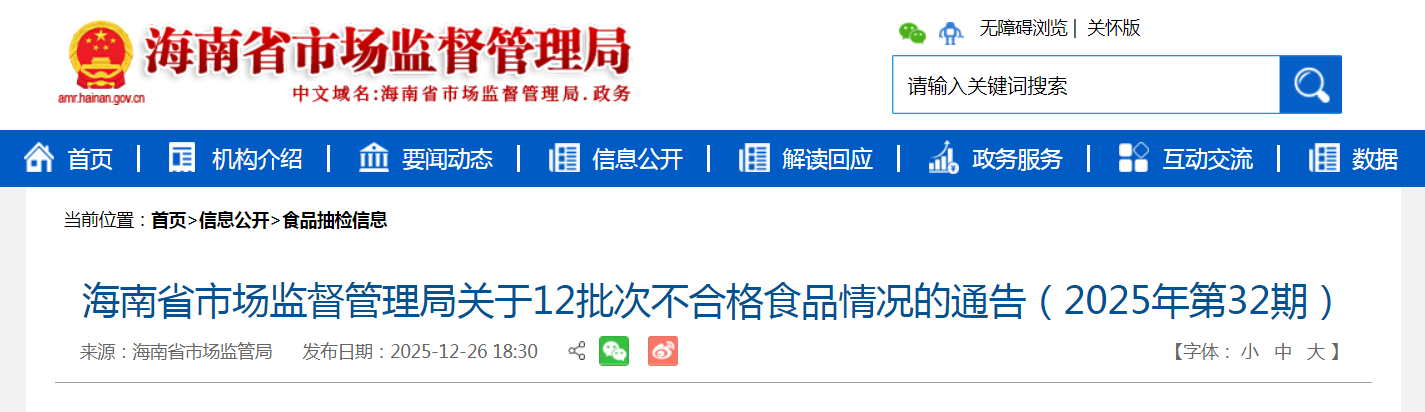
海南省市场监督管理局关于12批次不合格食品情况的通告(2025年第32期)
Zhong Guo Zhi Liang Xin Wen Wang· 2025-12-29 08:52
Core Points - The Hainan Provincial Market Supervision Administration conducted food safety inspections on 956 batches, identifying 12 batches of non-compliant products [1] - The non-compliance issues include excessive use of food additives, pesticide residue exceeding limits, veterinary drug residue, heavy metal contamination, and quality indicators not meeting standards [1] Group 1: Food Additives - The white angelica sold at Chengmai Laocheng Neighborhood Life Supermarket had sulfur dioxide residue exceeding national food safety standards [1] - The dried chili sold at Haikou Longhua Haibaiyi Subfood Business had sulfur dioxide residue exceeding national food safety standards [1] - The handmade pastry (raw wet noodle product) produced and sold by Hainan Xinting Food Co., Ltd. had sorbic acid and its potassium salt exceeding national food safety standards [1] Group 2: Pesticide Residue - The Dongjiang honey tangerines sold at Wenchang Wencheng Yixi Fruit Store had bifenthrin residue exceeding national food safety standards [1] - The leeks sold at Changjiang Shiluo Shulan Vegetable Stall had acephate residue exceeding national food safety standards [1] - The scallions sold at Danzhou Lemait Supermarket Co., Ltd. had acephate residue exceeding national food safety standards [1] - The cucumbers sold at Danzhou Baima Jing Vegetable Basket Supermarket had thiamethoxam residue exceeding national food safety standards [1] - The oranges sold at Chengmai Jinjian Qibo Fruit Store had bifenthrin residue exceeding national food safety standards [1] Group 3: Veterinary Drug Residue - The pangasius (marine fish) sold at Lingao Xinying Qingru Seafood Stall had chloramphenicol residue exceeding national food safety standards [1] Group 4: Heavy Metal Contamination - The chili peppers sold at Sanya Yazhou Yanying Vegetable Store had cadmium (as Cd) exceeding national food safety standards [1] Group 5: Quality Indicators - The peanut oil produced and sold by Ding'an Dingcheng Guangchang Oil Factory had an acid value (KOH) exceeding national food safety standards [1] Group 6: Other Contaminants - The reused dining utensils (bowls) used at Haikou Xiuying District Xinbiao Fast Food Restaurant had anionic synthetic detergent (as sodium dodecylbenzenesulfonate) residue exceeding national food safety standards [1]
(乡村行·看振兴)秦巴腹地“椒”响曲:洛南辣椒产业铺就共富路
Zhong Guo Xin Wen Wang· 2025-10-21 06:54
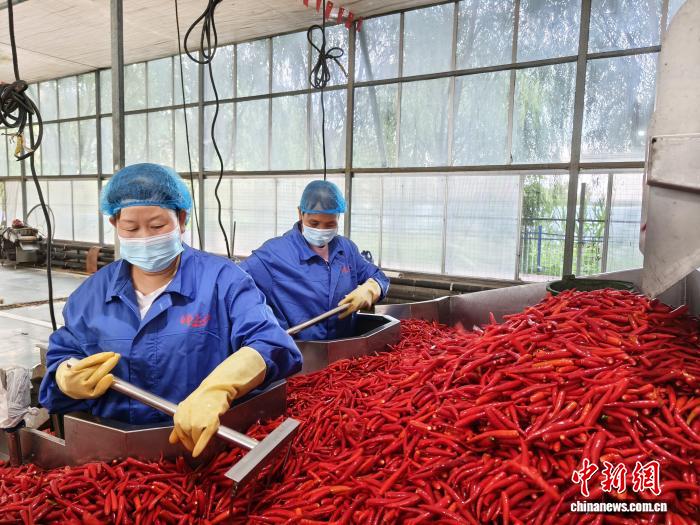
Core Viewpoint - The development of the chili pepper industry in Luonan County, Shaanxi Province, is significantly contributing to rural revitalization and economic growth, with a focus on the cultivation and processing of the "Chao Tian Jiao" chili pepper [1][3]. Group 1: Industry Development - The chili pepper industry in Luonan County has expanded to over 10,000 acres, involving 3,235 farming households, with an average output value of approximately 4,000 yuan per acre [5]. - The total expected yield for this year is around 1,000 tons, with 86 households in Kuanping Village alone cultivating over 1,000 acres of chili peppers [3][5]. - The cooperative has invested 10 million yuan to develop the chili pepper industry, utilizing the region's fertile soil and favorable climate [3]. Group 2: Economic Impact - The average income increase for participating households is about 12,000 yuan, demonstrating the economic benefits of engaging in chili pepper cultivation [5]. - The cooperative's model of "enterprise + cooperative + base + farmers" has successfully encouraged local farmers to participate, alleviating their concerns and ensuring a stable income [3][5]. Group 3: Value Addition and Market Expansion - The cooperative has established a modern production line for processing chili peppers into products like chopped chili and chili sauce, enhancing the industry's value [4]. - Long-term supply agreements have been signed with companies in Chongqing, Hunan, and Yunnan, indicating a strategic approach to market expansion [4]. - The cooperative is also leveraging technology by organizing live streaming sessions to showcase the production process, thereby broadening sales channels [5].
看!鄂尔多斯丰收的颜色!
Nei Meng Gu Ri Bao· 2025-10-09 05:52
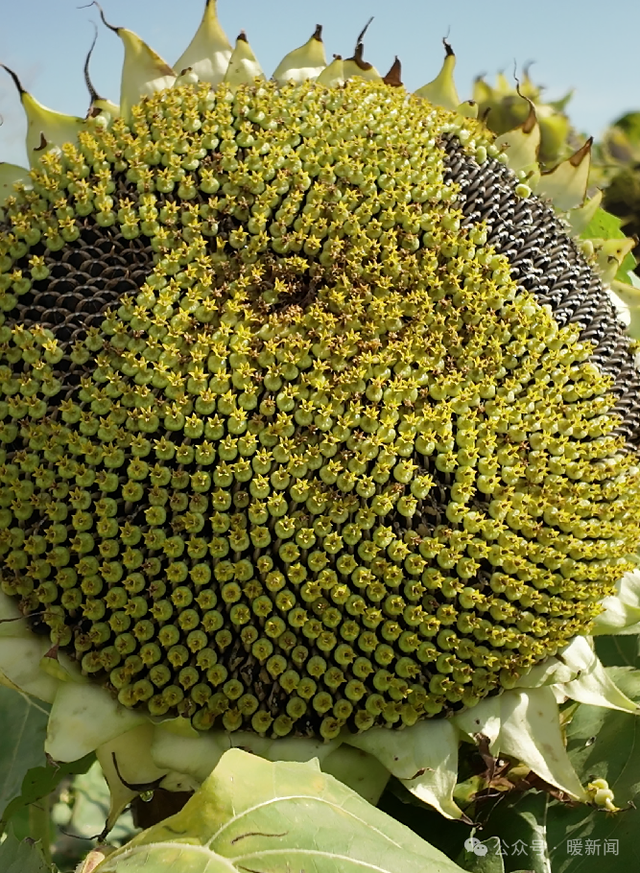
Core Points - The article celebrates the beauty and abundance of the autumn harvest, highlighting various crops and their vibrant colors, which symbolize the joy of maturity and the season's bounty Group 1: Color Symbolism in Harvest - Yellow represents the most dazzling light of the harvest, with sunflowers filled with seeds, exuding a faint fragrance when opened [1] - Green signifies freshness in the harvest, illustrated by early pears in orchards, which are smooth and juicy, providing relief from autumn dryness [4] - Red embodies the passionate vibrancy of the harvest, as seen in bright red chili peppers that emit a strong spicy aroma when held [6] - Purple reflects the gentle sweetness of the harvest, with grapes resembling purple crystals and plums offering a rich, sweet taste [8] Group 2: Overall Harvest Experience - The combination of yellow, green, red, and purple encapsulates the beauty of autumn and forms the most captivating image of the harvest [10]
广西宁明辣椒丰收 奏响致富“椒”响曲
Zhong Guo Xin Wen Wang· 2025-06-07 08:58
Core Insights - The pepper harvesting season is currently in full swing in Ningming County, Guangxi, with local farmers experiencing a bountiful harvest and high market demand for their produce [1][2] - The pepper cultivation area in Anma Village has reached over 380 acres, with an expected yield of approximately 1,000 pounds per acre, leading to projected revenues of 3 million RMB [1] - The local agricultural structure has been actively adjusted to optimize industry layout, focusing on short-cycle crops to enhance economic benefits and support stable income for villagers [1][2] Group 1 - The geographical and climatic advantages of Ningming County contribute to the high quality of peppers produced, which are well-received in markets such as Hunan and Hubei [1] - The labor-intensive nature of the pepper industry provides significant employment opportunities for local residents, with daily earnings ranging from 100 to 200 RMB during the harvesting season [1] - The county has expanded its vegetable planting area to approximately 78,000 acres this year, reflecting a strategic shift towards diverse agricultural production [1] Group 2 - Local agricultural departments are actively providing technical guidance to farmers during critical planting periods to ensure proper crop management [2] - Future plans for Ningming County include targeting market demands and leveraging the influence of large-scale farmers to stimulate local industry development and enhance employment opportunities [2]
三农记者的麦田日记丨跨界“老把式”
He Nan Ri Bao· 2025-06-01 23:42
Core Insights - The article highlights the innovative agricultural practices of a farmer, Ge Jinggang, who transitioned from the education sector to farming, successfully cultivating over 100 acres of land and implementing intercropping techniques [1][2]. Group 1: Agricultural Practices - Ge Jinggang employs a method of intercropping, specifically planting wheat alongside chili peppers, which allows for efficient use of resources and maximizes yield [1][2]. - The farmer utilizes drip irrigation between the crops, ensuring that both wheat and chili peppers receive adequate water without the need for additional irrigation [2]. - By selecting dwarf wheat varieties, Ge Jinggang enhances air circulation and light penetration in the fields, optimizing growth conditions for both crops [2]. Group 2: Economic Outcomes - The wheat yield is reported to exceed 1,000 pounds per acre, comparable to traditional single-crop farming [2]. - The net profit from chili pepper cultivation is approximately 3,000 yuan per acre, indicating a lucrative return on investment [2]. - The combination of crops not only improves soil nutrient utilization but also provides a sustainable approach to farming, as the leftover straw from wheat helps retain soil moisture and suppress weed growth [2].