
机器人控制器

Search documents
维宏股份(300508) - 300508维宏股份投资者关系管理信息20260203
2026-02-03 01:24
Group 1: Company Performance and Projections - The 2025 performance forecast indicates growth in both revenue and main business profit, with final data expected to align closely with the disclosed estimates [1] - The company has seen a significant increase in customer numbers, including both domestic and international clients, with some already in mass production [4] Group 2: Robotics Business Development - The company has expertise in motion control, having operated in the field for over 20 years, but lacks knowledge in perception and decision-making for robotics [1] - A strategic acquisition of nearly 48% of Hanm Electronics was made in November 2025 to enhance capabilities in motor control [1] Group 3: Technical Expertise and Collaboration - Hanm Electronics has a strong background in motor design and manufacturing, with key personnel having extensive experience in the industry [2] - The collaboration between Hanm Electronics and the company leverages their respective strengths, with Hanm focusing on motors and the company on drive control [5] Group 4: Product Development and Market Strategy - The product strategy involves starting with hand motors and expanding to modules and full-body systems, while avoiding direct competition with existing clients [6] - Current production capacity has improved due to previous bulk orders, and plans for an automated production line are underway to meet high-quality and quantity demands [7]

从自动驾驶到机器人,90%技术可复用
汽车商业评论· 2025-12-07 23:06
Core Viewpoint - The article emphasizes the importance of a solid foundation in technology and patience in the development of autonomous driving and robotics, suggesting that true speed in innovation comes from thorough groundwork [5][10]. Group 1: Technology Development - The integration of algorithms, software, and hardware in autonomous driving requires significant time investment, but once established, it allows for rapid algorithm iteration [5][14]. - The company has produced over one million autonomous driving controllers by the third quarter of this year, with a goal to exceed one million annually [5][27]. - The technology stack for autonomous driving and robotics is highly similar, with a 90% overlap in the underlying control systems and software layers [8][31]. Group 2: Industry Insights - The automotive supply chain has a production capacity of approximately 30 million vehicles annually, while the robotics supply chain produced only about 500,000 units last year, indicating a significant gap [15][17]. - The company has successfully transitioned from focusing solely on autonomous driving to also developing robotic controllers, leveraging its existing technology and expertise [24][26]. - The recent launch of the first domestic robot controller within two months showcases the rapid development capabilities stemming from nine years of experience in autonomous driving technology [8][29]. Group 3: Future Opportunities - The integration of autonomous vehicles and robotics presents numerous opportunities for innovation, particularly as the industry moves towards more automated solutions like automatic charging systems [29][33]. - The company is optimistic about leveraging China's strong industrial base and diverse scenarios to drive advancements in artificial intelligence and robotics [21][22]. - The establishment of a new manufacturing facility aims to enhance production capabilities, supporting both autonomous driving and robotics sectors [33].


机器人港股上市热潮涌动,2026商业化“大考”将至!
Jin Rong Jie· 2025-12-02 00:26
Core Insights - The robotics industry has seen a strong IPO wave in the Hong Kong stock market, with nearly 30 companies submitting prospectuses in the first 11 months of the year, including notable firms like Aodiwei and XianGong Intelligent [1][2] - The influx of robotics companies is expected to enhance the industrial clustering effect in the Hong Kong market if these firms successfully list [1] Group 1: Factors Driving the IPO Surge - The Hong Kong Stock Exchange's relatively lenient listing rules, especially for unprofitable biotech and high-tech companies, have made it an attractive destination for robotics firms seeking capital [3] - The surge in financing in the primary market, driven by government support for "embodied intelligence," has increased investor confidence and capital inflow into the robotics sector [3][4] - The significant stock price increases of existing robotics companies have further fueled investor enthusiasm, with companies like MicroPort Robotics-B and Yujian seeing year-to-date gains of over 142% and 66%, respectively [4] Group 2: Challenges Ahead - Despite the IPO enthusiasm, many robotics companies lack sustainable profit models, with 2026 being highlighted as a critical year for assessing their commercialization capabilities [5][6] - Companies like XianGong Intelligent and Youai Zhihui reported substantial losses, indicating a reliance on capital for survival rather than self-sustaining business models [5] - The industry faces challenges related to technological barriers and market demand, with a notable trend of homogenization among robotics firms, which may hinder differentiation and competitive advantage [6]



机器人企业扎堆“赶考”港交所 年内近30家递表
Shang Hai Zheng Quan Bao· 2025-12-01 19:21
Core Insights - The article highlights a surge in robot industry companies applying for listings on the Hong Kong Stock Exchange (HKEX), with nearly 30 companies having submitted applications in the first 11 months of the year, indicating a significant trend towards industrial concentration in the robotics sector [1][2]. Group 1: Market Trends - The year 2025 is anticipated to be a pivotal year for robot companies going public, driven by a transition from technological breakthroughs to commercial implementation [1][3]. - The HKEX has become a popular destination for robot companies due to its relatively lenient listing rules, which support unprofitable high-tech firms, thus attracting a wave of new listings [4][5]. Group 2: Financial Dynamics - The first eight months of the year saw a substantial increase in financing within the robotics sector, with a total of 38.624 billion yuan raised, which is 1.8 times the total financing for the entire year of 2024 [5]. - The stock performance of listed robotics companies has been strong, with notable increases such as MicroPort Robotics-B rising over 142% and the A-share robotics index increasing by over 34% this year, further fueling interest in IPOs [5][6]. Group 3: Challenges and Competition - Despite the enthusiasm for listings, many robot companies lack sustainable profit models, with significant losses reported by companies like XianGong Intelligent and YouAi ZhiHe, raising concerns about their long-term viability [7][8]. - The robotics industry faces challenges related to high competition and reliance on downstream industries, with humanoid robots still in the conceptual phase and industrial robots facing intense competition focused on precision [7][8].
新股前瞻|二次递表的仙工智能:机器人控制器销量全球第一,收入高增却连年亏损
智通财经网· 2025-12-01 11:40
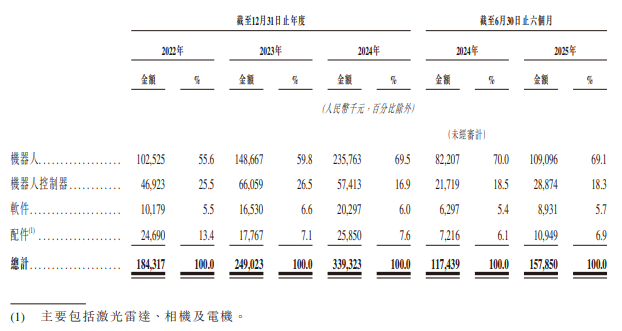
Core Viewpoint - Company X is seeking a secondary listing on the Hong Kong Stock Exchange, having established itself as a leader in the global robotics controller market, with over 2,000 robot models deployed across more than 20 industries, despite ongoing financial losses [1][11]. Company Overview - Founded in April 2020, Company X has developed a comprehensive product matrix including lifting robots, robot controllers, and intelligent forklifts, becoming a leader in both hardware and software in the industry [2]. - The company employs a "technology + platform" dual strategy, enabling scalable deployment across various industries while continuously evolving its AI-driven robotic brain technology [2][11]. Financial Performance - The company reported a compound annual growth rate (CAGR) of 36% in revenue from 2022 to 2024, with a continued high growth rate of 35% in the first half of 2025 [1]. - Despite strong revenue growth, the company has faced cumulative net losses of 173.5 million RMB since 2022, with a net loss margin of 32.1% in the first half of 2025, although this represents a year-on-year improvement of 5.8 percentage points [1][11]. Product and Revenue Breakdown - In the first half of 2025, revenue from robots and controllers was 110 million RMB and 29 million RMB, respectively, contributing 69.1% and 18.3% to total revenue [2][3]. - The software and accessories segments contributed 5.7% and 6.9% to total revenue, respectively [2]. Market Position and Growth Potential - Company X holds a 6.5% market share in the global industrial robot market, ranking third, and a 23.6% share in the robot controller market, leading the industry [8]. - The global industrial robotics market is projected to grow at a CAGR of 27.8%, reaching 220 billion RMB by 2024, with expectations to expand to 1,150 billion RMB by 2029 [7]. Technological and Competitive Advantages - The company’s robot controllers are compatible with over 300 types of components, significantly more than most competitors, which typically support fewer than 100 [8]. - The upcoming SRC-5000 series controller, set to launch in Q3 2024, will integrate AI capabilities, enhancing the performance of industrial robots [6]. International Expansion and Cost Management - Company X is actively expanding into international markets, with overseas revenue accounting for 14% in the first half of 2025, an increase of 5.1 percentage points from 2022 [11]. - The company has maintained a gross margin of 45-47%, with a slight increase to 45.4% in the first half of 2025, while also reducing sales expenses [11]. Investment and Valuation - The company has seen its post-investment valuation increase nearly tenfold from 300 million RMB in the A round to 3.27 billion RMB in the C round [12][15]. - The current valuation metrics indicate a price-to-sales (PS) ratio of 9.4 and a price-to-book (PB) ratio of 24.6, suggesting a higher valuation compared to secondary market peers [15].
上海仙工智能递表港交所,以机器人控制系统为核心构建竞争优势
Ju Chao Zi Xun· 2025-11-29 05:53
Core Insights - XianGong Intelligent Technology Co., Ltd. has submitted its listing application to the Hong Kong Stock Exchange, with China International Capital Corporation as the exclusive sponsor [2] - The company specializes in intelligent robotics, focusing on a "robot brain" technology that integrates control systems and cloud-based software to provide comprehensive robotic solutions [2] - The global intelligent robotics market is projected to grow from 277.8 billion RMB in 2024 to 708.5 billion RMB by 2029, with a compound annual growth rate (CAGR) of 19.4% from 2025 to 2029 [2] Industry Overview - Despite strong growth in the industrial intelligent robotics sector, challenges remain due to high development and application barriers, stemming from complex industrial scenarios and fragmented supply chains [3] - XianGong Intelligent has built a diverse customer base across over 35 countries, serving more than 1,600 integrators and end customers, with applications in over 20 industries including 3C, automotive, new energy, and semiconductors [3] Business Performance - The company's revenue has shown robust growth, increasing from 184 million RMB in 2022 to 339 million RMB in 2024, representing a CAGR of 35.7% [3] - In the first half of 2025, revenue reached 158 million RMB, a 34.5% increase compared to the same period in 2024 [3] Product Analysis - Robot sales are a key growth driver, with revenue rising from 103 million RMB in 2022 to 236 million RMB in 2024, a 129.6% increase, and sales volume increasing from 756 units to 2,576 units [4] - In the first half of 2025, robot sales revenue was 109 million RMB, a 32.7% year-on-year increase, with sales volume growing by 44.2% [4] - The sales of robot controllers also saw significant growth, with sales volume increasing from 1,685 units in 2022 to 4,055 units in 2024, and further to 2,532 units in the first half of 2025 [4] Profitability Metrics - The overall gross margin remained stable, recorded at 46.8% in 2022, 49.2% in 2024, and 45.9% in the first half of 2025 [5] - The gross margin for robot controllers reached 80.5% in the first half of 2025, benefiting from economies of scale and cost control [5] - The adjusted net loss decreased from 31 million RMB in 2022 to 11 million RMB in 2024, indicating a clear trend of improving profitability [6]

豪恩汽电:超声波雷达已成功搭载智元机器人并量产
Zheng Quan Shi Bao Wang· 2025-10-31 06:37
Core Viewpoint - The company, Haon Auto Electric (301488), plans to officially enter the robotics sector in 2024, leveraging its existing automotive perception technology for this new market [1] Business Expansion Path - Initially, the company will enter the market as a perception system supplier, reusing mature perception technology from the automotive field for robotics [1] - The company has established a partnership with NVIDIA to utilize its Thor chip and other core products to develop the "brain" (decision control system) for robots, creating an integrated layout of "perception + decision" [1] Product Layout - The company's product offerings currently cover two core aspects of robotics: - Perception, which includes visual perception (6-8 units per robot), ultrasonic radar perception (6-8 units per robot), and pure solid-state LiDAR - Decision-making, which is based on NVIDIA chips for the robot controller (brain) [1] Collaboration with Clients - The company has formed deep collaborations with leading robotics firms such as Zhiyuan and Zhejiang Renxing, with ultrasonic radar successfully integrated into Zhiyuan's robots and achieving mass production [1]
智微智能20251028
2025-10-28 15:31
Summary of the Conference Call for Zhiwei Intelligent (智维智能) Industry Overview - The company is affected by delays in high-performance server tenders, but traditional businesses like industry terminals and ICT infrastructure are expected to remain stable. Server business has growth potential driven by storage servers [2][4] - Domestic internet companies' capital expenditure has surpassed 100 billion, indicating strong global computing power market demand, with the domestic market likely to maintain or even revise upward capital expenditure [2][5] - Domestic chips are primarily used in the general innovation field, with NVIDIA's high-performance computing servers focused on training, while domestic chips emphasize inference [2][6] Company Performance - For the first three quarters, Zhiwei Intelligent reported revenue of less than 3 billion, with a net profit of 131 million, reflecting a revenue growth rate of 6.89% and a net profit growth rate close to 60% [4] - The third-quarter revenue was 1.03 billion, a year-on-year decline, mainly due to the focus on advantageous and high-growth potential businesses, optimizing less promising market segments [4] - The company’s net profit for the third quarter was less than 30 million, impacted by downstream clients delaying tenders due to high-performance server upgrades [4] Market Trends - The global computing power market can be observed through the CAPEX outlook of the four major CSPs in North America, with domestic internet companies benefiting from capital expenditure [5][6] - The computing power leasing market is difficult to assess due to frequent tenders from internet companies, but some competitors have announced procurement of high-performance servers, indicating a robust demand [6][8] Strategic Initiatives - The company is considering entering the domestic card OEM or server assembly business to address market opportunities arising from the US-China trade dispute and NVIDIA's limited graphics card supply [2][7] - Zhiwei Intelligent has made breakthroughs in humanoid robotics, collaborating with leading domestic clients, with products based on various platforms [2][9] Financial Insights - The impact of rising storage prices on the company's gross margin is limited, as high-performance servers primarily use HBM storage, which has seen price declines [3][16] - Storage costs constitute a small portion of total costs, with CPU or GPU being the largest cost items in traditional OEM businesses [18] Future Outlook - The company anticipates that the tendering process will resume in the fourth quarter, with strong procurement demand from internet companies expected to continue [14][15] - The company plans to disclose more data on the robot controller business by the end of the year, as investor interest in this area is high [12] Product Pricing - Different controller pricing reflects performance differences and application needs, with average prices ranging from 1,000-1,500 yuan for RK3,588 to around 35,000-40,000 yuan for SoC controllers [10] Operational Efficiency - The computing power charging business operates on a make-to-order basis, with a quick turnaround from winning bids to delivery, enhancing operational efficiency [25] Conclusion - Zhiwei Intelligent is navigating challenges in the high-performance server market while exploring new opportunities in domestic card OEM and humanoid robotics, with a focus on maintaining stable revenue streams and optimizing its product offerings in response to market demands.
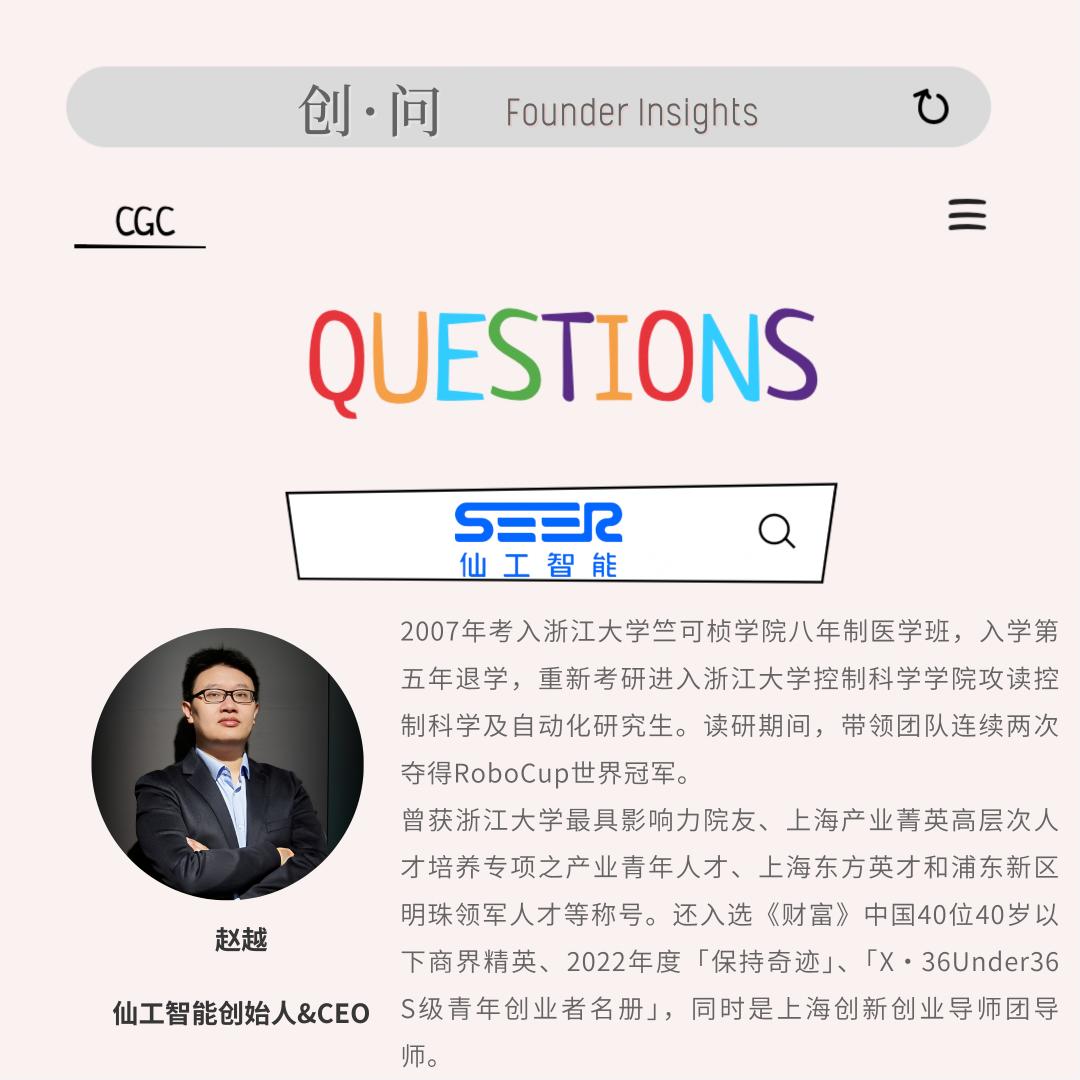
创·问——仙工智能赵越:从造机器人大脑到一站式平台
3 6 Ke· 2025-10-27 02:54
Core Insights - The article highlights the journey of XianGong Intelligent, a leading company in the intelligent robotics sector, focusing on its unique positioning in the market through its control systems and open platform solutions [4][11][50] - The founder, Zhao Yue, emphasizes the challenges and learning experiences faced during the company's development, particularly in standardizing products in a non-standardized industrial market [6][16][22] Company Overview - XianGong Intelligent, founded in 2020, has become the largest intelligent robotics company centered on control systems, achieving the highest global sales of controllers for two consecutive years [4][21] - The company operates in over 20 industries, including automotive, new energy, 3C, semiconductor, engineering machinery, and healthcare, with products and services available in more than 65 countries [4][50] Product and Service Offering - The company provides a one-stop solution comprising "controller + software + robot," which lowers the entry barriers for intelligent robotics in various industries [5][11] - The control system acts as the "brain" of the robots, responsible for perception, intelligent decision-making, and execution of commands, addressing the limitations of existing automation solutions [11][12] Market Positioning and Strategy - XianGong Intelligent identified a gap in the market for standardized control systems that could cater to diverse industrial needs, allowing various companies to build their own robots efficiently [9][10] - The company has developed a scalable open platform that enables integration among different robotic solutions, facilitating communication and collaboration between robots from different manufacturers [14][15] Challenges and Solutions - Zhao Yue discusses the difficulties in adapting control systems to a wide range of sensors and ensuring compatibility across various robotic applications, which is essential for building a robust ecosystem [16][17] - The company has faced internal skepticism regarding its focus on control systems over complete robots, but has maintained its commitment to this path, leading to a stable customer base of over 1,500 clients [21][22] Future Outlook - XianGong aims to further reduce the barriers in the robotics development chain, aspiring to create a comprehensive platform where users can easily obtain automation solutions tailored to their needs [50] - The company is preparing for an IPO, viewing it as a starting point to enhance its capabilities and expand its influence in the robotics industry [50]
港股异动丨知行科技大涨超8%,近期发布多项利好消息
Ge Long Hui· 2025-10-21 02:20
Core Insights - Zhixing Technology (1274.HK) experienced a rapid increase of over 8%, currently trading at 7.36 HKD, with a total market capitalization of 1.9 billion HKD [1] Group 1: Company Developments - On September 25, Zhixing Technology announced the opening of its new headquarters building, alongside the release of several technological achievements, including an end-to-end urban auxiliary driving system, robot controllers, and a 5G smart manufacturing base [1] - As of the end of September, Zhixing Technology secured 34 new mass production project designations in the auxiliary driving business, with several projects achieving first launches in China and globally, and the company also received mass production designations from a leading manufacturer in South China [1] Group 2: Strategic Direction - Analysts suggest that Zhixing Technology is outlining a "dual-track" development roadmap, focusing on solidifying its automotive foundation while simultaneously exploring new opportunities in embodied intelligence [1]
