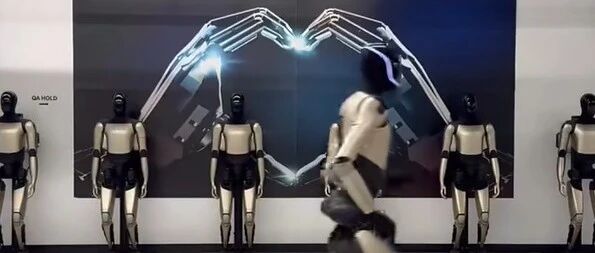
T800人形机器人

Search documents
冠军团队将斩获十公斤价值1000万元的纯金腰带 全球首个人形机器人格斗联赛URKL启动!
机器人大讲堂· 2026-02-12 09:15
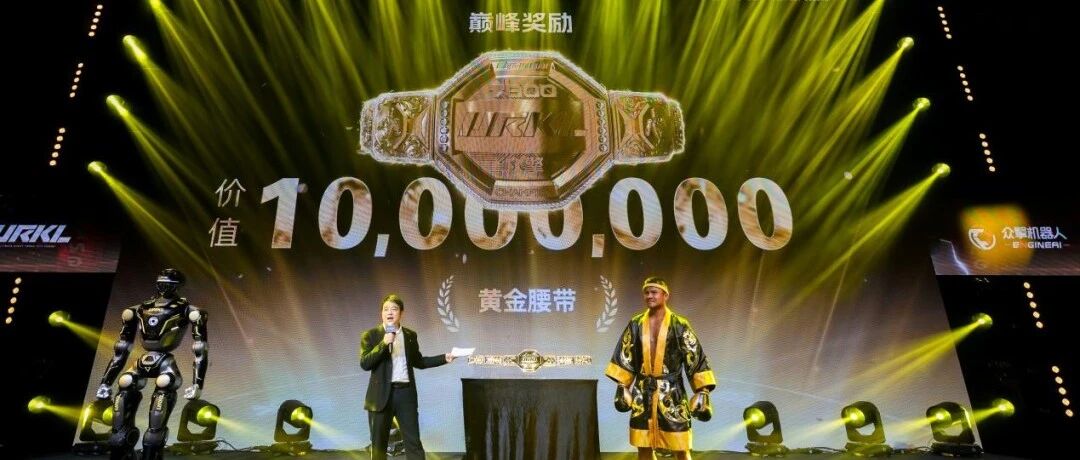
Core Viewpoint - The first Global Humanoid Robot Free Fighting League (URKL) is launched in Shenzhen, focusing on commercializing humanoid robot combat competitions, with a championship prize of a 10 kg pure gold belt valued at approximately 10 million yuan [1][2]. Group 1: Event Structure and Development - The URKL league will span the entire year of 2026, featuring a selection process that narrows down to 16 teams through registration and preliminary rounds, followed by group stage matches and knockout rounds to determine the champions [2][4]. - Future editions of the URKL league are planned to occur twice a year, with potential locations including Hong Kong, New York, and London, promoting the global development of humanoid robot competitions [6]. Group 2: Technology and Robot Specifications - The T800 humanoid robot, developed by the company, serves as the standard competition model, featuring a market price starting at 180,000 yuan and boasting performance metrics that exceed 90% of adult males in terms of physical capabilities [8][10]. - The T800's source code will be made open to encourage global collaboration in optimizing humanoid robot technology, aiming to create versatile robots capable of various tasks [12]. Group 3: Technical Challenges and Objectives - The league aims to rigorously test four core technologies of humanoid robots: motion control, intelligent decision-making, dynamic balance, and impact resistance, through the competitive format of combat [15][17]. - The competition requires robots to perform complex human-like fighting actions, presenting significant challenges in their technical systems, including coordination of multiple joints and real-time environmental response [17]. Group 4: Industry Impact and Cultural Integration - The URKL league is open to global teams from universities, enterprises, and research institutions, fostering the development of humanoid robots' core capabilities and pushing technological advancements from laboratory settings to real-world applications [18]. - The league integrates traditional Chinese "Kung Fu" culture with modern sports, positioning China at the forefront of the global humanoid robot competition landscape [20]. - The company is entering a critical phase of industrialization, with plans for a 10,000 square meter factory in Shenzhen and a 200-acre production base in Zhengzhou, aiming for an annual production capacity exceeding 100,000 units by 2026 [22].

马斯克坚定发声,看好机器人!大族激光涨超4%,机器人ETF汇添富(159213)涨1.58%!2026年机器人产业迎“奇点”时刻!
Sou Hu Cai Jing· 2026-02-09 10:41
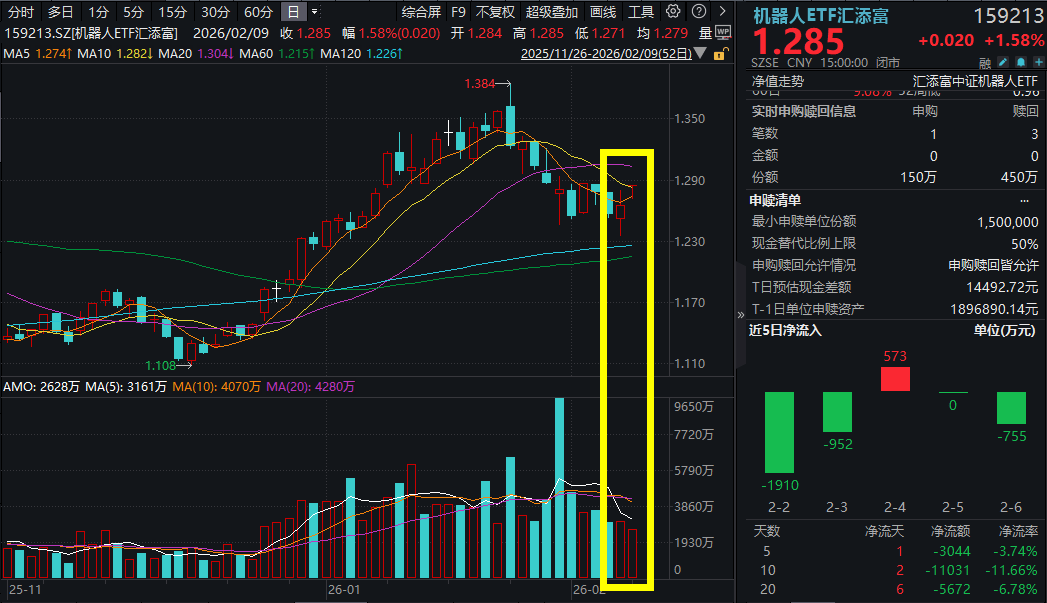
Core Viewpoint - The A-share market experienced a strong upward trend on February 9, with the Shanghai Composite Index rising by 1.4% and over 4,600 stocks increasing in value, indicating a positive market sentiment towards the robotics sector and related ETFs [1] Group 1: Market Performance - The Huatai-PB ETF (159213) rose by 1.58%, marking two consecutive days of gains [1] - Key component stocks of the robotics ETF showed mixed performance, with major players like Dazhong Laser and Green Harmony rising over 4%, while others like Zhongkong Technology saw a decline of 2.75% [2][3] Group 2: Industry Developments - The URKL Global First Human Robot Free Fighting League 2026 season was launched in Shenzhen, highlighting the growing interest and investment in robotics, with participating teams receiving T800 humanoid robots for practical development [5] - Elon Musk expressed strong confidence in the robotics sector, stating that without AI and robotics, the U.S. would face significant decline, emphasizing the economic potential of robotics as a "limitless money printing machine" [5] Group 3: Strategic Insights - According to CITIC Securities, the robotics industry is at a critical juncture, transitioning from "technological vision" to "industrial reality," with 2026 expected to be a year of mass production [6][7] - The industry is becoming a strategic focal point in the global competition for the fourth industrial revolution, with robotics serving as a key physical embodiment of AI [6] - The Chinese government is implementing a refined governance model to support the robotics industry, contrasting with the U.S. approach that previously lost its industrial robot leadership [8] Group 4: Investment Opportunities - The robotics sector is anticipated to experience explosive growth as it moves from prototype to commercial delivery, with significant advancements in technology and production capabilities [7][8] - The ETF Huatai-PB (159213) and related funds provide investors with a direct avenue to engage with the rapidly growing robotics industry, which is projected to have a substantial market potential [8]

京东砸百亿造机器人大军,刘强东砸50亿暗布局,占机器人半壁江山
Sou Hu Cai Jing· 2026-01-12 14:15
Core Insights - JD.com has quietly emerged as a significant player in the robotics sector, moving beyond its traditional retail and logistics business model [1] - The company is leveraging its supply chain and offline channels to push advanced robotics applications across various industries [5][10] Group 1: Market Performance and Product Launches - JD.com opened its first offline store for robotics in Beijing, achieving over 10% of last year's total revenue in sales within half a day, demonstrating strong market demand [3] - The company has successfully integrated robotics into practical applications, such as using humanoid robots for delivery alongside human staff, enhancing customer experience [3][5] Group 2: Strategic Partnerships and Ecosystem Development - JD.com is not operating in isolation; it has formed alliances with over 20 robotics brands, showcasing new products exclusively through its channels at major events like CES 2026 [8] - The company has invested over 5 billion in six robotics firms within 74 days, building a comprehensive robotics ecosystem that includes AI technology support from partners like iFlytek [12] Group 3: Long-term Vision and Market Trends - JD.com aims to procure 3 million robots, 1 million unmanned vehicles, and 100,000 drones over the next five years, focusing on logistics and supply chain automation [12][14] - The market for robotics is projected to reach $108 billion in China by 2028, with JD.com positioned to capitalize on this growth through its dual strategy of self-research and collaboration [14][16] Group 4: Future Aspirations and Innovations - JD.com is expanding its definition of robotics beyond humanoid forms to include quadrupedal robots and exoskeletons, aiming to create products that interact with humans and the environment [16] - The company envisions developing pet-like robots that can accompany owners, tapping into a potentially lucrative market segment [16][18]



中国科技企业闪耀CES,以创新和品牌力突围
2 1 Shi Ji Jing Ji Bao Dao· 2026-01-10 00:10
Group 1 - The core viewpoint of the articles highlights the increasing presence and competitiveness of Chinese technology companies at the CES 2026, showcasing a shift from traditional manufacturing roles to a more diversified global strategy that emphasizes technology, design, and localized operations [1][4]. - Chinese companies are exhibiting a strong focus on AI integration, with nearly all exhibitors emphasizing AI in their presentations, indicating a trend towards practical applications rather than just theoretical concepts [2][3]. - The number of Chinese humanoid robot exhibitors at CES 2026 exceeds 20, surpassing the total from the US, Japan, South Korea, and Europe combined, demonstrating a significant cluster effect in this sector [2]. Group 2 - In the first three quarters of 2025, China's export of high-tech products reached 37.5 trillion yuan, marking an 11.9% increase and contributing over 30% to the overall export growth during the same period [1]. - The global market for robotic vacuum cleaners is dominated by Chinese brands, which accounted for over 60% of the market share in terms of shipment volume in 2025 [5]. - Chinese technology companies are increasingly focusing on brand building after achieving significant sales milestones, with many adopting interactive marketing strategies to enhance brand visibility and consumer engagement [6][7]. Group 3 - The CES serves as a window into technological trends and reflects the journey of Chinese companies expanding into overseas markets, with a notable increase in brand recognition and a shift away from the "low-price label" to a "technology leader" image [4][6]. - The rapid iteration cycles of Chinese companies, averaging six months to a year for product updates, contrast with European companies that typically require two to three years, allowing for quicker market responsiveness [4][6]. - Challenges remain for Chinese companies in navigating diverse market environments, including varying consumer preferences, regulatory requirements, and external uncertainties, which necessitate comprehensive long-term strategic planning [7][8].
这些全球首发的硬核科技,都来自同一个地方
21世纪经济报道· 2025-12-27 08:24
Core Viewpoint - The article highlights the emergence of Guangdong as a global launchpad for innovative technologies and products, driven by the "premiere economy" that transforms exhibition traffic into tangible orders, thereby enhancing the region's influence in the global market [1][2]. Group 1: Premiere Economy - The premiere economy is characterized by the rapid launch of new technologies and products at global exhibitions, such as the AIE, which has led to significant sales in markets like the US, Canada, and the UK [1]. - Guangdong's "14th Five-Year Plan" emphasizes the development of the premiere economy, focusing on cities like Guangzhou and Shenzhen to enhance product visibility and brand reputation [1]. - The premiere platforms in Guangdong are not limited to offline sales but aim to create comprehensive environments for technology display, interactive experiences, and feedback collection [1]. Group 2: Technological Innovation - Guangdong is transitioning from a "manufacturing base" to a "premiere highland" for global technological innovation, showcasing numerous world-first technologies, including the first operational certificate for unmanned aerial vehicles and advanced robotics [4]. - The region has seen significant technological breakthroughs, such as the world's first humanoid robot capable of performing complex movements and the introduction of innovative products like the MAXHUB X7 quadruped robot [4][10]. - The dynamic cycle of "technological breakthroughs—premiere validation—innovation feedback" is effectively shortening the distance between technology and market [7]. Group 3: Global Market Positioning - Guangdong's strategic location, backed by Hong Kong and Macau, positions it as a gateway for international brands entering China and for Chinese manufacturing to reach global markets [2][9]. - The region's robust manufacturing ecosystem and flexible supply chain facilitate rapid transformation of technological achievements into market-ready products [2][10]. - The premiere economy allows Guangdong to redefine its ecological position in the global industrial landscape, attracting quality buyers and overseas investment [9][12]. Group 4: Industry Development - The integration of various industries in Guangdong, supported by favorable policies and a strong innovation ecosystem, is driving the transformation of traditional manufacturing into high-tech production [11]. - Companies like ExxonMobil and TCL are establishing new production lines in Guangdong, contributing to the region's economic dynamism and enhancing the product structure for a "second wave" of globalization [11]. - The collaboration between Macau and the Greater Bay Area is fostering a unique environment for cross-border technological trials and innovation, enhancing the region's attractiveness to international tech firms [11].





人工智能(AI)产业规模超2300亿元 机器人(Robotics)产业“深圳天团”亮眼 广东“AIR”产业稳居全国龙头
Shen Zhen Shang Bao· 2025-12-09 17:46
Group 1 - The core viewpoint of the articles highlights Guangdong's leading position in the artificial intelligence (AI) and robotics industry, with industrial robot production accounting for over 40% of the national total and service robots over 80% [1] - From January to October, the core AI industry in Guangdong reached a scale of over 230 billion yuan, with industrial and service robot production at 260,200 units and 12,838,800 units respectively, maintaining the top position in the country [1] - The Guangdong Provincial Office for AI and Robotics Innovation Development emphasizes the province's advantages in electromechanical and digital intelligence technologies, leading in R&D capabilities, enterprise development, key products, industry applications, and market potential [1] Group 2 - The "2025 Guangdong-Hong Kong-Macao Greater Bay Area AI and Robotics Industry Conference and Skills Competition" (XAIR Conference) will be held from December 12 to 14 in Guangzhou, showcasing Guangdong's AI and robotics industry [2] - The conference will feature a high-profile gathering of industry leaders and will include the participation of notable companies from Shenzhen, presenting their latest innovations in robotics [2] - The event will also host the 2025 Guangdong AI and Robotics Skills Competition, allowing for live demonstrations of robots in various applications, alongside a consumer technology carnival [3] Group 3 - Since the establishment of the leadership office in March, Guangdong has initiated a wave of innovation in the AI and robotics industry, with local governments forming specialized teams to support development [5] - A comprehensive policy matrix has been established to support the AI and robotics industry across key cities in Guangdong, including Guangzhou, Shenzhen, and Dongguan [5] - Guangdong aims to build an AI industry ecosystem to support various AI enterprises, with a focus on creating a core industrial layout centered around Guangzhou and Shenzhen [5]
众擎机器人踹翻自家老板背后:是技术突破,还是营销泡沫? 原创 凤凰网财经 凤凰网财经 2025年12月9日 20:49 北京
Feng Huang Wang Cai Jing· 2025-12-09 14:26
Core Viewpoint - The incident involving the T800 humanoid robot kicking its CEO, Zhao Tongyang, has sparked widespread discussion about the safety and marketing strategies of humanoid robots, highlighting the balance between innovation and consumer safety concerns [2][6]. Group 1: Product and Performance - The T800 humanoid robot is equipped with a high-performance solid-state battery, providing 4-5 hours of stable operation and capable of executing complex movements, achieving approximately 90% of an adult male's physical capabilities [3]. - The T800 is priced starting at 180,000 yuan, and it is the fourth humanoid robot launched by the company, which also offers various versions including basic, ecological, sharpened, and flagship models [4]. Group 2: Market and Competition - The company is in direct competition with other leading humanoid robot manufacturers, particularly Yushun Technology, as both companies aim to commercialize humanoid robots [3]. - The global humanoid robot market is projected to reach $154 billion by 2035, indicating significant growth potential despite current challenges in finding a clear profit model [13]. Group 3: Funding and Financial Backing - The company has successfully raised significant funding, including nearly 1 billion yuan in angel financing and a total of 1 billion yuan in Pre-A++ and A1 rounds, with major investors like JD.com and CATL participating [10]. - The company has also faced scrutiny regarding its production capabilities, particularly after reports of delays in its "robot police" product, raising questions about its operational sustainability [11]. Group 4: Industry Context and Challenges - The humanoid robot industry is becoming increasingly crowded, with major tech companies like Tesla, Xiaomi, and Google investing heavily in this space, indicating a competitive landscape [12]. - Despite the hype and investment, the industry has yet to establish a stable cash flow, with current profitable applications limited to specific industrial environments and research demonstrations [13].
众擎机器人踹翻自家老板背后:是技术突破,还是营销泡沫?
凤凰网财经· 2025-12-09 12:52
Core Viewpoint - The recent demonstration of the T800 humanoid robot, which accidentally knocked down its CEO Zhao Tongyang, has sparked widespread discussion about the safety and performance of humanoid robots in the industry [2][10]. Group 1: Product and Performance - The T800 humanoid robot is the first in the world to successfully perform a front flip and is equipped with a high-performance solid-state battery, allowing for 4-5 hours of stable operation [5]. - The robot can execute complex movements, achieving approximately 90% of an adult male's physical capabilities [5]. - The incident during the demonstration was attributed to a "sensor misjudgment" by the company, although some insiders suggested it was a deliberate marketing stunt [5][8]. Group 2: Market and Competition - The T800 is priced starting at 180,000 yuan and is part of a product matrix that includes various versions such as a basic version, ecological version, and a flagship version [8]. - The humanoid robot market is becoming increasingly competitive, with companies like UTree Technology also developing humanoid robots, leading to direct competition between Zhao's company and UTree [5][20]. - The global humanoid robot market is projected to reach $154 billion by 2035, indicating significant growth potential despite current challenges in finding a clear profit model [21]. Group 3: Company Background and Funding - Zhao Tongyang, the founder of Zhongqing Robotics, has a background in entrepreneurship and previously worked at Xiaopeng Motors before establishing his current company [11][15]. - Zhongqing Robotics has successfully raised significant funding, including nearly 1 billion yuan in angel financing and 1 billion yuan in subsequent rounds led by major investors like JD.com [17][18]. - The company aims to explore profitable applications for humanoid robots, particularly in entertainment and industrial sectors, as it faces pressure to demonstrate its technological capabilities [20].
当场“种草”!蒙古国记者打卡湾区机器人,直呼“想下单”
2 1 Shi Ji Jing Ji Bao Dao· 2025-12-07 09:13
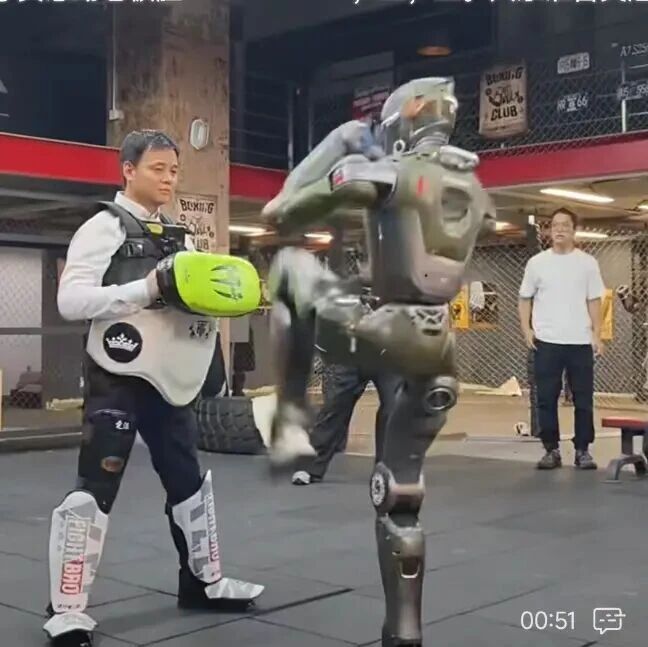
Group 1 - The core focus of the news is on the advancements and commercialization of humanoid robots in China, particularly through companies like Ubiquiti and Zhongqing Technology, which are showcasing their innovations to international media [1][2]. - The T800 humanoid robot from Zhongqing Technology is currently in prototype testing, while the PM01 model has begun mass production with a price below 100,000 yuan, primarily targeting research and education applications [2]. - Ubiquiti Technology recently released a video showcasing the mass delivery of hundreds of industrial humanoid robots, which has faced skepticism regarding its authenticity, but the company asserts the footage is genuine [3]. Group 2 - The current applications of humanoid robots are mainly in research and education, with future plans to expand into industrial sectors, including partnerships with major automotive manufacturers for training and logistics tasks [2]. - The key to achieving large-scale commercialization of humanoid robots lies in the development of advanced AI models, as current hardware and motion control capabilities are nearing maturity [2]. - Mongolian journalists expressed a strong interest in the potential applications of humanoid robots across various industries in Mongolia, highlighting their role as effective assistants in the workforce [3].
机器人,跑起来了
财联社· 2025-12-04 13:50
Core Viewpoint - The competition in the humanoid robot sector is intensifying, highlighted by recent developments from Tesla and Figure, with significant government interest in accelerating the industry's growth [8][10]. Group 1: Industry Developments - Tesla's Optimus robot recently showcased its running capabilities, achieving a speed of approximately 2.5-3 meters per second, which is close to a human jogging pace [10]. - Figure's F.03 humanoid robot also demonstrated its running abilities, indicating advancements in robotic control and neural network technology [8]. - The U.S. government is considering an executive order to promote the robotics industry, with the Department of Transportation planning to establish a robotics working group by the end of the year [10]. Group 2: Market Response - Following news of advancements in humanoid robotics, several stocks in the A-share robotics industry surged, with companies like Haichang New Materials and Hwa Wo股份 reaching their daily limit up [10][11]. - The humanoid robotics sector is experiencing rapid growth, with the industry projected to reach a market size of 100 billion yuan by 2030, growing at an annual rate exceeding 50% [11][12]. Group 3: Technological Innovations - Recent releases include the T800 humanoid robot from Zhongqing Robotics, featuring advanced joint modules and capabilities surpassing 90% of adult males [12]. - Xiaopeng Motors has also introduced a new humanoid robot, IRON, designed with biomimetic features and flexible skin, addressing previous criticisms regarding its realism [12]. Group 4: Industry Landscape - The humanoid robot industry in China has over 150 companies, with many being startups or cross-industry entrants, indicating a crowded market that may face challenges such as product redundancy and compressed R&D space [14]. - Analysts suggest focusing on leading companies in the sector, such as Tesla and Yushu, as the market consolidates around key players [14].