
榴莲披萨

Search documents
江苏制造勇闯东南亚
Xin Hua Ri Bao· 2025-12-08 04:48
Core Insights - The "Silk Road E-commerce" event highlighted the significant potential of the Southeast Asian market for Jiangsu enterprises, emphasizing the need for deep localization to capitalize on this opportunity [1][8] - The Southeast Asian e-commerce market is transitioning from a "traffic dividend" phase to a "brand cultivation" phase, necessitating a shift in strategy for Jiangsu companies from mere product export to brand building and localized user experiences [2][3] Group 1: Market Dynamics - Southeast Asia, particularly Malaysia, Thailand, and Indonesia, is moving towards refined brand operations as local consumers mature and competition intensifies [2] - Jiangsu's manufacturing strengths, such as wearable devices and smart home appliances, have been validated in the mid-to-high-end Southeast Asian market, presenting both challenges and opportunities for brand recognition [3] Group 2: Data-Driven Localization - The use of AI tools like Adqlo can help companies analyze social media data across platforms to gain actionable consumer insights and market trends, facilitating effective localization strategies [4][5] - Successful case studies, such as the launch of "Iron Guanyin Coconut Tea" by a tea brand in Malaysia, demonstrate the effectiveness of data-driven approaches in identifying and responding to local market demands [5] Group 3: Talent and Compliance - Building and managing an efficient local team is a common challenge for Chinese companies entering Southeast Asia, where the job market is competitive and local talent has high expectations [6][7] - Companies like Astar provide essential services for local recruitment and compliance, helping Jiangsu enterprises navigate the complexities of local labor laws and operational needs [7] Group 4: Strategic Implications - The shift from simple goods export to regional supply chain integration reflects a new trend in international trade, where Jiangsu manufacturers are increasingly focusing on local production and procurement to meet regulatory requirements [7][8] - The Southeast Asian market serves as a critical avenue for Jiangsu enterprises to optimize production capacity and enhance global brand influence amidst dual pressures of growth and capacity optimization [8]
比萨市场,三个品牌,三种命运
东京烘焙职业人· 2025-11-15 08:32
Core Viewpoint - The article discusses the contrasting trajectories of three pizza brands in China: Pizza Hut, Domino's, and Mister Pizza, highlighting the importance of deep localization in the competitive restaurant market [5][9][56]. Group 1: Pizza Hut's Challenges - Yum China has initiated a comprehensive strategic review of Pizza Hut, considering options such as sale or divestiture, reflecting dissatisfaction with the brand's current performance [6][10][11]. - Pizza Hut's global same-store sales fell by 1% in Q3 2025, with an 8 percentage point decline in operating profit margin, making it the only core brand under Yum to experience growth stagnation [18]. - The brand's market share in the U.S. has decreased from 22.6% in 2019 to 18.7% in 2024, losing its leading position to Domino's [19]. Group 2: Pizza Hut China’s Resilience - Despite global challenges, Pizza Hut China has shown growth, with Q3 2025 revenue increasing by 3.25% and system sales up by 1%, driven by a strategic focus on local operations [20][23]. - The brand's success in China is attributed to a 35-year deep localization strategy, including product innovation and a diverse store model to cater to different consumer segments [24][28]. - Pizza Hut China has effectively utilized a localized supply chain, enhancing operational efficiency and market responsiveness [30][32]. Group 3: Mister Pizza's Decline - Mister Pizza, once a prominent Korean brand in China, has faced significant challenges, including management issues and a decline in consumer interest due to changing cultural trends [36][44]. - The brand's reliance on the "Korean Wave" for expansion has proven unsustainable, leading to a loss of market share as domestic brands gain popularity [48][55]. - By 2025, Mister Pizza had accumulated multiple legal issues and a shrinking store footprint, illustrating the consequences of operational mismanagement [50][52]. Group 4: Domino's Success - Domino's China has experienced remarkable growth, with revenue reaching 4.314 billion yuan in 2024, a 41.4% increase year-on-year, and a net profit surge of 1394.2% [64]. - The brand's strategic shift towards deep localization, including menu innovation and a focus on lower-tier cities, has been pivotal in its turnaround [67][68]. - Domino's has successfully integrated local flavors into its offerings, such as introducing unique products that resonate with Chinese consumers, enhancing its market appeal [73][76]. Group 5: Key Insights - The contrasting fortunes of these brands underscore that past successes do not guarantee future performance in the rapidly evolving Chinese restaurant market [79]. - Deep localization is essential for success, as demonstrated by Domino's and Pizza Hut China, which have adapted their strategies to meet local consumer demands [82][83].


记者手记|从制冰机到榴莲球:“中国制造”在印尼电商展获青睐
Xin Hua She· 2025-11-08 14:59
Group 1 - The event showcased over 400 brands, highlighting the integration of digital technology with "Made in China" products, which attracted significant interest from international buyers [1][2] - Guangdong Hongshi Intelligent Technology Co., Ltd. presented various consumer electronic security products, including a 4G solar-powered camera with AI human tracking capabilities, demonstrating the innovative edge of Chinese manufacturing [1][2] - The popularity of creative durian-based food products from Mr. Durian (Guangdong) Industrial Co., Ltd. indicates a growing interest in local partnerships and sourcing raw materials from Indonesia [2] Group 2 - Indonesia's digital economy is projected to reach $90 billion in 2024 and grow to $360 billion by 2030, with small and medium enterprises accelerating their entry into the global market through cross-border e-commerce platforms [3] - The appeal of the Indonesian market lies in its large consumer base, youthful demographic, active social media environment, and interconnected e-commerce system, fostering collaboration between China and Indonesia in various sectors [3] - The integration of smart manufacturing and e-commerce channels is facilitating the establishment of Chinese products in Indonesia while opening doors for Indonesian enterprises to engage in the global e-commerce network [3]
提前完成全年开店目标,国际餐饮巨头血拼下沉市场
3 6 Ke· 2025-10-13 00:37
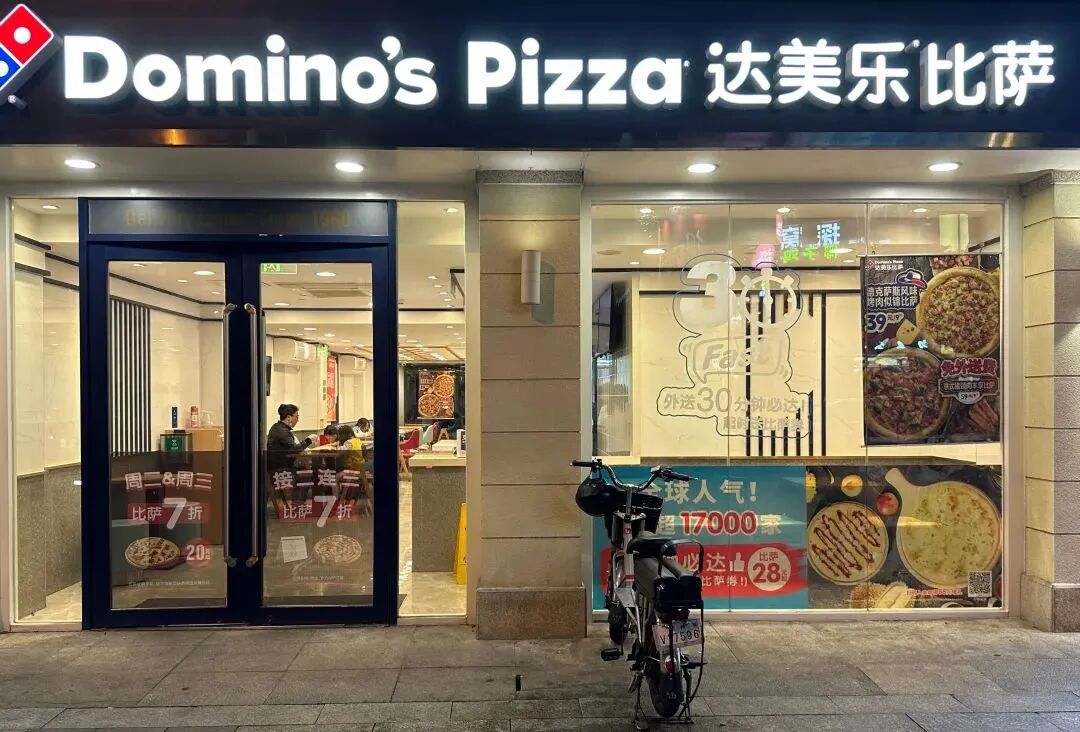
Group 1 - The core viewpoint is that Domino's China is rapidly expanding its store network while seeking a balance between scale and profitability, particularly focusing on lower-tier markets [1][11] - As of the third quarter of this year, Domino's China has added 275 new stores, achieving nearly 100% of its goal of 300 new openings for the year [2][1] - The company has shifted its focus from first-tier cities to lower-tier markets, with a total of 1,283 stores in mainland China, making it the third-largest international market for Domino's globally [4][7] Group 2 - New store openings in lower-tier markets have resulted in record sales, with the first store in Xuzhou achieving over 680,000 yuan in sales on its opening day, setting a global record [6][7] - Despite rapid expansion, same-store sales growth has declined from 8.9% in 2023 to 2.5% in 2024, with a further drop to -1% in the first half of 2025, marking the lowest level since 2017 [14][11] - The average transaction value has decreased from 86.8 yuan in the previous year to 82.1 yuan in 2024, reflecting challenges in maintaining profitability amid aggressive expansion [11][14] Group 3 - The competitive landscape in the pizza market is intensifying, with major players like Pizza Hut and local brands also focusing on lower-tier markets and value-driven strategies [15][20] - Pizza Hut has reduced prices on several products, resulting in a 13% drop in average transaction value to 76 yuan, while expanding its presence in lower-tier cities [15][17] - The overall pizza market in China is projected to exceed 500 billion yuan by 2025, with over 40,000 pizza outlets nationwide, indicating a growing and competitive environment [14][15]
必胜客“泰国日”以榴莲为媒 “链”动中泰“甜蜜经济”
Zheng Quan Ri Bao· 2025-07-18 10:26
Group 1 - The third China International Supply Chain Promotion Expo (Chain Expo) was held in Beijing from July 16 to July 20, showcasing the collaboration between YUM China and its supply chain partners for the second consecutive year [1] - During the event, YUM China's Pizza Hut brand hosted a "Thai Day" themed activity, emphasizing the integration of supply chain collaboration, culinary innovation, and cultural exchange through interactive exhibits and a durian tasting experience [1][3] - The event highlighted the importance of supply chain synergy between Thailand and China, showcasing how Thai durians have become popular among Chinese consumers through effective supply chain management [1][2] Group 2 - Thai durian supplier Gao Feng's successful integration into YUM China's supply chain exemplifies the potential of the "Belt and Road" initiative, demonstrating the benefits of standardized practices and international food safety certifications [2] - YUM China has been operating in China for 35 years, focusing on product innovation by incorporating Thai durians into various menu items, making them accessible to a broader audience [2] - The collaboration with popular youth brands has transformed durian into a trendy item among Generation Z, enhancing the cultural exchange between China and Thailand [2]