欣·碧霄

Search documents
“祛魅”固态电池:固态电池并非绝对安全,液态电池不会必然被替代
Xin Lang Cai Jing· 2025-12-15 13:33
Core Viewpoint - The solid-state battery industry is experiencing significant investment and market enthusiasm, but there are growing concerns about its safety and the potential for traditional lithium batteries to remain relevant [2][3][20]. Investment and Market Trends - Over 40 investment events related to solid-state batteries have occurred this year, attracting various national and international investors, including major financial institutions and venture capital firms [2][19]. - The solid-state battery index has seen substantial growth, with individual stocks like Shanghai Xiba (SH: 603200) increasing over 241% this year, and a notable trading volume of 16.1 billion on September 5 for Pioneer Intelligent (SZ: 300450) [2][19]. Safety Concerns - Experts are cautioning against the absolute safety claims of solid-state batteries, highlighting that they also have safety risks, particularly in the context of thermal runaway [3][21][22]. - The potential for solid-state batteries to cause more severe incidents if they fail is compared to traditional lithium batteries, which are seen as less dangerous in failure scenarios [21][22]. Technological Developments - The solid-state battery is often touted as the "ultimate form" of lithium batteries, but the industry is witnessing advancements in traditional lithium battery safety through material innovations and structural optimizations [26][27]. - Research is ongoing into flame-retardant additives and surface coating technologies for traditional lithium batteries, which are showing promise in enhancing safety [27][29]. Route Controversy - The solid-state battery technology landscape includes various routes: sulfide, oxide, and polymer, with sulfide being previously viewed as the leading option [31][32]. - Recent developments indicate that other routes, particularly polymer and oxide technologies, are making significant progress and may challenge the dominance of sulfide technology [34].








利好!热门赛道,新进展
Zheng Quan Shi Bao· 2025-11-23 11:30
Core Insights - The first large-capacity all-solid-state battery production line in China has been completed and is currently undergoing small-scale testing [1] - The all-solid-state battery technology is seen as a significant breakthrough in addressing "range anxiety" and "safety concerns" in the electric vehicle industry [1][3] - The energy density of the newly developed all-solid-state battery is nearly double that of existing batteries, enabling vehicles with over 500 kilometers of range to achieve more than 1000 kilometers [1] Industry Developments - The all-solid-state battery is referred to as the "holy grail of next-generation battery technology" due to its higher energy density and inherent safety compared to traditional liquid lithium batteries [3] - The technology has been included in national strategic initiatives, highlighting its importance for high-quality development in the new energy storage manufacturing sector [3] - No company globally has yet commercialized all-solid-state batteries, but several companies, including CATL and Changan Automobile, have set timelines for production and testing between 2025 and 2027 [3][4] Company Progress - GAC Group has established the first large-capacity all-solid-state battery production line, with plans for small-scale vehicle testing by 2026 and mass production between 2027 and 2030 [1] - SAIC Group's all-solid-state battery production line in Shanghai is set to achieve sample production by the end of this year, with vehicle testing planned for next year and mass production by 2027 [6] - Penghui Energy has completed its all-solid-state battery pilot line, while Baichuan Co. is monitoring the technology's development without current plans for mass production [6]




利好!热门赛道,新进展!
Zheng Quan Shi Bao· 2025-11-23 11:05
Core Insights - The solid-state battery technology is making significant progress, with GAC Group establishing the first large-capacity solid-state battery production line in China, capable of mass production of automotive-grade solid-state batteries with over 60Ah capacity [1] - The energy density of the newly developed solid-state batteries is nearly double that of existing batteries, enabling vehicles with over 500 km range to achieve over 1000 km after usage [1] - The industry anticipates small-scale vehicle testing by 2026 and gradual mass production from 2027 to 2030 [1] Industry Developments - Solid-state batteries are referred to as the "holy grail of next-generation battery technology," offering higher energy density, inherent safety, longer lifespan, and wider temperature range compared to traditional liquid lithium batteries [2] - No company has yet commercialized solid-state batteries globally, but several companies, including CATL and Changan Automobile, plan to achieve vehicle integration by 2027, with Changan's battery safety improved by 70% over liquid batteries [2] - The industry expects a peak in pilot production lines in 2026, with small-scale commercialization starting in 2027 and a potential market scale of 100 GWh by 2030 [3] Company Updates - SAIC Group announced that its solid-state battery production line in Shanghai has been fully operational, with sample production expected by the end of this year and vehicle testing in 2024, aiming for mass production in 2027 [4] - Penghui Energy confirmed that its solid-state battery pilot line is operational, with results pending further evaluation [4] - Baichuan Co. has conducted research on solid-state battery technology but has not yet achieved mass production, indicating ongoing monitoring of industry developments [4]



利好!固态电池赛道,新进展!
Zheng Quan Shi Bao· 2025-11-23 11:03
Core Insights - The first large-capacity all-solid-state battery production line in China has been completed and is currently undergoing small-scale testing [1] - The all-solid-state battery technology is seen as a significant breakthrough in addressing "range anxiety" and "safety concerns" in the electric vehicle industry [1] - The energy density of the newly developed all-solid-state battery is nearly double that of existing batteries, enabling vehicles with over 500 kilometers of range to achieve more than 1000 kilometers [1] Industry Developments - Currently, no company globally has commercialized all-solid-state batteries, but several companies have set timelines for production and testing [2] - Companies like CATL and Changan Auto plan to achieve vehicle integration by 2027, with Changan's battery safety improved by 70% compared to liquid batteries [2] - The industry is expected to see a peak in pilot production lines in 2026, with small-scale commercialization anticipated by 2027 and a potential market scale of 100 GWh by 2030 [2] Technological Advancements - The transition from laboratory to pilot production for all-solid-state batteries is accelerating, with multiple companies initiating pilot line construction [3] - Key challenges include material systems, manufacturing processes, and cost reduction, with ongoing engineering validation of core processes [3] - The demand for equipment is expected to rise as pilot lines transition to GWh-level production, benefiting equipment manufacturers [3] Company Updates - SAIC Group has achieved full connectivity of its all-solid-state battery production line in Shanghai and plans to conduct vehicle testing in 2023 [4] - Penghui Energy has established its pilot line for solid-state batteries, with results pending further evaluation [4] - Baichuan Co. is monitoring the development of solid-state battery technology but has not yet initiated mass production [4] - The Chinese Association for Science and Technology emphasizes the need to overcome technical bottlenecks in manufacturing costs and lifecycle for solid-state batteries [4]


利好!热门赛道,新进展!
证券时报· 2025-11-23 11:01
Core Viewpoint - The domestic first large-capacity all-solid-state battery production line has been established, marking a significant milestone in the advancement of solid-state battery technology, which is crucial for overcoming "range anxiety" and "safety concerns" in the electric vehicle industry [1][3]. Group 1: Industry Developments - The all-solid-state battery technology is recognized as the "holy grail of next-generation battery technology," offering higher energy density, inherent safety, longer lifespan, and wider temperature range compared to traditional liquid lithium batteries [3]. - The all-solid-state battery has been included in the national strategic technology development plan, indicating its importance for future energy storage solutions [3]. - Major companies like CATL and Chuangxin Hang plan to achieve all-solid-state battery vehicle integration by 2027, while others like Changan Automobile aim for a prototype by the end of 2025 [3][4]. Group 2: Production and Testing - GAC Group has developed a solid-state battery with nearly double the energy density of current batteries, enabling vehicles to achieve over 1000 kilometers of range after initial use [1]. - The industry is expected to see a peak in pilot production lines in 2026, with small-scale commercial vehicle integration anticipated by 2027, leading to a market scale of 100 GWh by 2030 [4]. - Several companies, including SAIC and Penghui Energy, have reported progress in their solid-state battery pilot lines, with plans for sample production and vehicle testing in the near future [6][7].

固态电池,还是中国的主角戏
投中网· 2025-11-12 01:58
Core Viewpoint - Solid-state batteries are emerging as a hot segment in the new energy sector, with significant market interest and investment, particularly in China, where companies are expected to lead in large-scale production [4][23][24]. Market Dynamics - The solid-state battery concept has seen a dramatic increase in market activity, with a reported net inflow of over 6.5 billion yuan into the Guangfa Guozheng New Energy Vehicle Battery ETF in the past 20 trading days, indicating strong investor enthusiasm [4][24]. - In the primary market, solid-state battery startups have received funding support, with leading companies like Weilan New Energy completing D+ round financing, alongside early-stage funding for other firms [4][24]. Policy and Research Support - The Chinese government has initiated a 6 billion yuan special plan to stimulate solid-state battery development, reflecting a proactive approach to securing the country's position in the global battery market [7][9]. - A collaborative innovation platform for solid-state batteries was established, led by prominent experts, to enhance research and development efforts [7][9]. Technological Advancements - Solid-state batteries are considered the "ultimate form" of lithium batteries, offering improved safety and energy density through the use of solid electrolytes [7][14]. - Major companies like CATL have significantly increased their R&D investments in solid-state batteries, expanding their teams and planning for mass production [10][12]. Industry Trends - The industry is witnessing a shift towards semi-solid batteries as a compromise solution, which combines solid and liquid electrolytes to address some of the challenges faced by fully solid-state batteries [18][19]. - Companies are exploring various technological routes for solid-state batteries, including sulfide, oxide, and polymer electrolytes, each with its own advantages and challenges [14][16]. Future Outlook - The commercialization of solid-state batteries is expected to be a long and challenging journey, with industry consensus indicating that mass production may not occur until around 2027 [14][26]. - Current applications for solid-state and semi-solid batteries are more likely to be found in sectors such as aviation, robotics, and consumer electronics, rather than in the automotive industry, due to cost and performance considerations [22][26].

60亿“国家赌注”,中国为何死磕这场硬仗?
3 6 Ke· 2025-11-06 10:58
Core Insights - Solid-state batteries are currently the hottest segment in the new energy sector, attracting significant market interest and investment [1][17][18] - The Chinese government is actively supporting the development of solid-state batteries through policies and funding, aiming for large-scale production [2][5][19] Market Dynamics - In the secondary market, the solid-state battery concept has seen a dramatic increase, with over 6.5 billion yuan net inflow into the Guangfa Guozheng New Energy Vehicle Battery ETF in the last 20 trading days [1][18] - Major companies like CATL, BYD, and others have received government support for foundational research in solid-state batteries [5] Technological Advancements - Solid-state batteries are considered the "ultimate form" of lithium batteries, offering improved safety and energy density due to the use of solid electrolytes [4][9] - Various companies are exploring different technological routes for solid-state batteries, including sulfide, oxide, and polymer electrolytes, each with its own advantages and challenges [10][11] Industry Collaboration - The establishment of the China All-Solid-State Battery Industry-Academia-Research Collaborative Innovation Platform indicates a concerted effort among academia, industry, and government to advance solid-state battery technology [4] - Companies are accelerating their R&D efforts, with CATL expanding its solid-state battery research team from under 100 to over 1,000 members [6] Product Development - Several companies, including Xinwangda, have begun to release solid-state battery products, with Xinwangda's polymer solid-state battery achieving an energy density of 400 Wh/kg [7][10] - The industry is currently in the product development phase, with expectations for commercial viability to emerge in the coming years [8][19] Future Outlook - The consensus within the industry is that while solid-state batteries are promising, they are still several years away from mass production, with a common delivery timeline set around 2027 for small-scale demonstrations [11][19] - The focus on solid-state batteries is expected to extend beyond automotive applications to sectors like aviation and robotics, where energy density and safety are critical [15][16]
突破安全与效能瓶颈 中国电池产业构筑发展新优势
Zhong Guo Qing Nian Bao· 2025-11-05 23:03
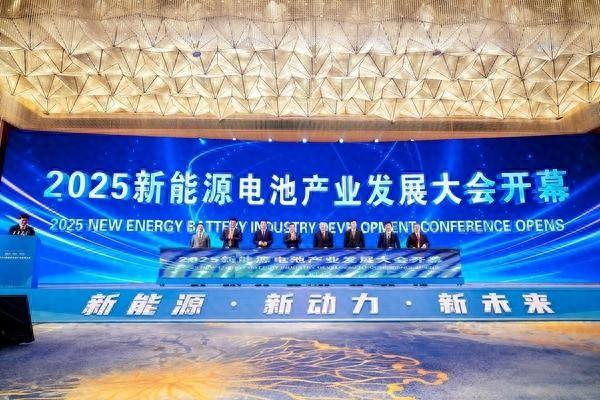
Core Insights - The 2025 New Energy Battery Industry Development Conference aims to promote the lithium battery industry towards clusterization and high-quality development, showcasing China's leading position in the global new energy battery sector [2][3] Industry Growth and Statistics - China's renewable energy installed capacity reached 2.159 billion kilowatts by June 2023, a year-on-year increase of 30.6%, accounting for 59.2% of the total installed capacity [2] - In 2024, China's production and sales of new energy vehicles are expected to exceed 10 million units, maintaining a global leadership position [2] - The new energy storage installed capacity reached 73.76 million kilowatts/168 million kilowatt-hours, with a global market share exceeding 40% [2][3] Technological Advancements - The lithium battery technology has achieved large-scale commercial application, with new technologies like solid-state batteries and sodium-ion batteries accelerating validation and implementation [3] - The newly launched polymer solid-state battery "Xin·Bixiao" has an energy density of 400 Wh/kg and a cycle life of 1200 weeks under ultra-low pressure [4] - China has maintained over 70% of the global lithium battery shipment volume for eight consecutive years, with leading domestic companies generating over 40% of their revenue from overseas markets [4] Safety and Charging Efficiency - Safety remains a critical focus, with experts emphasizing the need for robust safety measures and the development of non-flammable electrolytes [5] - The "supercharging technology" is being discussed as a solution to improve charging efficiency, allowing for better resource allocation in charging stations [6] Collaborative Innovation - The industry is encouraged to pursue collaborative innovation across the supply chain to enhance competitiveness, with a focus on cost reduction and efficiency improvement [8] - The importance of establishing a comprehensive recycling system for retired batteries is highlighted, with 22 national standards already published to guide the recycling process [9] Future Outlook - The potential of the battery recycling market is significant, with efforts to standardize prices and ensure safe transportation to promote industry regulation [10] - The emphasis on smart manufacturing is seen as essential for upgrading the battery industry, aiming for high-end, intelligent, and green development [10]
欣旺达
数说新能源· 2025-11-05 07:17
Group 1 - The company plans to invest up to 48.16 million USD in the second phase of its green energy lithium battery factory in Thailand, with a total planned capacity of 17.4 GWh, pending regulatory approvals [1] - The joint venture with Li Auto aims to deepen business cooperation, as Li Auto is an important customer for the company's power battery business [2] - The company submitted its A1 prospectus to the Hong Kong Stock Exchange on July 30, 2025, and is awaiting further feedback while needing to meet various regulatory conditions for the IPO [3] Group 2 - The company launched a new polymer solid-state battery product named "Xin·Bixiao," achieving an energy density of 400 Wh/kg and a cycle life of 1,200 weeks under ultra-low pressure [4] - The proportion of silicon-carbon anode batteries in the company's shipments is continuously increasing, with expectations for silicon content to exceed 10% next year [5] - Expected growth in the power battery business next year includes increased market share from existing customers and mass production from new clients such as Volvo and Volkswagen [6]

固态电池为何迟迟无法上车
36氪· 2025-11-03 09:34
Core Viewpoint - Solid-state batteries are considered the ultimate form of power batteries due to their high thermal stability and potential for long-range and safety, but they face significant challenges in technology, manufacturing, and cost that hinder large-scale production in the short term [4][8][27]. Summary by Sections Recent Developments - Several second- and third-tier battery manufacturers, along with automakers like Chery, have announced advancements in solid-state battery research, indicating a potential for mass production [5][7]. - On October 23, XINWANDA unveiled its solid-state battery "XIN·BIXIAO" with an energy density of 400 Wh/kg, compared to 200-250 Wh/kg for mainstream lithium iron phosphate batteries and 250-300 Wh/kg for ternary lithium batteries [5][6]. - Chery showcased its self-developed "Rhino S" all-solid-state battery module with an energy density of 600 Wh/kg, promising a range of 1200-1300 km, with plans for mass production by 2027 [7]. Industry Challenges - Despite the excitement, industry leaders like CATL have stated that solid-state batteries will not achieve small-scale production until 2027 and large-scale production until 2030 [9]. - Technical challenges include poor ionic conductivity of solid electrolytes and high interfacial resistance, which complicate large-scale production [10][11]. Material and Manufacturing Issues - The choice of materials for solid-state batteries is contentious, with current trends favoring sulfide electrolytes due to their high ionic conductivity, despite their sensitivity to moisture and complex manufacturing processes [15][16][17]. - The negative electrode materials are also not mature, with silicon-carbon composites being used, which can lead to reduced cycle life due to expansion during lithium-ion intercalation [22]. Cost and Commercial Viability - The cost of solid-state batteries is currently 5-10 times higher than that of liquid batteries, making it difficult for both automakers and consumers to adopt them [24]. - The significant changes required in manufacturing processes and equipment for solid-state batteries pose additional barriers to entry for many companies [23]. Market Dynamics - The push for solid-state batteries is driven by second- and third-tier manufacturers seeking to disrupt the market dominated by CATL, while automakers hope to gain leverage in negotiations [26]. - Recent incidents of electric vehicle fires have heightened consumer interest in safer battery technologies, further fueling the demand for solid-state batteries [26].