注射用米卡芬净钠

Search documents
人福医药集团股份公司关于注射用米卡芬净钠获得美国FDA批准文号的公告
Zhong Guo Zheng Quan Bao - Zhong Zheng Wang· 2026-02-28 01:14
Core Viewpoint - The company has received FDA approval for Micafungin for Injection, marking a significant step in expanding its presence in the U.S. generic drug market [1][2]. Group 1: FDA Approval Details - The FDA has granted approval for Micafungin for Injection under ANDA number 219518, available in 50 mg and 100 mg vials [1]. - The drug is indicated for the treatment of candidemia, acute disseminated candidiasis, candidal peritonitis, and abscesses in adults and pediatric patients aged 4 months and older, as well as for the prevention of candidal infections in hematopoietic stem cell transplant recipients [1]. Group 2: Market Potential and Financials - The total R&D investment for Micafungin has been approximately RMB 6.8 million, with projected annual sales in the U.S. market estimated at around $67 million for 2024 [2]. - Major competitors in the U.S. market include FRESENIUS and SAGENT PHARMACEUTICALS [2]. Group 3: Future Plans - The company plans to actively advance the market launch preparations for Micafungin in the U.S. following the FDA approval [2].

ST人福:注射用米卡芬净钠获得美国FDA批准文号
Xin Lang Cai Jing· 2026-02-27 08:51
Core Viewpoint - ST Renfu's subsidiary, Yichang Renfu Pharmaceutical Co., Ltd., has received approval from the U.S. Food and Drug Administration (FDA) for Micafungin Sodium for injection, which is indicated for the treatment of candidemia, acute disseminated candidiasis, candidal peritonitis, and abscesses in adults and pediatric patients aged 4 months and older [1] Summary by Category Product Approval - The FDA approval allows Yichang Renfu to market Micafungin Sodium in the U.S. [1] - The drug is approved for use in both adult and pediatric patients [1] Financial Investment - The total research and development investment for this project amounts to approximately RMB 6.8 million [1] Market Potential - According to IQVIA data, the annual sales for Micafungin Sodium in the U.S. market are projected to be around USD 67 million in 2024 [1]
316种国家集采药品接续采购开标,原研药中标的比例不到一成
Di Yi Cai Jing· 2026-02-12 22:50
Core Viewpoint - The recent round of national drug procurement has resulted in 4,163 products from 1,020 companies being shortlisted, covering 316 commonly used drugs across 26 therapeutic areas, with only 21 original drugs selected, representing less than 10% of the total [1][2]. Group 1: Procurement Details - The procurement aims to reduce drug prices and patient burdens while reallocating saved healthcare funds to innovative drugs [2]. - The procurement process involved 51,000 medical institutions, with a high selection rate of 93% and an average of 14 companies selected per product [2][3]. - The results of this procurement are expected to be implemented by the end of March 2026, with a procurement cycle lasting until the end of 2028 [2]. Group 2: Original Drug Participation - The selected original drugs include various formulations from companies like Bristol-Myers Squibb, Sanofi, and Bayer, with some previously shortlisted in earlier rounds [3]. - Notable original drugs that did not participate in this round include AstraZeneca's gefitinib and Sanofi's clopidogrel, which had previously been selected [4][3]. Group 3: Market Dynamics - The phenomenon known as "patent cliff" has led to significant declines in sales and profits for original drugs post-patent expiration, making it challenging for them to maintain market share without substantial price reductions [6]. - Some original drug companies have reduced or dissolved their sales teams for products affected by procurement policies, yet many still find market opportunities outside public hospital procurement [7]. - Cross-national pharmaceutical companies are increasingly focusing on innovative drug development while divesting mature product lines to local firms [8][9].


316种国家集采药品接续采购开标,原研药中标的比例不到一成
第一财经· 2026-02-12 14:56
Core Viewpoint - The recent round of national drug procurement in China has resulted in 1,020 companies winning bids for 4,163 products, covering 316 commonly used drugs across 26 therapeutic areas, with original research drugs making up less than 10% of the selected products [3][5]. Group 1: Procurement Results - The procurement process involved a high participation rate, with a selection rate of 93% and an average of 14 companies winning bids for each product [5]. - The selected original research drugs include various formulations such as oral and injectable forms, with notable companies like Merck, Sanofi, and Bayer involved [6]. - Some original research drugs that previously won bids in earlier rounds did not secure selection in this round, indicating a shift in market dynamics [6][7]. Group 2: Market Dynamics - The introduction of national drug procurement has led to significant price reductions for original research drugs, which now face competition from generics, resulting in a phenomenon known as the "patent cliff" [9]. - Despite the challenges, many original research drugs maintain a presence in the market, particularly in outpatient settings, leveraging brand strength [10]. - Some multinational pharmaceutical companies are divesting mature product lines to focus on innovative drug development, reflecting a strategic shift in response to the evolving market landscape [11][12].

深度|316种国家集采药品接续采购开标,原研药中标的比例不到一成
Di Yi Cai Jing· 2026-02-12 13:49
Core Viewpoint - The recent round of national drug procurement has resulted in 4,163 products from 1,020 companies being shortlisted, with only 21 original drugs selected, indicating a significant shift in the pharmaceutical market dynamics in China [1][2]. Group 1: Drug Procurement Overview - The new round of procurement involves 316 commonly used drugs across 26 therapeutic areas, including anti-infection, anti-tumor, and cardiovascular treatments [1]. - The procurement process has a high selection rate of 93%, with an average of 14 companies winning bids for each product [2]. - The results of this procurement are expected to be implemented by the end of March 2026, with a procurement cycle lasting until the end of 2028 [2]. Group 2: Impact on Original Drugs - Original drugs are facing challenges in maintaining high profits and market share post-patent expiration due to increased competition from generic drugs [6]. - Some original drugs, despite not being selected in the procurement, continue to find market opportunities outside public hospitals due to their brand strength [1][7]. - The absence of original drugs in the procurement does not equate to their market exit; they may still be prescribed in specific hospital settings [7]. Group 3: Market Dynamics and Strategies - The phenomenon known as "patent cliff" is causing significant declines in sales and profits for original drugs once their patents expire [6]. - Many original drug companies are reducing or dissolving their sales teams for products affected by the procurement policies [7]. - Some multinational pharmaceutical companies are divesting mature product lines to focus on innovative drug development and market entry [8][9][10].
博瑞医药:关于公司部分产品拟中选国家药品接续采购的公告
Zheng Quan Ri Bao· 2026-02-11 11:11
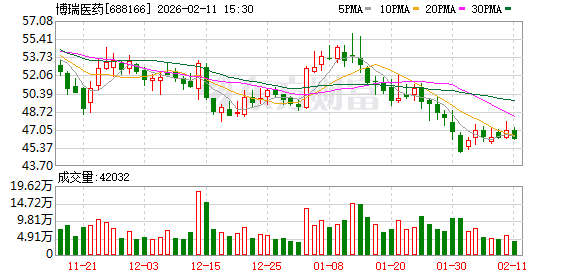
Group 1 - The core announcement is that Borui Pharmaceutical's wholly-owned subsidiary, Borui Pharmaceutical (Suzhou) Co., Ltd., has its products selected for the national centralized procurement program, with a procurement period extending until December 31, 2028 [2] - The selected products include Agatroban injection, Micafungin sodium for injection, Oseltamivir phosphate dry suspension, and Oseltamivir phosphate capsules [2] - The total sales of these four products for the first three quarters of 2025 are projected to be 88.8475 million yuan, accounting for 10.16% of the company's revenue [2]

辉瑞撤资余波未平:海正药业遭遇营收三连降,创新转型前路迷雾重重
Hua Xia Shi Bao· 2025-08-02 12:42
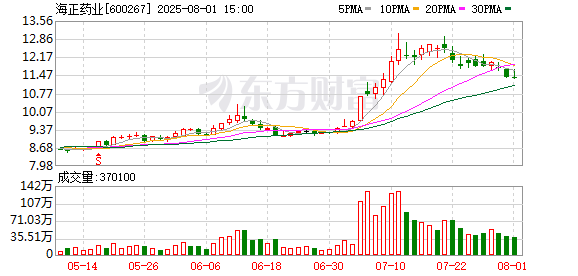
Core Viewpoint - After parting ways with Pfizer, Zhejiang Hai Zheng Pharmaceutical Co., Ltd. is facing significant challenges in its development, despite recent approval of its fumarate bedaquiline raw material, which brings a glimmer of hope for the company [1] Group 1: Company Background - Hai Zheng Pharmaceutical was founded in 1956 and listed on the A-share market in 2000, operating as a state-controlled comprehensive pharmaceutical group with a diverse portfolio including chemical drugs, biological drugs, and veterinary drugs [2] - The company’s core products include the self-developed first-class new drug Haibo Maibu tablets and other medications for liver bile accumulation treatment [2] Group 2: Partnership with Pfizer - The partnership with Pfizer began in September 2012, forming Hai Zheng Pfizer Pharmaceutical Co., Ltd. with a total investment of $295 million, where Hai Zheng held a 51% stake [2] - Initially, the collaboration was beneficial, with the antibiotic "Tezhixing" becoming a major revenue source, contributing significantly to the company's profits in 2013 and 2014 [2][3] Group 3: Challenges Post-Partnership - In 2015, production issues at Pfizer's overseas factories led to a significant drop in sales, and by 2017, Pfizer completely exited the partnership, leaving Hai Zheng to adjust its strategies without a key growth driver [3] - The company has since faced continuous revenue declines from 2022 to 2024, with a drop of 0.82%, 13.82%, and 5.65% year-on-year, and a further decline of 3.48% in Q1 2025 [4] Group 4: Impact of Market Dynamics - The company’s performance has been adversely affected by centralized procurement policies, leading to a significant reduction in market share and a decrease in revenue from its main products [5][6] - In 2023, the revenue from self-operated pharmaceutical business decreased by 10.41 billion yuan, indicating the impact of competitive pressures in the market [6] Group 5: Innovation and R&D - Hai Zheng's self-developed drug Haibo Maibu tablets has shown promising sales growth, reaching over 4 billion yuan in 2023, with potential peak sales estimated at 19.54 billion yuan if market penetration improves [7] - The company has recently received approval for clinical trials of HS387 tablets targeting advanced ovarian cancer and non-small cell lung cancer, but faces stiff competition in these therapeutic areas [8] - The approval of fumarate bedaquiline raw material is a positive development, but the timeline for mass production and revenue contribution remains uncertain [9] Group 6: R&D Investment Trends - R&D investment has fluctuated, with 4.42 billion yuan in 2022, decreasing to 3.94 billion yuan in 2023, but showing a slight increase to 4.16 billion yuan in 2024 [9][10] - The company is establishing advanced R&D platforms, but the effectiveness and impact of these initiatives on innovation remain unclear [10]

辉瑞撤资余波未平:海正药业遭遇营收三连降,创新转型前路迷雾重重|创新药观察
Hua Xia Shi Bao· 2025-08-01 14:09
Core Viewpoint - After parting ways with Pfizer, Zhejiang Haizheng Pharmaceutical Co., Ltd. is facing significant challenges in its development despite recent approval for its active pharmaceutical ingredient, fumarate bedaquiline [2] Group 1: Company Background - Haizheng Pharmaceutical, founded in 1956 and listed in 2000, is a state-controlled comprehensive pharmaceutical group with a diverse portfolio including chemical drugs, biological drugs, and veterinary drugs [3] - The company’s core products include the self-developed first-class new drug Haibomab, a cholesterol absorption inhibitor, and other medications for liver bile accumulation treatment [3] Group 2: Partnership with Pfizer - The partnership with Pfizer began in September 2012, creating Haizheng Pfizer Pharmaceutical Co., Ltd. with a total investment of $295 million, where Haizheng held a 51% stake [3][4] - Initially, the collaboration was beneficial, significantly boosting Haizheng's revenue through the exclusive production of off-patent antibiotics [4] - However, production issues at Pfizer's overseas factories led to a significant revenue drop, and by 2017, Pfizer completely exited the partnership [4] Group 3: Financial Performance - Haizheng Pharmaceutical has experienced a continuous decline in revenue from 2022 to 2024, with year-on-year decreases of 0.82%, 13.82%, and 5.65% respectively [5][6] - In Q1 2025, the company reported revenue of 2.632 billion yuan, a 3.48% decrease year-on-year, and a net profit of 194 million yuan, down 21.85% [5] Group 4: Market Challenges - The company’s performance has been adversely affected by centralized procurement policies, leading to a significant reduction in market share for key products [6] - In 2023, the revenue from self-operated pharmaceutical preparations decreased by 10.41 billion yuan, indicating a substantial impact from procurement policies [6] Group 5: Innovation and R&D - Haizheng's self-developed drug Haibomab has shown promising sales growth, reaching over 400 million yuan in 2023, with potential peak sales estimated at 1.954 billion yuan [7] - The company has recently received approval for HS387, targeting advanced ovarian cancer and non-small cell lung cancer, but faces intense competition in these markets [8] - R&D investment has fluctuated, with 2024's R&D expenditure at 416 million yuan, representing 4.25% of revenue, indicating a focus on innovation despite financial pressures [10] Group 6: Future Prospects - The approval of fumarate bedaquiline is a positive development, but the company faces challenges in scaling production and market entry [9] - The overall effectiveness of Haizheng's R&D platforms and the impact of past collaborations with Pfizer on current innovation efforts remain uncertain [10]