涡桨发动机

Search documents
江苏神通:鸿鹏航空主要专注于通用航空动力装置的研发设计、装配生产、试验、销售和维修保障业务
Zheng Quan Ri Bao· 2025-12-30 14:13
Group 1 - The core focus of Hongpeng Aviation is on the research, design, assembly, production, testing, sales, and maintenance of general aviation power devices [2] - The company develops a series of turboprop engines and their derivative products, including turbofan and turboshaft engines, aimed at applications such as fixed-wing drones, transport aircraft, helicopters, and general aviation [2]


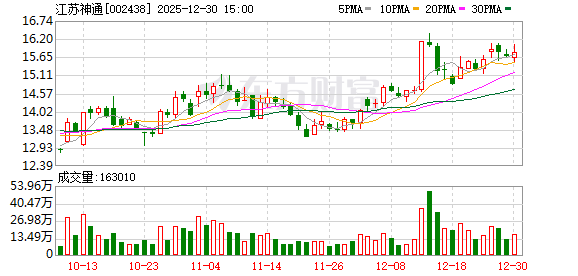
航发动力(600893):3Q25营收同比增长19%,存货和合同负债增长较多
Minsheng Securities· 2025-10-31 08:11
Investment Rating - The report maintains a "Recommended" rating for the company, indicating a positive outlook for its long-term potential [6][3]. Core Insights - The company reported a revenue of 229.12 billion yuan for the first three quarters of 2025, reflecting a year-over-year decline of 11.73%. The net profit attributable to shareholders was 1.08 billion yuan, down 85.13% year-over-year, primarily due to reduced revenue and increased financial and R&D expenses [1][2]. - In Q3 2025, the company achieved a revenue of 88.14 billion yuan, a year-over-year increase of 18.97%. However, the net profit was only 0.16 billion yuan, down 87.69% year-over-year, indicating significant pressure on profit margins due to impairment losses [1][2]. - The company has seen a substantial increase in contract liabilities, which grew by 85% compared to the beginning of the year, and inventory increased by 38% [2]. Summary by Sections Financial Performance - For the first three quarters of 2025, the company reported a gross margin of 10.74%, down 1.29 percentage points year-over-year, and a net margin of 0.83%, down 2.32 percentage points year-over-year. In Q3 2025, the gross margin was 10.40%, down 3.55 percentage points year-over-year, and the net margin was 0.44%, down 1.69 percentage points year-over-year [1][2]. - The company recorded a net cash flow from operating activities of -84.66 billion yuan for the first three quarters of 2025, an improvement from -172.76 billion yuan in the same period last year [2]. Business Strategy - The company aims to achieve a revenue of 476.63 billion yuan and a net profit of 5.92 billion yuan for the full year of 2025. As of Q3 2025, it has completed 48% of its revenue target and 18% of its net profit target [3]. - The company is actively expanding into the low-altitude and general aviation markets, focusing on developing various turbine engines. It has established long-term strategic partnerships with renowned global aircraft engine manufacturers, enhancing its competitive edge in the export market [3]. Financial Forecast - The company is projected to have a net profit of 5.00 billion yuan in 2025, with expected profits of 7.78 billion yuan and 11.43 billion yuan in 2026 and 2027, respectively. The corresponding price-to-earnings ratios are estimated to be 211x, 136x, and 92x for the respective years [3][5].

航发动力: 中国航发动力股份有限公司投资者活动记录表
Zheng Quan Zhi Xing· 2025-07-28 16:27
Core Viewpoint - The company is experiencing a decrease in sales revenue due to external factors affecting product delivery and some products not yet contracted, leading to increased financing needs and financial expenses in the first half of 2025 [2][3] Group 1: Financial Performance - Sales revenue in the first half of 2025 decreased year-on-year due to external factors impacting product delivery and delayed contract signings [2] - Increased financing needs were driven by slower-than-expected receivables collection, resulting in higher financial expenses compared to the previous year [2] Group 2: Product Structure and Profitability - The company is undergoing a product structure upgrade, with a significant increase in the proportion of new product models, which has impacted profitability [3][4] - The adjustment in product structure is seen as a necessary and positive move for long-term growth, despite causing short-term challenges and pressure on overall profit margins [4][5] Group 3: Market Strategy and Opportunities - The company plans to leverage its advantages in technology and product similarity to expand into the domestic commercial engine market [4] - The company is focusing on the low-altitude economy sector through its subsidiaries, enhancing market penetration with specific engine series [4] - The company aims to capitalize on long-term growth opportunities presented by the domestic large aircraft industry chain while continuously improving market share [5]
新型号技术成熟叠加后市场格局改变,航发产业有望迈入全新发展阶段
Orient Securities· 2025-06-30 14:43
Investment Rating - The industry investment rating is maintained as "Positive" [4] Core Viewpoints - The appointment of Zhang Yujin as the chairman of AVIC Engine Group indicates a potential return to high growth for the engine sector, with a broad market outlook [3][7] - The core technologies in the aviation engine industry are maturing, and the pressure on profitability from high investment in model development is expected to ease [7] - The maintenance, commercial aviation, and gas turbine sectors are opening up broader development opportunities for the aviation engine segment [7] Summary by Relevant Sections Industry Overview - The aviation engine industry has made significant progress over the past five years, achieving independence from imported engines for military applications and actively participating in the development of domestic commercial engines [7] Market Dynamics - The demand for weaponry and equipment is expected to expand due to ongoing international tensions, which will benefit the military trade market [6] Investment Recommendations - The report suggests focusing on specific segments within the aviation engine industry, including maintenance, commercial aviation, and gas turbines, as they present substantial growth potential [3][7] - Listed companies under AVIC Group include AVIC Power (600893), AVIC Control (000738), AVIC Technology (600391), and AVIC Materials (688563) [7]
【最全】2025年航空发动机行业上市公司全方位对比(附业务布局汇总、业绩对比、业务规划等)
Qian Zhan Wang· 2025-05-17 03:10
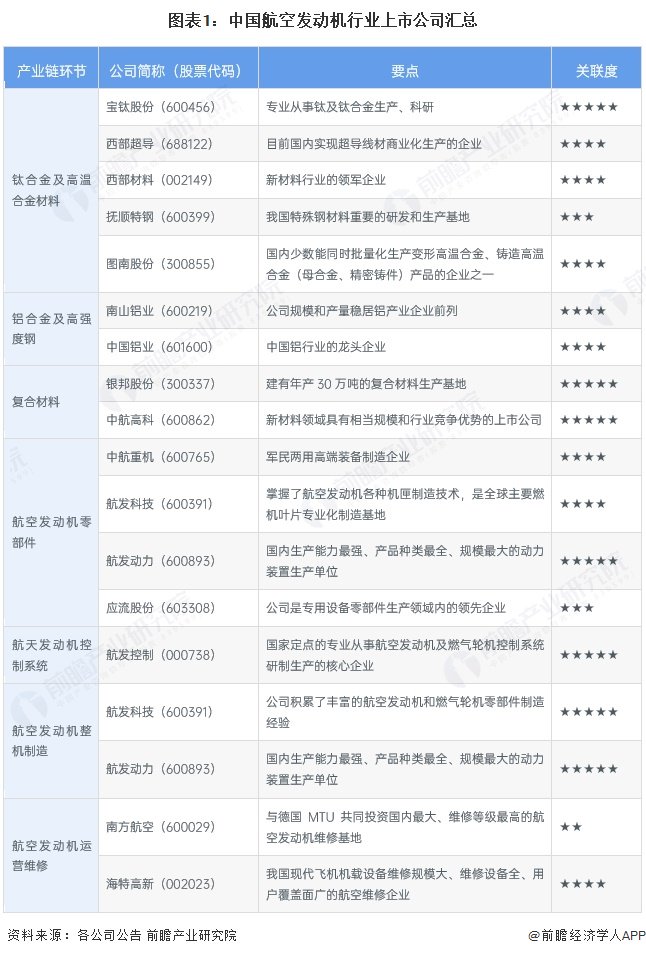
Summary of Key Points Core Viewpoint - The aviation engine industry in China is primarily dominated by a few key players, with a significant focus on innovation, research and development, and market expansion to enhance their competitive edge in both military and civilian sectors [1][18]. Group 1: Industry Overview - The aviation engine manufacturing segment includes four main types: turbojet, turbofan, turboshaft, and turboprop engines, largely monopolized by the China Aviation Engine Group [1]. - Key companies in the industry include Aviation Power (航发动力), Aviation Technology (航发科技), and Aviation Control (航发控制), among others [1][3]. Group 2: Company Performance - Aviation Power reported a revenue of 449.94 billion yuan in 2024, leading the industry in terms of revenue [16]. - The average gross margin for listed companies in the aviation engine sector is around 25%, with individual margins ranging from 10% to 35% [16]. - Aviation Control achieved a gross margin of 28.11% in 2024, reflecting its strong technological innovation capabilities [16]. Group 3: Business Layout and Market Position - Aviation Power and Aviation Technology have over 50% of their business focused on aviation engines, indicating a strong commitment to this sector [13]. - The regional distribution of companies shows that titanium alloy leaders are mainly located in Shaanxi, while other material representatives are concentrated in the East China region [5]. Group 4: Future Business Plans - Companies are focusing on innovation and R&D investments to expand their aviation engine business, with plans to enhance their capabilities in high-temperature alloy components and precision casting [19]. - Aviation Technology aims to participate in the development of the C919 aircraft's engines and expand its international subcontracting business [19]. Group 5: Key Financial Metrics - The largest revenue-generating company in the aluminum and high-strength steel sector is China Aluminum, with a revenue of 2370.66 billion yuan [4]. - The revenue of Aviation Power in the aviation engine sector is projected to exceed 400 billion yuan in 2024, highlighting its market leadership [4]. Group 6: Patent and Employee Information - China Aluminum and Aviation Power hold over 1000 patents, indicating a strong focus on innovation [8]. - Southern Airlines has the largest employee count among listed companies, exceeding 100,000 [8].





预见2025:《2025年中国航空发动机行业全景图谱》(附市场现状、竞争格局和发展趋势等)
Qian Zhan Wang· 2025-04-26 01:11
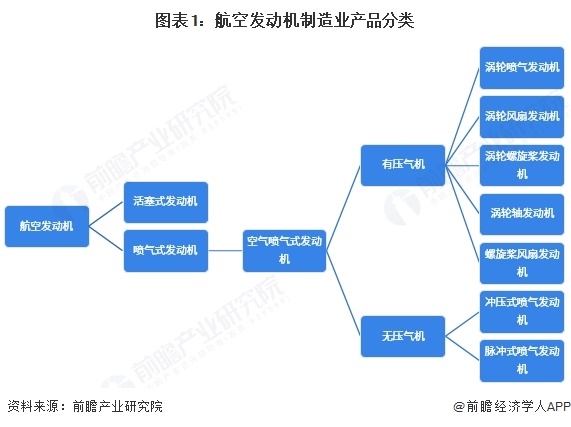
Industry Overview - The aviation engine industry is crucial for national economy and security, serving as the power source for various aircraft and representing a country's comprehensive strength [1] - Aviation engines can be categorized into several types based on thrust generation principles and oxidizer sources, including piston engines, rocket engines, ramjet engines, and turbine engines [1] Industry Chain Analysis - The aviation engine industry chain includes research and design, manufacturing (raw materials, components, complete machine manufacturing), operation, and maintenance [3] - China has established a complete research and production system for aviation engines, with key participants including universities and research institutes [4] Development History - The Chinese aviation engine industry has evolved from imitation to independent research and development, achieving significant self-innovation capabilities supported by national policies [5][8] Policy Background - The "14th Five-Year Plan" emphasizes accelerating the research and development of advanced aviation engine materials and technologies, promoting the development of civil large bypass ratio turbofan engines [10] Current Market Status - The aviation engine industry has vast market potential, with a global annual output of over 14,000 units and an estimated annual value of around $70 billion [12] - The Chinese commercial aviation engine market is expected to experience explosive growth, with projected deliveries reaching 19,000 units and a market value exceeding $300 billion over the next 20 years [12] Demand Trends - Both military and civil aviation sectors in China are witnessing an upward trend in aircraft numbers, with the military fleet expected to reach 3,309 aircraft by the end of 2024 [14] - The number of civil passenger and cargo aircraft in China has also been increasing, with approximately 4,400 aircraft expected in 2024 [15] Competitive Landscape - The aviation engine market is primarily dominated by foreign manufacturers, with significant gaps in capabilities compared to the US, Russia, and other military powers [17][19] - The global commercial aviation engine market is largely controlled by a few companies, with CFM International and Pratt & Whitney holding substantial market shares [20] Future Development Trends - The Chinese aviation engine manufacturing industry is expected to focus on independent innovation, quality improvement, international cooperation, and sustainable development [24]