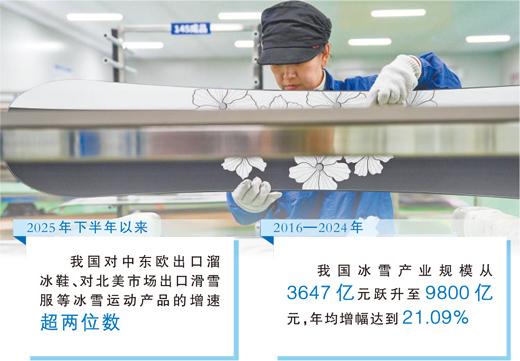
滑雪鞋

Search documents
顶流“尔滨”的第三个冰雪季:科技赋能,在冰天雪地间打造消费新场景
Hua Xia Shi Bao· 2026-02-24 01:09
Core Insights - The Harbin Ice and Snow World set a new record with over 120,000 visitors on February 19, marking a significant increase in tourism and consumer spending in the city [2][9] - The integration of innovative experiences, such as smart technology and unique attractions, has enhanced the appeal of Harbin's winter tourism [4][6] - The ice and snow economy in Harbin has become a model for high-quality development, contributing significantly to the local GDP and showcasing the transformation of natural resources into economic advantages [11][13] Group 1: Visitor Statistics and Economic Impact - The 27th Harbin Ice and Snow World attracted a total of 3.06 million visitors over its 65-day operation, with a single-day record of 120,000 visitors [9] - The total revenue generated from the event was approximately 1.5 billion yuan, with a net profit of around 500 million yuan, contributing 1.2 percentage points to Harbin's GDP growth [9] - The previous ice season saw over 90 million visitors, with total spending exceeding 137.2 billion yuan [9] Group 2: Innovations and Attractions - New features such as warm tents, ice fishing, and smart welcoming robots have been introduced to enhance the visitor experience [4][6] - The park's use of a weather sensing system to maintain the quality of ice sculptures and the "digital ice flame" projection show exemplifies the blend of technology and art [8][6] - The iconic ice sculpture of the Yellow Crane Tower, made from 8,600 cubic meters of natural ice, has become a major attraction for visitors [8] Group 3: Industry Growth and Development Strategies - The ice and snow economy in Harbin has surpassed 80 billion yuan, accounting for 9.7% of the city's GDP, reflecting a 7.3 percentage point increase since 2016 [13] - The number of ice and snow-related enterprises in Harbin has exceeded 2,300, with a compound annual growth rate of 23.6% over the past three years [13] - The local government aims to further develop the ice and snow industry by integrating various sectors such as education, events, and technology to enhance the overall tourism experience [9][15]


当春节遇上冬奥 “冰雪热”点燃消费新活力
Xin Hua She· 2026-02-21 03:39
Group 1: Industry Overview - The winter sports economy is experiencing significant growth, driven by increased public participation and enthusiasm during the Spring Festival, marking a new trend in holiday celebrations [2][3][5] - The number of visitors to the Yabuli Ski Resort during the Spring Festival reached over 62,000, a year-on-year increase of 3.6%, indicating a strong start to the new year for the tourism sector [1] - The ice and snow tourism boom is not limited to Harbin but is also evident in other regions, with various cultural and entertainment activities enhancing the festive atmosphere [2][3] Group 2: Economic Impact - The ice and snow economy in Heilongjiang Province is projected to achieve a robust growth rate of 13.2% by 2025, reflecting the province's efforts to establish itself as a world-class ice and snow tourism destination [4] - The demand for ice and snow sports has led to the activation of approximately 3,000 community ice and snow venues, showcasing the widespread appeal of these activities [3][4] - The production of winter sports equipment is on the rise, with companies like Qianmao Xuelong Sports Goods Co., Ltd. ramping up production to meet the growing market demand [4]
当春节遇上冬奥,“冰雪热”点燃消费新活力
Xin Lang Cai Jing· 2026-02-20 14:30
Group 1 - The Winter Olympics have significantly boosted interest in ice sports in China, leading to increased participation and engagement in winter activities during the Spring Festival [1][3][8] - The Yabuli Ski Resort reported over 62,000 visitors during the Spring Festival, marking a 3.6% year-on-year increase, indicating a strong start to the new year for the ice and snow tourism sector [3][7] - The ice and snow economy is thriving, with a projected growth of 13.2% in total output by 2025 in Heilongjiang Province, showcasing the potential for economic development in this sector [7][8] Group 2 - The popularity of ice sports has led to a surge in demand for professional training and equipment, with local ski instructors reporting a busy season catering to younger generations eager to improve their skills [3][6] - Various ice and snow events and activities have been organized, utilizing over 3,000 community ice venues, which have contributed to a vibrant atmosphere during the holiday season [7][8] - The ice and snow tourism trend is not limited to Harbin but is spreading across the region, with local accommodations experiencing high occupancy rates due to increased visitor interest [5][6]
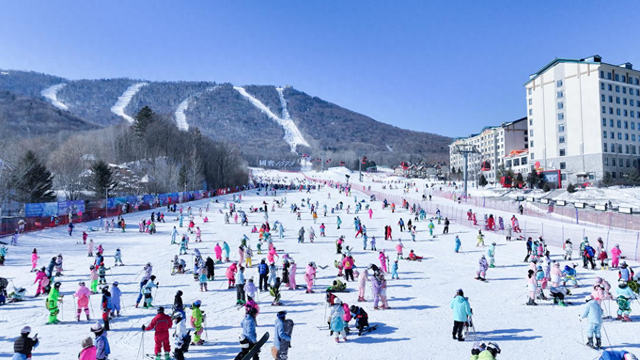
图解冬奥|滑雪+狩猎,这项运动原来是北欧人的日常
Xin Lang Cai Jing· 2026-02-18 01:54
Group 1 - The 2026 Winter Olympics will feature the women's 4×6 km relay in biathlon, with the Chinese team aiming to improve upon their 12th place finish from the previous Olympics [1] - The biathlon combines cross-country skiing and shooting, reflecting ancient human life in cold regions [1] Group 2 - Athletes will use equipment such as skis, ski boots, and rifles, with specific weight and measurement requirements for the gear [3][4] - The shooting range will have specific diameters for standing and prone shooting, and penalties will be applied for mistakes during the race [4][5] - The competition format includes multiple laps of skiing interspersed with shooting rounds, with penalties for missed shots [6][7]

冰雪产业正崛起|冰雪装备向新生长
Jing Ji Ri Bao· 2026-02-11 02:34
Core Insights - The scale of China's ice and snow industry has grown from 270 billion yuan in 2015 to 980 billion yuan in 2024, with expectations to surpass 1 trillion yuan by 2025, indicating a robust growth trajectory in the sector [1] - The industry is evolving from relying on imports to focusing on domestic research and development, with a significant emphasis on high-end, intelligent, and branded products [1][2] Industry Development - Technological innovation is the driving force behind the development of the ice and snow equipment industry, with key regions like Henan and Heilongjiang investing in core technologies and equipment [2] - Harbin has leveraged its educational resources to produce leading ice and snow equipment technologies, including automated ice sculpture building robots and advanced training systems [2] - Companies like Harbin Qianmao Xuelong Sports Goods Co., Ltd. and Henan Jinan Machinery Technology Co., Ltd. are at the forefront of innovation, developing competitive products using advanced materials and technologies [3] Ecosystem Construction - The ice and snow equipment industry is transitioning towards a systematic and ecological growth phase, moving away from a fragmented state [4] - Harbin has initiated a special plan for ice and snow equipment manufacturing, aiming to cultivate several billion-yuan revenue companies by 2030 and establish a leading global manufacturing base by 2035 [4][5] - The city has established four industrial clusters focusing on different aspects of ice and snow equipment, enhancing collaboration and resource integration [5] Brand Development - Brand building is crucial for elevating industry value, as the international market is still dominated by traditional Western brands [6] - The 2026 Harbin International Ice and Snow Economy Expo showcased over a hundred domestic and international ice and snow equipment companies, facilitating brand exposure and collaboration [6][7] - Companies like Henan Jinan Machinery have developed multiple brands and successfully exported products to 22 countries, marking a shift from OEM/ODM to establishing Chinese brands in the global market [7]
冰雪装备向新生长
Jing Ji Ri Bao· 2026-02-10 22:16
Core Insights - The scale of China's ice and snow industry has grown from 270 billion yuan in 2015 to 980 billion yuan in 2024, with expectations to surpass 1 trillion yuan in 2025, indicating a robust growth trajectory in the sector [1] - The industry is transitioning from relying on imports to self-research and brand expansion, with a focus on high-end, intelligent, and branded products [1][2] - Technological innovation is a key driver of development in the ice and snow equipment industry, with significant investments in core technologies and equipment [1][3] Industry Development - Harbin is leveraging its educational and technological resources to advance ice and snow equipment technology, with six leading innovations recently announced, including automated ice sculpture robots and advanced training systems [2] - Companies like Harbin Qianmao Xuelong Sports Goods Co., Ltd. and Henan Jinan Machinery Technology Co., Ltd. are at the forefront of innovation, focusing on R&D and achieving significant technological breakthroughs [3][4] - The establishment of a comprehensive industrial ecosystem is crucial for the high-quality development of the ice and snow equipment industry, moving towards a systematic and ecological growth phase [4][5] Brand Building - Brand development is essential for enhancing the industry's value, as international markets are still dominated by traditional Western brands [6] - Harbin is actively promoting brand visibility through events like the 2026 Harbin International Ice and Snow Economy Expo, facilitating collaboration among over a hundred participating companies [6][7] - Companies are creating brand matrices to enhance their market presence, with successful exports to numerous countries, marking a shift from OEM/ODM models to establishing Chinese brands in the global market [7][8]
冰雪春天丨中国消费需求重塑全球冰雪产业
Zhong Guo Xin Wen Wang· 2026-02-09 06:36
Core Insights - The Chinese ice and snow industry is experiencing significant growth post-Beijing Winter Olympics, transforming the global ice and snow economic landscape [1] - China is expected to not only be the largest ice and snow consumer market but also to ascend to high-value segments of the global ice and snow industry chain through technological advancements and innovative models [1] Industry Growth - The scale of China's ice and snow industry has grown from 270 billion yuan in 2015 to an estimated 980 billion yuan by 2024, with projections to exceed 1 trillion yuan by 2025, marking nearly a fourfold increase over ten years [2] - The number of participants in ice and snow tourism is expected to reach 360 million by the winter of 2025-2026, highlighting its role as a key driver of winter consumption and cultural tourism integration [2] Global Brand Strategy - China's market is becoming increasingly influential in reshaping global ice and snow brand strategies, with international companies customizing sales strategies and shifting R&D and manufacturing to align with Chinese market characteristics [2][3] - Notable international brands are establishing significant equipment centers in China to leverage the market for regional expansion into Southeast Asia and Japan [2] Supply-Side Challenges - Despite strong consumer demand, the supply side of China's ice and snow industry faces challenges, particularly in high-end equipment manufacturing, which is still dominated by traditional Western brands [4] - Domestic brands need to enhance their R&D, marketing, and brand-building capabilities to move up the value chain in the ice and snow industry [4] Innovation and Technology - Chinese companies are making strides in innovation, with products like fifth-generation lithium battery heated ski gloves gaining international recognition and sales in over 60 countries [5] - Innovations showcased at events like the Harbin Ice Expo include smart ice sculpture robots and industrial-grade snow removal machines, which are receiving positive feedback for their efficiency and precision [5] Role Enhancement and Global Influence - The Chinese government is promoting high-quality development in the ice and snow economy, encouraging international cooperation and the export of Chinese ice and snow products [7] - Experts suggest that China should transition from being a participant to a leader in the global ice and snow industry, enhancing its international influence through active participation in global organizations and technology leadership [7][8]
大湾区“1小时冰雪经济圈”成形
21世纪经济报道· 2026-02-08 00:56
Core Viewpoint - The article highlights the rapid growth of the ice and snow economy in China, particularly in Guangdong, where indoor snow venues are becoming popular during the Spring Festival, indicating a shift in consumer preferences towards winter sports and experiences [1][6]. Industry Growth - The national ice and snow industry is projected to exceed 1 trillion yuan by 2025 and reach 1.5 trillion yuan by 2030, with Guangdong playing a significant role in this growth [1][6]. - From 2016 to 2024, the scale of China's ice and snow industry increased from 364.7 billion yuan to 980 billion yuan, with an average annual growth rate of 21.09% [6]. Consumer Engagement - The 2024-2025 ice and snow season is expected to see consumer spending exceed 187.5 billion yuan, representing a growth of over 25% compared to the previous season [6]. - Guangdong is the third-largest source of ice and snow tourists in China, with major cities like Guangzhou and Shenzhen ranking among the top ten tourist source cities [6][7]. Venue Development - Guangdong has established over 30 ice and snow venues, with the largest indoor ski resort, Qianhai Huafa Ice and Snow World, attracting over 1.3 million visitors within four months of its opening [7][12]. - The "Tropical Snow Country" concept is being realized through these venues, which provide accessible skiing experiences for local residents and tourists from nearby regions [7][8]. Economic Impact - The ice and snow industry in Guangdong is interconnected with various sectors, including manufacturing, retail, and dining, creating a comprehensive service chain from ticket sales to equipment rentals [12][17]. - Guangdong is home to approximately 23,000 companies involved in ice and snow equipment manufacturing, accounting for over 25% of the national total [12][13]. Future Trends - The article suggests that the future of the ice and snow industry lies in diversifying revenue streams through "ice and snow+" business models, high-end customized services, and event-driven economies [17][18]. - There is a growing emphasis on integrating local cultural elements into ice and snow projects to enhance uniqueness and attract more consumers [18].

国产冰雪装备缘何全球畅销(中国品牌圈粉海外)
Ren Min Ri Bao· 2026-02-02 06:46
Core Viewpoint - The surge in winter sports has significantly boosted the ice and snow equipment industry in China, which is transitioning from an initial stage to a high-quality development phase, enhancing its competitiveness and brand influence in overseas markets [4]. Group 1: Industry Growth and Market Dynamics - The Chinese ice and snow industry is witnessing a robust increase in product supply capabilities, with exports of ice skating shoes to Central and Eastern Europe and ski apparel to North America growing at over double-digit rates since the second half of 2025 [4]. - The industry is responding rapidly to global consumer trends, with companies like Qianmao Xuelong leveraging technological advancements to enhance product offerings and expand into international markets [5][6]. Group 2: Company Innovations and Product Development - Qianmao Xuelong has developed a freestyle aerial ski board for the national team, utilizing aerospace-grade composite materials and 3D printing technology, which is expected to debut at the 2026 Milan Winter Olympics [6]. - The company has achieved a significant production capacity increase, with an annual output of 10,000 ski shoes and bindings, thanks to semi-automated production lines [5]. Group 3: Competitive Advantages and Customization - The ability to customize products based on athletes' performance habits and technical characteristics has positioned Qianmao Xuelong competitively, with multiple technical indicators meeting international standards [7]. - The company aims to expand its product range and retail channels, enhancing the visibility of Chinese ski boards in global markets [7]. Group 4: Export Performance and Market Penetration - Baite Outdoor Products has seen a 30% increase in orders for ski poles, with over 400,000 pairs ordered for the 2025 snow season, primarily targeting European and North American markets [9]. - The company has established a production scale nearing 1 billion yuan annually, with a complete supply chain for ski poles, demonstrating significant export capabilities [9]. Group 5: Technological Advancements and Sustainability - Baite is focusing on technological breakthroughs in lightweight poles and ergonomic designs, reducing carbon emissions by over 50% through the use of recyclable materials [10]. - The company has implemented efficient manufacturing processes, allowing for rapid sample production and mass production within a month [10]. Group 6: Brand Development and Market Integration - Baite emphasizes brand recognition through partnerships with international athletes and sponsorship of events, aiming to strengthen its market presence [11]. - The establishment of local teams for market, sales, and after-sales services is part of the strategy to integrate into local communities and enhance brand loyalty [11].
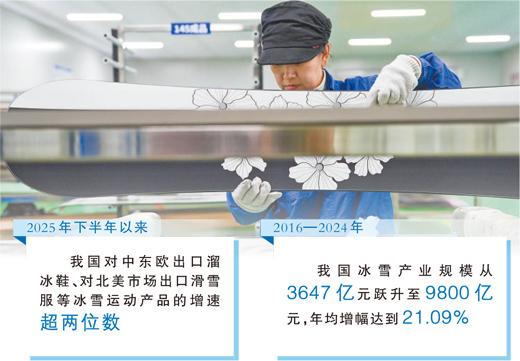
【人民日报】国产冰雪装备缘何全球畅销(中国品牌圈粉海外)
Ren Min Ri Bao· 2026-02-02 00:46
Core Insights - The surge in ice and snow sports has significantly boosted the ice and snow equipment industry in China, with increasing product supply capabilities and a shift towards high-quality development, enhancing competitiveness and brand influence in overseas markets [2] Group 1: Industry Growth - China's exports of ice and snow sports products, such as ice skates to Central and Eastern Europe and ski clothing to North America, have seen growth rates exceeding double digits since the second half of 2025 [2] - The ice and snow equipment industry is transitioning from an initial stage to a high-quality development phase, with a more robust industry system being established [2] Group 2: Company Developments - Qianmao Xuelong, an early player in ice and snow equipment manufacturing, has seen significant sales growth in 2023, operating at full capacity due to the ice and snow boom in Harbin [3] - The company has developed a full range of products from entry-level to competitive gear, producing 10,000 pairs of ski shoes and bindings annually [3] Group 3: Product Innovation - Qianmao Xuelong's freestyle aerial ski board, developed for the national team, utilizes aerospace-grade composite materials and 3D printing technology, achieving a weight reduction while enhancing toughness, priced at half of similar imported products [4] - The company emphasizes customization capabilities, allowing adjustments based on athletes' habits and technical characteristics, achieving international leading standards in multiple technical indicators [4] Group 4: Market Expansion - The company aims to leverage the Milan Winter Olympics to expand its product range and retail channels, promoting Chinese ski boards on the global stage [5] - The popularity of ski poles, particularly lightweight and ergonomic designs, has also increased among overseas consumers, with significant orders received for the upcoming snow season [6][7] Group 5: Competitive Pricing and Production Efficiency - The production of ski poles in Ninghai has reached an annual output value of nearly 1 billion yuan, with local companies producing over 5 million pairs of sports poles annually, primarily exporting to Europe and North America [7] - The production process is highly efficient, allowing for rapid sample production and mass production within a month, with competitive pricing at about 60% of similar products from European and American brands [7][8] Group 6: Sustainability and Brand Building - Companies are focusing on reducing carbon emissions by over 50% through the use of recyclable materials and innovative designs [8] - To enhance brand recognition, companies are signing international athletes and sponsoring events, while also establishing local teams for market integration and customer service [9]