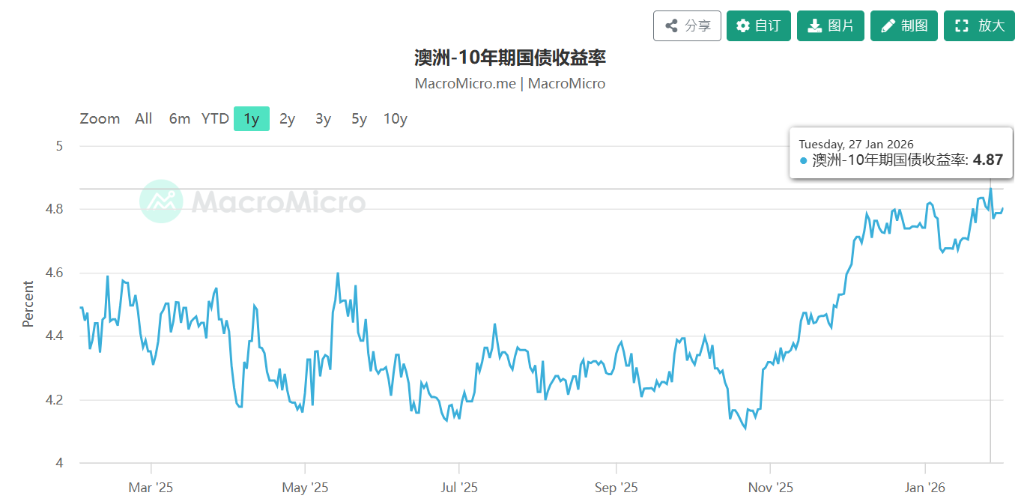
澳大利亚10年期国债

Search documents
澳洲央行要逆势加息?澳大利亚10年期国债收益率逼近5%
Hua Er Jie Jian Wen· 2026-02-02 02:23
Core Viewpoint - The Reserve Bank of Australia (RBA) is expected to raise the cash rate by 25 basis points to 3.85% due to persistent inflation and a strong labor market, marking a significant policy shift as most global central banks are moving towards rate cuts [1][2]. Group 1: Interest Rate Changes - The RBA's potential rate hike contrasts sharply with its previous attempts to stimulate the economy through rate cuts less than six months ago [2]. - Market expectations indicate a 73% probability of a 25 basis point increase in the cash rate [1]. Group 2: Bond Market Impact - The yield on Australia's 10-year government bonds reached 4.81% last week and briefly hit 4.90% following stronger-than-expected inflation data, with forecasts suggesting it may temporarily exceed 5% in the coming months [3][5]. - Analysts believe that if the RBA raises rates in February and May, the 10-year yield could face further upward pressure, although sustaining levels above 5% may be challenging due to demand from overseas investors [5]. Group 3: Economic Indicators - Recent unexpected strong data, including core inflation remaining above the RBA's target range of 2%-3% and a drop in the unemployment rate to 4.1%, has shifted policy expectations [5]. - Strategists emphasize that addressing inflation through rate hikes is crucial to avoid more aggressive future measures [5]. Group 4: Global Monetary Policy Divergence - The potential rate hike by the RBA occurs amid a backdrop of diverging global monetary policies, with the Federal Reserve and some Asian economies nearing rate cuts, while the Eurozone remains cautious and Japan leans towards further tightening [6][7]. - This divergence is reflected in currency movements, with the Australian dollar appreciating approximately 5% this year, indicating a "passive tightening" of financial conditions [8]. Group 5: Rate Hike Context - If the RBA proceeds with the rate hike, it may be viewed more as an "insurance hike" rather than the beginning of a new tightening cycle [9].

澳元鹰派政策 利差优势凸显
Jin Tou Wang· 2026-01-30 03:01
Core Viewpoint - The Australian dollar (AUD) has shown strong performance against the US dollar (USD) and is positioned as a leading currency among G10 currencies, driven by monetary policy divergence and robust commodity prices [1][2][3]. Group 1: Currency Performance - As of January 30, 2026, the AUD/USD exchange rate reached 0.7016, with a year-to-date increase of nearly 4% [1]. - The AUD has consistently broken key resistance levels against the USD, reaching a 16-month high of 0.6931 on January 26 and further climbing to 0.7050 [1]. - The AUD/CNY exchange rate has shown high volatility, fluctuating between 4.86 and 4.90, indicating a strong overall performance since the beginning of the year [1]. Group 2: Monetary Policy Divergence - The Reserve Bank of Australia (RBA) has maintained a benchmark interest rate of 3.6% and indicated a shift towards potential rate hikes, contrasting with the US Federal Reserve's recent rate cuts [2]. - Australia's consumer inflation expectations rose to 4.7% in December 2025, exceeding the RBA's target range, which has strengthened the case for interest rate increases [2]. - The market is pricing in a nearly 50% chance of a rate hike in March, with predictions that the benchmark rate could rise to 3.85% [2]. Group 3: Commodity Prices and Economic Indicators - The AUD is closely linked to commodity prices, with recent strong performances in gold, copper, and iron ore, benefiting Australia's trade balance [3]. - Australia's GDP grew by 2.1% year-on-year in Q3 2025, and the unemployment rate fell to 4.1%, indicating a robust economic environment [3]. - The National Australia Bank's business survey showed a capacity utilization rate of 83.3%, reflecting strong operational performance across sectors [3]. Group 4: Market Sentiment and Technical Analysis - The USD index has weakened due to expectations of coordinated intervention to support the Japanese yen and rising concerns over US government debt [4]. - The AUD is viewed as a preferred alternative investment due to its high yield and solid fundamentals, with analysts expressing optimism about its future performance [4]. - Technical indicators suggest a clear bullish trend for the AUD/USD, with significant support levels identified at 0.7000 and 0.6931 [4]. Group 5: Future Outlook - Analysts from major banks predict that the AUD/USD could reach the 0.70 mark by the end of March 2026, with a probability exceeding 70% according to options market data [5]. - Despite the positive outlook, potential risks include a downturn in commodity prices, lower-than-expected interest rate hikes, and geopolitical tensions that could affect the AUD's performance [6]. - Key variables to monitor include the RBA's upcoming policy meeting, the Federal Reserve's meeting minutes, and changes in Chinese demand and commodity prices [6].
澳元本周表现亮眼 市场热议澳储行明年上半年加息可能性
Xin Hua Cai Jing· 2025-12-05 07:47
Group 1 - The Australian economy is showing strong signs of growth, with robust consumer spending and private sector demand, prompting economists to reassess the Reserve Bank of Australia's (RBA) policy outlook [1][2] - The RBA is expected to signal a shift in policy direction during the upcoming monetary policy meeting, indicating the end of the rate-cutting cycle and providing clearer guidance on future tightening paths [2] - Recent data shows that household spending in Australia increased by 1.3% in October, significantly above market expectations of 0.6%, driven by promotional activities and major entertainment events [1][2] Group 2 - The Australian dollar (AUD) has appreciated nearly 1% against the US dollar this week, trading around 0.6625, supported by strong economic data and a decline in the US dollar [1][2] - The yield on Australian 10-year government bonds has risen to approximately 4.69%, the highest level since January, reflecting changing interest rate expectations [3] - Morgan Stanley recommends investors increase their allocation to Australian assets, forecasting that the AUD/USD trading range will move up to 0.66-0.70 over the next 12 months [3]
澳大利亚10年期国债收益率上涨5个基点至4.35%
Mei Ri Jing Ji Xin Wen· 2025-11-03 04:03
Core Viewpoint - Australia's 10-year government bond yield has increased by 5 basis points to 4.35%, marking the highest level since October 10 [1] Group 1 - The rise in the bond yield indicates a potential shift in investor sentiment and expectations regarding future interest rates [1] - The current yield level reflects broader economic conditions and may influence borrowing costs for both consumers and businesses [1]
澳大利亚10年期国债收益率日内升幅扩大至10个基点
Mei Ri Jing Ji Xin Wen· 2025-10-30 00:00
Core Viewpoint - Australia's 10-year government bond yield increased by 10 basis points in a single day, following the upward trend of U.S. Treasury yields [1] Group 1 - The rise in Australia's 10-year bond yield reflects a broader trend in global bond markets, particularly influenced by U.S. Treasury yields [1]
供应下降缓解市场紧张情绪 全球长期债券重回投资者视野
Zhi Tong Cai Jing· 2025-09-26 06:58
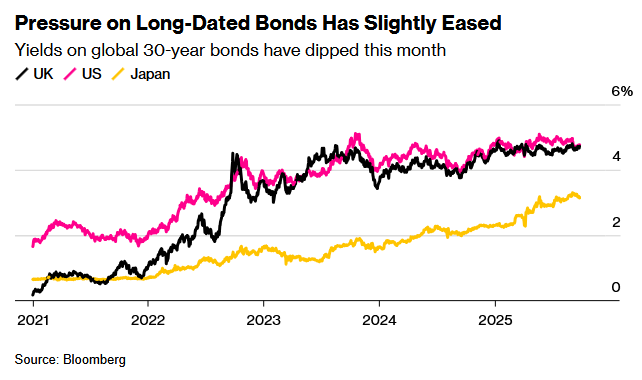
Group 1 - The global long-term bond market is experiencing a rebound as investors seek buying opportunities after a sell-off, with U.S. and Japanese 30-year bond yields dropping approximately 20 basis points since early September, and UK yields falling over 10 basis points [1] - The recent decline in long-term bond yields is partly driven by reduced supply, as some countries shift their issuance focus to cheaper short-term bonds, with Japan proposing to cut long-term bond issuance and the UK central bank reducing long-term bond sales in its quantitative tightening plan [1][2] - There is a growing optimism in the long-term bond market, highlighting the significant role of supply concerns in recent sell-offs, despite ongoing worries about rising fiscal deficits [2] Group 2 - Strong economic growth globally is alleviating concerns about fiscal deficits and prompting investors to reconsider long-term interest rate trends, with recommendations for Australian investors to adopt positions that benefit from a flattening yield curve [3] - The Bloomberg Global Aggregate Index indicates that bets on long-term bonds are starting to pay off, with 10-year and longer bonds returning 0.7% this month, outperforming shorter-term bonds [6] - Recent auctions show strong demand for long-term bonds, with Japan's 40-year bonds seeing enthusiastic buying and the strongest demand for 20-year bonds since 2020 [6]
5月30日电,澳大利亚10年期国债收益率跌幅扩大至11个基点,之前公布了疲软数据。
news flash· 2025-05-30 02:08
Core Viewpoint - Australia's 10-year government bond yield has seen a significant decline of 11 basis points following the release of weak economic data [1] Group 1 - The 10-year government bond yield in Australia has dropped by 11 basis points [1]
特朗普关税措施被叫停后,主要政府债券下跌
news flash· 2025-05-29 00:29
Core Viewpoint - The U.S. Federal Trade Court's rejection of Trump's global tariffs has led to a decline in major government bond prices, indicating a potential shift of funds away from sovereign debt and other safe-haven assets [1] Group 1: Government Bond Market Reaction - Major government bond prices have decreased following the court's decision, suggesting a market response to reduced tariff pressures [1] - The yield on the 10-year Japanese government bond increased by 1 basis point to 1.525% [1] - The yield on the 10-year U.S. Treasury bond rose by 4 basis points to 4.5186% [1] - The yield on the 10-year Australian government bond also increased by 4 basis points to 4.3740% [1]
澳大利亚10年期国债收益率涨7个基点,报4.55%。
news flash· 2025-05-14 23:01
Core Viewpoint - Australia's 10-year government bond yield increased by 7 basis points, reaching 4.55% [1] Group 1 - The rise in the 10-year bond yield indicates a shift in investor sentiment and expectations regarding future interest rates [1]
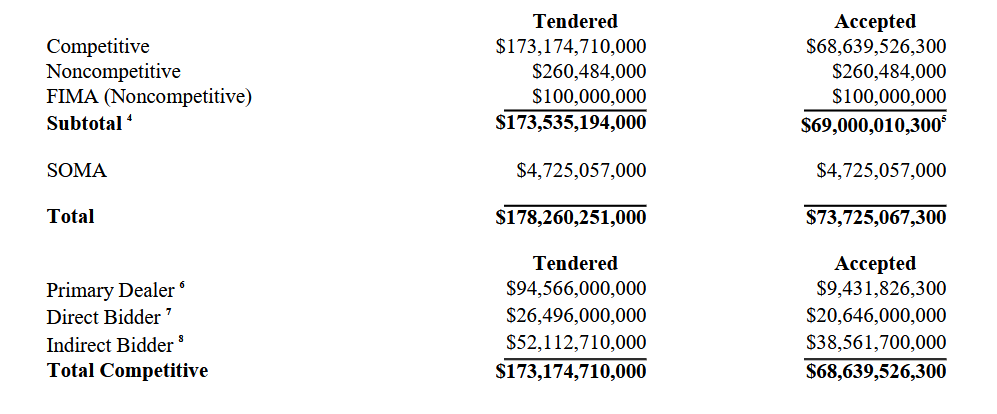
美债海外需求创阶段新低 国际避险资产格局重构
Xin Lang Cai Jing· 2025-04-24 06:07
Core Viewpoint - The latest auction results for U.S. Treasury bonds indicate a significant decline in overseas investor demand, marking a new low since the Silicon Valley Bank crisis, which increases the pressure on U.S. Treasury sales and suggests a restructuring of the international safe-haven asset landscape [1][2]. Group 1: Auction Results - The recent auction of $69 billion two-year U.S. Treasury bonds had a bid rate of 3.795%, the lowest since September of the previous year, with a tail of 0.6 basis points and a bid-to-cover ratio of 2.52, below recent averages [2]. - Domestic demand remains strong, with direct bidders accounting for 30.1%, while indirect bidders, representing overseas demand, fell to 56.2%, the lowest since the Silicon Valley Bank crisis [2][4]. Group 2: Market Implications - Analysts suggest that if overseas participation in Treasury auctions declines by another 10-20%, the Federal Reserve may have no choice but to restart quantitative easing and position itself as the "last buyer" of U.S. Treasuries [4]. - The recent sell-off of dollar assets is leading to a reconfiguration of traditional safe-haven assets, with gold and non-U.S. bonds gaining attention as investors shift away from U.S. Treasuries [5][8]. Group 3: Global Asset Allocation - The volatility in U.S. Treasury yields is expected to increase pricing pressure on global sovereign debt markets and reshape global asset allocation, enhancing the monetary and safe-haven attributes of gold [8]. - Emerging market bonds are also gaining popularity, with India's 10-year benchmark yield dropping to 6.2981%, the lowest since November 2021, and Australian 10-year yields remaining low since early April [8][9]. Group 4: Domestic Market Outlook - In the context of high international market volatility, the value of Chinese assets is becoming increasingly significant, with expectations of a stable A-share market and potential appreciation of the RMB due to domestic economic resilience [9].