
美国10年期国债

Search documents
一图看懂冲突30天全球资产大洗牌
和讯· 2026-03-27 09:03
Group 1 - The core viewpoint of the article is that the ongoing geopolitical conflict in the Middle East has led to a significant revaluation of global assets, shifting the market logic from "rate cut expectations" to "inflation and geopolitical risk" [5][37]. - The conflict has evolved through a chain reaction: conflict → supply shock → rising inflation → asset repricing, with energy supply becoming the primary variable affecting asset pricing [6][9]. - Brent crude oil prices surged from approximately $66 per barrel before the conflict to a peak of $109.78 per barrel, representing an increase of over 58%, indicating that the price rise is driven by supply constraints rather than demand [14][37]. Group 2 - Gold has underperformed during this conflict, with COMEX gold futures experiencing a maximum decline of over 18%, primarily due to a stronger US dollar and rising interest rate expectations, which have diminished gold's safe-haven appeal [19][20]. - The US dollar has strengthened due to safe-haven demand and expectations of delayed rate cuts, while the Chinese yuan has shown resilience, depreciating less than the dollar has appreciated [23][24]. - Global stock markets have exhibited a divergent pattern, with European and Japanese markets experiencing significant declines, while US stocks have remained relatively stable, reflecting varying degrees of dependence on energy imports [28][29]. Group 3 - Traditional safe-haven assets like government bonds have seen rising yields in the US and Germany, indicating a shift in market dynamics where inflation expectations and central bank policies are dominating over safe-haven demand [33][34]. - The current macro environment suggests that government bonds are no longer purely safe-haven instruments but are highly dependent on each country's inflation and policy cycles [34][37]. - Overall, the conflict has not only caused short-term market volatility but has also led to a fundamental shift in global asset pricing logic, with inflation assets like oil leading the market, while gold has become a significant cognitive bias asset [37][38].


收盘后11分钟发帖!美股遭遇伊朗战争以来“最惨一天”,特朗普“立刻”延长10天“谈判时间”
华尔街见闻· 2026-03-27 00:40
Core Viewpoint - The article discusses the significant market reactions to the escalating Middle East conflict and President Trump's decision to extend the deadline for striking Iranian energy facilities, highlighting the volatility in the stock and bond markets as well as the implications for inflation and energy prices [2][4][10]. Market Reactions - The U.S. stock market experienced its most severe sell-off in months, with the S&P 500 index dropping 1.7%, marking its largest single-day decline since January 20, and reaching a six-month low [5]. - The Nasdaq Composite index fell 2.4%, entering a "technical correction" as it dropped over 10% from its late October peak [6]. - The bond market was also heavily impacted, with the 10-year Treasury yield rising by 7.95 basis points to 4.4117%, and the two-year yield increasing by 10.05 basis points to 3.9858%, reflecting investor fatigue amid rising inflation concerns [5]. Energy Prices and Inflation - Brent crude oil prices surged by 5.7% to $108.01 per barrel, the largest single-day increase since March 11, while WTI crude rose by 4.6% to $94.48 [5]. - The OECD warned that the Middle East crisis could push U.S. inflation rates to 4.2%, the highest among G7 countries [5]. Political and Economic Dynamics - Trump's administration is seen to oscillate between diplomatic efforts and military threats, with a recent extension of the deadline for military action against Iran, indicating a complex interplay of negotiation and military readiness [10]. - Observers note that Trump's rhetoric tends to soften when energy prices or borrowing costs reach certain thresholds, suggesting a strategic response to market conditions [9]. Investor Sentiment - Market reactions are characterized as rational responses to extreme uncertainty, with many investors opting to remain cautious and avoid sudden moves in light of potential policy shifts from the White House [11].

国际油价大跳水
第一财经· 2026-03-23 11:41
Group 1 - The yield on the US 10-year Treasury bond decreased by 8.4 basis points, now at 4.307% [1] - European stocks turned positive, with the German DAX and French CAC40 indices rising over 2% during the day [2] - The price of copper in London increased by over 4%, currently at $12,315.90 per ton, while nickel rose by 2% to $17,178.40 per ton [2] Group 2 - Spot gold saw a narrowing decline of 1.08%, now priced at $4,443 per ounce, while spot silver increased by 1.6% [3] - International oil prices experienced a sharp drop, with both WTI and Brent crude oil falling over 13% [4] - Dow Jones futures rose by 1.92%, S&P 500 futures increased by 2.30%, and Nasdaq 100 futures gained 2.08% [5] Group 3 - The Turkish Istanbul 100 index declined by 3.11% [6] - The UK 2-year Treasury yield rose by 14 basis points to 4.71%, marking a new high since November 2023 [7] - The US 2-year Treasury yield reached 4% for the first time since June, hitting its highest level since June 2025 [8][9]

估值逻辑的断裂:从流动性狂欢到现金流为王
美股研究社· 2026-03-22 12:36
Core Viewpoint - The rise of the US 10-year Treasury yield to 4.37% signifies the end of the era of cheap capital, fundamentally altering the investment landscape and asset pricing dynamics [1][3][14]. Group 1: Impact of Rising Yields - The bond market serves as a reliable indicator of macroeconomic conditions, reflecting true pricing of inflation expectations and capital supply and demand [3][4]. - The increase in the risk-free rate has reset the valuation framework for all assets, leading to a systematic re-evaluation of risk premiums [6][10]. - High-leverage industries, such as real estate and technology, are particularly vulnerable as rising financing costs threaten their operational viability [9][10]. Group 2: Shifts in Investment Behavior - Investors are now compelled to reassess whether the risks they are taking are justified, leading to a preference for safer, cash-generating assets [7][12]. - There is a noticeable shift in asset allocation, with institutional investors increasing bond holdings while reducing equity risk exposure [7][11]. - Cash flow-generating assets, such as those in the energy and financial sectors, are becoming more attractive in a high-interest environment [11][12]. Group 3: Market Dynamics and Valuation - The market is transitioning from a focus on growth narratives to an emphasis on current cash flows and profitability, marking a return to traditional valuation metrics [12][16]. - The disparity in market expectations is evident, with some investors betting on a return to lower rates while others prepare for prolonged high rates, increasing market volatility [13][14]. - The strong dollar and rising US Treasury yields are drawing capital back to the US, creating pressure on emerging markets and potentially leading to sovereign debt crises [13][14]. Group 4: Long-term Implications - The end of the cheap capital era necessitates a focus on asset quality and cash flow generation, as only those assets with real earning potential will thrive in the new environment [14][16]. - The current market conditions highlight the risks of relying on outdated investment strategies, emphasizing the need for adaptability and a return to fundamental analysis [16].

金银价格再急跌,原油成安全资产?
日经中文网· 2026-03-20 08:01
Core Viewpoint - The article discusses the significant drop in gold and silver prices, attributed to rising interest rates and geopolitical tensions, particularly related to the Iran situation, which has shifted investor focus towards oil as a new safe asset [2][4][6]. Group 1: Price Movements - On March 19, gold futures fell to $4505 per ounce, a decrease of approximately $391 (8%) from the previous day's settlement [2] - Silver prices also dropped by 16%, reaching their lowest point since early February [2] - Over two days, the decline in gold prices marked the largest drop in about a month and a half, with a 14% decrease compared to the closing price on February 27, prior to the U.S.-Israel attacks on Iran [4] Group 2: Interest Rates and Economic Factors - The U.S. 10-year Treasury yield rose to 4.3%, increasing by 0.07% from the previous day, which negatively impacts the attractiveness of gold as it does not yield interest [4][6] - High interest rates and a strengthening dollar are contributing to the downward pressure on gold and silver prices [6] Group 3: Oil as a Safe Asset - Concerns over the Iran situation have led to a significant increase in oil prices, with WTI crude oil futures reaching around $101 per barrel, up from $96 [6][8] - The rising oil prices are seen as a hedge against geopolitical risks, reducing the demand for precious metals as safe assets [8] Group 4: Market Reactions - The Nikkei average index fell by 9.3%, and the KOSPI dropped by 7.7%, prompting investors to sell gold to cover losses in the stock markets [10] - There was a notable increase in individual investors selling gold, with $2.8 million worth of gold sold in the first two hours of trading on March 19 [10]
美伊谈判分歧较大,避险情绪延续
Hua Tai Qi Huo· 2026-02-27 05:02
Report Industry Investment Rating - Gold: Cautiously bullish [8] - Silver: Cautiously bullish [8] - Arbitrage: Short the gold-silver ratio on rallies [9] - Options: On hold [9] Core View of the Report - The market risk sentiment is rising, and the safe-haven logic remains. It is expected that the gold price will be mainly in a volatile and slightly stronger pattern in the near future, with the Au2604 contract fluctuating in the range of 1,100 yuan/gram - 1,200 yuan/gram. The macro logic of silver is similar to that of gold, but its price volatility is much greater than that of gold. It is expected to maintain a volatile and slightly stronger pattern, with the Ag2604 contract fluctuating in the range of 22,000 yuan/kilogram - 24,000 yuan/kilogram [8][9] Summary According to Related Catalogs Market Analysis - Geopolitical situation: The third round of indirect negotiations between the US and Iran ended. Iran's foreign minister said that the two sides are close to reaching a consensus in some areas, and technical negotiations will be held in Vienna next Monday. The mediator, Oman's foreign minister, said the negotiations "made significant progress", but the media reported that the differences between the two sides are still large. The US insists that Iran completely dismantle its nuclear facilities and transfer all enriched uranium out of the country; Iran proposes to stop nuclear activities within a limited period and then resume enrichment activities within a regulated regional framework [1] - Global debt: The Institute of International Finance reported that the global debt scale climbed to a record $348 trillion at the end of last year, an increase of nearly $29 trillion, the fastest growth rate since the early days of the COVID-19 pandemic in 2020, changing the previous structure dominated by households or enterprises. The government debt of countries such as the US and the eurozone accounts for more than $10 trillion [1] - Economic data: The number of initial jobless claims in the US last week was 212,000, compared with an expected 215,000, and the previous value was revised from 206,000 to 208,000 [1] Futures Quotes and Trading Volumes - On February 26, 2026, the Shanghai Gold main contract opened at 1,148.68 yuan/gram and closed at 1,146.48 yuan/gram, a change of -0.40% from the previous trading day's closing price. The trading volume on that day was 41,087 lots, and the open interest was 129,725 lots. In the night session, it opened at 1,144.50 yuan/gram and closed at 1,146.04 yuan/gram, a decrease of 0.04% from the afternoon closing price [2] - On February 26, 2026, the Shanghai Silver main contract opened at 22,975.00 yuan/kilogram and closed at 22,572.00 yuan/kilogram, a change of -1.98% from the previous trading day's closing price. The trading volume on that day was 357,610 lots, and the open interest was 173,529 lots. In the night session, it opened at 22,088 yuan/kilogram and closed at 22,219 yuan/kilogram, a decrease of 1.56% from the afternoon closing price [2] US Treasury Yield and Spread Monitoring - On February 26, 2026, the yield of the 10-year US Treasury bond closed at 4.002%, unchanged from the previous trading day. The spread between the 10-year and 2-year Treasury bonds was 0.574%, also unchanged from the previous trading day [3] Changes in Positions and Trading Volumes of Gold and Silver on the Shanghai Futures Exchange - On the Au2604 contract, the long positions changed by 777 lots compared with the previous day, and the short positions changed by 315 lots. The total trading volume of the Shanghai Gold contract on the previous trading day was 224,651 lots, a change of -16.82% from the previous trading day [4] - On the Ag2604 contract, the long positions changed by -3,175 lots, and the short positions changed by -3,518 lots. The total trading volume of the silver contract on the previous trading day was 946,281 lots, a change of -3.54% from the previous trading day [4] Precious Metal ETF Position Tracking - The position of the gold ETF yesterday was 1,097.62 tons, unchanged from the previous trading day. The position of the silver ETF was 16,080 tons, a decrease of 28 tons from the previous trading day [5] Precious Metal Arbitrage Tracking - On February 26, 2026, the domestic premium of gold was 6.38 yuan/gram, and the domestic premium of silver was 536.47 yuan/kilogram. The price ratio of the main contracts of gold and silver on the Shanghai Futures Exchange yesterday was about 50.79, a change of 1.62% from the previous trading day, and the price ratio of gold and silver in the overseas market was 57.01, a change of -2.78% from the previous trading day [6] Fundamentals - On the previous trading day (February 26, 2026), the trading volume of gold on the Shanghai Gold Exchange T+d market was 28,110 kilograms, a change of -3.90% from the previous trading day. The trading volume of silver was 226,742 kilograms, a change of -7.11% from the previous trading day. The gold delivery volume was 11,872 kilograms, and the silver delivery volume was 30 kilograms [7]
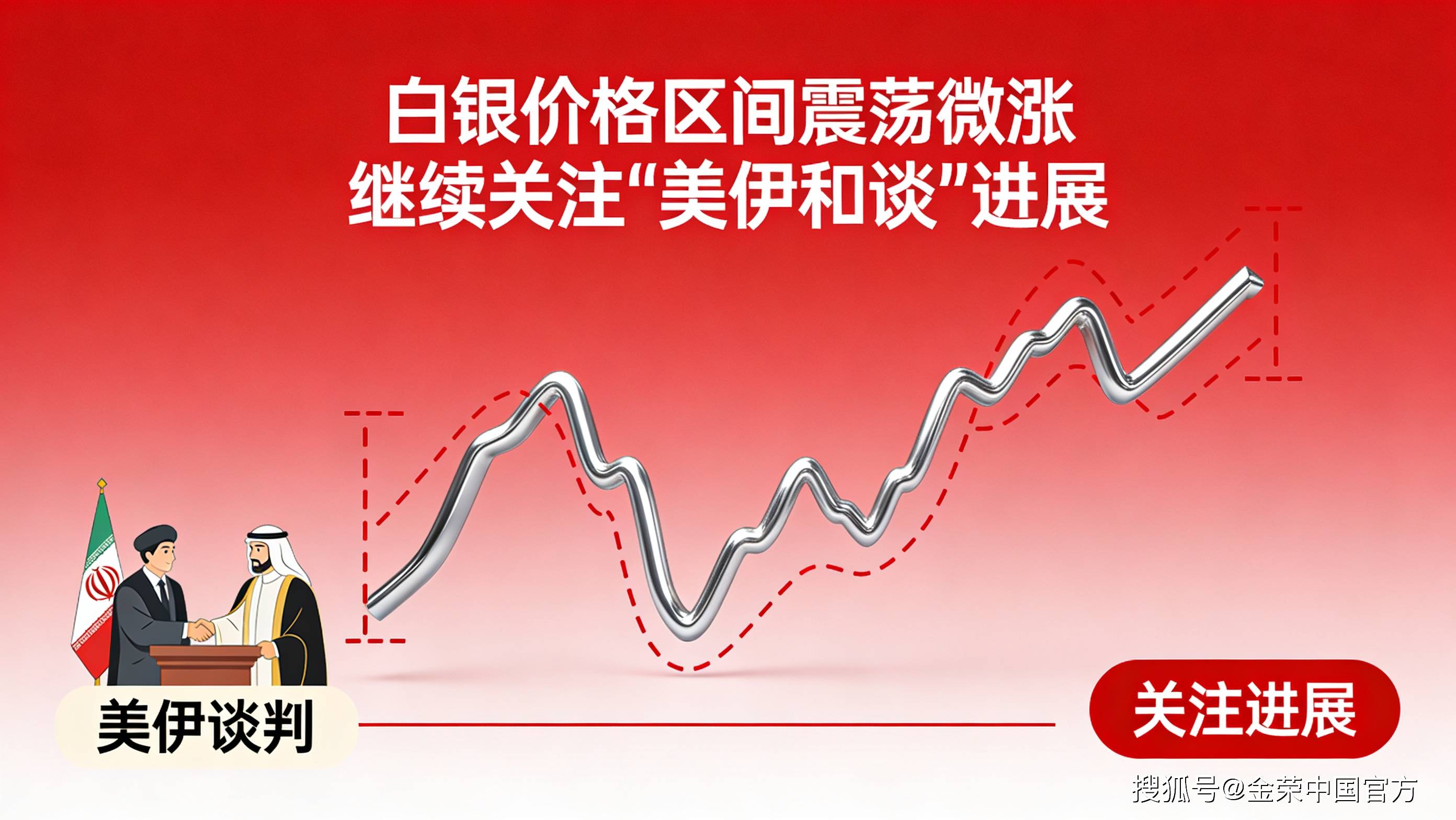
金荣中国:白银价格区间震荡微涨,继续关注“美伊和谈”进展
Sou Hu Cai Jing· 2026-02-27 02:48
Fundamental Analysis - Silver prices experienced slight fluctuations and increased slightly, currently at $88.65 per ounce, with attention on the progress of the "US-Iran talks" [1] - Iranian Foreign Minister Zarif described the talks as "serious," indicating some consensus on certain issues, while acknowledging remaining differences [1] - The market faces a dilemma: a substantial breakthrough in negotiations could significantly reduce geopolitical risk premiums, potentially leading to a pullback in gold prices; conversely, a breakdown in talks could trigger heightened risk aversion due to military tensions in the Middle East [1] Market Sentiment - The gold price is attempting to break through the resistance level of $5200 but has struggled to maintain gains, reflecting a lack of clear directional catalysts as both bulls and bears await the outcome of the Geneva negotiations [1] - The current uncertainty in the market is pervasive, with expectations that if a geopolitical agreement is reached, gold prices may indeed face a correction; however, mid-term projections suggest gold could rise to $5340.72 and challenge the $5400 mark [4] Geopolitical Context - The military shadow of US-Iran tensions looms large, with President Trump issuing a "10 to 15 days" ultimatum for an agreement, warning of "very bad things" if no deal is reached [4] - The US has completed a significant military buildup in the Middle East, adding pressure to the negotiations [4] Iranian Position - Iran's leadership has shown flexibility but maintains a clear bottom line, with President Raisi emphasizing a ban on nuclear weapon development, indicating Tehran's commitment to not pursue nuclear arms [5] - The core exchange logic of "abandoning nuclear ambitions for sanctions relief" could be a key breakthrough in easing US-Iran tensions [5] Bond Market Signals - While gold prices remain stagnant, the US bond market has shown clear signs of risk aversion, with the 10-year Treasury yield dropping to a three-month low of 4.016% [5] - The yield curve has flattened, with the two-year and 10-year Treasury yield spread narrowing for ten consecutive trading days, the longest such period since November 2015, reflecting a re-pricing of Fed rate cut expectations [6] Economic Indicators - Despite stable labor market data, the market anticipates two rate cuts this year, with the first potentially occurring in July or September [6] - The US dollar index saw a slight increase of 0.14% to 97.79, amid mixed assessments of tariff prospects, risk sentiment, and economic conditions [6]
【UNFX财经事件】鹰派重定价压制美元 黄金高位维持强势
Sou Hu Cai Jing· 2026-02-25 09:24
Core Viewpoint - The current market dynamics indicate a shift in asset pricing, where gold prices are approaching recent highs despite rising short-term U.S. Treasury yields, suggesting that factors beyond interest rates are influencing valuations [1] Group 1: Gold Market Dynamics - Gold prices are hovering just below the $5200 mark, close to monthly highs, with the overall upward trend remaining intact despite not achieving a decisive breakout [2] - Geopolitical tensions in the Middle East and uncertainties surrounding trade policies are providing ongoing support for safe-haven assets like gold [2] - The market is experiencing a "dual-line game," where rising risk premiums from geopolitical and trade uncertainties are supporting gold prices, while the re-evaluation of Federal Reserve policy is exerting upward pressure on short-term yields [5] Group 2: U.S. Treasury Yields and Federal Reserve Policy - Market expectations for the Federal Reserve's policy have shifted towards a more hawkish stance, with the probability of a rate cut in June dropping to around 50%, reflecting a significant change in sentiment [3] - The 2-year U.S. Treasury yield has risen to 3.46%, while the 10-year yield remains stable around 4.03%, indicating increased confidence in maintaining restrictive short-term policies [3] - Recent statements from Federal Reserve officials emphasize the need for clearer evidence of inflation decline before considering any rate adjustments, reinforcing the current policy stance [3] Group 3: Currency and Risk Sentiment - The U.S. dollar index initially strengthened but later retreated to around 97.70, indicating a lack of sustained buying momentum [4] - The divergence in major currency pairs reflects mixed market sentiment, with the euro and pound showing resilience while the dollar struggles to maintain upward momentum due to trade policy uncertainties [4] - The current market environment is characterized by a structural differentiation in capital flows, with some funds returning to risk assets amid a rebound in equity markets, which diminishes the dollar's appeal as a safe haven [4]
10年期美债收益率跌约1个基点,投资者关注地缘政治风险
Xin Lang Cai Jing· 2026-02-19 23:03
Core Viewpoint - The article discusses the recent movements in U.S. Treasury yields, highlighting fluctuations in various maturities and the implications for the bond market [1] Group 1: Treasury Yield Movements - The 10-year U.S. Treasury yield decreased by 0.96 basis points to 4.0731%, continuing a downward trend since 22:00 Beijing time [1] - The 2-year Treasury yield increased by 0.62 basis points to 3.4657% [1] - The 30-year Treasury yield fell by 0.29 basis points to 4.7030% [1] Group 2: Yield Spread and TIPS - The 2/10 year Treasury yield spread decreased by 1.161 basis points to +60.530 basis points [1] - The 10-year Treasury Inflation-Protected Securities (TIPS) yield dropped by 1.29 basis points to 1.7747% [1] - The 2-year TIPS yield fell by 2.04 basis points to 0.7315%, while the 30-year TIPS yield decreased by 0.77 basis points to 2.4717% [1]
两年期美债收益率创2022年以来新低,中长期收益率本周跌约16个基点
Xin Lang Cai Jing· 2026-02-13 22:47
Core Viewpoint - The U.S. Treasury yields have experienced a downward trend, with significant declines across various maturities, indicating a potential shift in market sentiment regarding inflation and interest rates [1] Group 1: Treasury Yields - The 10-year Treasury yield fell by 4.98 basis points to 4.0483%, with a total decline of 15.77 basis points for the week [1] - The 2-year Treasury yield decreased by 5.45 basis points to 3.4014%, reaching a new low of 3.3951% when the U.S. CPI inflation data was released, with a weekly drop of 9.62 basis points [1] - The 30-year Treasury yield dropped by 3.75 basis points to 4.6953%, accumulating a weekly decline of 15.57 basis points [1] Group 2: Yield Spreads - The yield spread between the 10-year and 2-year Treasuries increased by 0.477 basis points to +64.486 basis points, with a weekly decline of 5.945 basis points [1] Group 3: TIPS Yields - The 10-year Treasury Inflation-Protected Securities (TIPS) yield fell by 2.41 basis points to 1.7551%, with a total weekly decline of 12.25 basis points [1] - The 2-year TIPS yield decreased by 0.59 basis points to 0.7077%, with a weekly drop of 0.25 basis points [1] - The 30-year TIPS yield declined by 1.99 basis points to 2.4636%, accumulating a weekly decline of 12.01 basis points [1]