
澳洲蓝龙虾

Search documents
万紫千红百县兴
Jing Ji Ri Bao· 2025-12-09 22:19
Core Insights - Agricultural Bank of China (ABC) is actively supporting local agricultural development in Guangdong Province through tailored financial products and services aimed at enhancing rural revitalization and industrial growth [4][10]. Group 1: Financial Support for Agriculture - ABC has introduced various financial products such as "惠农e贷" (Huinong e-loan) and "科技e贷" (Technology e-loan) to support the gold pomelo industry in Meizhou, providing loans totaling 16.9 billion yuan to 278 agricultural leading enterprises and small businesses [7]. - The bank's efforts have resulted in the support of 5,702 households in the pomelo industry, with a total issuance of 11.1 billion yuan in "惠农e贷" [7]. - In the white pigeon breeding sector, ABC has launched the "白鸽e贷" (White Pigeon e-loan) product, which has provided over 28 million yuan in loans, significantly boosting the local industry [9]. Group 2: Impact on Local Economy - The financial support from ABC has enabled local farmers and enterprises to expand their operations, such as a couple in Meizhou who received a 260,000 yuan loan to enhance their pomelo orchard [5]. - The white pigeon industry in Qingyuan has seen a dramatic increase in production, with annual output rising from 4 million to 28 million birds, generating over 900 million yuan in value [8]. - The introduction of the "农业全产业链贷" (Agricultural Full Industry Chain Loan) has facilitated the expansion of the blue crayfish industry in Huizhou, with a loan of 1.4 million yuan helping a company to scale up its operations [10][11]. Group 3: Strategic Initiatives - ABC's initiatives align with the "百千万工程" (Hundred Counties, Thousand Towns, and Ten Thousand Villages Project), which aims to promote high-quality development across rural areas in Guangdong [4][6]. - The bank has committed to enhancing financial services for rural revitalization, with a total county loan balance exceeding 600 billion yuan and agricultural loans surpassing 500 billion yuan as of October 2025 [11]. - ABC has been recognized for its outstanding performance in providing financial services for rural revitalization, receiving an "excellent" rating from the central bank for five consecutive years [11].


视频丨从“死亡之海”到“水产绿洲” 解锁新疆“点沙成金”的密码→
Yang Shi Xin Wen Ke Hu Duan· 2025-11-29 13:48
Core Viewpoint - The transformation of the Taklamakan Desert from a "sea of death" to a "green oasis" showcases innovative ecological farming practices in Xinjiang, highlighting the region's adaptive development strategies in the face of environmental challenges [2][17]. Group 1: Ecological Innovations - The introduction of desert plants like "Rou Cong Rong" (a parasitic plant) has led to increased income for local farmers, with an area of 22,900 acres cultivated, generating an annual income of 30,000 to 50,000 yuan per household [8][10]. - The local aquaculture industry has adapted to the saline-alkaline water conditions, producing unique seafood such as local crabs and Australian blue lobsters, which thrive in the desert environment [11][13]. - Advanced agricultural techniques, including vertical soilless cultivation and smart lighting, have enabled the production of 70,000 tons of fruits and vegetables annually in 1,000 greenhouses, significantly reducing costs by 60% to 80% [15][13]. Group 2: Cultural and Economic Development - The ancient village of Daliyabuyi has become a tourist attraction, with over 70,000 visitors this year, as it preserves its original charm while integrating modern amenities [34][32]. - The local economy has diversified, with traditional dishes like "Kumaiqi" made from local sheep, enhancing the culinary appeal for tourists and increasing local incomes [24][26]. - Infrastructure improvements, including new housing and access to utilities, have transformed the living conditions for residents, allowing them to engage in tourism and agriculture simultaneously [30][28]. Group 3: Environmental Restoration Efforts - Local initiatives led by figures like Aisikar Dawuti have resulted in the planting of 12,000 acres of protective forests, creating a green barrier against desert encroachment [41][45]. - The community has adopted a combination of biological and engineering methods for desertification control, successfully establishing 2,800 acres of artificial protective forests and 500 acres of grass grids [56][51]. - The introduction of "desert ginseng" (Rou Cong Rong) cultivation has provided a new revenue stream, with projected earnings of approximately 2,000 yuan per acre, contributing to sustainable economic development [58][61].

从“死亡之海”到“水产绿洲” 解锁新疆“点沙成金”的密码→
Yang Shi Xin Wen Ke Hu Duan· 2025-11-29 12:27
Group 1 - The transformation of the Taklamakan Desert from a "Sea of Death" to an "Aquaculture Oasis" showcases innovative ecological farming practices in Xinjiang, emphasizing local resource utilization and development strategies [1] - The introduction of various desert delicacies, including the unique flavors derived from local products, highlights the successful adaptation of agriculture in arid environments [1][15] - The cultivation of desert plants such as meat corydalis, which thrives on the roots of red willow, has become a significant source of income for local farmers, with an area of 22,900 acres planted, generating an annual income increase of 30,000 to 50,000 yuan per household [6][4] Group 2 - The local aquaculture industry has adapted to the desert environment, producing local crab and Australian blue lobster, with the unique saline-alkaline water contributing to the distinct taste and texture of the seafood [8][10] - Advanced agricultural techniques, including the use of smart greenhouses, have led to a significant increase in vegetable and rice production, with annual yields reaching 70,000 tons and a reduction in rice growth cycles by nearly half [12][13] - The integration of tourism and traditional lifestyles in the ancient village of Daliyabuyi has revitalized the local economy, attracting over 70,000 visitors this year and promoting local culinary traditions [31][29] Group 3 - The ecological restoration efforts in Kashgar's Shache County, including the planting of 12,000 acres of protective forests, aim to combat desertification and protect local communities from sand encroachment [40][41] - The village of Wenaletai Kushi has implemented a combination of biological and engineering methods for sand control, successfully creating over 2,800 acres of artificial protective forests and 500 acres of grass grids [50][55] - The introduction of economic crops such as meat corydalis and other fruits aims to convert ecological benefits into economic gains, with projections indicating stable employment for 29 individuals and temporary jobs for 640, generating an income of 544,000 yuan [60][58]
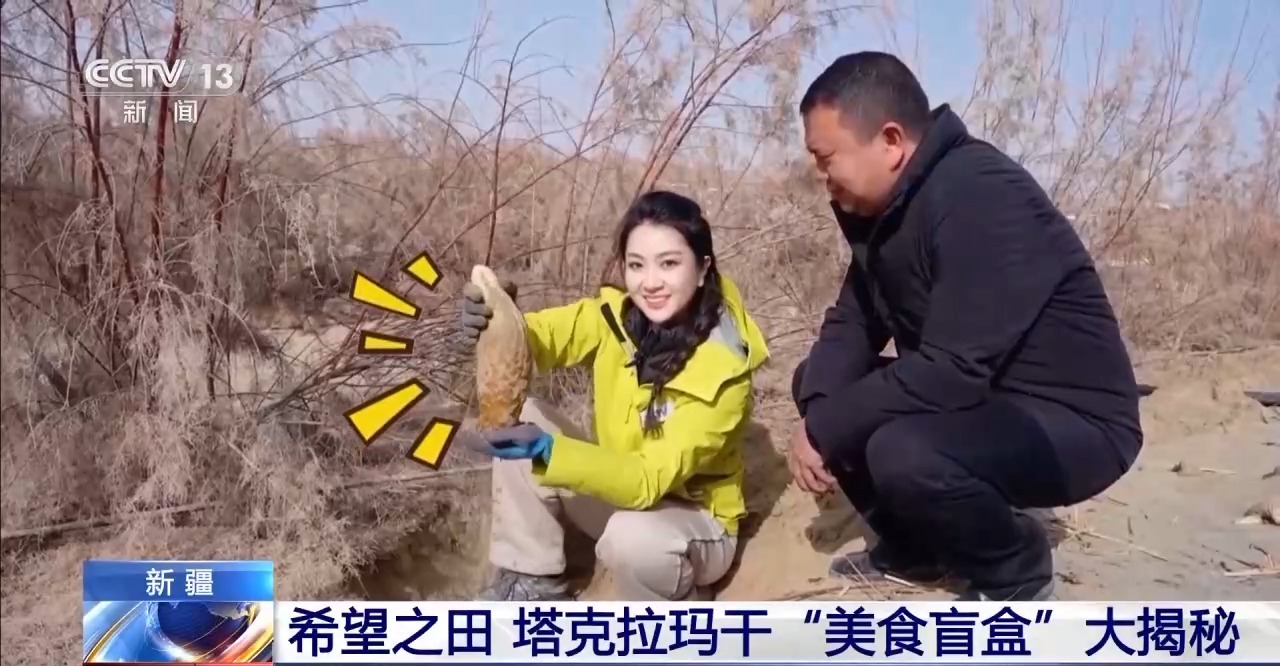
沙漠“盲盒”开出美味物产 解锁“死亡之海”背后的绿色密码
Yang Shi Wang· 2025-11-29 08:50
Core Viewpoint - The Taklamakan Desert, once considered a barren land, is transforming into a "food oasis" due to desertification control efforts, showcasing a variety of desert delicacies [1] Group 1: Agricultural Developments - The region has successfully cultivated large areas of red willow, which serve as both windbreaks and protectors of valuable resources [3] - The area planted with the desert treasure, Cistanche, has reached 22,900 acres, with each farmer potentially increasing their annual income by 30,000 to 50,000 yuan [5] - The introduction of advanced agricultural techniques, such as vertical soilless cultivation, has significantly reduced the growth cycle of rice by nearly half [9][10] Group 2: Aquaculture Innovations - Local aquaculture has enabled the harvesting of crabs and Australian blue lobsters, providing fresh seafood options for residents [7] - The unique saline-alkali water conditions contribute to the firmer texture and sweeter taste of the seafood, although they also pose challenges for growth [9] Group 3: Culinary Offerings - The region is now producing a variety of fruits and vegetables, with an annual output of 70,000 tons from 1,000 greenhouses, including strawberries, peppers, cucumbers, and cherry tomatoes [9] - Traditional dishes featuring Cistanche, such as Cistanche stewed with lamb and honey Cistanche, are becoming popular, highlighting the local culinary innovations [12] Group 4: Environmental Impact - The transformation of the desert into productive land symbolizes a harmonious coexistence between humans and nature, turning a once barren area into fertile fields and fish farms [15]
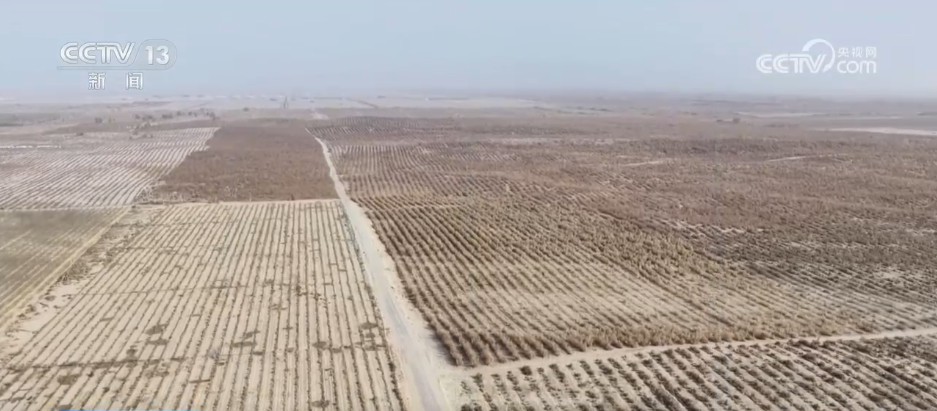
稻浪翻滚、虾蟹满塘 “一田多收”模式解锁希望的田野“财富密码”
Yang Shi Wang· 2025-09-10 09:21
Group 1: Agricultural Transformation in Jilin Province - The western region of Jilin Province, previously known as "the vast sea of eight hundred miles," has transformed into a significant agricultural area, now referred to as "the national granary" and "land of fish and rice" [1] - In Daan City, 100,000 acres of saline-alkali land have been successfully cultivated with rice and aquatic products through innovative biological remediation techniques [3][5] - The introduction of a multi-species farming model has allowed for the co-cultivation of rice, crabs, and shrimp, enhancing productivity and diversifying income sources for farmers [5][7] Group 2: Aquaculture Development in Xinjiang - In Shihezi City, Xinjiang, the first successful harvest of Australian blue crayfish has occurred, with over one million crayfish being caught [8][10] - The region's unique environmental conditions, including mineral-rich meltwater and abundant sunlight, have created an ideal habitat for crayfish farming [12] - The use of an intelligent feeding system has improved farming efficiency, leading to an early harvest, with expected yields of around 200 kilograms per acre [14] Group 3: Fishing Industry in Anhui Province - After a 160-day fishing ban, the South Yihe Lake in Xuancheng, Anhui, has reopened for fishing, marking a peak season for local fishermen [15][19] - The lake, covering an area of 320,000 acres, has seen effective ecological management through artificial breeding and conservation efforts, enhancing fish stocks and supporting local livelihoods [19] Group 4: Buckwheat Cultivation in Inner Mongolia - In the Ordos region of Inner Mongolia, 16,000 acres of buckwheat flowers are in full bloom, showcasing successful agricultural practices [20] - The transition from sloped farming to terraced fields, along with the adoption of drought-resistant varieties and modern irrigation techniques, has increased average yields from 190 to 260 pounds per acre [20] - The establishment of a complete industrial chain, from production to marketing, has resulted in an average income increase of 300 yuan per acre for local farmers [20]
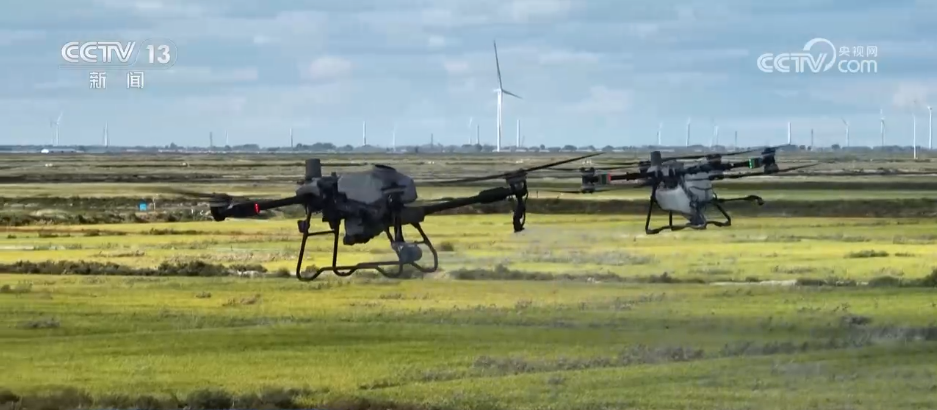
学用结合,壮大乡村富民产业
Ren Min Ri Bao· 2025-08-06 02:16
Core Insights - The article highlights the efforts of a village cadre, Xun Ran, in promoting the farming of Australian blue crayfish as a means to boost local economic development and improve villagers' incomes [1][2][3] Group 1: Background and Initiatives - Xun Ran, with a background in food quality and safety, was appointed as an assistant to the village party secretary in September 2023, coinciding with the introduction of blue crayfish farming in the village [2] - The village collaborated with neighboring villages to establish a 100-acre crayfish farming base, aiming to promote this initiative among local farmers to enhance their income [2][3] Group 2: Challenges and Solutions - Initial resistance from villagers was encountered due to concerns about the viability and marketability of blue crayfish, as many were accustomed to traditional farming methods [3][6] - Xun Ran recognized the need to address villagers' fears about profitability and market access, leading to the proposal of a "base + farmer" management model and securing buyback agreements with external companies [6][7] Group 3: Implementation and Results - By providing technical support and establishing a clear sales strategy, Xun Ran successfully encouraged villagers to adopt blue crayfish farming, resulting in increased confidence and participation [7][8] - As of May 2024, the farming initiative had expanded to over 700 acres, with 30 local farmers signing supply and sales agreements, demonstrating the project's growing acceptance and success [8][9] Group 4: Training and Development - The article discusses the establishment of a mentorship program in Ma'anshan City to support young village cadres, addressing challenges in adapting to rural environments and enhancing practical skills [9] - Initiatives include training sessions, on-the-job learning opportunities, and a clear pathway for career advancement to retain talented young leaders in rural areas [9]
学用结合,壮大乡村富民产业(干部状态新观察·年轻干部基层路)
Ren Min Ri Bao· 2025-08-04 22:39
Core Insights - The article highlights the efforts of a village cadre, Xun Ran, in promoting the farming of Australian blue crayfish as a means to boost the local economy and improve villagers' incomes [2][9] - The initiative faced initial skepticism from villagers regarding the viability and marketability of blue crayfish farming, which required strategic communication and support from local leaders [6][7] Group 1: Background and Initiatives - Xun Ran, with a background in food quality and safety, was appointed as an assistant to the village party secretary and played a crucial role in introducing blue crayfish farming to the village [2][3] - The village collaborated with neighboring villages to establish a 100-acre crayfish farming base, aiming to promote this venture among local farmers [2][3] Group 2: Challenges and Solutions - Initial resistance from villagers stemmed from concerns about the unknowns of blue crayfish farming, including survival rates and market access [6][7] - To address these concerns, Xun Ran and village leaders proposed a "base + farmer" management model and secured a buy-back agreement to ensure market access for the farmers [7][8] Group 3: Progress and Outcomes - Following the implementation of support measures, one farmer reported an average income of over 10,000 yuan per acre from crayfish farming, indicating the project's potential success [7][8] - By May 2023, the farming base had signed supply and sales agreements with 30 local farmers, expanding the farming area to over 700 acres [8]