
特色农产品保险

Search documents
146.8万亿保障护航南粤!广东人保财险发布高质量发展“年度答卷”
Nan Fang Nong Cun Bao· 2026-02-24 05:01
Core Viewpoint - Guangdong People's Insurance Company (GPI) has made significant contributions to local economic and social development, providing risk protection amounting to 146.8 trillion yuan, reflecting a year-on-year growth of 9.8% [5]. Group 1: High-Quality Development Initiatives - The Guangdong High-Quality Development Conference was held to promote robust high-quality development [2]. - GPI's General Manager, Li Xu, represented the insurance industry at the conference, emphasizing the company's commitment to financial responsibilities [3]. - GPI aims to deepen its insurance business and fulfill its financial mission by 2025, showcasing its service to local economic development [4]. Group 2: Risk Protection and Economic Support - GPI provided risk protection for 551,000 enterprises and 85.82 million individuals, with a total risk coverage of 146.8 trillion yuan, marking a 9.8% increase year-on-year [5]. - The company efficiently paid out 31.38 billion yuan in various claims, which is a 10% increase compared to the previous year [6]. - GPI played a crucial role in disaster response, effectively supporting 12,000 households in rebuilding, assisting in the replanting of 1.1 million acres of land, and helping 2,489 enterprises resume operations [7][8]. Group 3: Focus on Key Areas - GPI is committed to supporting key sectors, including technology finance and the development of the marine economy, in alignment with provincial directives [9][10]. - The company has established the first Guangdong-Hong Kong-Macao Greater Bay Area Technology Insurance Service Center, aiming to create a comprehensive insurance service system covering the entire innovation chain [15][16]. - GPI has launched nine innovative technology insurance products, filling market gaps in strategic emerging industries [18]. Group 4: Green Finance Initiatives - GPI is actively involved in green finance, providing over 500 billion yuan in risk protection for 449 key green energy projects in collaboration with major enterprises [25]. - The company has seen a more than 300% increase in new energy vehicle insurance underwriting compared to the previous five-year plan [26]. - GPI has also provided over 100 billion yuan in risk protection for nearly 100 million acres of forest, contributing to ecological construction [27]. Group 5: Inclusive Financial Services - GPI aims to enhance its services to meet the public's needs, providing over 1 trillion yuan in risk protection for vulnerable groups, including new entrepreneurs and veterans [32]. - The company has achieved full coverage of rice insurance across the province and has launched 160 specialty agricultural insurance products, leading the industry in innovation [34]. - During the "14th Five-Year Plan" period, GPI's "Hui Min Bao" risk protection program covered over 67 million people across 19 cities, supporting a multi-tiered medical insurance system [40]. Group 6: Aging Population and Digital Transformation - GPI is accelerating the development of a multi-tiered pension insurance system to support the aging population, covering over 2.8 billion people with various social security projects [45]. - The company has implemented a digital transformation strategy, utilizing a self-developed large language model for various applications, enhancing its digital innovation capabilities [51][54]. - GPI has established a digital regulatory service system for agriculture, improving the resilience of the agricultural industry and the precision of financial services [56][59].


“十四五”奋进路 中华财险河南分公司:以保险之力护航实体经济 守护人民美好生活
Jin Rong Jie Zi Xun· 2025-12-11 08:23
Core Viewpoint - The China Pacific Insurance Henan Branch has actively implemented financial services aligned with national strategies and regional development, contributing to high-quality development in the Central Plains through various insurance initiatives. Group 1: Agricultural Insurance - The company has been a pioneer in agricultural insurance in Henan, covering 1.05 billion acres of crops and livestock, providing risk protection worth 121.3 billion yuan to 5.98 million farming households during the 14th Five-Year Plan period [2] - It has developed 142 types of specialty agricultural product insurance, offering risk coverage of 19.7 billion yuan, and has supported agricultural supply chain integration through the "Denghai Model" [2] - The company has provided over 13 billion yuan in claims to support disaster recovery following significant natural disasters, enhancing the resilience of agricultural projects [2] Group 2: Industrial Support - The company has insured over 100 major projects in sectors such as railways, water conservancy, and aerospace, demonstrating quick claims processing, such as the 20 million yuan payout for the Zhengzhou Metro project [4] - It focuses on strategic emerging industries like aerospace, new energy materials, and advanced manufacturing, offering tailored risk solutions for high-tech enterprises [4] - The company utilizes big data, AI, and satellite remote sensing to enhance risk management, shifting from post-event claims to proactive risk prevention [4] Group 3: Social Welfare and Governance - The company prioritizes improving people's livelihoods, having served over 7.86 million individuals annually through a provincial-level major illness insurance program, with total claims of 2.127 billion yuan [6] - It has initiated long-term care insurance projects to alleviate financial burdens for disabled families, providing over 23 million yuan in support [6] - The company has established 24 service stations to facilitate grassroots conflict resolution and has launched various public service initiatives to enhance financial literacy among consumers [6][9] Group 4: Rural Revitalization - The company integrates its party-building efforts with cultural initiatives, promoting respect for the elderly and actively participating in rural revitalization strategies [8] - It has reported over 20 exclusive insurance products for poverty alleviation and has implemented premium reductions for over 70,000 households, totaling 4 million yuan [8] - The company collaborates with various organizations to expand service boundaries and enhance community support [8] Group 5: Future Outlook - The China Pacific Insurance Henan Branch aims to continue its commitment to serving the nation, agriculture, and people's livelihoods, ensuring robust protection for the well-being of millions [11]
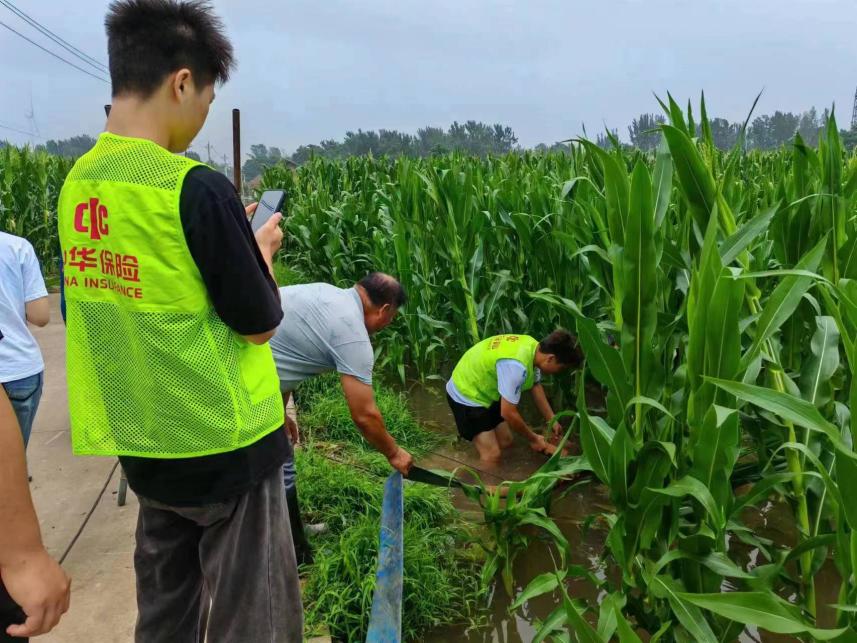
县级政府财政压力对农业保险多层次发展的影响——基于险种结构多元化的视角
Sou Hu Cai Jing· 2025-12-05 00:37
Core Insights - The article emphasizes the need for a diversified agricultural insurance structure in China, highlighting the impact of local government fiscal pressure on the development of agricultural insurance products [1][2][17] - It identifies a shift from a monopolized structure dominated by staple crop insurance to a more diversified insurance landscape that includes specialty crop insurance [3][17] Group 1: Agricultural Insurance Structure - China's agricultural insurance has developed a diversified structure characterized by staple crop insurance as the mainstay and specialty crop insurance as a supplement, with a decreasing concentration index from 0.67 in 2011 to 0.59 in 2022 [3] - Coverage rates for major crops have significantly increased, with corn, rice, and wheat insurance coverage expanding by 0.94, 0.39, and 3.11 times respectively since 2011, achieving an average coverage rate of 75.44% in 2022 [4] - The protection levels for agricultural insurance have improved, particularly for specialty crops, which have seen rapid growth due to central government policies, although disparities in protection levels remain significant [5] Group 2: Fiscal Pressure and Its Impact - Research indicates that fiscal pressure on local governments reduces the subsidy intensity, coverage levels, and growth rates of agricultural insurance, thereby hindering its high-quality development [2] - The article establishes a theoretical framework linking local fiscal pressure to the diversification of agricultural insurance products, suggesting that increased fiscal pressure leads to a preference for funding staple crop insurance over specialty crop insurance [6][7] Group 3: Market Competition Effects - Market competition plays a moderating role in the relationship between local government fiscal pressure and the diversification of agricultural insurance products, with new insurance companies enhancing product variety to gain market access [8][9] - The study proposes that competitive dynamics in the insurance market can mitigate the negative effects of fiscal pressure on the diversity of agricultural insurance offerings [16] Group 4: Empirical Analysis - Empirical analysis shows that local government fiscal pressure has a significant positive effect on the concentration index of agricultural insurance products, confirming the hypothesis that fiscal pressure reduces product diversification [13] - Robustness checks validate the findings, ensuring that the results are not influenced by sample selection or variable specification [15] Group 5: Policy Recommendations - The article suggests creating a differentiated subsidy mechanism based on agricultural contribution and farm size, advocating for a gradual reduction of subsidies for staple crop insurance while enhancing support for specialty crop insurance [18] - It recommends exploring multi-layered development strategies for specialty crop insurance under fiscal constraints and improving the bidding and performance evaluation systems for insurance providers to promote product diversification [18]
提升保险市场保障初级产品供给安全的能级|银行与保险
清华金融评论· 2025-09-27 09:38
Core Viewpoint - The insurance market plays a crucial role in ensuring the supply security of primary products, including essential agricultural products, basic energy, and strategic mineral resources, but faces various constraints and challenges that need to be addressed to enhance its effectiveness [3][5][10]. Group 1: Agricultural Insurance - The insurance market has developed a systematic support system for the safety of primary agricultural product supply, but there are still issues and shortcomings that need improvement [4][5]. - In 2022, the introduction of comprehensive cost insurance for major grains expanded coverage to key production factors, benefiting approximately 230 million farmers [6]. - In 2024, the agricultural insurance premium scale reached 152.1 billion yuan, providing risk protection of 5.2 trillion yuan for about 150 million farmers, demonstrating the market's role as a risk buffer [6][7]. Group 2: Basic Energy Insurance - The insurance market has established a comprehensive protection network for basic energy supply, covering coal, natural gas, and oil through product innovation and policy collaboration [8]. - Specialized insurance companies have been created to address safety in coal mining, offering products that cover health risks and accident prevention [8]. - Insurance companies are also investing in high-dividend coal enterprises to stabilize the funding chain of the coal industry, as evidenced by a 32 million HKD investment in China Shenhua [8]. Group 3: Strategic Mineral Resource Insurance - The insurance market has built a comprehensive risk management system for strategic mineral resources, incorporating safety production guarantees and overseas risk hedging [9]. - Innovative practices, such as ecological restoration insurance in Inner Mongolia, have emerged to balance resource development and ecological protection [9]. - China Export & Credit Insurance Corporation is facilitating overseas resource acquisition for enterprises, as seen in the underwriting of a South African energy project involving critical minerals [9]. Group 4: Challenges in Insurance Market - The agricultural insurance market is hindered by insufficient grassroots service networks, with nearly 5% of townships and 46% of administrative villages lacking coverage [11]. - The energy insurance market faces dual bottlenecks, including weak professional service capabilities and insufficient product innovation to meet new risk management needs [13][14]. - The strategic mineral resource insurance market suffers from a lack of specialized talent and inadequate product innovation to address unique risks [15][16]. Group 5: Policy Recommendations - It is recommended to advance five reforms to establish a multi-level agricultural insurance system, enhancing accessibility and precision in service delivery [18]. - Strengthening the policy framework and collaboration among stakeholders is essential to improve the overall effectiveness of the insurance market in supporting primary product supply security [18].

金融新规热读
KPMG· 2025-03-31 01:34
Investment Rating - The report does not explicitly provide an investment rating for the industry Core Insights - The report highlights the release of multiple economic promotion policies and regulations in February, aimed at stabilizing growth and enhancing financial openness, particularly for Hong Kong and Macau financial institutions [7][10] - The focus remains on the "Five Major Articles" in financial services, with regulatory bodies continuing to push for institutional development and service innovation [8][12] - There is an emphasis on strengthening the collaboration between fiscal, financial, and industrial sectors to enhance policy consistency [9] Summary by Sections 1. Overview of Financial Regulations in February - In February, 14 significant new regulations were released by various regulatory bodies, covering areas such as economic promotion, inclusive finance, green finance, personal information protection, and insurance [10] 2. Capital Market and the "Five Major Articles" - The China Securities Regulatory Commission (CSRC) issued implementation opinions on enhancing the capital market's role in supporting technology finance, green finance, inclusive finance, pension finance, and digital finance [16][17] - Specific measures include supporting quality technology companies in issuing shares, optimizing the system for mergers and acquisitions, and enhancing the service capabilities of financial institutions [23][25] 3. Insurance Group Concentration Risk Management - The National Financial Supervision Administration released guidelines to improve the risk management standards of insurance groups, emphasizing the need for a systematic approach to concentration risk management [29][30] - The guidelines require insurance groups to establish comprehensive risk management processes and improve information disclosure practices [32][36] 4. Trust Industry Regulations - New regulations were introduced to strengthen supervision and risk prevention in the trust industry, focusing on enhancing the core functions of trust companies and ensuring compliance with legal standards [39][40] - The regulations aim to improve the governance structure and risk management capabilities of trust companies [43][46] 5. Personal Information Protection - The National Internet Information Office published a compliance audit management method for personal information protection, which will take effect in May 2025 [51][56] - The method establishes a framework for conducting compliance audits and outlines the responsibilities of personal information processors and auditing institutions [52][53] 6. Rural Revitalization Initiatives - The Central Government issued a document aimed at promoting rural revitalization through systemic reforms and practical measures, including financial support for agricultural projects [61][65] - The initiatives focus on enhancing the financial services available to rural areas and improving the overall governance structure [66][68] 7. Government Financing Guarantee Development - A new management method for government financing guarantees was released to support small and micro enterprises and the agricultural sector, emphasizing performance evaluation and risk control [71][77] - The method aims to enhance the capacity of local government financing guarantee institutions and improve their operational standards [72][74]
农业保险护航“三农”发展——中国人保践行中央一号文件精神的创新实践与展望
Zheng Quan Ri Bao Zhi Sheng· 2025-03-30 16:10
Core Viewpoint - Agricultural insurance plays a crucial role in supporting the "three rural issues" and contributes significantly to the sustainable development of agriculture and the implementation of rural revitalization strategies [1]. Group 1: Policy Implementation - China People's Insurance Group (China PICC) is actively implementing the requirements of the Central Document No. 1, focusing on agricultural insurance as a key service for the "three rural issues" [2]. - China PICC has established a task list and regularly supervises progress to ensure the timely and high-quality completion of key tasks and indicators related to rural revitalization [2]. - The company is enhancing its product development and local government collaboration to ensure the effective implementation of comprehensive cost insurance and income insurance policies [2]. Group 2: Insurance Coverage and Expansion - In 2024, China PICC expanded its coverage of major grain comprehensive cost insurance and income insurance to 29 provinces and cities, insuring 320 million mu (approximately 21.33 million hectares) with a total insured amount increasing by 23% year-on-year [3]. - The company reported that compensation for major grains such as corn, wheat, and rice reached over 6.5 million mu (approximately 433,333 hectares), reflecting a year-on-year growth of over 8% [3]. Group 3: Development of Specialty Agricultural Insurance - China PICC is committed to developing specialty agricultural insurance to support local agricultural industry development, aligning with the Central Document No. 1's call for a multi-tiered agricultural insurance system [4]. - The company aims to promote high-quality and diversified supply of important agricultural products by focusing on local specialty resources and supporting the development of unique agricultural products [4]. Group 4: Collaboration with Local Governments - Local governments are increasing support for agricultural insurance participation in local advantageous and specialty agricultural and rural industry construction [5]. - China PICC plans to strengthen collaboration with local policies and utilize a variety of insurance products to ensure stable supply and pricing of agricultural products, contributing to rural revitalization [5]. Group 5: Innovative Insurance Models - China PICC is exploring the "Agricultural Insurance +" model to enhance financing and expand the depth and breadth of financial services for agriculture [6]. - The company has been running the "Insurance + Futures" project in Gansu Province since 2017, covering 20,000 fruit farmers and insuring 55,600 acres of apple cultivation, significantly benefiting local farmers [6]. Group 6: Green Transformation in Agriculture - China PICC is integrating into the national "dual carbon" goals by promoting ecological green insurance products such as forest insurance and carbon sink insurance [6]. - The company aims to provide insurance coverage for various carbon-sequestering assets and accelerate the development of ecological carbon sink insurance to support the green transformation of agriculture [6]. Group 7: Future Trends in Agricultural Insurance - The agricultural insurance industry is expected to advance along a path of high-quality development, with improved legal frameworks, diversified products, and more standardized management practices [7]. - Agricultural insurance will continue to play a vital role as an economic stabilizer and social stabilizer in the context of rural revitalization and agricultural modernization [7].
金融新规热读(2月刊)
KPMG· 2025-03-28 23:15
Investment Rating - The report does not explicitly provide an investment rating for the industry Core Insights - The report highlights the release of 14 important new regulations in February, focusing on economic promotion, inclusive finance, green finance, personal information protection, and insurance [7][9] - The emphasis on the "Five Major Articles" continues to be a priority for financial services, with regulatory bodies pushing for systemic reforms and service innovations [10][25] - There is a notable trend of enhanced collaboration between fiscal, financial, and industrial sectors, indicating a stronger alignment of policies [11] Summary by Sections 1. Economic Promotion - Multiple new policies were introduced to stabilize growth, focusing on rural revitalization, foreign investment, and consumer confidence [9][64] - The report outlines the government's commitment to improving the investment environment and supporting entrepreneurship [8] 2. Insurance - The Financial Regulatory Bureau issued guidelines to standardize concentration risk management for insurance groups, enhancing their risk management capabilities [28][29] - The guidelines emphasize the need for a systematic approach to managing concentration risks, including the establishment of multi-dimensional indicators and limits [30][33] 3. Trust Industry - New regulations aim to strengthen supervision and risk prevention in the trust industry, emphasizing the importance of adhering to the essence of trust services [38][41] - The report discusses the need for trust companies to enhance their governance and risk management frameworks [41][45] 4. Personal Information Protection - The National Internet Information Office introduced a compliance audit management method for personal information protection, effective from May 1, 2025 [49][56] - The framework aims to enhance the legal compliance of personal information processing activities and protect individual rights [56][58] 5. Rural Revitalization - The Central Government's document outlines strategies for rural revitalization, focusing on enhancing agricultural productivity and improving rural governance [62][66] - Financial mechanisms are proposed to support rural development, including the issuance of special financial bonds for agriculture [64][68] 6. Government Financing Guarantee - A new management method for government financing guarantees aims to support small and micro enterprises, enhancing their access to financing [73][79] - The report highlights the importance of risk control and the standardization of asset disposal processes to mitigate financial risks [80][81]
中国人保服务乡村全面振兴工作 取得新成效
Jin Rong Shi Bao· 2025-03-26 06:18
Core Insights - China Pacific Insurance Group has made significant progress in supporting rural revitalization efforts, focusing on enhancing agricultural insurance and improving rural governance [1][2][3] Group 1: Agricultural Insurance - The company aims to strengthen agricultural insurance to ensure food security, providing risk protection for 55.42 million farming households with a total coverage of 2.1 trillion yuan [2] - In 2024, the company paid out 49.1 billion yuan in agricultural insurance claims to 17.57 million farming households, with comprehensive cost insurance and income insurance covering 29.95 million households with 312.3 billion yuan in risk protection [2] - The number of specialty agricultural product insurance policies exceeded 3,000, offering risk protection of 498 billion yuan, and the company pioneered agricultural germplasm resource protection insurance [2] Group 2: Rural Governance and Social Services - The company has enhanced its rural governance capabilities, providing comprehensive governance insurance to 46.73 million farming households with over 6 trillion yuan in risk protection [3] - Housing insurance has been extended to 88.96 million farming households, offering more than 5 trillion yuan in risk protection [3] - In 2024, the company launched a dedicated insurance product for rural health and elderly care, adding over 800 billion yuan in insurance coverage for agricultural groups [3]
