
玉琮

Search documents
聆听礼乐文明悠远回响——山东文物特展亮相银川
Xin Lang Cai Jing· 2026-01-17 19:45
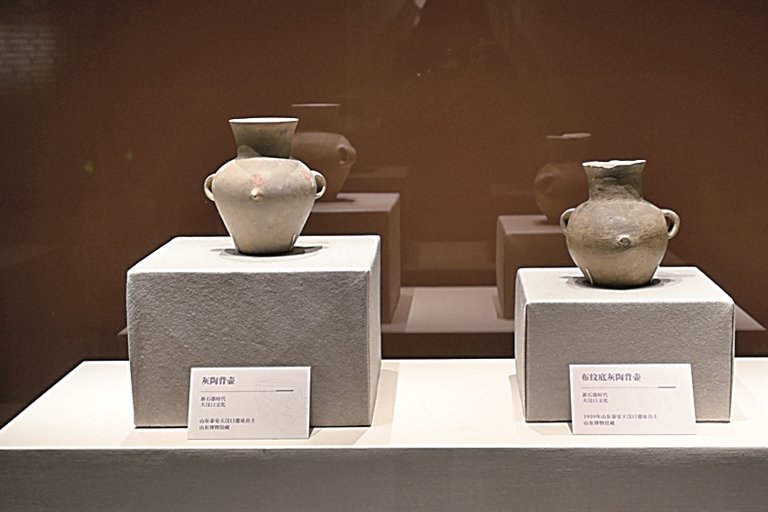
Core Viewpoint - The exhibition "Harmony of Rites and Music - Shandong Cultural Relics Exhibition" showcases over 100 artifacts, including jade, pottery, and bronze items, highlighting the evolution of Chinese civilization through the lens of ritual and music [1][2]. Group 1: Artifacts and Their Significance - The exhibition features a black pottery high-handled cup from the Longshan culture, noted for its delicate craftsmanship, representing the pinnacle of prehistoric pottery techniques [5]. - Jade artifacts from the Neolithic era, such as jade cong and jade axes, illustrate the early social structure and spiritual evolution, with jade becoming a symbol of moral and ethical values [2]. - The exhibition includes pottery that reflects the development of ritual practices from everyday life, indicating how these items transitioned from utilitarian to ceremonial purposes [2]. Group 2: Cultural Insights - The integration of jade into the ritual system signifies a deeper connection between material culture and moral values, as jade embodies qualities like benevolence and wisdom [2]. - The transition from pottery to bronze during the Shang and Zhou dynasties marks a significant evolution in ritual practices, with bronze items becoming symbols of state power and authority [5]. - The exhibition emphasizes the historical significance of ritual and music in shaping the values of Chinese civilization, promoting ideals such as virtue and harmony [7]. Group 3: Exhibition Details - The exhibition is held at the Ningxia Museum and will run until March 8 [8].

良渚遗址发现九十年|徐峰谈良渚与周边
Xin Lang Cai Jing· 2026-01-04 01:56
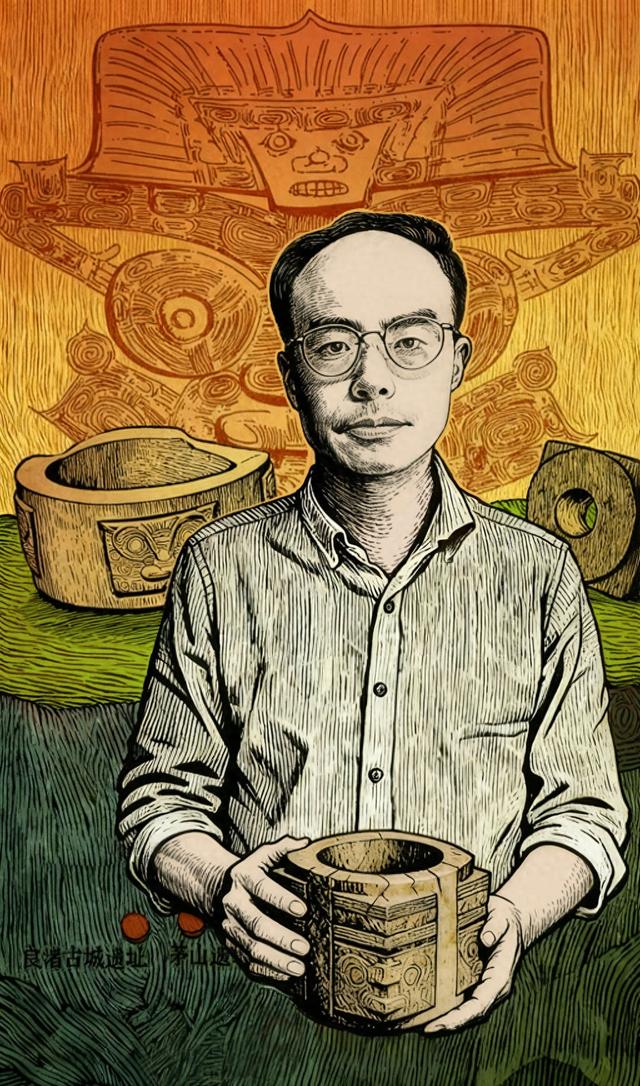
Core Viewpoint - The interview with Professor Xu Feng highlights the significance of Liangzhu culture in understanding early state formation and its relationship with surrounding cultures, emphasizing the role of jade artifacts and ritual practices in establishing social hierarchies and religious beliefs [2][10][12]. Group 1: Liangzhu Culture and Early State Formation - Liangzhu culture is recognized as an early regional state form, supported by archaeological findings that indicate social stratification and a unified belief system during the late Neolithic period [10][12]. - The successful inclusion of the Liangzhu Ancient City site in the World Heritage List in 2019 has brought significant attention to its role in the origins of Chinese civilization [10][12]. - The concept of early states is complex, with various definitions and theories, but Liangzhu culture exemplifies a unique case of early state development characterized by agricultural economy and social differentiation [10][12][11]. Group 2: Jade Artifacts and Ritual Practices - Jade artifacts in Liangzhu culture are not merely decorative but are deeply embedded in the social and spiritual lives of its people, symbolizing status, identity, and religious significance [6][8]. - The aesthetic appreciation of jade reflects the advanced artistic capabilities of the Liangzhu people, indicating a sophisticated understanding of beauty and spirituality [6][8]. - Ritual practices involving jade, such as large-scale sacrificial ceremonies, suggest a complex social structure where religious and political powers were intertwined [17][32]. Group 3: Water Management and Political Power - The discovery of advanced water management systems in Liangzhu culture suggests a strong connection between agricultural practices and the emergence of political authority, aligning with theories of "hydraulic societies" [17][18]. - The political structure of Liangzhu is characterized as a composite of both royal and religious authority, indicating a unique governance model that integrated water management with social organization [17][18]. - The archaeological evidence of large-scale public works and social mobilization reflects the presence of a centralized authority capable of organizing labor for significant construction projects [14][19]. Group 4: Economic and Trade Dynamics - The Liangzhu region's geographical advantages facilitated trade and economic development, with waterways enhancing transportation and resource distribution [30][31]. - The emergence of a commodity economy during the Liangzhu period indicates a shift towards more complex social interactions and economic exchanges, contributing to social stratification [30][31]. - The relationship between agriculture, trade, and social complexity in Liangzhu culture underscores the importance of economic factors in the development of early states [30][31]. Group 5: Cultural Interactions and Influence - Liangzhu culture had a significant impact on surrounding regions, demonstrating a "siphoning effect" where resources and cultural practices were drawn towards the Liangzhu core [25][28]. - The interaction between Liangzhu and neighboring cultures reflects a dynamic exchange of ideas, materials, and technologies, contributing to the broader narrative of early Chinese civilization [25][28]. - The multi-centered nature of Liangzhu culture suggests a complex network of interactions among various settlements, each contributing to the overall cultural landscape of the region [24][25].
通天“神作”:三星堆人的自然、图腾与祖先崇拜
Jing Ji Guan Cha Bao· 2025-12-16 04:46
Core Viewpoint - The article discusses the unique cultural significance of the Sanxingdui archaeological site, highlighting its religious artifacts and the complex belief systems of the ancient civilization that created them [1]. Group 1: Archaeological Findings - The Sanxingdui site has revealed eight burial pits containing a wealth of bronze, jade, and ivory artifacts, with distinct characteristics that allow them to be categorized into two groups [2][3]. - The burial pits show evidence of intentional burning, with many artifacts charred or deformed, suggesting a ritualistic context rather than a violent burial [4]. - The artifacts' stratified arrangement within the pits indicates a systematic approach to their burial, closely linked to ritual practices [5]. Group 2: Ritual Significance - Experts largely agree that the burial pits are associated with sacrificial activities, rather than being the result of a violent conflict [6][7]. - The concept of "yi mai" (burial for sacrifice) is referenced, indicating a cultural practice of interring offerings as part of religious ceremonies [5]. - Different interpretations exist regarding the nature of the pits, with some experts categorizing them as direct products of sacrificial activities, while others view them as burial sites for sacrificial artifacts [6]. Group 3: Belief Systems - The Sanxingdui culture exhibits three primary forms of worship: nature, totem, and ancestor worship, reflecting a rich spiritual life [8]. - Nature worship is exemplified by artifacts such as the bronze sacred tree and sun-shaped vessels, indicating a deep reverence for natural elements [9]. - Ancestor worship is represented by the unique "Zongmu" masks, which are believed to connect the living with their ancestors [10]. Group 4: Artistic Expression - The bronze sacred tree, standing at 396 cm, is noted as the largest of its kind discovered, symbolizing a connection between the earthly and divine realms [11]. - The intricate design of the sacred tree, featuring multiple branches and symbolic elements, showcases the advanced bronze casting techniques and artistic imagination of the Sanxingdui civilization [12].
郭大顺对红山文化与中华文明的36个回答(下篇)
Jing Ji Guan Cha Bao· 2025-11-11 03:49
Core Insights - The article discusses the contributions of Guo Dashun to the study of Hongshan culture, emphasizing his role in archaeological discoveries and his academic lineage from Su Bingqi, a prominent figure in Chinese archaeology [1][2][3]. Group 1: Contributions to Hongshan Culture - Guo Dashun is recognized as the leading figure in Hongshan culture, having led significant archaeological excavations that revealed important artifacts, establishing Hongshan as one of the three major sources of Chinese civilization over 5,000 years ago [1]. - He proposed a new understanding that there should be a structure of higher significance than the "Goddess Temple" within the Hongshan culture [1]. - Recent discoveries in Hebei, including a large number of Hongshan cultural relics, suggest that the culture may have migrated southward during its peak [2]. Group 2: Academic Influence and Legacy - Guo Dashun, a disciple of Su Bingqi, continues to advocate for the idea that Hongshan culture is a direct root of Chinese civilization, emphasizing the importance of Su's academic thoughts in contemporary archaeology [1][2]. - The article highlights the significance of Su Bingqi's theories, particularly the continuity of Chinese civilization and the importance of ritual systems, which Guo Dashun elaborates on in his discussions [5][6]. - Guo Dashun's reflections on Su Bingqi's legacy indicate that his academic contributions remain relevant in current archaeological discourse, particularly in understanding the origins of Chinese civilization [17][18]. Group 3: Archaeological Methodology and Perspectives - The article discusses the need for a combination of archaeological findings and historical texts to reconstruct ancient history, emphasizing that archaeological evidence should validate historical narratives [29][30]. - Guo Dashun advocates for a collaborative approach between archaeologists and historians to enhance the understanding of ancient cultures, suggesting that archaeological methods should be applied to historical research [36]. - The discussion includes the importance of diverse perspectives in archaeology, encouraging a "hundred schools of thought" approach to foster deeper insights into ancient civilizations [28].
在寺墩进入长三角大文化圈:说常州寺墩遗址|访古
Jing Ji Guan Cha Bao· 2025-07-09 22:30
Core Viewpoint - The article discusses the significance of the Cidun archaeological site in Changzhou, highlighting its cultural richness and historical importance in the context of the Liangzhu culture and the broader Yangtze River Delta civilization [1][12]. Archaeological History - The Cidun site, an oval-shaped earth mound approximately 20 meters high, was first discovered in 1973 when villagers found jade artifacts from the Liangzhu culture [2]. - From 1978 to 1995, multiple archaeological investigations were conducted, uncovering over 2,200 square meters of the site, primarily focusing on the Liangzhu culture noble burial grounds [2]. Key Findings - The Cidun site has been included in the "Archaeological China - Civilization Patterns in the Lower Yangtze Region" research project since 2016, with significant discoveries made since 2019, including burial sites and architectural remains from the Songze and Liangzhu cultures, dating back approximately 5,500 to 4,500 years [3]. - The site features a range of archaeological remains, including residential areas, burial sites, and ritual zones, covering an area of 100 meters in length and 80 meters in width [4]. Cultural Artifacts - Artifacts from the site include pottery, jade, stone, and bone tools, reflecting the production, lifestyle, and cultural aspects of the local residents around 5,000 years ago [9][10]. - The pottery from the Songze culture is characterized by gray and red clay, while Liangzhu culture pottery includes a variety of forms, such as large ceremonial vessels and intricately decorated jars [9][10]. Social Structure - The burial sites indicate a social stratification during the Songze culture period, with evidence of wealth disparities among the deceased, suggesting a complex social structure [12]. - The discovery of large-scale wooden structures and intricate pottery indicates a high level of craftsmanship and social organization, reflecting the advanced state of the society at that time [12]. Cultural Connections - The presence of artifacts with characteristics of the Dawenkou culture from Shandong suggests cultural exchanges between the lower Yangtze region and the Yellow River basin, indicating a broader interaction among ancient Chinese civilizations [14].
楚玉风华:楚人如何将浪漫与灵动注入玉石|观展
Jing Ji Guan Cha Bao· 2025-05-17 00:47
Group 1 - The article explores the historical significance of jade in early Chinese civilization, highlighting its dual role as a symbol of both divine and royal power [2][12][32] - Jade artifacts from different periods reflect the evolution of cultural practices, transitioning from spiritual communication tools to symbols of social hierarchy [12][32] - The craftsmanship of jade artifacts, such as the intricate designs and techniques used in the production of jade items, showcases the advanced skills of ancient artisans [5][18][24] Group 2 - The article discusses the transformation of jade from ritualistic objects in the Xia and Shang dynasties to more secular and decorative items in the Ming dynasty, indicating a shift in societal values [24][28][32] - Specific jade pieces, like the jade crown and belt buckles from royal tombs, illustrate the intertwining of art, power, and social status in ancient China [25][30][32] - The exhibition at Hubei Provincial Museum serves as a comprehensive showcase of jade artifacts across various dynasties, providing insights into the cultural and historical context of jade in Chinese civilization [33]
禹会村遗址:淮河文明与夏文化探源|访古
Jing Ji Guan Cha Bao· 2025-05-14 09:22
Core Insights - The Yuhui Village site is closely related to the legendary figure of Da Yu, who is celebrated for his water management and governance in ancient Chinese history [2][3][4] - The archaeological findings at Yuhui Village provide significant evidence supporting historical records about the Xia culture and its origins, particularly in relation to the Huai River civilization [8][10][12] Archaeological Findings - The Yuhui Village site was discovered in 1981, with extensive excavations conducted from 2006 to 2011, revealing a site area of approximately 500,000 square meters, indicating a late Longshan culture settlement [4][5] - A large ceremonial building measuring nearly 2,000 square meters was uncovered, featuring unique ritual artifacts and a sacrificial trench filled with numerous pottery items [4][7] - The site has revealed a complex social structure with evidence of a large-scale public works project, including a defensive system with a perimeter of 2.8 kilometers, suggesting a strong centralized authority [12][14] Cultural Significance - The Yuhui Village site is the largest and highest-ranking Longshan culture site discovered in the Huai River basin, filling gaps in the understanding of the region's civilization development [8][9] - Artifacts from the site, including pottery and jade items, show a clear evolution of cultural practices over approximately 300 years, indicating interactions with neighboring cultures [9][13] - The findings suggest that the site played a pivotal role in the cultural exchange and integration within early Chinese civilization, influencing various regional cultures [14][15]