电话

Search documents
国泰海通 · 晨报260115|宏观、金融工程 、固收
国泰海通证券研究· 2026-01-14 12:25
Macroeconomic Insights - US inflation remains moderate, with December CPI year-on-year growth at 2.7%, unchanged from November, and month-on-month growth at 0.3%, also stable since September. Core CPI year-on-year growth is at 2.6%, slightly below the expected 2.7% [1] - The structure of inflation shows weakness in goods and strength in services. Core goods month-on-month growth is 0%, primarily dragged down by used cars. Even excluding used cars, core goods growth remains low, while core services show a general month-on-month rebound [1] Short-term Inflation Outlook - Despite lower-than-expected inflation data, the market does not anticipate an early rate cut by the Federal Reserve, with expectations for the first rate cut still set for June 2026. Food inflation is expected to cool gradually, while used car prices may see marginal rebounds, and rent remains stable [2] Financial Engineering Strategies - The quantitative model signals a recommendation to overweight small-cap stocks in January, with a model signal of 0.17 indicating a preference for small caps. The model's return as of the end of December is 27.56%, outperforming the equal-weight benchmark by 0.71% [4] - For value and growth styles, the model signal is neutral, suggesting an equal-weight allocation between the two styles. The model's return is 22.72%, with an excess return of 1.93% over the benchmark [4] Fixed Income Insights - Concerns about long-term bond supply do not necessarily imply a tightening of interbank liquidity. The central bank's support is expected to keep liquidity stable, with funding rates likely remaining low in the first quarter of 2026 [10] - The central bank's ability to smooth out funding fluctuations has improved, with a flexible approach to liquidity management anticipated. If necessary, measures such as large-scale MLF injections or reserve requirement ratio cuts may be employed [12]

观察·透视外国游客购物清单上主力产品 解码“中国购”新亮点、新趋势
Yang Shi Wang· 2026-01-03 06:54
Core Insights - The article highlights the increasing influx of foreign tourists to Shenzhen's Huaqiangbei, driven by the optimized visa policies and the appeal of "Chinese manufacturing" products [1][10][14] Group 1: Foreign Tourist Behavior - Foreign tourists are actively purchasing a variety of products, including toys, technology items, and personal care gadgets, often expressing satisfaction with the prices [6][7][13] - Many tourists arrive with empty bags or suitcases specifically to shop, indicating a strong demand for "Chinese-made" goods [8][10] - The average daily foot traffic of foreign visitors to Huaqiangbei exceeds 7,000, with a notable increase in foreign visitors after major trade events [14][46] Group 2: Popular Products - The most sought-after products among foreign tourists include AI glasses, drones, translation devices, and portable cameras, reflecting a trend towards innovative and high-tech items [21][19] - The sales of "Huaqiangbei-made" AI glasses have seen a remarkable year-on-year increase of 270% in overseas markets during the first half of 2025 [19] Group 3: Market Dynamics - The shopping experience in Huaqiangbei is enhanced by the availability of translation devices, making communication easier for foreign visitors [17] - The overall transaction volume in Huaqiangbei is projected to exceed 400 billion yuan in 2025, indicating a robust market for electronic products [46] Group 4: Comparative Insights - Foreign tourists find prices in Huaqiangbei significantly more attractive compared to those in Europe, contributing to the area's popularity as a shopping destination [13][14] - The article also mentions Yiwu, known as the "world supermarket," where foreign visitors are also drawn to innovative products and flexible pricing strategies [22][25]

中美贸易回暖,是真的利好还是权宜之计?
Jin Tou Wang· 2025-10-31 12:56
Core Points - The recent trade negotiations between the US and China have resulted in a one-year suspension of tariffs, with the US pausing a 24% tariff on China and China reciprocating by suspending its 10% tariff on fentanyl [1] - The suspension of tariffs is expected to save over $8 billion annually for US-China import-export businesses, providing a significant financial relief that can be reinvested into R&D, production, and market expansion [1] - The negotiations indicate a shift towards a more cooperative approach, with both countries opting for dialogue rather than confrontation, showcasing China's ability to negotiate on equal terms [1] Trade and Economic Impact - The US has also paused export sanctions on Chinese companies with over 50% foreign ownership, while China has suspended its export controls on rare earths, lithium batteries, and superhard materials for a year [1] - The US's agricultural sector has been severely impacted by the trade war, with soybean prices dropping 40% due to a lack of Chinese purchases, leading to increased bankruptcies among American farmers [3] - Rising prices in the US for various consumer goods, including electronics and clothing, have been attributed to the tariffs, affecting overall consumer spending [3][4] Military and Strategic Considerations - The US military's reliance on Chinese rare earth materials for key equipment highlights the strategic vulnerabilities created by the trade tensions, with 87% of major military equipment potentially affected by supply chain disruptions [4] - The negotiations have created a buffer period for both countries to stabilize their economic relations while addressing core differences, allowing for continued discussions on critical issues [4][6] Future Outlook - The upcoming year is seen as a crucial observation window for US-China relations, with expectations for ongoing negotiations to address fundamental disagreements while maintaining a stable relationship [6] - The current negotiations are viewed as a temporary resolution, with the potential for future conflicts if circumstances change, emphasizing the need for vigilance and continued reform on both sides [5]
晚清客居天津的丹麦人,深刻影响了城市基础建设
Di Yi Cai Jing· 2025-08-16 04:50
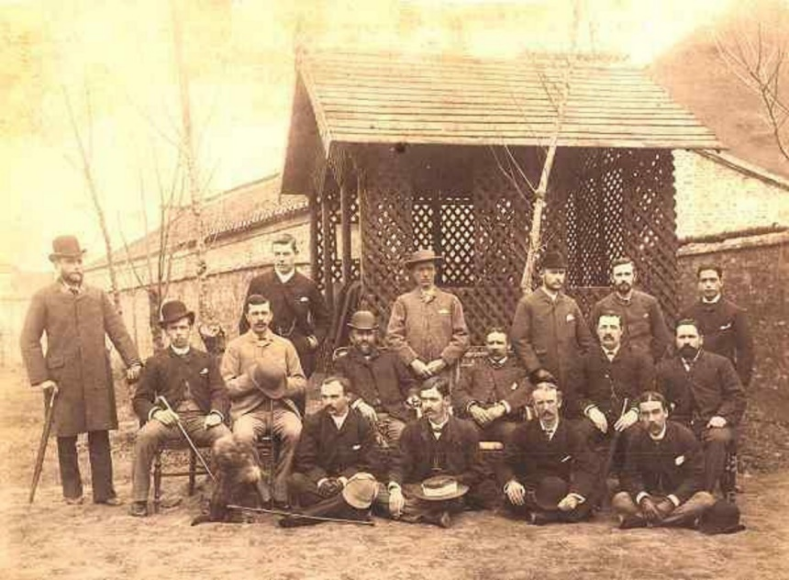
Core Insights - The book "Water and Electricity in Late Qing China: The Life of Danes in Tianjin, 1860-1912" presents a comprehensive view of Danish immigrants and their families in Tianjin during the late Qing Dynasty, highlighting their contributions to the city's development [1][7] Group 1: Danish Contributions to Tianjin - Nearly 150 Danes lived and worked in Tianjin from the late 19th century to the early 20th century, participating in the city's modernization and development through entrepreneurship and employment [1][12] - Key figures such as Karl Puhlsen and Lind made significant contributions to Tianjin's public utilities and infrastructure, including the establishment of telegraph and water supply systems [3][6][9] - Puhlsen, who arrived in 1881, played a crucial role in training Chinese telegraph operators and was involved in various social and political activities in Tianjin [3][4] Group 2: Professional and Social Dynamics - The Danish immigrants primarily worked in technical fields, driven by Denmark's rapid population growth and the demand for skilled labor in Tianjin during the Self-Strengthening Movement [10][11] - The presence of Danish professionals led to the formation of a community that engaged in social activities, often gathering in the homes of prominent figures [11][12] - The book also highlights the diverse experiences of these immigrants, including both successful individuals and those who faced legal troubles, emphasizing the importance of studying all facets of their lives [10][11] Group 3: Historical Context and Research Significance - The research sheds light on the motivations and paths of different nationalities in Tianjin, providing a new perspective on the city's urban history [9][10] - The book contributes to the understanding of how smaller nations like Denmark influenced Asian cities through technical expertise in communication and municipal engineering [9][10] - The study of Danish immigrants in Tianjin fills a gap in historical research, particularly regarding less prominent figures and their everyday lives [10][11]