
AI+生态

Search documents
AI CHINA|刘伟:中美AI发展路径差异与“AI+”生态的核心优势
Sou Hu Cai Jing· 2026-01-07 01:17
Core Insights - The article contrasts the AI development strategies of the United States and China, highlighting that while the U.S. focuses on limiting chip access and proving model safety, China is advancing AI as a self-repairing and self-evolving industrial infrastructure through a comprehensive approach involving policy, state-owned enterprises, scenarios, and data [1][2]. Group 1: U.S. AI Development Characteristics - U.S. AI development is characterized by a focus on general foundational technology breakthroughs, leading to a closed-source model and hardware monopoly, which creates a "technical island" effect [1][2]. - The reliance on hardware monopolies, such as NVIDIA GPUs and Google TPUs, has established significant technical barriers, making it difficult for other countries to overcome computational bottlenecks [2]. - The application of U.S. AI is primarily concentrated in consumer internet sectors, lacking depth in complex industrial and social governance scenarios, which limits its ability to address real-world unstructured problems [2]. Group 2: China's AI Development Approach - China has shifted from a "technology defines demand" model to a "demand defines technology" approach, utilizing its diverse economic and social governance scenarios as testing grounds for AI technology [2][3]. - The development of AI in China is not limited to single breakthroughs but encompasses a systematic innovation that integrates chips, frameworks, models, and applications, creating a self-sustaining industrial ecosystem [4]. - China's AI strategy emphasizes open collaboration and ecosystem building through open-source models and industry alliances, which contrasts with the U.S. approach and fosters a complementary relationship between the two nations [5][6]. Group 3: Practical Applications and Innovations - Various practical applications in China demonstrate the effectiveness of AI technology, such as the implementation of 67 digital applications in Shougang's cold-rolling company, where AI applications account for 61% [2][3]. - In agriculture, China National Chemical Corporation launched the iMAP model for intelligent decision-making across the entire farming process, significantly reducing decision-making time by 75% [2]. - The integration of AI in healthcare is exemplified by the AI+ county medical community initiative, which facilitates rapid deployment of outpatient pre-diagnosis and intelligent health management [2][3]. Group 4: Future Trends and Global Cooperation - The article suggests that the future of AI development will involve both the U.S. and China leveraging their respective strengths, with the U.S. focusing on general problems and China addressing complex issues through a systematic innovation approach [6]. - Both countries are expected to continue their parallel advancements in AI technology, with potential for mutual benefits in achieving breakthroughs such as general artificial intelligence (AGI) [6].


AI迎来5000亿市场!腾讯元宝靠社交杀疯了,微信沉默藏大招
Sou Hu Cai Jing· 2025-12-08 12:03
Core Insights - The competition in China's AI-to-C market is intensifying, with major players like Douyin, Tencent, and Alibaba vying for dominance through their respective AI assistants [1][3] - The shift from "traffic distribution" to "intelligent services" marks a significant transformation in the industry, emphasizing the importance of user engagement and ecosystem integration [3][6] Market Dynamics - The AI assistant market in China is projected to reach 98.7 billion yuan by 2025, reflecting a year-on-year growth of 189%, with expectations to exceed 500 billion yuan by 2028 [10] - User demand is diversifying, with different demographics seeking tailored functionalities, such as entertainment for Gen Z and productivity tools for professionals [13] Competitive Strategies - Douyin's Doubao leverages its traffic advantage to attract users with entertainment features, driving them towards e-commerce monetization [16][19] - Tencent's Yuanbao integrates deeply within the WeChat ecosystem, focusing on social and office functionalities, benefiting from high user engagement and trust [23][25] - Alibaba's Qianwen and Lingguang adopt an ecosystem synergy approach, combining lifestyle services with productivity tools to enhance user experience and engagement [27][29] User Engagement and Retention - Douyin's users spend an average of 28 minutes daily on Doubao, significantly higher than the industry average of 12 minutes, indicating strong engagement [19] - Users of Alibaba's AI assistant exhibit a 42% higher consumption rate within the ecosystem compared to non-users, showcasing the effectiveness of integrated services [8] Future Outlook - In the short term, Douyin is expected to lead in user scale, while Alibaba may excel in profitability; however, as user preferences shift towards practical value, Alibaba's ecosystem could gain an edge [29] - Long-term projections suggest a three-way competition, with Douyin focusing on entertainment and e-commerce, Tencent on social and office applications, and Alibaba covering a broad range of services [31][33]


万咖壹联跃升华为鲸鸿动能“铂金代理” 卡位鸿蒙生态核心圈层重塑估值逻辑
Zhi Tong Cai Jing· 2025-11-20 06:15
Core Insights - WanKa YiLian's subsidiary, Huanyujidao Cultural Media (Beijing) Co., Ltd., has been awarded the Platinum Service Provider status in the N1 field of Huawei's Petal Ads for 2025, marking a significant validation of the company's strategic positioning in the HarmonyOS smart marketing ecosystem and its AI technology barriers [1][2] Group 1: Strategic Positioning - The elevation to Platinum Service Provider signifies a shift from "commercial services" to "ecosystem co-construction," enhancing the company's role within Huawei's advertising ecosystem [2] - The N1 field covers 13 core industries, including reading, audio-visual, e-commerce, automotive, finance, and gaming, directly addressing the integrated marketing needs of advertisers [2] - The management emphasizes that the Platinum status not only reflects operational scale but also the ability to unlock the flow value of HarmonyOS ecosystem devices, positioning the company advantageously in the commercial traffic entry [2] Group 2: Market Opportunities - By 2025, the HarmonyOS ecosystem is expected to exceed 1 billion devices, with native applications and meta-services projected to reach 100,000, indicating a significant commercial value realization period for the ecosystem [2] - WanKa YiLian has established a dual moat of "breadth and depth," serving over 200 clients across all 13 industries and integrating AI marketing intelligence deeply into the HarmonyOS ecosystem [2][3] Group 3: Technological Advancements - The company's revenue for the first half of 2025 increased by 39% to 1.7 billion RMB, with a full-year growth forecast raised to 50%, driven by the large-scale implementation of AI technology [3] - In September 2025, WanKa YiLian partnered with Alibaba Cloud to integrate the Qwen3 model, automating the entire advertising decision-making process based on vast user behavior data [3] - The Platinum Service Provider status is part of the "AI + ecosystem" strategy, enhancing advertising efficiency while solidifying the company's bargaining power and market share [3] Group 4: Valuation Transformation - From a capital market perspective, WanKa YiLian is transitioning from a traditional mobile marketing service provider to a core infrastructure player within the HarmonyOS ecosystem [4] - The Platinum status not only enhances immediate revenue visibility but also secures a strategic position in the flow entry of the IoT era for the next 3-5 years [4] - As the HarmonyOS NEXT commercial rollout expands, the company is expected to benefit from ecosystem growth and monetization, initiating a value reassessment cycle for its second growth curve [4]
“AI+生态”双轮驱动 小鹏汽车开拓汽车市场新蓝海
Zheng Quan Ri Bao Wang· 2025-11-18 05:39
Core Insights - Xiaopeng Motors reported record-high operational metrics for Q3 2025, with deliveries reaching 116,000 units, a year-on-year increase of 149.3%, and revenue of 20.38 billion yuan, up 101.8%, with a gross margin surpassing 20% for the first time at 20.1% [1] Group 1: "One Car, Dual Energy" Strategy - The "One Car, Dual Energy" strategy aims to reshape the electric vehicle product landscape, introducing the Kunpeng Super Range Extender technology to address five key issues faced by traditional range extender users [2] - The Xiaopeng X9 Super Range Extender, the first model featuring this technology, has become the world's longest-range seven-seater vehicle, generating unprecedented user interest and achieving nearly four times the pre-sale orders compared to the last pre-sale [2] - The company plans to launch seven models with Super Range Extender configurations by 2026, including three models in Q1 2026, addressing user pain points with longer electric range and faster charging [2][3] Group 2: Market Performance and Projections - Xiaopeng Motors anticipates a strong growth trajectory, projecting Q4 2025 total deliveries between 125,000 and 132,000 units, representing a year-on-year increase of 36.6% to 44.3%, with expected revenue of 21.5 billion to 23 billion yuan, up approximately 33.5% to 42.8% [3] Group 3: Physical AI Ecosystem - The company is transitioning to a physical AI technology framework, positioning itself as a global explorer in embodied intelligence, with significant investments in AI models, computing power, and data [4] - The second-generation VLA model will have ten times the parameters of its predecessor, enhancing safety and user experience in intelligent driving [4] - Xiaopeng Motors adopts an open ecosystem strategy, with the second-generation VLA model being made available to global partners, including Volkswagen as the first customer [4][5] Group 4: Future Applications and Market Potential - The company views Robotaxi and humanoid robots as the two primary application scenarios for physical AI, planning to launch three Robotaxi models in 2026 and operate trials in China [5] - The new generation IRON robot, designed with a human-like form, is expected to achieve comprehensive capability integration by Q2 2026 and mass production by the end of 2026, with long-term sales potential exceeding 1 million units annually by 2030 [5] - Xiaopeng Motors is confident in becoming a leader in physical AI, aiming to create greater value for global customers and shareholders [5]
异动盘点0929|芯片股再度走高,三花智控涨超5%;英特尔涨超4%,理想汽车美股跌超5%
贝塔投资智库· 2025-09-29 05:16
Group 1: Hong Kong Stocks - Juzi Bio (02367) rose over 3% as its controlling shareholder Juzi Holding has been continuously increasing its stake [1] - NetDragon (00777) increased by more than 2%, with its strategic layout in frontier technology and AI+ ecosystem gaining market recognition [1] - New Oriental-S (09901) saw a rise of over 5%, attributed to the stabilization of overall business development and an increase in shareholder return ratio [1] - Chip stocks experienced a rally, with Jingmen Semiconductor (02878) up over 7%, Huahong Semiconductor (01347) up over 3%, SMIC (00981) up over 1%, and Shanghai Fudan (01385) up over 1%, supported by a solid long-term domestic substitution logic [1] - Kintor Pharmaceutical (09995) rose over 4% as its drug Taitasib was proposed for priority review, achieving the primary endpoint in Phase III trials for IgA nephropathy [1] - Jingtai Holdings (02228) increased by over 6%, collaborating with Baicheng Pharmaceutical to advance AI drug development [1] - UBTECH (09880) rose over 4% as Tianqi Co. plans to purchase UBTECH's industrial humanoid robot Walker S series for a total price of 30 million yuan, with delivery expected by December 31, 2025 [1] Group 2: US Stocks - XPeng Motors (XPEV.US) rose 2.43% after announcing its entry into five European markets, having partnered with Hedin Group [3] - Intel (INTC.US) increased by 4.44%, engaging in discussions with companies like Apple and TSMC regarding investment or manufacturing collaborations [3] - Kuke Music (KUKE.US) fell 37.29% after announcing its acquisition of a controlling stake in Naxos Music Group, the largest independent classical music company [3] - Wayfair (W.US) rose 2.14% following the announcement of high tariffs on furniture by the US government [3] - Ideal Auto (LI.US) dropped 5.62% despite the launch of its new electric vehicle model, with analysts optimistic about future sales growth [3] - AMD (AMD.US) decreased by 1.12% as Ark Invest, led by Cathie Wood, reduced its stake in the company [4] - GlobalFoundries (GFS.US) rose 8.37% amid reports that the US plans to require semiconductor companies to match domestic production with imports [4] - Boeing (BA.US) increased by 3.62% after receiving expanded safety inspection authority from the FAA [4]

TCL驭新以AI+生态,推动人车家全场景融合
Zhong Guo Qi Che Bao Wang· 2025-09-26 13:05
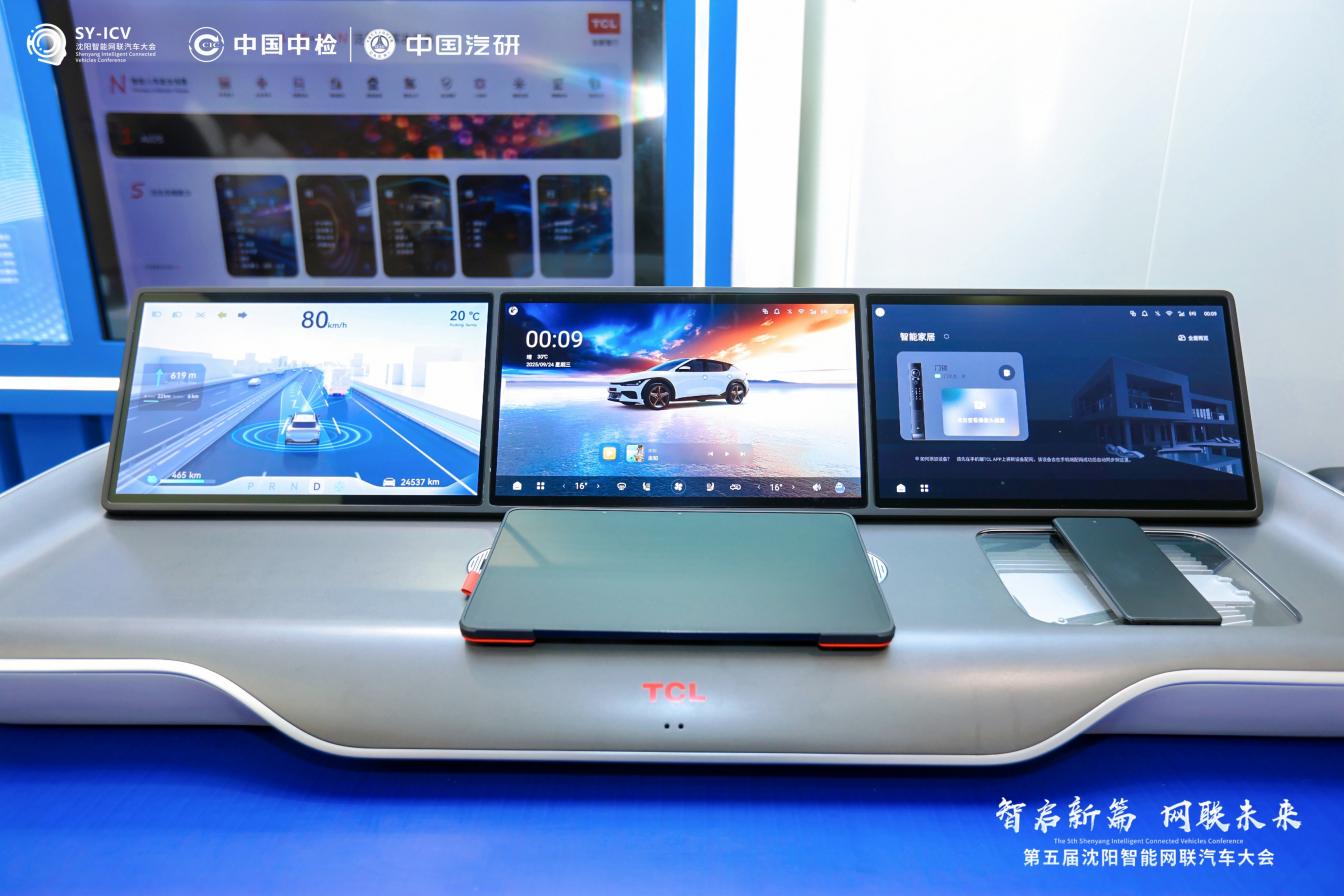
Core Insights - TCL has launched its core product concept of "AI + Ecosystem, Promoting the Integration of People, Vehicles, and Homes" at the 5th Shenyang Intelligent Connected Vehicle Conference, marking a significant milestone following its strategic cooperation in the automotive intelligence sector [1] - The company aims to create a seamless smart ecosystem by deeply integrating the three major scenarios of people, vehicles, and homes, leveraging its global product layout and AI technology capabilities [1] - TCL emphasizes the transition of the automotive industry from a single transportation tool to a "mobile intelligent space," addressing diverse user needs such as safety, companionship, and efficient mobile office solutions [1] Company Developments - In 2023, TCL established the Intelligent Automotive Solutions Division to focus on the automotive intelligent components sector, with the establishment of Yuxin Zhixing Technology (Shenyang) Co., Ltd. in March 2025 [2] - The company is investing in a vehicle-grade intelligent cockpit production base in the Dadong District, which is expected to commence production in the same year, aiming to provide user experience-based intelligent automotive solutions [2] - TCL has developed a comprehensive product capability covering various domains, including in-car multi-modal displays, home appliances, security, energy management systems, and personal terminals like AR glasses and tablets, ensuring seamless data and service integration [2] Industry Perspective - Industry experts believe that TCL is demonstrating its commitment to transforming from smart hardware to ecosystem services, providing a systematic path for "integration of people, vehicles, and homes" [4] - The company is expected to play a significant role in advancing the industry from isolated intelligence to scenario-based intelligence [4] - With the deep integration of AI, 5G, and IoT technologies, TCL plans to continue collaborating with automakers, developers, and ecosystem partners to promote the integrated development of smart mobility and smart homes, driving the construction of a "seamless future life" [4]

上海电影(601595):业绩基本符合预期 IP运营加速推进
Xin Lang Cai Jing· 2025-08-27 00:25
Core Viewpoint - The company reported a decline in revenue and net profit for the first half of 2025, with a significant drop in second-quarter performance, indicating challenges in the cinema and IP sectors [1][2]. Financial Performance - In 1H25, the company generated revenue of 362 million yuan, a decrease of 5.0% year-on-year; net profit attributable to shareholders was 53.76 million yuan, down 20.4%; and net profit excluding non-recurring items was 34.41 million yuan, down 20.1% [1]. - In 2Q25, revenue was 114 million yuan, a decline of 33.0%, with a net loss attributable to shareholders of 11.51 million yuan and a net loss excluding non-recurring items of 16.19 million yuan [1]. Industry Trends - The national box office for 1H25 reached 29.231 billion yuan, an increase of 23% year-on-year, but the second quarter showed weaker performance [2]. - The company's direct-operated cinemas achieved a box office of 27.3 million yuan, ranking 11th nationally, an improvement of 2 places from the previous year [2]. - The company's gross margin in 2Q25 was 8.5%, showing a significant decline, attributed to the impact of the national box office performance and rigid costs [2]. IP Development - The company’s investment in the film "Wang Wang Mountain Little Monster" is expected to contribute to revenue growth in 3Q25, with box office predictions exceeding 1.6 billion yuan [3]. - The company has established over 40 partnerships for commercial licensing and derivative products related to the IP, with more than 800 SKUs developed [3]. - Upcoming content, such as the animated series "Chinese Strange Tales 2," is anticipated to further enhance the company's IP commercialization efforts [3]. AI and Cross-Industry Collaboration - The company is exploring AI integration with its investment in AI products, aiming to provide emotional companionship for Generation Z [4]. - Collaborations with various AI ecosystem partners are being pursued to expand IP operation pathways [4]. Profit Forecast and Valuation - The company maintains its profit forecasts for 2025 and 2026, with current stock prices reflecting 29.9x and 27.0x EV/EBITDA for those years [5]. - The target price has been raised by 8.6% to 38 yuan, indicating a potential upside of 17.6% from the current price [5].

天能以“AI+生态”重构智能制造新范式
Jin Tou Wang· 2025-05-06 08:11
Core Insights - The company is leveraging an "AI + ecosystem" strategy to transform its manufacturing processes and create a comprehensive ecosystem that integrates smart manufacturing, supply chain collaboration, and digital marketing [1][2] - The focus on "green development" and "intelligent efficiency" is driving significant changes in production processes, leading to reduced energy consumption and costs while exploring new digital applications [1] - The establishment of the "Future Factory" project in 2019 has enabled the company to implement advanced automation and digital technologies, enhancing sustainability and operational efficiency [1] Manufacturing Innovations - The company has developed an industrial internet platform that connects core enterprises in the supply chain, enhancing collaboration and efficiency [2] - The implementation of a Manufacturing Execution System (MES) has improved raw material inventory turnover rates and accelerated product development cycles through an "AI + expert" model [2] - The Wu Mountain Smart Factory, launched in 2022, serves as a model for replicating smart manufacturing practices across various core production bases [2] Technological Advancements - The company is advancing 5G applications in logistics, predictive maintenance, and production monitoring, with the Puyang Company achieving over 98% 5G network coverage [2] - The integration of 5G technology has led to a 20% reduction in delivery times, a 20% increase in production capacity, and a 30% rise in output [2] Market and Customer Engagement - Real-time data visualization across thousands of terminal points has improved market identification efficiency by five times, enabling grid-based market management [3] - The use of user profile data has driven personalized marketing efforts, resulting in a continuous increase in the sales proportion of high-value products [3] - The company has developed a community marketing engine utilizing AI technologies to generate personalized marketing content, enhancing conversion rates and customer retention [3]