
石墨烯导热膜

Search documents
300+国产企业突围:AI算力新材料全景图谱
材料汇· 2026-03-10 16:16
Core Viewpoint - The article emphasizes the critical role of material innovation in driving the next generation of AI computing power, highlighting the shift from traditional silicon-based materials to advanced materials that can support higher performance and efficiency in AI applications [2][52]. Group 1: Core Computing and Logic Chip Materials - Advanced channel materials are essential for semiconductor transistors, directly influencing the speed, power consumption, and integration of chips [4]. - AI chips require channel materials with high mobility, high switching ratio, high stability, low power consumption, low leakage current, and ultra-thin thickness [6]. - Various materials such as Molybdenum Disulfide (MoS₂), Black Phosphorus (BP), Indium Gallium Arsenide (InGaAs), and others are being explored for their superior electronic properties [7][10][11][12][14]. Group 2: Gate and Dielectric Materials - Gate and dielectric materials are crucial for controlling the conduction of channel carriers and minimizing leakage current, impacting the switching speed and reliability of AI chips [15]. - Hafnium Oxide (HfO₂) and its doped variants are highlighted for their low leakage currents and high dielectric constants, suitable for advanced logic chips [16][18][19]. Group 3: Substrate Materials - Substrate materials provide physical support and thermal management for semiconductor chips, affecting the performance limits and reliability of AI chips [21]. - Silicon Carbide (SiC) and Gallium Oxide (β-Ga₂O₃) are noted for their high thermal conductivity and breakdown fields, making them suitable for AI power modules [22][23]. Group 4: New Storage and Computing Materials - Non-volatile storage materials like phase change materials and resistive switching materials are essential for AI applications, offering high speed and low power consumption [25][26]. - Neuromorphic computing materials, such as memristors, are being developed to mimic synaptic behavior, enhancing AI processing capabilities [26]. Group 5: Advanced Packaging and Integration Materials - Substrate and interconnect materials are critical for enhancing signal transmission speed and reducing power consumption in AI chip packaging [29][30]. - Thermal management materials, including diamond composites and graphene films, are vital for effective heat dissipation in high-performance AI devices [31][32]. Group 6: New Computing Paradigm Hardware Materials - Photonic computing materials, such as Lithium Niobate (LiNbO₃), are highlighted for their potential to significantly increase processing speeds while reducing energy consumption [34][35]. - Quantum computing materials, including superconductors and diamond nitrogen-vacancy centers, are essential for developing quantum computing hardware [38][39]. Group 7: Investment Logic Analysis - The investment opportunity lies in material innovation that can replace traditional silicon technologies, aligning with national strategies for semiconductor supply chain security [52]. - Focus areas include advanced logic and storage materials, packaging and thermal management materials, and frontier materials for emerging computing paradigms [52]. Group 8: Conclusion - The article presents a comprehensive overview of the material innovations driving the AI computing revolution, emphasizing the importance of these advancements for China's semiconductor industry and global competitiveness [55].


未知机构:浙商通信张建民科创新源3月金股TIM材料稀缺标的液冷时代全面受益-20260306
未知机构· 2026-03-06 02:40
Summary of Conference Call Notes Industry Overview - The focus is on the liquid cooling industry, particularly in relation to TIM (Thermal Interface Materials) and AI applications. The demand for liquid cooling solutions is expected to surge globally, with domestic manufacturers showing significant advantages and accelerating their international expansion [2][4]. Key Company Insights - **Company Name**: Zhaoke (兆科) - Zhaoke is actively progressing with a planned acquisition of 51%-60% in Dongguan Zhaoke, which specializes in TIM materials [3]. - The company is focusing on next-generation products such as liquid metal, graphene thermal films, silicone thermal materials, and carbon fiber thermal pads [3]. - Zhaoke has established a strong customer base, serving major global cooling module and server manufacturers, including Foxconn, Delta, and Qihong, indicating high customer barriers [3]. Core Points and Arguments - The upcoming NVIDIA GTC conference from March 16-19 is anticipated to reveal details about the Rubin series liquid cooling solutions, supplier information, and future technology iterations [1]. - A new LPU chip aimed at inference is expected to be launched, which will increase cooling demands due to its large-scale architecture [1]. - The global demand for AI liquid cooling materials is projected to experience explosive growth, positioning Zhaoke to benefit significantly from this trend [3]. Additional Important Information - Zhaoke is adopting a collaborative manufacturing approach to penetrate the supply chains of leading Taiwanese companies and has initiated contract manufacturing for critical components of liquid cooling plates [3]. - The company is also advancing product certification processes for liquid cooling plates and cooling module client products, which is crucial for market entry and expansion [3][4].

如何抢占新兴产业未来产业赛道
Xin Lang Cai Jing· 2026-02-05 22:20
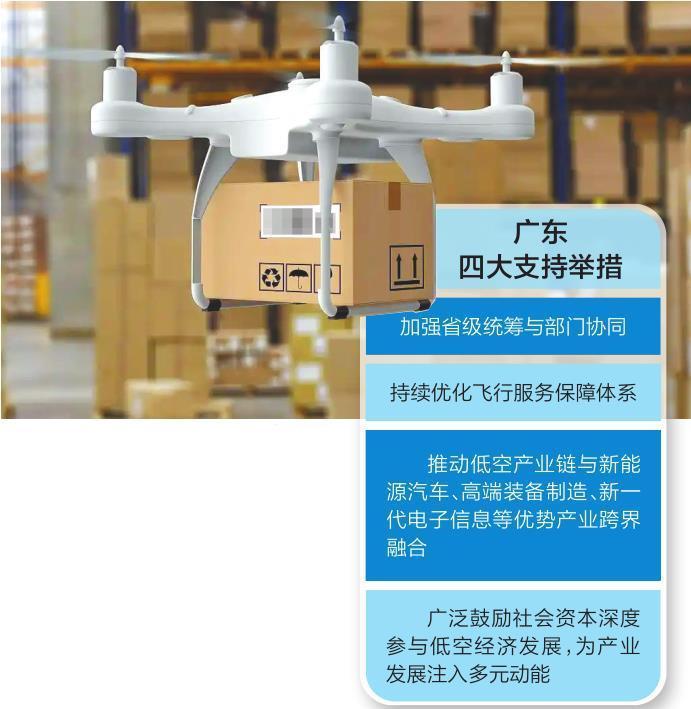
Core Insights - In 2026, China's emerging industries are expected to collectively enter a phase of mass production and ecological construction, with a focus on strategic emerging industries and localized development paths [6] Group 1: Low Altitude Economy - Guangdong is establishing itself as a benchmark for the low altitude economy, leveraging its complete industrial chain and policy framework, aiming for an industry scale exceeding 300 billion yuan by 2026 [7][8] - The province has over 15,000 low altitude industry chain enterprises, accounting for more than 30% of the national total, with over 2,000 drone manufacturing companies [7] - Guangdong is enhancing its infrastructure and policy environment to support low altitude logistics, medical rescue, and agricultural monitoring applications [8] Group 2: Embodied Intelligence - Shanghai is positioning itself as a global innovation hub for embodied intelligence, with plans to achieve significant breakthroughs in core algorithms and technologies by 2027 [9][11] - The city aims to support key projects financially and establish several high-quality incubators for the embodied intelligence sector [11] Group 3: New Energy Storage - Inner Mongolia is leading the development of new energy storage, focusing on attracting leading enterprises and building a comprehensive industrial chain [12][13] - The region has established a capacity to support 28.5 million kilowatt-hours of installed demand, with significant projects underway, including a large-scale energy storage project [13] Group 4: New Materials - Jiangsu is enhancing its new materials industry through a comprehensive innovation system, with 32 provincial key laboratories and 15 national enterprise technology centers established [14][15] - The province's advanced materials industry has surpassed 1 trillion yuan in output value, with significant clusters in Suzhou focusing on nanomaterials and advanced carbon materials [15] Group 5: Deep Sea and Aerospace Integration - Shandong is promoting the integration of deep sea and aerospace industries through a "chain leader" system, enhancing efficiency and fostering a collaborative industrial ecosystem [16][17] - The province is developing key technologies in both fields and establishing a unique layout for manufacturing and launching [17] Group 6: Quantum Technology - Anhui is building a global hub for quantum technology, with over 100 companies in the sector and a focus on practical applications through the "thousand scenarios" initiative [18][20] - The province has established a quantum future industry park and is providing comprehensive support for technology development and industry collaboration [20]
我国突破石墨烯材料质量评价关键技术
Huan Qiu Wang Zi Xun· 2025-12-26 01:05
Core Insights - The State Administration for Market Regulation has announced significant breakthroughs in the quality evaluation of graphene materials, addressing long-standing issues of reliability and market trust in applications such as new energy and 5G communications [1][2] - A research team has successfully developed key technologies and released quality evaluation certificates for five typical products in the conductive and thermal management fields, marking a new phase of standardization and trust in the industrial application of graphene materials [1] Group 1 - The research team focused on critical metrology challenges in graphene materials for electric heating applications, overcoming key parameter traceability and value transfer technologies under extreme conditions [1] - A comprehensive evaluation parameter system covering conductive and thermal applications has been established, along with a technical matrix combining physical and textual standards [1] - Multiple standard substances, metrology technical specifications, and industry standards have been released, forming a quality infrastructure system driven by metrology data and standardized evaluation [1] Group 2 - The new system effectively addresses the common challenges of "uncertainty in measurement and incomparable results" faced by upstream and downstream enterprises in the industry chain, significantly reducing repetitive testing costs [2] - The results have facilitated the large-scale application of graphene materials in smartphones, 5G base stations, and new energy batteries, providing solid technical support and standard assurance for the high-quality development of China's new materials industry [2]
只是材料供应商?4连板后 道明光学否认有AI手机相关业务
Mei Ri Jing Ji Xin Wen· 2025-12-02 14:37
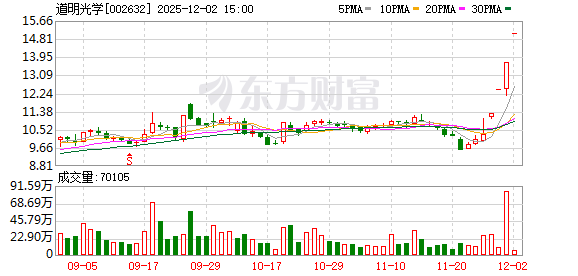
Core Viewpoint - The "AI phone" concept stocks have gained significant attention in the capital market, with Daoming Optics experiencing a four-day trading limit increase, despite the company clarifying that it does not have any AI phone-related business [2][4]. Group 1: Stock Performance - Daoming Optics has achieved a four-day trading limit increase, with its stock price rising significantly due to market speculation around "AI phones" [2][3]. - On December 2, Daoming Optics announced that its stock had experienced an abnormal trading fluctuation, with a cumulative price increase exceeding 20% over two consecutive trading days [3][4]. Group 2: Company Clarification - Daoming Optics confirmed that it has not found any significant undisclosed information that could impact its stock price and reiterated that it does not engage in AI phone-related business [4][6]. - The company had previously issued a statement regarding stock price fluctuations but did not mention "AI phone" information at that time [4][6]. Group 3: Business Overview - Daoming Optics specializes in reflective materials and has expanded its product offerings to include new functional films such as aluminum-plastic composite films and graphene thermal conductive films, targeting the micro-nano optical display and consumer electronics industries [5][6]. - In the first half of the year, Daoming Optics reported a revenue of 76.65 million yuan in the electronic functional materials sector, marking a 25.86% increase year-on-year, driven by growth in release materials and graphene thermal conductive films [6].

道明光学2025年三季报营利双增 将积极布局智能穿戴智能驾乘新型消费电子等领域
Zheng Quan Shi Bao Wang· 2025-10-24 03:48
Core Insights - The company reported a revenue of 1.102 billion yuan for the first three quarters of 2025, representing a year-on-year growth of 7.24% [1] - The net profit attributable to shareholders reached 180 million yuan, with a year-on-year increase of 24.69% [1] - The company is actively expanding its application scenarios in the electronic functional materials sector, particularly with graphene products [2] Financial Performance - Revenue for the first three quarters: 1.102 billion yuan, up 7.24% year-on-year [1] - Net profit attributable to shareholders: 180 million yuan, up 24.69% year-on-year [1] - Non-recurring net profit: 163 million yuan, up 27.26% year-on-year [1] - Operating cash flow: 367 million yuan, up 150.26% year-on-year [1] - Basic earnings per share: 0.29 yuan [1] Strategic Collaborations - The company has established stable partnerships with major brands such as BYD, DJI, and Sunny Optical, enhancing market recognition [1] - Collaboration with the Red Magic brand has led to the application of graphene thermal films in their liquid-cooled smartphones [2] - Ongoing projects include partnerships for small foldable phones and advancements in thermal interface materials for various applications [2] Global Expansion - The company is expanding its global footprint by establishing offices in Singapore and Thailand to enhance regional service capabilities [2] - The company aims to promote domestic alternatives in the reflective film industry and increase market share both domestically and internationally [2] Future Outlook - The company plans to deepen its involvement in optical display, new energy vehicles, and consumer electronics to broaden its product range [2] - The focus is on becoming a leading comprehensive film enterprise both domestically and globally [2]
石墨烯热管理材料!华为,小米争相搭载,它到底厉害在哪?
DT新材料· 2025-10-23 16:04
Core Viewpoint - Graphene thermal management materials are rapidly gaining popularity in the technology sector due to their exceptional thermal conductivity and versatility in various applications, particularly in consumer electronics and automotive industries [4][15]. Group 1: Graphene Thermal Management Materials - Graphene is recognized for its high thermal conductivity, with theoretical values reaching up to 5300 W/m·K, significantly outperforming traditional metals like copper and aluminum [6][8]. - The material's unique structure allows for efficient heat transfer, making it suitable for applications in smartphones, laptops, and electric vehicles [4][10]. - Major brands like Huawei and Xiaomi have successfully integrated graphene thermal materials into their products, showcasing its effectiveness in enhancing thermal management [4][5]. Group 2: Mechanisms of Heat Transfer - Heat conduction in graphene occurs through both phonon and electron interactions, which contribute to its superior thermal conductivity [5][12]. - The layered structure of graphene films affects heat transfer efficiency, with phonon scattering occurring at the interfaces between layers, impacting overall thermal performance [5][12]. Group 3: Advantages Over Traditional Materials - Compared to traditional thermal materials, graphene offers a combination of high thermal conductivity, flexibility, and lightweight properties, making it an ideal choice for modern electronic devices [8][10]. - Graphene thermal materials maintain their performance even after extensive bending and folding, unlike metals that may fracture or traditional thermal pads that may degrade over time [8][10]. Group 4: Industry Analysis - The graphene industry is experiencing rapid growth, particularly in China, which is leveraging its resources and manufacturing capabilities to develop a comprehensive graphene supply chain [15][16]. - The competitive landscape includes numerous players, but the high technical and financial barriers to entry limit the threat from new entrants [16][17]. Group 5: Representative Companies - Companies like Shenzhen Hongfu New Materials Co., Ltd. and Changzhou Fuxin Technology Co., Ltd. are leading the development and production of graphene thermal materials, focusing on advanced applications in AI, 5G, and automotive sectors [17][21]. - Guangdong Morion Technology Co., Ltd. has established itself as a pioneer in the full-chain production of graphene materials, achieving significant advancements in thermal interface materials [24][25].

泰和新材,入局热管理新材料
DT新材料· 2025-10-12 16:05
Core Viewpoint - Taihe New Materials has made significant progress in the mobile phone cooling sector by developing high-performance thermal film materials based on POD (Polyoxadiazole), which is currently in the pilot test stage [2][7]. Group 1: Product Development - The new thermal film material being developed is distinct from previously mentioned products like thermal films and aramid thermal films [2]. - POD is a functional heterocyclic polymer known for its excellent thermal and mechanical properties, chemical stability, and unique electronic and optical properties, making it suitable for various applications [2]. - Traditional synthesis methods for POD are complex and limited, which restricts the structural diversity and functional applications of POD materials [2][4]. Group 2: Market Context - The smartphone market has evolved into a high-performance computing device, leading to increased processor power consumption and heat output [2]. - Passive cooling methods have been the norm, transitioning from natural graphite sheets and copper foils to advanced materials like graphene thermal films and VC (Vapor Chamber) heat spreaders [2][6]. - The market for mobile phone thermal films is substantial, with annual demand measured in billions of pieces, indicating a promising future for scaled production once material performance is validated [7]. Group 3: Competitive Landscape - The main suppliers of artificial synthetic graphite films are limited, with key players including DuPont, Zhongyuan Chemical, Ube Industries, SKC, and Maida Technology [3]. - Taihe New Materials' entry into POD-based thermal films represents a strategic extension into the electronic cooling materials sector, providing a differentiated competitive approach for domestic thermal material manufacturers [5][7]. Group 4: Future Trends - By 2025, companies like Huawei and OPPO are expected to lead the adoption of active cooling technologies, such as micro fans and piezoelectric micro pumps, in response to the high power consumption era [9]. - The global thermal interface materials (TIM) market is projected to grow rapidly, driven by emerging applications in AI, humanoid robots, communication, chips, and electric vehicles [11]. - The upcoming 6th Thermal Management Industry Conference in December 2025 will focus on cutting-edge thermal management materials and solutions, highlighting the importance of advanced cooling technologies in the industry [11].

奔驰高管“炮轰”宝马、奥迪!背后究竟发生了什么?
Zhong Guo Qi Che Bao Wang· 2025-09-15 03:31
Core Viewpoint - The discussion initiated by Gorden Wagener, Mercedes' global design director, regarding the interior designs of BMW and Audi at the 2025 Munich Auto Show has sparked a broader conversation about automotive interior design trends and philosophies [3][4]. Group 1: Professional Opinions - Gorden Wagener criticized a BMW model for its "small capacity and cumbersome operation" and described an Audi concept car's interior as reminiscent of designs from 1995 [4]. - He praised Mercedes' "Hyperscreen," a 39.1-inch large display, emphasizing the necessity for clear visual information and entertainment options for users [4][5]. - The automotive interior design is evolving under the influence of electric and intelligent vehicle trends, leading to diverse design philosophies rather than a uniform approach [5]. Group 2: Industry Transformation - The automotive interior is transitioning from a functional space to an "intelligent ecological terminal," driven by advancements in AI and sensor technologies [6]. - Technologies like AR-HUD have evolved from simple monochrome displays to full-color 3D displays, enhancing safety and convenience by integrating critical information into the driver's field of vision [6]. - Biometric technologies are enabling personalized settings for seats, climate, and music, creating a "one person, one car, one mode" experience [7]. Group 3: Sustainable Design Trends - Environmental sustainability is becoming a core principle in interior design, moving away from traditional materials like plastic and leather to more sustainable options [7][8]. - Innovative materials such as mycelium-based materials are emerging as alternatives to leather, offering low-energy production and zero emissions [8]. - Graphene heating elements are improving seat heating efficiency by 30%, contributing to energy savings and enhanced comfort [8]. Group 4: User-Centric Design Evolution - The shift from driver-centered to user-experience-centered design reflects the transition towards autonomous driving, transforming vehicles into "smart mobile living spaces" [9]. - In autonomous modes, vehicles can switch to entertainment modes, providing immersive experiences for passengers [9]. - Future automotive interiors will focus on multifunctionality, catering to work, entertainment, rest, and social interactions, thus redefining mobility and lifestyle [9][10]. Group 5: Competitive Landscape - The competition in automotive interiors is shifting from hardware comparisons to ecosystem building, emphasizing a deep understanding of user needs [10]. - As electric vehicle technology levels the playing field, interior design is becoming a key differentiator for brands [10]. - Brands that can innovate and meet user demands through breakthrough technologies will gain a competitive edge in the market [10].

道明光学(002632):25H1业绩稳健增长,探索新材料领域新机遇
NORTHEAST SECURITIES· 2025-08-28 14:16
Investment Rating - The report initiates coverage with a "Buy" rating for the company, indicating a positive outlook for the stock's performance in the coming months [4][9]. Core Insights - The company reported a steady revenue growth of 9.97% year-on-year for H1 2025, achieving a total revenue of 734 million yuan, with a net profit of 114 million yuan, reflecting a year-on-year increase of 21.88% [1]. - The reflective materials business showed resilience, generating 516 million yuan in revenue for H1 2025, up 5.7% year-on-year, driven by strong demand from the growing electric vehicle market [2]. - The optical display materials segment achieved a revenue of 128 million yuan, marking a 14.1% increase year-on-year, supported by the resilience of the home appliance market [3]. - The electronic functional materials sector saw a significant revenue increase of 25.9% year-on-year, reaching 76 million yuan, primarily due to growth in release materials and graphene thermal films [3]. Financial Summary - The company forecasts net profits of 247 million yuan, 282 million yuan, and 323 million yuan for 2025, 2026, and 2027 respectively, with corresponding price-to-earnings ratios of 25X, 22X, and 19X [4]. - Revenue projections for the years 2025 to 2027 are estimated at 1.596 billion yuan, 1.769 billion yuan, and 1.960 billion yuan, reflecting a compound annual growth rate of approximately 10.76% [10]. - The gross profit margin is expected to remain stable, with slight fluctuations projected over the next few years [10].