硅通孔(TSV)

Search documents
芯片互联,复杂性飙升
半导体芯闻· 2026-01-26 08:44
Core Insights - The article discusses the evolution of interconnect complexity in semiconductor devices, highlighting the shift from a two-level routing structure to a five-level structure, which enhances flexibility but increases complexity and decision-making requirements [1][19]. - It emphasizes the gradual nature of these changes, comparing it to the story of "boiling a frog," where the cumulative impact of incremental changes becomes apparent only in hindsight [1]. Group 1: Routing Structure and Challenges - The routing structure or platform is defined as the location of interconnections, historically represented by metal wiring in integrated circuits (IC) and printed circuit boards (PCB), both of which provide multi-layer wiring to maximize connectivity while managing costs [1]. - The differences between chip and PCB design have traditionally been significant, with chip designers focusing on internal wiring and PCB designers on connections to other components [3]. - Increasing the number of layers can reduce wiring density but also raises graphical complexity and sensitivity to lateral etching effects, necessitating careful design considerations [3]. Group 2: Power and Heat Management - The rise in chip power levels, reaching kilowatt levels, complicates heat dissipation, as traditional packaging methods struggle to manage the generated heat effectively [4]. - The increasing integration of circuits within chips leads to higher power density, exacerbating heat management challenges as more heat must be dissipated from smaller volumes [4]. - Flip-chip packaging has emerged as a solution, allowing chips to connect to substrate boards directly, improving heat dissipation and I/O interface availability [4][5]. Group 3: Stacked and 2.5D Integration Technologies - Stacked packaging, which involves vertically stacking multiple chips, presents significant thermal management challenges due to limited heat dissipation paths for chips in the middle of the stack [8]. - The development of 2.5D integration technology utilizes an intermediary layer as a "PCB," allowing for tighter line spacing and the installation of multiple chips, enhancing performance and reducing costs [9][10]. - The intermediary layer can be made from organic or silicon materials, with the latter allowing for finer dimensions, although at a higher cost [9][12]. Group 4: Design and Verification Complexity - The design and verification process for five-layer interconnect systems is significantly more complex than in the past, requiring integrated efforts from chip and packaging designers [12][16]. - Early-stage verification must encompass structural material analysis, layout planning, and thermal simulations, reflecting the need for a multi-physical field approach [16][17]. - The integration of power delivery and signal quality solutions has become more refined, with voltage regulation now occurring closer to the chip, enhancing performance [17][18]. Group 5: Future Implications - The evolution towards a five-layer interconnect structure may influence future chip development decisions, providing clearer insights into the growing flexibility and complexity of chip designs [19]. - The article concludes that while these changes are not revolutionary, they represent a significant shift in how semiconductor devices are designed and managed, impacting all levels of architecture [19].

芯片互联,复杂性飙升
半导体行业观察· 2026-01-23 01:37
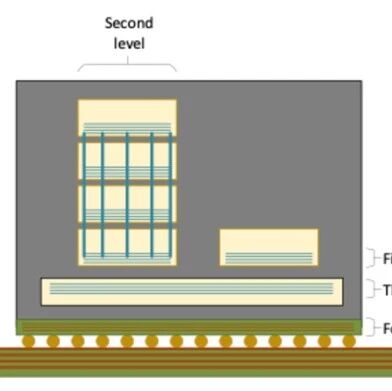
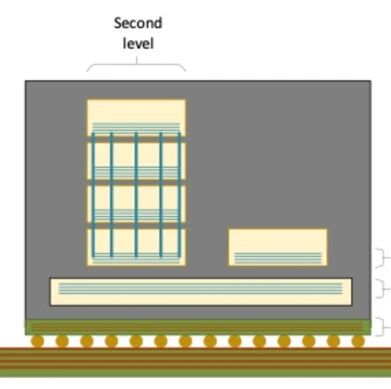
Core Viewpoint - The article discusses the evolution of interconnect complexity in semiconductor design, highlighting the transition from traditional two-level routing structures to more complex five-level systems, which enhance flexibility but also increase design challenges and costs [1][25]. Group 1: Evolution of Interconnect Structures - Historically, interconnect structures in integrated circuits (IC) and printed circuit boards (PCB) have been limited to two levels, but recent advancements have expanded this to five levels, significantly increasing complexity and decision-making requirements [1][25]. - The distinction between chip-level and PCB-level design has been significant, with chip designers focusing on internal wiring and PCB designers managing connections to other components [3][25]. Group 2: Challenges in Chip Design - Three key trends are challenging traditional interconnect solutions: the importance of signal transmission lines, increased power levels leading to heat dissipation issues, and higher chip integration levels that exacerbate power density challenges [4][5]. - As chip sizes increase, the number of required I/O connections also rises, necessitating new packaging solutions like flip-chip packaging, which connects chips directly to substrate rather than through lead frames [6][7]. Group 3: Advanced Packaging Techniques - 3D stacking of chips using Through-Silicon Vias (TSV) allows for vertical signal transmission but complicates heat dissipation due to limited pathways for heat escape [9][11]. - The introduction of intermediary layers in 2.5D integration technology allows for more compact designs and improved signal routing, with the potential for multiple layers to enhance performance [13][14]. Group 4: Design and Verification Complexity - The design and verification process for five-layer interconnect systems is significantly more complex than in the past, requiring integrated efforts from chip and packaging design teams [17][21]. - Early-stage verification now includes structural material analysis, layout planning, and thermal simulations, expanding beyond traditional functional verification [20][21]. Group 5: Power Delivery and Signal Integrity - The increase in interconnect layers facilitates finer power delivery and signal integrity solutions, allowing voltage regulation to occur closer to the chip and improving overall performance [23][24]. - The integration of decoupling capacitors within the packaging can buffer voltage fluctuations, enhancing signal quality and performance [23][24]. Group 6: Conclusion on Industry Trends - The shift to a five-layer interconnect structure represents a gradual evolution rather than a revolutionary change, reflecting years of incremental improvements in semiconductor design [25][26]. - This complexity in interconnect design will influence future chip development decisions, emphasizing the importance of architecture-level considerations [26].
TSV,日益重要
半导体行业观察· 2026-01-08 02:13
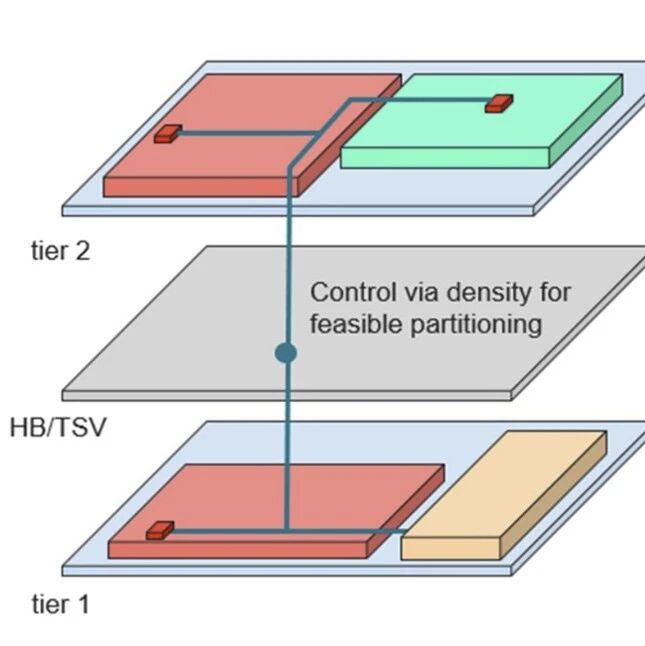
Core Viewpoint - Through-Silicon Vias (TSVs) are essential for modern 3D Integrated Circuit (3D-IC) technology, providing vertical interconnections that enable short and low-latency signal paths between stacked chips [1] Group 1: TSV Structure and Manufacturing - TSVs are vertical metal plugs, typically made of copper, embedded in the thickness of silicon chips. The classic manufacturing process includes deep reactive ion etching (DRIE), deposition of liner and barrier layers, copper electrochemical deposition, and back thinning to expose the vias [3] - TSVs can be categorized into three types based on their introduction in the manufacturing process: front-side, middle, and back-side vias, with middle vias being most common in high-density logic memory stacking [3] Group 2: TSV Spacing and Electrical Characteristics - TSV spacing is a critical parameter affecting system design choices. Smaller spacing allows for more vertical interconnections per unit area, supporting higher bandwidth between stacked chips, but also presents challenges [5] - Parasitic parameters of TSVs, including resistance, capacitance, and inductance, must be accurately modeled early in the process. These parameters impact signal integrity, timing convergence, power transmission, and inter-layer communication [7] - The capacitance of TSVs acts like a metal-insulator-semiconductor capacitor, where higher capacitance increases delay and reduces noise tolerance, introducing crosstalk to nearby networks [7] - Resistance from copper filling is significant for high-frequency signals, directly affecting insertion loss and power efficiency for wideband memory and high-speed SerDes paths [7] - The vertical geometry of TSVs can introduce inductive behavior that affects impedance matching and eye diagram margins for fast edges and GHz-range components [7] Group 3: Design Constraints and Reliability - The choice of TSV spacing must optimize electrical performance, mechanical reliability, and physical design constraints due to increased mechanical stress and larger KOZ (Keep Out Zone) areas [8] - Each TSV requires a KOZ, preventing the placement of active devices or sensitive interconnections within that area to avoid performance degradation due to stress and leakage current [12] - The thermal expansion coefficient (CTE) of copper is higher than that of silicon, leading to local stress during temperature cycling, which can alter transistor characteristics and affect long-term reliability [12] - To mitigate stress impacts, TSVs can be compared with micro-bumps, with TSVs offering shorter vertical path lengths, typically in the range of tens of micrometers, compared to hundreds of micrometers for micro-bumps [12] Group 4: Applications and Performance - TSVs significantly enhance vertical bandwidth density, supporting more parallel connections in a smaller space, crucial for high bandwidth memory (HBM) stacks achieving terabits per second [15] - TSVs provide lower interconnect latency due to shorter path lengths and reduced RC delay compared to micro-bump interconnections, which introduce longer paths and additional parasitic layers [15] - TSVs can also serve as thermal conduits, aiding in vertical heat dissipation, a feature not available with micro-bumps, although TSVs introduce thermal stress that requires balanced layout strategies [15] - Engineering teams must establish a TSV budget early in the 3D IC design phase, influencing chip size, partitioning strategies, bandwidth targets, and overall packaging economics [15] Group 5: Verification and Reliability Considerations - Electrical, physical, and reliability verification are essential for TSVs, addressing long-term reliability concerns such as hybrid bonding and TSV integration [20] - Specific scenarios for hybrid bonding include precise extraction of TSV array parasitics, timing analysis of inter-layer paths, and SI/PI analysis of vertical power networks [21]
反潮流的TSV
半导体行业观察· 2025-12-10 01:50
Core Viewpoint - The advancement in semiconductor technology is shifting from device scaling to interconnects, with advanced packaging becoming the new frontier, particularly through the use of larger Through-Silicon Vias (TSVs) to enhance electrical performance, power delivery, thermal management, and manufacturing yield [2][11]. Group 1: Evolution of Interconnect Technology - The journey began with wire bonding, the standard interconnect technology of the 20th century, followed by flip-chip packaging, which reduced interconnect size and parasitic effects [4]. - The introduction of silicon interposers in the early 21st century provided a platform for high-density interconnects, enabling the development of breakthrough technologies like Xilinx FPGA Virtex 7 and AI accelerators [4][6]. - TSVs are vertical channels that allow direct communication between chips, significantly reducing signal delay and enhancing overall system performance compared to traditional wire bonding [4][6]. Group 2: Characteristics and Functions of Interposers - Interposers serve as a critical layer between silicon chips and printed circuit boards (PCBs), enhancing functionality and performance through high-density interconnects [6]. - They are custom-designed based on specific chip packaging requirements and play three key roles: providing a mounting surface for semiconductor chips, enabling connections between chips, and connecting the stacked structure to the packaging substrate [6][7]. - Interposers are typically made from silicon, glass, or organic substrates, with TSMC being a major supplier [7]. Group 3: Advantages of Larger TSVs - Larger TSVs (up to 50μm in diameter and 300μm in depth) are being developed to support higher power transmission, lower high-frequency losses, and improved thermal management [11][15]. - The transition from traditional TSVs (5-10μm in diameter) to larger TSVs represents a fundamental shift in packaging concepts, enabling better performance for high-performance computing (HPC), AI, and 5G applications [16]. - Larger TSVs can accommodate greater currents, reduce IR drop, and enhance signal integrity, which is crucial for high-frequency applications [15][16]. Group 4: Challenges and Future Directions - Despite the advantages, larger TSVs present challenges such as increased mechanical stress due to mismatched thermal expansion coefficients and reduced available routing space on the interposer [13]. - The industry is exploring new materials and designs to mitigate these challenges while ensuring cost-effectiveness and reliability in future applications [16]. - Future interposers are expected to integrate more functionalities and materials, supporting heterogeneous integration of CPUs, GPUs, memory, and RF devices, while also addressing thermal management and cost scaling [16].
芯片,怎么连?(上)
半导体行业观察· 2025-08-11 01:11
Group 1 - The article discusses the importance of interconnectivity in the information age, focusing on the internal interconnect structures within semiconductor chips [2] - It introduces various interconnect elements such as wires, vias, local interconnects, and contact points, explaining their roles and construction methods [4][8] - The manufacturing process of chips is divided into two main stages: front-end process (FEoL) for creating transistors and back-end process (BEoL) for building interconnect layers [6][12] Group 2 - A typical silicon chip can contain up to five different interconnect elements, including metal lines, vias, local interconnects, contact points, and through-silicon vias (TSVs) [4][8] - Metal lines are primarily used for signal transmission, with advanced nodes allowing for multiple layers of metal interconnects [7][22] - TSVs are crucial for connecting signals from the front of the chip to the back, especially in stacked chip configurations [17][41] Group 3 - The article highlights the transition from aluminum to copper as the primary material for interconnects due to copper's superior conductivity [22][25] - It describes the dual-damascene process used for copper interconnects, which involves etching trenches in dielectric materials and filling them with copper [26] - Other metals such as tungsten, nickel, and emerging materials like cobalt are also discussed for their roles in interconnect applications [30] Group 4 - Dielectric materials are essential for maintaining isolation between metal lines, with silicon dioxide (SiO₂) being the most commonly used [31] - The article emphasizes the development of low-k dielectric materials to reduce capacitive effects in densely packed circuits [33] - High-k materials like hafnium oxide (HfO₂) are explored for their benefits in gate oxide applications, providing better performance without thinning the layer [38][40] Group 5 - The interconnect system within chips is evolving from simple point-to-point connections to more complex structures like buses and networks on chip (NoC) [50][75] - Buses allow for multiple signal lines to transmit data, while NoC mimics external network structures to improve efficiency in large-scale systems [53][75] - The article discusses various addressing methods in NoC, including unicast, multicast, and broadcast, to enhance data transmission efficiency [78]