
印刷电路板(PCB)

Search documents
全球最大电子级玻纤生产线点火,占全球产能9%
第一财经· 2026-03-19 12:58
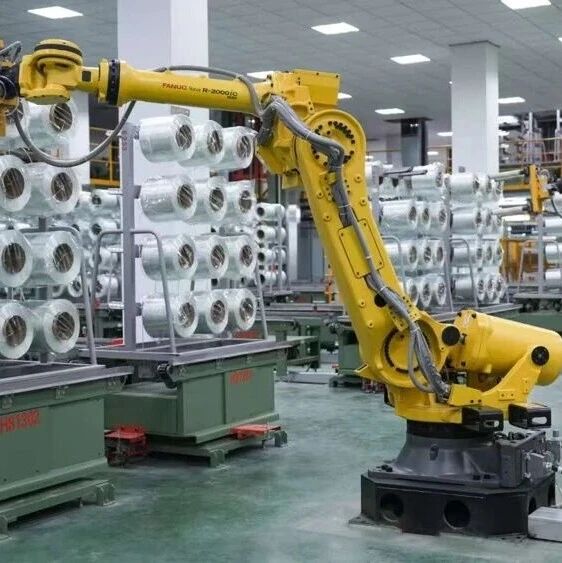
Core Viewpoint - The successful ignition of China's Jushi's 100,000-ton electronic-grade fiberglass production line in Huai'an marks a significant advancement in the global electronic fiberglass market, with the production line accounting for 9% of the global market and being the largest of its kind worldwide [3][4]. Group 1: Production and Market Impact - The new production line will increase Jushi's market share in electronic fiberglass to approximately 28%, enhancing its position in the global market [4]. - This production line is part of the world's first zero-carbon intelligent manufacturing base for fiberglass, aimed at supporting emerging industries such as consumer electronics, 5G communications, and industrial control [3]. Group 2: Technological Advancements - The project integrates advanced technologies including proprietary high-performance glass formulations, large-scale melting furnaces, and smart manufacturing, achieving 100% independent intellectual property rights [5]. - The use of industrial internet, AI quality inspection, and digital twin technologies enables full-process intelligence, significantly improving production efficiency and reducing energy consumption [5]. Group 3: Strategic Importance - Electronic-grade fiberglass is a critical strategic material for printed circuit boards (PCBs), which serve as the physical and electrical connection for all electronic components [5]. - The performance of electronic-grade fiberglass directly influences the dielectric properties, thermal expansion coefficients, and reliability of PCBs, making it essential for the digital economy [5]. Group 4: Future Directions - The company aims to focus on breakthroughs in next-generation electronic fabric core technologies during the 14th Five-Year Plan, collaborating with downstream customers and research institutions to enhance the safety and autonomy of China's electronic information industry chain [5].


IPO申购指南:广合科技
Guoyuan International· 2026-03-12 14:24
Investment Rating - The report recommends subscription for Guanghe Technology (1989.HK) [1][4] Core Insights - The company specializes in the research, production, and sales of customized printed circuit boards (PCBs) used in computing servers and other computing scenarios. It ranks third among global PCB manufacturers for computing servers based on cumulative revenue from 2022 to 2024 [2][3]. - The global PCB market is expected to grow steadily, increasing from USD 62.0 billion in 2020 to USD 75.0 billion by 2024, with a compound annual growth rate (CAGR) of 4.9%. The market is projected to continue growing at a CAGR of 4.5% from 2024 to 2029, driven by the recovery of the global economy and the rise of new applications such as data centers, AI, autonomous driving, and AR/VR [3]. - The company's revenue for the years 2022, 2023, and 2024 is projected to be RMB 2,412.4 million, RMB 2,678.3 million, and RMB 3,734.3 million, respectively, with corresponding net profits of RMB 279.65 million, RMB 414.69 million, and RMB 680.26 million [3]. - The highest issue price for the Hong Kong stock is set at HKD 71.88 per share, which is 50% of the A-share closing price on March 11, 2026 (RMB 124.1 per share). The valuation is considered to have a certain margin of safety, with an expected price-to-earnings (PE) ratio of approximately 20 times for 2026 [4]. Summary by Relevant Sections - **IPO Details**: The company aims to raise HKD 3.1754 billion through its IPO, with a total offering of 46 million shares, of which 4.14 million shares are for international placement and 460,000 shares for public offering [1]. - **Market Position**: The company is positioned as a key player in the PCB market for computing servers, which are essential for handling data-intensive workloads [2]. - **Financial Performance**: The projected revenue and profit growth indicate a positive financial outlook, with significant increases expected in the coming years [3].
广合科技(01989):IPO申购指南
Guoyuan Securities2· 2026-03-12 13:55
Investment Rating - The report recommends subscription for Guanghe Technology (1989.HK) [1][4] Core Insights - The company specializes in the research, production, and sales of customized printed circuit boards (PCBs) used in computing servers and other computing scenarios, ranking third among global PCB manufacturers for computing servers based on cumulative revenue from 2022 to 2024 [2][3] - The global PCB market is expected to grow steadily, increasing from USD 62.0 billion in 2020 to USD 75.0 billion by 2024, with a compound annual growth rate (CAGR) of 4.9%. The market is projected to continue growing at a CAGR of 4.5% from 2024 to 2029, driven by the recovery of the global economy and the rise of new applications such as data centers, AI, autonomous driving, and AR/VR [3] - The company's revenue for the years 2022, 2023, and 2024 is projected to be RMB 2,412.4 million, RMB 2,678.3 million, and RMB 3,734.3 million, respectively, with corresponding net profits of RMB 279.65 million, RMB 414.69 million, and RMB 680.26 million [3] Summary by Relevant Sections IPO Details - The IPO price is set at HKD 71.88 per share, with a total fundraising amount of HKD 3.1754 billion, and the subscription period is from March 12 to March 17, 2026 [1] - The total number of shares available for subscription is 46 million, with 90% allocated for international placement and 10% for public offering [1] Market Position and Valuation - The highest issuance price of HKD 71.88 per share represents 50% of the A-share closing price of RMB 124.1 on March 11, 2026, and is estimated to have a price-to-earnings (PE) ratio of approximately 20 times for 2026, indicating a certain margin of safety in valuation [4]
AI大算力牵引石英电子布加速落地
2026-03-01 17:22
Summary of Conference Call Notes Company and Industry Overview - The conference call discusses the advancements in the quartz electronic cloth industry, driven by the increasing demand for AI computing power and signal transmission rates reaching 224G. The focus is on the performance requirements for copper-clad laminates (CCL) and the transition from traditional fiberglass electronic cloth to quartz materials, which are deemed more suitable for high-performance applications [1][2]. Key Points and Arguments Industry Demand and Standards - The demand for new electronic cloth is urgent due to the rising signal transmission rates, which necessitate higher performance materials. The industry standards for CCL, defined by Panasonic, categorize them into levels MA6, MA7, MA8, and MA9, with MA9 requiring a DF (dissipation factor) of less than 7/10,000 [2][3]. - Traditional fiberglass electronic cloth has a higher DF, making it unsuitable for high-end applications, while quartz materials, with a purity of over 99% silica, can achieve a DF as low as 5.5/100,000, making them ideal for MA9 standards [1][4]. Company Position and Strategy - The company, 菲利华 (Philihua), has established a fully integrated supply chain for quartz electronic cloth, from quartz sand purification to weaving, making it the only global player with such capabilities [1][6]. - Since 2017, the company has been developing new electronic cloth and acquired 中益科技 (Zhongyi Technology) in 2021 to strengthen its position in this market [5]. Market Share and Competitive Advantage - 菲利华 holds over 90% market share in the aerospace sector for quartz fibers and is extending its technological advantages to the development of electronic-grade quartz fibers, which have higher performance and price requirements compared to military-grade fibers [7][8]. - The company has established partnerships with major CCL manufacturers, including 台光 (Taiko), 斗山 (Doosan), 松下 (Panasonic), and 生益 (Sengyi), with strategic collaborations and certifications in progress [9][10]. Financial Projections and Growth Potential - Based on customer framework guidance for 2026, 菲利华 expects to sell approximately 10 million meters of new electronic cloth, potentially increasing net profit by 800 million to 1 billion yuan [3][11]. - The company anticipates that the new electronic cloth business will significantly contribute to overall performance, with projections indicating a total revenue exceeding several billion yuan in 2026, driven by demand from AI chips and 6G applications [11]. Future Catalysts and Market Trends - Key catalysts for growth include the release of NV-related chips and the increasing demand for MA9 materials from companies like Google and domestic chip manufacturers. The market for new electronic cloth is expected to expand significantly as it enters a phase of mass procurement in 2026 [11]. Additional Important Insights - The company has made significant investments in technology and capacity expansion, including a 300 million yuan investment to enhance quartz sand purification capabilities, with plans for further expansion [6]. - The competitive landscape shows that while other companies are attempting to enter the market, 菲利华 maintains a dominant position due to its long-standing expertise and established relationships in the aerospace sector [8]. This summary encapsulates the critical insights from the conference call, highlighting the strategic positioning of 菲利华 in the quartz electronic cloth industry and the anticipated growth driven by technological advancements and market demand.

量子哈密顿学习:密歇根大学实现基因调控网络推断的新跨越
GUOTAI HAITONG SECURITIES· 2026-03-01 10:11
Investment Rating - The report does not explicitly provide an investment rating for the industry Core Insights - The technology industry experienced a total of 90 financing events globally from February 21 to February 27, 2026, with 60 events in the domestic market and 30 abroad. The leading sectors for financing in the domestic market were advanced manufacturing, artificial intelligence, and automotive transportation, with 28, 18, and 6 events respectively [9][10] - The overall market indices showed positive performance, with the Shanghai Composite Index rising by 1.98% to 4163 points, the Shenzhen Component Index increasing by 2.80% to 14495 points, and the ChiNext Index up by 1.05% to 3310 points. The semiconductor, automotive electronics, artificial intelligence, and metaverse indices also saw gains of 2.30%, 4.46%, 1.72%, and 2.19% respectively [26][30] - The report highlights significant advancements in various technology sectors, including breakthroughs in quantum technology, artificial intelligence, and advanced semiconductors, indicating a robust innovation landscape [34][39] Summary by Sections Financing Overview - A total of 90 financing events occurred in the technology sector during the specified week, with advanced manufacturing leading the domestic market [9] - The report details the distribution of financing events across different sectors, emphasizing the dominance of advanced manufacturing and AI [9] IPO Updates - Tongbao Optoelectronics was listed on the Beijing Stock Exchange, focusing on automotive electronic components, including LED lighting systems [10][11] - Shenghong Technology, Huayi Technology, Qunkong Technology, and Taidong Technology submitted IPO applications to the Hong Kong Stock Exchange, indicating a trend of companies seeking public listings in the technology sector [14][17][20][23] Market Performance Tracking - The report tracks the performance of major market indices, noting an overall upward trend in the technology sector, with specific indices showing significant weekly gains [26][30] - High turnover rates were observed in the semiconductor and metaverse indices, indicating active trading and investor interest [26] NextX Technology Tracking - The report discusses advancements in the advanced semiconductor sector, including the development of oxide semiconductor gain cell-embedded memory and breakthroughs in ferroelectric materials [34][39] - In the AI sector, significant findings were reported regarding the performance of AI diagnostic tools and improvements in reinforcement learning stability [34] - Quantum technology advancements were highlighted, including a new framework for quantum error correction and significant improvements in quantum dot LED efficiency [34][39]
格林大华期货早盘提示:铜-20260227
Ge Lin Qi Huo· 2026-02-27 07:50
1. Report Industry Investment Rating - The investment rating for the copper sector in the non - ferrous metals industry is "oscillating with a bullish bias" [1] 2. Core View - The report analyzes the copper market, including price trends, important news, market logic, and provides no trading strategy for now. It shows that although there are some positive factors, there are also factors suppressing copper prices [1] 3. Summary by Relevant Catalogs 3.1 Market Quotes - The night - closing price of the main Shanghai copper contract CU2604 is 102,550 yuan/ton, down 0.47% from the previous night - closing price. The night - closing price of the secondary main contract CU2605 is 102,870 yuan/ton, with a decline of 0.42%. As of 06:00 on February 27, 2026, the closing price of the COMEX copper main contract HGK26E is 6.025 US dollars per pound (equivalent to 90,849 yuan/ton after exchange - rate conversion), down 0.31% from the previous trading day. The LME CA03M E closes at 13,259 US dollars per ton (equivalent to 90,688 yuan/ton after exchange - rate conversion), with a decline of 0.68% [1] 3.2 Important News - On February 26, Resonac, a Japanese semiconductor material factory, announced a price increase of over 30% for printed circuit board (PCB) materials such as copper foil substrates (CCL) and adhesive films starting from March 1 [1] - On February 25, the Stoxx Europe Basic Resources Index rose 2.2%, with precious - metal mining companies like Fresnillo up 6.3%, Rio Tinto up 2.6%, Anglo American up 4.5%, Glencore up 2.4%, Antofagasta up 4.7%, and KGHM up 5.1% [1] - On February 25, the "Yingtan Inspection, Testing and Certification Institute Copper and Copper Products Forensic Appraisal Institute" was approved to be established, the first specialized forensic appraisal institution in the national copper industry [1] - On February 25, Citigroup predicted that copper prices would reach 14,000 US dollars per ton in the next three months, and the average copper price in 2026 is still forecasted to be 13,000 US dollars per ton in the base - case scenario [1] 3.3 Market Logic - According to the World Bureau of Metal Statistics (WBMS) and the International Copper Study Group (ICSG), the global refined copper supply had a surplus of 38.51 million tons and 38.3 million tons respectively in 2025 [1] - The market's expectation of the Fed's interest - rate cut in March has decreased significantly, and the strengthening of the US dollar will suppress copper prices [1] - Since August 2025, the global visible inventory has been rising and has doubled to nearly 1 million tons by mid - February, indicating that high copper prices have curbed copper consumption [1] - The market is worried about the US imposing tariffs on refined copper in the future. The LME copper inventory in Europe has decreased from nearly 70,000 tons to 13,900 tons since April 2025, while the COMEX copper inventory has increased from less than 100,000 short tons to 600,400 short tons [1] 3.4 Trading Strategy - There is no trading strategy provided for now [1]
半导体产业链震荡走强,AI人工智能ETF(512930)红盘上扬
Xin Lang Cai Jing· 2026-02-25 05:29
Group 1 - The core viewpoint of the news highlights the significant growth and opportunities in the semiconductor industry, driven by the demand for AI computing power, with global semiconductor sales expected to reach $791.7 billion by 2025, a 25.6% increase year-on-year [2] - The semiconductor equipment industry is experiencing a historical development window, with a projected industry scale exceeding $1 trillion by 2026, influenced by supply-demand imbalances and rising prices across the entire supply chain [2] - The AI Artificial Intelligence ETF closely tracks the CSI Artificial Intelligence Theme Index, which includes 50 listed companies involved in providing resources, technology, and application support for AI [2][3] Group 2 - As of January 30, 2026, the top ten weighted stocks in the CSI Artificial Intelligence Theme Index account for 57.27% of the index, with companies like Zhongji Xuchuang, Xinyi Sheng, and Cambricon leading the list [3] - The semiconductor supply chain is experiencing price increases due to AI server demand affecting consumer electronics production capacity, leading to a shortage of storage chips and prioritization of orders from major clients like NVIDIA [2] - The news mentions the successful construction of the world's first large-scale quantum key distribution network based on integrated optical quantum chips by a team from Peking University, marking a significant advancement in quantum communication technology [1]
中国电子元器件行业展望
Zhong Cheng Xin Guo Ji· 2026-02-13 09:56
Investment Rating - The investment outlook for the Chinese electronic components industry is stable, with overall credit quality expected to remain unchanged over the next 12 to 18 months [5][8]. Core Insights - The industry is driven by the recovery in consumer electronics, rapid growth in automotive electronics, and advancements in artificial intelligence, with traditional consumer electronics providing basic demand support but limited impact on overall growth [15][21]. - The industry is expected to gradually transition towards high-end products, with leading companies leveraging their high-end capacity and technological advantages to maintain a competitive edge [15][21]. - The overall credit risk in the electronic components industry is manageable, with no significant changes in ratings and no instances of bond extensions or defaults reported [22]. Industry Fundamentals Analysis - In 2025, domestic policies such as "trade-in" programs effectively boosted demand in the downstream market, helping to stabilize the electronic components industry amid fluctuating international trade conditions and tariff policies [9][11]. - The global competition landscape in the electronic components sector has remained stable, with significant growth in revenue and profits across various sub-sectors, although operating cash flow has declined [7][22]. - The industry is expected to see substantial order growth driven by automotive electronics and AI demand, with potential for upward adjustments in industry outlook if favorable conditions persist [7][8]. Credit Performance of Industry Enterprises - The financial performance of enterprises within the electronic components industry has improved, with revenue and profit growth reported, although operating cash flow has decreased [22][27]. - The average revenue growth for sample enterprises in the electronic components sector was 27.14% year-on-year, with significant contributions from AI-related demands [27][28]. - The debt scale of sample enterprises increased, but the overall financial leverage remains low, indicating good debt repayment capabilities [34][35].






全球最大的PCB制造商在泰投资超650亿泰铢获批
Shang Wu Bu Wang Zhan· 2026-02-11 01:24
Group 1 - The Thai Investment Promotion Committee has approved four investment promotion projects by Pengshen Technology (Thailand) Co., Ltd., with a total value exceeding 65 billion THB for the production of advanced printed circuit boards (PCBs) in Prachinburi, creating 5,600 jobs for Thai workers [1] - The first project was approved in 2023 and is set to commence production by September 2025, aiming to establish Thailand as a production base for high-complexity PCBs to meet the demands of modern electronic products such as smartphones and AI servers [1] - The Secretary-General of the BOI stated that ZDT's goal is to export these high-performance PCBs globally, enhancing Thailand's position in the electronics supply chain [1] Group 2 - Since 2017, ZDT has been among the largest PCB manufacturers globally, with annual revenues exceeding 180 billion THB and over 48,000 employees worldwide [2] - In addition to establishing a production base in Thailand, Pengshen Technology (Thailand) Co., Ltd. emphasizes human resource development and has signed agreements with top educational institutions in Thailand to cultivate high-quality talent [2] - The investment boom in the PCB sector over the past three years has positioned Thailand as the largest PCB producer in ASEAN and among the top five globally, contributing to a more complete electronics supply chain [2] - From 2023 to November 2025, the BOI has received 214 project applications related to PCBs, with a total investment exceeding 300 billion THB, with major PCB factories set to commence production starting in 2025 [2]
建筑材料行业:普通电子布存供需缺口,步入涨价大周期
GF SECURITIES· 2026-02-08 08:31
Investment Rating - The industry investment rating is "Hold" [2] Core Insights - The ordinary electronic cloth market is entering a price increase cycle due to a supply-demand gap, with expectations of sustained high demand and price elasticity for leading companies [6][33] - The demand for electronic cloth is projected to grow, with estimates of 3.66 billion meters under pessimistic conditions, 3.83 billion meters under neutral conditions, and 4.00 billion meters under optimistic conditions for 2026 [6][34] - The supply side is constrained by a fixed number of new weaving machines and a shift towards higher-margin AI electronic cloth production, leading to no expected increase in ordinary electronic cloth capacity [6][33] Summary by Sections 1. Electronic Cloth: A Key Material for Copper-Clad Laminates with Growth Potential - Electronic cloth is a crucial material for copper-clad laminates (CCL), with a cost share of approximately 20% in CCL and 30%-40% in PCB [14][15] - The market for electronic cloth is expected to maintain growth due to increasing demand from AI servers, communication, and consumer electronics [15][19] 2. Supply and Demand Analysis: Loom Shortages Expected in 2026 and 2027 - The supply-demand gap for ordinary electronic cloth in 2026 is projected to be -1.65 million meters under pessimistic conditions, with inventory levels remaining low even in adverse scenarios [6][33] - The demand for electronic cloth is expected to reach 3.66 billion meters under pessimistic conditions, with a decrease of 0.65 million meters, and 3.83 billion meters under neutral conditions, with an increase of 1.02 million meters [33][34] 3. Anticipated Long Duration of High Demand for Electronic Cloth - The current high demand for electronic cloth is expected to last, driven by supply constraints and rising copper prices, with leading companies having significant price elasticity [6][33] - The price of ordinary electronic cloth has already seen multiple increases, with cumulative price hikes reaching 1-1.2 RMB per meter [6][33] 4. Key Company Valuation and Financial Analysis - China Jushi is highlighted as a key player with significant price elasticity and cost advantages, making it a recommended investment [7][6] - The financial metrics for China Jushi indicate a reasonable value of 21.54 RMB per share, with projected EPS growth and favorable PE ratios for 2025 and 2026 [7]