私募资产

Search documents
施罗德发表2026年十大投资市场预测 看好美股、黄金及亚洲科技股
Zhi Tong Cai Jing· 2025-11-26 08:52
Core Insights - The article presents a forecast for investment markets in 2026, highlighting optimism for U.S. equities while cautioning against potential AI-related bubbles [1][2] - It emphasizes the importance of diversification in investment strategies amid a complex market environment influenced by various global factors [3] Group 1: U.S. Market Outlook - Positive outlook for overall U.S. stocks in a non-recessionary, rate-cutting environment, but caution is advised regarding the potential for an AI bubble [2] - The Russell 2000 index is expected to perform well, particularly in a non-recessionary environment, with a recommendation to hedge risks through shorting high-yield bonds [2] Group 2: Asian Market and Technology - Strong growth anticipated in Asian technology stocks, with earnings growth expected to exceed forecasts and valuations not overly stretched [2] - Asian markets are projected to outperform the U.S., becoming a core area for returns [3] Group 3: European Market - European banks and industrial stocks are expected to benefit from increased defense spending and related consumption, providing diversification opportunities [2] Group 4: Alternative Investments - Convertible bonds are highlighted for their unique attributes, offering 80% upside potential from stocks and 60% downside protection [2] - Gold is favored as a strong investment, with central banks increasing their gold reserves and a trend towards diversification away from the U.S. dollar [2] Group 5: Emerging Markets - Emerging markets and local currency bonds are seen as attractive due to improved fiscal conditions and higher yields compared to developed markets [2] - Emerging markets are expected to have more room for rate cuts to stabilize economies, particularly in a weakening dollar environment [2] Group 6: Energy and Private Assets - The demand for alternative energy is anticipated to rise due to structural changes from AI development and climate change pressures, with reasonable valuations expected to support future growth [2] - Private assets are noted for their resilience against market volatility and ability to capture strong fundamental returns [2]
普华永道:2030年全球基金规模迈向200万亿美元,私募将贡献过半收入
Hua Er Jie Jian Wen· 2025-11-24 10:58
Core Insights - The global asset management industry is projected to grow from $139 trillion in 2024 to $200 trillion by 2030, with private equity becoming a significant revenue contributor, expected to account for over half of the industry's income within five years [1][2]. Group 1: Private Equity Market Growth - The private equity market is anticipated to generate $432 billion in revenue by 2030, surpassing the combined revenue of traditional active and passive investment products [1]. - Factors driving the rapid expansion of the private equity market include investor demand for higher returns, increased accessibility for retail investors, and a decline in public market IPOs [2][3]. Group 2: Traditional Asset Management Challenges - Despite the growth in asset size, the profitability of the asset management industry is under pressure, with 89% of firms experiencing profit challenges over the past five years [4]. - Profit margins have decreased by 19% since 2018 and are expected to decline by an additional 9% by 2030, primarily due to rising costs and the growth of low-fee passive funds [4]. - The rapid growth of passive funds is projected to increase from approximately $40 trillion to $70 trillion by 2030, further compressing overall fee levels in the industry [4]. Group 3: Strategic Shifts in the Industry - Companies are encouraged to innovate and restructure their business models to remain competitive, as the winners will be those that adapt quickly rather than those that simply accumulate assets [5].

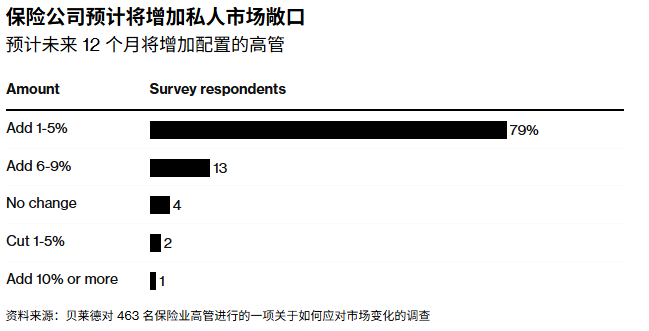
全球保险巨头加速转向私募资产 贝莱德:此为“结构性转变”非短期配置
Zhi Tong Cai Jing· 2025-10-21 06:56
Core Insights - The global insurance industry, managing $23 trillion in assets, is planning to increase allocations to private markets as a strategy to smooth long-term returns [1] - A survey of 463 insurance executives revealed that 93% expect to increase private asset holdings in the next 12 months, while only 3% anticipate a decrease [1] - Investment-grade private credit, including infrastructure debt and private bonds, remains the most favored asset class among investors [1] Group 1 - Insurance companies have increasingly embraced alternative assets, with private equity firms acquiring insurance companies driving growth in private credit, raising concerns among lawmakers about potential risks in the $1.7 trillion market [4] - Executives in the insurance industry are currently prioritizing the diversification and low volatility potential of private assets over merely seeking higher returns [4] - Liquidity is the primary concern for insurance executives when selecting private assets [4] Group 2 - The interest in private assets is seen as a long-term structural shift rather than a trend driven by low interest rates, according to BlackRock's global insurance strategist Mark Erikson [5] - Despite significant investments in private credit by large insurance companies, smaller firms are also beginning to increase their allocations to alternative assets [4] - Following the prolonged low interest rate environment since the 2008 financial crisis, insurance companies have turned to private markets for yield, and recent interest rate hikes have not led to a reduction in private asset allocations [4]

瑞士百达集团股权合伙人:AI系统逐渐接近人类投资经理水平
2 1 Shi Ji Jing Ji Bao Dao· 2025-10-18 12:28
Core Insights - The discussion at the Global Wealth Management Forum highlighted how artificial intelligence (AI) is fundamentally reshaping the future of asset management [2] - AI is seen as a tool to enhance productivity in service-oriented companies, narrowing the gap with manufacturing firms [2] - Historical examples show that aging economies have successfully adopted new technologies to improve productivity, with AI being the next wave of innovation [2] Group 1 - AI has reached a level of maturity that allows service companies to leverage it for significant productivity gains [2] - The most exciting and disruptive applications of AI are emerging directly in investment management, with AI systems approaching the skill level of human investment managers [2] - The challenge to human judgment in asset management is not about "if" AI will compete, but "when" it will match or exceed traditional human advantages [3] Group 2 - Future exploration is needed on how to apply AI in areas such as asset allocation, private assets, external fund selection, and money market funds [3] - Many projects utilizing AI in asset management are expected to yield results soon [3]

特朗普将签令,允许养老金投资加密货币等资产
财联社· 2025-08-07 13:46
Core Viewpoint - The article discusses a significant policy shift in the U.S. pension investment landscape, allowing alternative assets such as private equity, real estate, and cryptocurrencies to be included in 401(k) retirement savings plans, as announced by President Trump [1][2]. Group 1: Policy Changes - President Trump will sign an executive order to permit alternative assets in 401(k) plans, marking a major policy shift in U.S. pension investments [1][2]. - The U.S. Department of Labor will reassess guidelines regarding alternative asset investments in 401(k) plans and clarify the government's fiduciary responsibilities [2][3]. - This reform aligns with Trump's support for the cryptocurrency industry and follows recent congressional actions favoring cryptocurrencies [2]. Group 2: Market Impact - Following the announcement, Bitcoin prices surged, and private equity stocks like Apollo Group saw slight pre-market gains [2]. - The inclusion of private market products in 401(k) plans is expected to provide savers with more investment options and potentially higher returns, despite the associated risks and costs [3]. Group 3: Industry Developments - Major asset management firms, such as BlackRock, plan to introduce funds that allocate a portion of assets to private markets within 401(k) plans by 2026 [4]. - Empower, the second-largest retirement plan service provider in the U.S., is set to collaborate with asset management companies, including Apollo, to introduce private asset allocations in select accounts [4]. Group 4: Current Landscape - As of Q1 2025, Americans are projected to hold approximately $8.7 trillion in 401(k) accounts, with asset managers beginning to launch alternative asset products specifically for retirement accounts [3].