
红葡萄酒

Search documents
中国市场葡萄酒进口状况蓝皮书——红葡萄酒精华版|WBO新年企划
Sou Hu Cai Jing· 2026-02-10 07:44
Core Insights - The Chinese bottled wine import market has entered a deep adjustment period over the past five years, with total imports declining from 286 million liters in 2021 to 133 million liters in 2025, a cumulative drop of over 53% [1] - The red wine market, which dominates the sector, has undergone significant structural changes, reflecting complex dynamics in source regions, price segments, and driving logic [1][4] Import Volume Trends - The total import volume of bottled wine in China has been on a continuous decline for five years, forming an "L" shaped curve, primarily driven by the shrinkage of red wine imports [4] - In 2025, the import volume of red wine from Australia is projected to be approximately 34.3 million liters, showing a slight increase of 0.8% compared to 2024, while France's imports are expected to drop by 35.71% to about 29.98 million liters [5][6] Source Region Performance - Australia has regained market share, with its import volume share rising from less than 0.1% in 2023 to 41.95% in 2025, indicating a strong recovery in both quantity and value segments [16] - France's market share has decreased from 44.94% to 29.04% over five years, with a significant loss in the mid to low-end market, although it still maintains a strong position in the high-end segment [16][17] - Chile's market share has dropped from 20.57% to 8.57%, with red wine's share around 7%, indicating a notable decline in market influence [17] Price Trends - Despite the overall decline in import volume, the average import price of red wine in China has entered an upward trend, with the average price reaching approximately $9.69 per liter in 2025, reflecting a 21.79% increase year-on-year [12] - The average price of Australian red wine is projected to be $15.74 per liter in 2025, showcasing a clear market strategy focused on value recovery [14] Market Dynamics - The market is shifting from broad social and investment demand to more focused personal consumption and quality pursuit, with future competition emphasizing brand resilience, channel efficiency, and precise consumer targeting [17] - The structural adjustment in the market indicates a dynamic balance among source regions, with ongoing changes in competitive positioning and consumer preferences [17]

急性酒精中毒怎么办
Xin Lang Cai Jing· 2026-01-28 16:48
Group 1 - Acute alcohol poisoning is defined as a state of excitement followed by suppression after excessive alcohol intake, which can cause significant harm and even lead to death [1] - Factors leading to acute alcohol poisoning include whether the individual is fasting, gastrointestinal function, and the body's ability to metabolize alcohol [2] - Symptoms of acute alcohol poisoning can be categorized into three phases: excitement, ataxia, and coma, with varying blood alcohol concentrations [4][5] Group 2 - Diagnosis of acute alcohol poisoning is relatively straightforward, typically indicated by a history of excessive drinking and the presence of a strong odor of alcohol in breath or vomit [3] - Immediate care for acute alcohol poisoning includes preventing aspiration, monitoring blood sugar levels, and conducting an ECG, especially for older patients or those with pre-existing conditions [6][8] - For mild cases, patients should rest, stay warm, and consume sugary foods and fluids to aid recovery, while severe cases require immediate medical attention [8][9] Group 3 - Prevention of acute alcohol poisoning involves changing drinking habits to limit alcohol intake, with specific guidelines on daily alcohol consumption based on beverage type [9] - It is advised to avoid using coffee or strong tea as a remedy for intoxication, as they can exacerbate heart strain and irritate the stomach lining [9]
福建“尾牙”市场调查:数量缩减、规格降低,有宴会低度酒唱主角
Sou Hu Cai Jing· 2026-01-28 10:51
Group 1 - The number of year-end banquets (尾牙宴) in Fujian is significantly decreasing, with many hotels reporting no bookings at all [2][5] - The scale and standards of these banquets are shrinking, with many companies opting not to hold them or reducing their scale and specifications [4][5] - The impact of the "limit on alcohol" policy has exacerbated the situation, leading to a reported 50% reduction in corporate year-end events [2][5] Group 2 - There is a notable shift in the types of alcoholic beverages being purchased for these events, with a preference for lower-cost options and an increase in the popularity of craft beers and low-alcohol beverages [6][8] - Companies are increasingly focusing on cost-effectiveness, with many opting for cheaper wines and spirits, and a significant drop in the procurement of mid to high-end products [6][9] - The changing preferences reflect a broader trend where companies prioritize practicality over extravagance, favoring a more relaxed dining experience [9]
王朝酒业:王朝江苏与盐城天宫建设工程订立建设工程协议
Zhi Tong Cai Jing· 2025-09-25 10:50
Core Viewpoint - Dynasty Fine Wines Group Limited (00828) has announced a construction agreement for a new winery in Jiangsu, China, which will enable the company to diversify its product offerings and enhance its strategic development in the wine industry [1] Group 1: Construction Agreement - The company’s non-wholly owned subsidiary, Dynasty Jiangsu, has entered into a construction agreement with Yancheng Tiangong Construction Engineering Co., Ltd. for a total cost of RMB 22.3262 million [1] - The contractor will serve as the general contractor responsible for building a facility for producing Huangjiu (yellow wine) and Chenpi wine, along with necessary infrastructure such as warehouses, office buildings, and wastewater treatment facilities [1] Group 2: Product Diversification - The company primarily produces red and white wines made from grapes, but the new facility will allow for the production of Huangjiu and Chenpi wine using glutinous rice [1] - The completion of this construction project is a significant strategic move for the company to effectively expand its product range and achieve high-quality development in the wine industry [1]
王朝酒业(00828):王朝江苏与盐城天宫建设工程订立建设工程协议
智通财经网· 2025-09-25 10:44
Core Viewpoint - Dynasty Fine Wines Group Limited (00828) has announced a construction agreement for a new winery facility in Jiangsu, China, which will enable the company to diversify its product offerings and enhance its strategic development in the wine industry [1] Group 1: Construction Agreement - The company’s non-wholly owned subsidiary, Dynasty Jiangsu, has entered into a construction agreement with Yancheng Tiangong Construction Engineering Co., Ltd. for a total cost of RMB 22.3262 million [1] - The contractor will serve as the general contractor responsible for building a winery facility, warehouse, office building, and wastewater treatment facilities in the Dongtai Green Food Industrial Park, Jiangsu Province [1] Group 2: Product Expansion - The new facility will focus on the production of Huangjiu (yellow wine) and Chenpi wine, utilizing glutinous rice as the primary ingredient, which marks a significant expansion from the company’s current focus on grape wines [1] - This strategic move is aimed at achieving high-quality development within the wine industry and broadening the company’s product range [1]
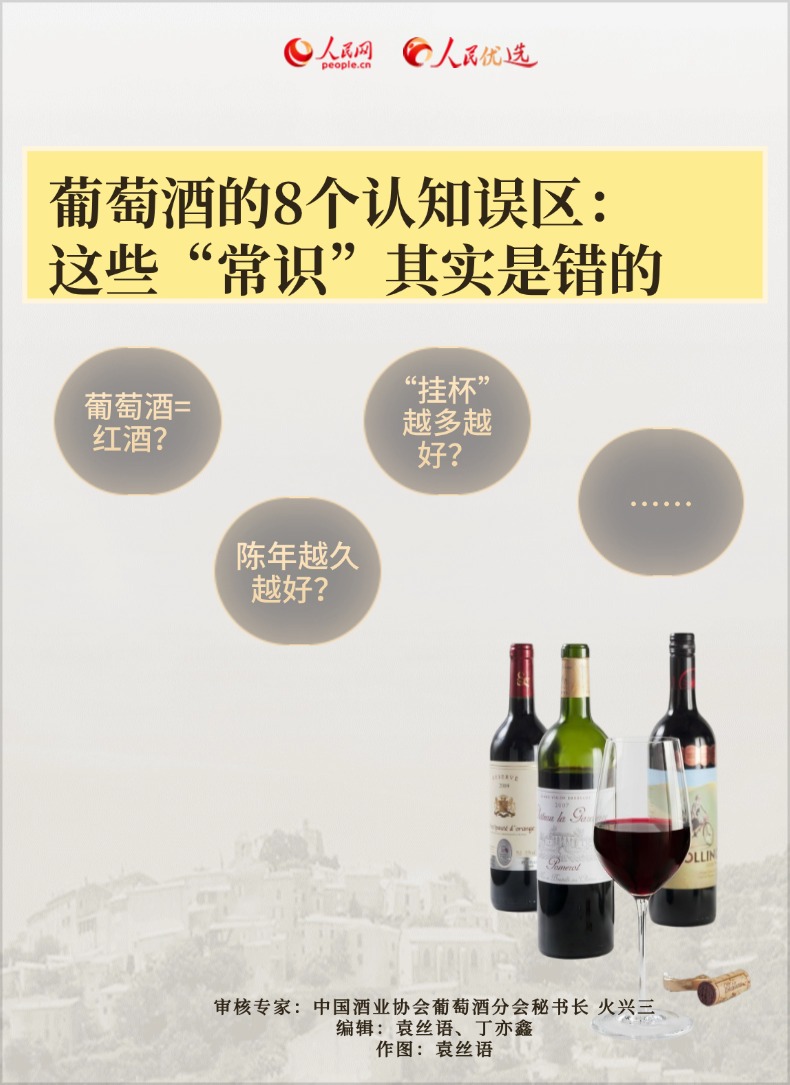
葡萄酒的8个认知误区:这些“常识”其实是错的
Ren Min Wang· 2025-08-25 06:29
Core Viewpoint - The article aims to clarify eight common misconceptions about wine, emphasizing that many widely accepted beliefs about wine may be incorrect and providing expert insights to help consumers make informed choices [1][3]. Group 1: Misconceptions about Wine Types - Misconception 1: Red wine is synonymous with wine. In reality, red wine is just one type of wine, which also includes white and rosé wines [4][5]. - Misconception 8: White wine is considered "lower-end" and suitable for beginners. Both white and red wines have unique qualities, and many white wines possess high quality and aging potential [29][30]. Group 2: Misconceptions about Wine Quality - Misconception 2: The longer wine is aged, the better its quality. Different wines have varying aging potentials, and many are best consumed within 2-5 years after production [7][9]. - Misconception 3: Higher-priced wines are always of better quality. Wine prices are influenced by various factors, and lower-priced wines can also be of excellent quality [11][13]. - Misconception 5: All red wines require long decanting. Only certain full-bodied red wines benefit from decanting, while lighter reds and most white wines do not [19][20]. Group 3: Misconceptions about Wine Characteristics - Misconception 4: More "legs" or "tears" on the glass indicate better quality. The presence of legs is related to alcohol and sugar content, not necessarily quality [15][17]. - Misconception 6: Astringency in wine indicates poor quality. Astringency is caused by tannins, which are essential for the structure of red wine and not a defect [21][23]. - Misconception 7: The date on the bottle indicates the bottling year. The year on the label refers to the grape harvest year, which is crucial for assessing wine quality based on climatic conditions [25][27].
12款天然饮料 助你喝走坏胆固醇
Bei Jing Qing Nian Bao· 2025-06-11 08:18
Core Viewpoint - Beverages play a significant role in managing health, particularly in regulating cholesterol levels, which is crucial for heart health [1] Group 1: Health Benefits of Specific Beverages - Green tea is rich in antioxidants, particularly catechins, which can lower LDL cholesterol levels and improve overall heart health [2] - Black tea contains theaflavins, which effectively reduce LDL cholesterol and improve arterial function [3] - Oat milk, rich in beta-glucans, helps lower cholesterol by binding to it in the gut [4] - Red wine, when consumed in moderation, contains resveratrol that lowers LDL cholesterol and increases HDL cholesterol [5] - Pomegranate juice is high in antioxidants and can lower LDL cholesterol while improving blood flow [6][7] - Tomato juice, rich in lycopene, can lower LDL cholesterol and enhance cardiovascular health [8] - Soy milk contains isoflavones that help reduce LDL cholesterol levels [9][10] - Cranberry juice is effective in lowering LDL cholesterol and improving vascular function [11][12] - Beetroot juice, high in nitrates, can lower LDL cholesterol and enhance blood flow [13] - Dark chocolate drinks, made from high-quality cocoa, are rich in flavonoids that lower LDL cholesterol [14] - Orange juice contains hesperidin, which can lower LDL cholesterol and improve vascular health [15] - Ginger tea has bioactive compounds that help lower LDL cholesterol and triglycerides [16]