
绿色合成氨

Search documents
三部门部署氢能综合试点应用,氢能应用领域有望全面拓展
Xinda Securities· 2026-03-22 08:31
Investment Rating - The investment rating for the environmental sector is "Positive" [2] Core Insights - The report highlights the deployment of hydrogen energy comprehensive pilot applications by three departments, indicating a broad expansion of hydrogen energy application fields [3][18] - By 2030, the average price of hydrogen for end-use is expected to drop below 25 yuan per kilogram, with a target of 10 million fuel cell vehicles in the country, doubling the number from 2025 [19][20] - The policy aims to shift hydrogen applications from solely fuel cell vehicles to a dual focus on transportation and industrial applications, promoting a comprehensive ecosystem for hydrogen energy [19] Market Performance - As of March 20, the environmental sector has declined by 5.59%, underperforming the broader market, which saw a decrease of 3.38% [3][10] - The water management sector fell by 3.06%, while the waste-to-energy sector dropped by 5.05% [3][13] Industry Dynamics - On March 20, a joint implementation plan for high-quality development of energy-saving equipment was released, focusing on enhancing the efficiency of energy-saving equipment across various sectors [32] - The report discusses the importance of "waste-free" industrial practices, emphasizing the need for standards to guide industrial parks and enterprises in reducing waste and improving resource utilization [33] Investment Recommendations - The report suggests maintaining a focus on energy-saving and environmental protection sectors, which are expected to remain in high demand [4] - Specific companies recommended for investment include Hanlan Environment, Xingrong Environment, and Hongcheng Environment, with additional attention to companies like Wangneng Environment and Junxin Co [4]
环保行业周报:三部门部署氢能综合试点应用,氢能应用领域有望全面拓展
Xinda Securities· 2026-03-22 06:24
Investment Rating - The investment rating for the environmental sector is "Positive" [2] Core Insights - The report highlights the deployment of comprehensive hydrogen energy pilot applications by three departments, indicating a broad expansion of hydrogen energy application fields [3][18] - By 2030, the average terminal hydrogen price is expected to drop below 25 yuan per kilogram, with a target of 10 million fuel cell vehicles in the country, doubling the number from 2025 [19] - The policy aims to shift hydrogen applications from solely fuel cell vehicles to a dual focus on transportation and industrial sectors, promoting a comprehensive ecosystem for hydrogen energy applications [19] Market Performance - As of March 20, the environmental sector declined by 5.59%, underperforming the broader market, which saw a 3.38% drop in the Shanghai Composite Index [3][10] - The water management sector fell by 3.06%, while the waste-to-energy sector decreased by 5.05% [3][13] Industry Dynamics - On March 20, a joint implementation plan for high-quality development of energy-saving equipment was issued, focusing on enhancing the efficiency of energy-saving equipment in key industries [32] - A seminar on "waste-free parks" and "waste-free enterprises" was held to promote resource utilization and environmental protection in industrial production [33] Investment Recommendations - The report suggests maintaining a positive outlook on energy-saving and resource recycling sectors, with specific recommendations for companies such as Huanlan Environment, Xingrong Environment, and Hongcheng Environment [4]
建筑建材行业周报:中国能建重点关注,绿色氢氨醇一体化项目落地-20260308
Western Securities· 2026-03-08 11:55
Investment Rating - The report highlights a focus on green fuel companies, particularly China Energy Construction (601868.SH) and China Energy Construction (3996.HK) [2] Core Insights - The "14th Five-Year Plan" emphasizes the dual control of carbon emissions and intensity, marking a critical period for accelerating the green transformation of the economy and society [1] - The government work report for this year includes "green fuels" for the first time, indicating a shift in focus towards hydrogen energy as a new growth point [1] - China Energy Construction has signed the world's first green ammonia ocean shipping fuel sales contract and is developing the largest green hydrogen-ammonia-methanol integrated project globally, with an annual production capacity of 800,000 tons [2] Summary by Sections Market Review - The construction index fell by 0.70% and the building materials index dropped by 4.32% during the week of March 2-6, 2026, while the Shanghai Composite Index decreased by 0.93% [10] - Year-to-date, the construction index has increased by 9.33%, ranking 11th among 30 industries, and the building materials index has risen by 17.25%, ranking 5th [10] Special Bonds and Construction Resumption - As of March 6, 2026, the newly issued local government special bonds amounted to 78.169 billion yuan, a week-on-week decrease of 38.57% [21] - Cumulatively, 902.378 billion yuan has been issued this year, a year-on-year increase of 50.46% [21] - The construction resumption rate across 10,692 sites was 23.5%, with a labor attendance rate of 29.7% and a funding availability rate of 35.5% as of March 4, 2026 [25] High-Frequency Data Tracking - The cement dispatch rate decreased by 1.24 percentage points to 14.45%, with a year-on-year decline of 15.55% [31] - The operating rate of cement mills fell by 1.94 percentage points to 14.62%, with a year-on-year decrease of 12.44% [31] Cement Industry Weekly Data - As of March 6, 2026, the national average cement price was 254.6 yuan per ton, reflecting a week-on-week decline of 0.7% and a year-on-year drop of 18.4% [40] - The clinker price remained stable week-on-week but saw a year-on-year decrease of 20.7% [45]

能源安全战略框架下的确定性环节及标的推荐
2026-03-06 02:02
Summary of Key Points from Conference Call Records Industry and Company Involvement - **Industry**: Renewable Energy, Distributed Energy, Green Hydrogen, and Power Equipment - **Companies Mentioned**: Four-way Co., Oriental Cable, Goldwind Technology, Deleja, Huadian Technology, and others Core Insights and Arguments 1. **Distributed Energy Demand**: Geopolitical conflicts have intensified the demand for distributed energy, particularly in Europe, where household storage is expected to see a resurgence similar to the high demand during the 2022 crisis. The capacity for 100Ah battery cells is currently insufficient for the first half of 2025 [1][2] 2. **Green Hydrogen Economics**: Rising oil prices enhance the economic viability of green hydrogen, with green methanol costs estimated between 2,700-4,000 RMB/ton, making it a strategic alternative to traditional fuels priced at around 4,000 RMB/ton [1][8] 3. **Infrastructure Shift**: The construction of computing infrastructure is returning to domestic markets, driving demand for integrated green electricity and computing solutions, with Four-way Co. having over five years of experience in solid-state transformer (SST) technology [1][11] 4. **Market Valuation**: Oriental Cable is projected to have a dynamic PE of approximately 20 times by 2026, significantly lower than the 30-50 times average in the grid sector, indicating a high safety margin [1][13] 5. **Wind Power Market Dynamics**: The wind power gearbox market is characterized by a duopoly between Deleja and China High-Speed Transmission, with Deleja expected to achieve over 30% growth through overseas brand certifications [1][15] 6. **Green Fuel Acceleration**: Goldwind Technology plans to gradually produce green methanol from 2025 to 2027, while Huadian Technology has secured nearly 1 billion RMB in equipment orders, establishing a leading position in the market [1][9] Additional Important Insights 1. **Short-term Demand Surge**: The short-term impact of rising natural gas prices in Europe has led to a significant increase in demand for distributed energy equipment, particularly household storage and solar storage systems [2][4] 2. **Long-term Renewable Energy Growth**: The long-term outlook suggests a shift from fossil fuels to renewable energy sources, with a focus on green fuels and space photovoltaic applications [2][3] 3. **Financial Performance Risks**: Companies with exposure to the Middle East may face delivery disruptions in 2026, but long-term demand for renewable energy is expected to drive growth [5][6] 4. **Investment Recommendations**: Key recommended stocks include Four-way Co., Oriental Cable, Keli Co., and Deleja, with a focus on their performance in 2026 [1][17] 5. **Green Methanol Production**: Goldwind Technology's green methanol projects are set to produce significant volumes by 2027, with additional projects planned in the Inner Mongolia region [9][12] This summary encapsulates the critical insights and projections from the conference call, highlighting the evolving landscape of the renewable energy sector and the strategic positioning of key companies within it.


国家能源局发布重点行业标准
中国能源报· 2026-01-07 03:27
Core Viewpoint - The National Energy Administration has released a series of key industry standards aimed at regulating energy project planning, construction, and safety management, promoting new technologies and industries, and supporting energy efficiency and carbon emission management [1]. Group 1: Comprehensive Technical Specifications - The "Guidelines for Assessing the Capacity of Distributed Power Sources Connected to the Power System" standardizes the assessment of the capacity and available capacity for distributed power sources, enhancing the acceptance and configuration capabilities of the distribution network for distributed renewable energy [2]. - A series of safety production standardization implementation specifications for power generation enterprises have been established, covering various types of power generation including hydropower, gas, coal, and solar, aimed at improving safety management levels in power generation enterprises [2]. Group 2: Important Product Standards - The "Clean Low-Carbon Hydrogen Evaluation Standard" provides a lifecycle assessment method for hydrogen products, guiding hydrogen production enterprises in accurately defining carbon footprint accounting boundaries and promoting the transition to green and clean hydrogen production processes [5]. - The standards for "Green Ammonia" and "Green Methanol" aim to fill gaps in product evaluation and promote the green low-carbon transformation of the ammonia and methanol industries, supporting carbon trading market development [7][8]. Group 3: New Technologies, Industries, and Business Models - The "General Technical Conditions for Photovoltaic Power Plant Inspection Robots" standardizes the technical requirements and testing methods for inspection robots, enhancing the intelligent operation and maintenance of photovoltaic power plants [9]. - The "Deep Peak Regulation Capability Assessment Guidelines for Coal-Fired Power Generation Units" provide a framework for evaluating the peak regulation capabilities of coal-fired power plants, supporting the integration of renewable energy [11]. Group 4: Energy Efficiency and Carbon Emission Management Standards - The "Quantification Methods and Evaluation Standards for Carbon Emissions of Wind Power Projects" and "Photovoltaic Power Projects" establish guidelines for assessing the carbon emissions throughout the lifecycle of these projects, aiding in low-carbon management and industry development [12][13].

国家能源局发布《分布式电源接入电力系统承载力评估导则》等重点行业标准
国家能源局· 2026-01-06 10:00
Core Viewpoint - The article discusses the recent announcement by the National Energy Administration regarding the issuance of key industry standards aimed at regulating energy project planning, construction, and safety management, as well as promoting new technologies and industries to support energy efficiency and carbon emission management [2] Group 1: Comprehensive Technical Specifications - The guideline for assessing the carrying capacity of distributed power sources connected to the power system is established, which aims to enhance the evaluation of distributed renewable energy integration and improve the capacity of the distribution network [3] - A series of safety production standardization implementation specifications for power generation enterprises have been released, covering various types of power generation including hydropower, gas, coal, photovoltaic, and wind power, to strengthen safety management and supervision [4][5] - The operational and maintenance regulations for special transmission channels have been defined, focusing on improving the efficiency and safety of large power grid operations [6] - Standards for the construction of basic geographic information databases for power engineering have been established to support the digitalization of power engineering [7][8] - The continuous mining machine excavation and mining technical specifications have been introduced to promote safe and efficient mining practices in coal enterprises [9][10] Group 2: Important Product Standards - The clean low-carbon hydrogen evaluation standard has been set to guide hydrogen production companies in accurately defining carbon footprint accounting boundaries and methods, promoting a shift towards greener hydrogen production processes [11] - A standard for evaluating green ammonia products has been established, filling a gap in the evaluation of green ammonia and supporting the industry's low-carbon transition [12] - The green methanol product evaluation standard has been introduced to regulate the technical requirements for green methanol, aiding in the industry's transition to low-carbon practices [13] - The B24 heavy marine fuel oil standard has been defined to support the production and sales of bio-marine fuels, guiding the industry's green transformation [14][15] Group 3: New Technologies, Industries, and Business Models - General technical conditions for photovoltaic power station inspection robots have been established, which will enhance the intelligent operation and maintenance of photovoltaic power stations [17] - Guidelines for assessing the deep peak-shaving capacity of coal-fired power units have been introduced, aimed at improving the utilization of renewable energy and reducing waste [18][19] - Design regulations for gas-insulated metal-enclosed transmission lines have been set to provide technical basis and standardize requirements for engineering applications [20][21] Group 4: Energy Efficiency and Carbon Emission Management Standards - The carbon emission quantification method and evaluation standard for wind power projects throughout their lifecycle have been established, providing a technical basis for accurate carbon accounting [22][23] - The carbon emission quantification method and evaluation standard for photovoltaic power projects have been defined, supporting low-carbon management in the industry [24][25] - The energy consumption status evaluation technical specification for coal-fired power plants has been introduced, aimed at optimizing energy consumption levels and supporting environmental upgrades [26][27]
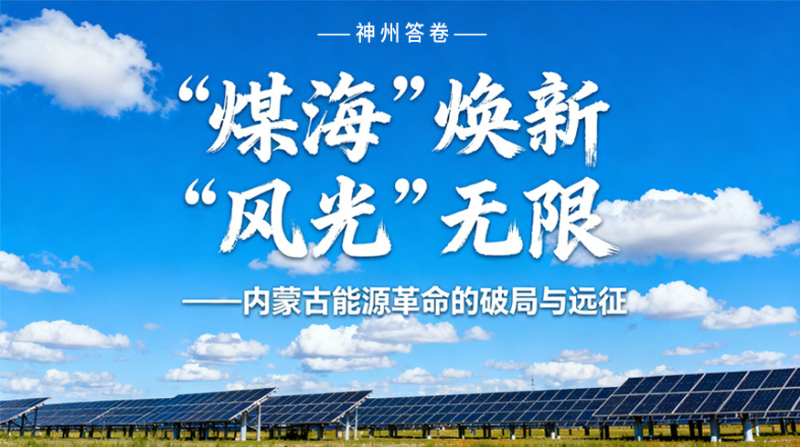
"煤海"焕新 "风光"无限--内蒙古能源革命的破局与远征
Xin Hua Wang· 2025-11-20 12:05
Core Insights - Inner Mongolia is undergoing a significant transformation in its energy sector, leveraging its abundant coal, wind, and solar resources to drive a comprehensive energy revolution [1][7][8] Traditional Energy Industry Transformation - Inner Mongolia is developing a modern coal chemical industry that converts coal into various chemical products, with a projected local conversion utilization scale exceeding 100 million tons by 2024 [1][3] - The Guoneng Baotou Coal Chemical Company operates the world's first coal-to-olefins demonstration facility, converting 3 million tons of coal into 1.8 million tons of methanol and 600,000 tons of polyethylene annually, generating approximately 6 billion yuan in revenue [3] New Energy Industry Development - Inner Mongolia has become the first province in China to exceed 100 million kilowatts of installed renewable energy capacity, with a total of 150 million kilowatts, surpassing thermal power installations [8] - The region is actively constructing large-scale wind and solar energy projects, transforming desert areas into significant renewable energy bases [13][15] Future Energy Industry Initiatives - The region has launched the largest green hydrogen project in China, producing 320,000 tons of green ammonia annually, marking a shift towards large-scale commercial operations in the green hydrogen sector [16][18] - Inner Mongolia is developing a comprehensive green hydrogen industry, including the establishment of hydrogen corridors and pipelines, aiming to become a national leader in green hydrogen production and applications [18] New Energy Storage Development - Inner Mongolia is initiating multiple new energy storage projects, with a total of 34 projects started in the first half of the year, aiming for a storage capacity of 10.32 million kilowatts by the end of 2024 [20][21] - The region is focusing on new energy storage as a stabilizing and regulating component of the power system, essential for integrating renewable energy into the grid [21] Electricity Market Reform - Inner Mongolia is leading in green electricity trading, with a total of 76.2 billion kilowatt-hours traded in 2024, and is establishing cooperative relationships for green electricity trading with several provinces [23] - The region is committed to enhancing its energy industry advantages to ensure national energy security and contribute to China's modernization efforts [23]

神州答卷|“煤海”焕新 “风光”无限——内蒙古能源革命的破局与远征
Xin Hua Wang· 2025-11-20 01:45
Core Insights - Inner Mongolia is undergoing a significant energy transformation, leveraging its abundant coal, wind, and solar resources to drive a comprehensive energy revolution [2][10]. Traditional Energy Industry - Inner Mongolia is developing a modern coal chemical industry, transforming coal into high-value products like polyethylene and polypropylene, with a projected conversion scale exceeding 100 million tons by 2024 [3][5]. - The coal-to-olefins demonstration facility in Baotou processes 3 million tons of coal annually to produce 600,000 tons of methanol and generates approximately 6 billion yuan in annual revenue [5]. New Energy Industry - Inner Mongolia has become the first region in China to exceed 100 million kilowatts of installed renewable energy capacity, with current installations reaching 150 million kilowatts, surpassing thermal power capacity [11]. - The region is developing a complete photovoltaic industry chain, producing high-purity polysilicon and solar panels, with innovative processes reducing energy consumption and costs [13][16]. Future Energy Industry - The launch of the largest green ammonia project in China marks a significant step in the green hydrogen and ammonia industry, with an annual production capacity of 320,000 tons [19][21]. - Inner Mongolia is planning to establish a green hydrogen corridor and hydrogen pipeline network, aiming to become a national leader in green hydrogen production and applications [21]. New Energy Storage - A series of new energy storage projects are underway, with a target of reaching 10.32 million kilowatts of installed capacity by the end of 2024, and projections of over 16 million kilowatts by 2025 [23]. - The region is actively reforming its electricity market, leading the nation in green electricity trading volumes, with 76.2 billion kilowatt-hours settled in 2024 [24].
股市必读:中国能建(601868)11月7日主力资金净流出8520.08万元,占总成交额11.94%
Sou Hu Cai Jing· 2025-11-09 16:40
Core Viewpoint - China Energy Construction Corporation (China Energy) is actively developing the world's largest green hydrogen and ammonia integrated project, with significant government support and a robust investment strategy [1][2]. Trading Information Summary - On November 7, 2025, China Energy's stock closed at 2.46 yuan, with a turnover rate of 0.89% and a trading volume of 2.9019 million shares, amounting to a total transaction value of 713 million yuan [1]. - The net outflow of main funds was 85.2008 million yuan, accounting for 11.94% of the total transaction value, while retail investors saw a net inflow of 69.5087 million yuan, representing 9.74% of the total transaction value [2]. Company Announcement Summary - The Songyuan Hydrogen Energy Project, with a total investment of 29.6 billion yuan, is designed to produce 800,000 tons of green synthetic ammonia and green methanol annually, supported by multiple policies from the National Development and Reform Commission and the National Energy Administration [1][2]. - The project will utilize advanced technologies such as "green electricity direct supply" and "load-following source movement" to efficiently match renewable energy with chemical loads, with an internal rate of return of no less than 7.02% and an investment payback period of approximately 14 years [1].
中国能源建设股份有限公司关于接待机构投资者调研活动的公告
Shang Hai Zheng Quan Bao· 2025-11-06 18:44
Core Viewpoint - China Energy Construction Corporation is actively engaging with institutional investors regarding its major project, the Songyuan Hydrogen Energy Industrial Park, which is positioned as the world's largest integrated green hydrogen and ammonia project [2][3]. Group 1: Project Overview - The Songyuan Hydrogen Energy Industrial Park project has a total investment of 29.6 billion yuan and aims to construct 3 million kilowatts of renewable energy generation capacity, with an annual production capacity of 800,000 tons of green synthetic ammonia and green methanol [3]. - The first phase of the project commenced construction in September 2023, with plans to be operational by the end of 2025 [3]. Group 2: Policy Support - The project has been selected as a pilot for several national initiatives, including the first batch of green low-carbon advanced technology demonstrations by the National Development and Reform Commission and the first batch of green liquid fuel technology research and industrialization pilots by the National Energy Administration [4]. Group 3: Technological Innovations - The project employs innovative technologies, including the domestically first "green electricity direct supply chemical" technology and the "load-following" operational model, addressing the challenges of renewable energy fluctuations and chemical stability requirements [5]. - It has achieved four "world's best" and four "international leading" technological milestones, including being the largest integrated green hydrogen and ammonia project globally and the most flexible synthetic ammonia process [5]. Group 4: Financial Viability - The first phase of the Songyuan Hydrogen Energy project has a total investment of 6.9 billion yuan, with an internal rate of return on equity of no less than 7.02% and an overall investment payback period of approximately 14 years [7]. Group 5: Cost Control Advantages - The project benefits from three main cost control advantages: abundant wind and solar resources in the Songyuan area, favorable geographical conditions, and advanced technology that enhances energy efficiency, bringing green ammonia costs close to blue ammonia levels [8]. Group 6: Market Strategy - The company employs a "certification first, long-term contract locking" strategy to ensure market absorption of products, having obtained clean hydrogen certifications from several national governments and being shortlisted by multiple power generation companies [9]. Group 7: Future Project Pipeline - The company has a robust project pipeline, including the operational Lanzhou New Area Hydrogen Energy Industrial Park, the under-construction Shijiazhuang Luquan Hydrogen Energy project, and several other key projects in various stages of development [9]. Group 8: Strategic Vision - The company has established a comprehensive strategy for the hydrogen energy industry, focusing on the entire value chain from production to storage, transportation, and application, aiming to become a leading provider of integrated solutions in the green hydrogen sector [10]. Group 9: Innovation Achievements - The company has made significant innovations in the hydrogen energy field, applying for 65 core patents and establishing a leading domestic water electrolysis hydrogen production technology [11]. Group 10: Development Goals - During the 14th Five-Year Plan period, the company aims to transition from a traditional energy engineering firm to an integrated energy solution provider, focusing on new energy systems and hydrogen energy applications [13].