美国证券

Search documents
中美关系出现惊人的“缓和”,中国政府持续增持美元与外国证券?
Sou Hu Cai Jing· 2026-02-27 06:41
Group 1 - China is rapidly increasing its purchase of US dollars and foreign securities, which has become a focal point in the global foreign exchange and capital markets [1][3] - In December of the previous year, Chinese state banks and the central bank collectively bought over $100 billion in foreign exchange, a significant scale [1][10] - The trend of increasing purchases continued into January, indicating a strategic approach to diversify foreign exchange reserves and stabilize the RMB [3][10] Group 2 - The RMB has appreciated by over 2.4% this year, reflecting a strong upward trend in the currency [5] - As of January 2026, China's foreign exchange reserves reached a peak of $33,991 billion, the highest in nearly a decade, maintaining above the 3.3 trillion yuan mark for six consecutive months [12][26] - The increase in foreign securities investment has been notable, rising from $1.41 trillion at the end of 2024 to $1.95 trillion by September 2025, with US securities holdings exceeding $331.6 billion [14][16] Group 3 - China's strategy involves a dual approach of increasing US securities while simultaneously accumulating gold, indicating a defensive diversification logic [21][23] - The recent economic data shows a rebound in large enterprise PMI and a significant increase in consumer spending during the Spring Festival, contributing to foreign capital's reverse settlement [25][23] - The flexibility in China's financial management reflects a shift from passive responses to proactive hedging and dual profit strategies, marking a significant evolution in national financial management [26][28]

27.6万亿美元失衡头寸暗藏杀机!全球资金“抛售美国”可行性几何?
Jin Shi Shu Ju· 2026-01-23 08:18
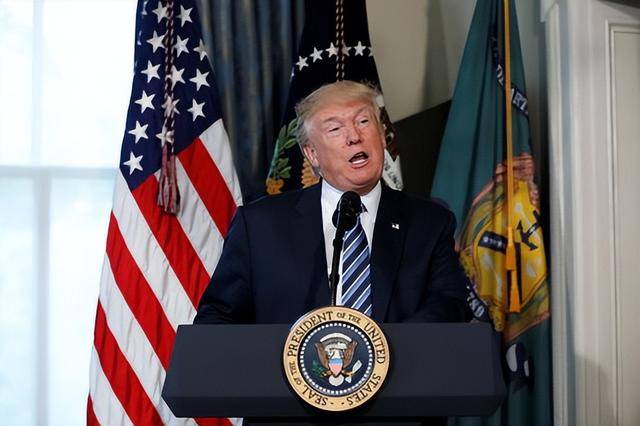
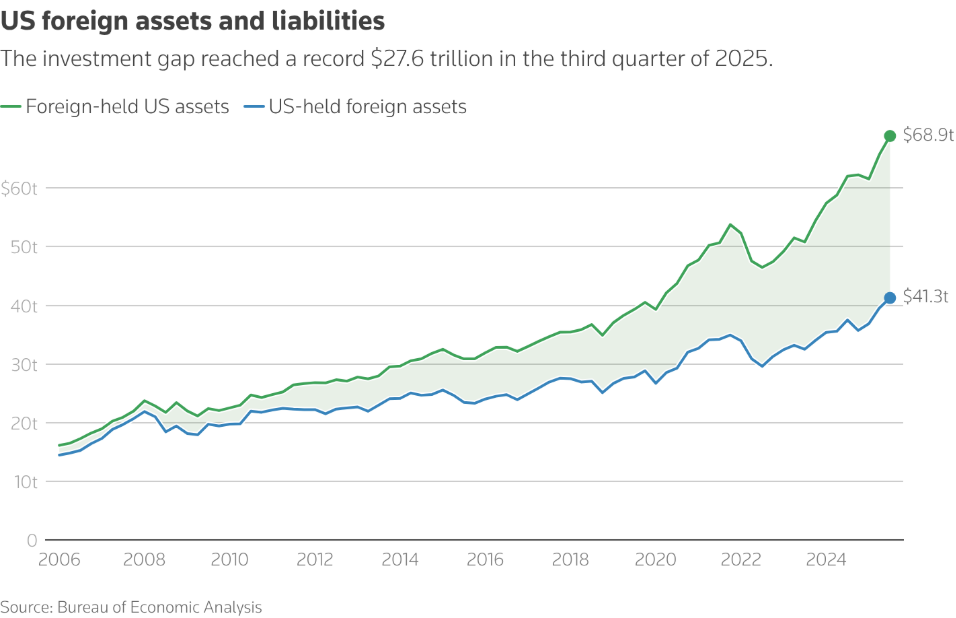
Core Viewpoint - The discussion around "selling off America" has resurfaced, despite a temporary easing due to potential agreements related to Greenland by President Trump. However, concerns about a significant reduction in exposure to U.S. assets remain prevalent [1]. Group 1: Market Sentiment and Investment Trends - Last year, the term "de-dollarization" gained popularity amid fears stemming from Trump's trade war, leading investors to consider reducing their exposure to U.S. assets. Ultimately, this concern did not materialize, as overseas investors net purchased $1.27 trillion in U.S. securities in the first 11 months of the year, largely driven by private investments attracted by the AI boom [1][5]. - The current net international investment position (NIIP) of the U.S. stands at approximately $27.6 trillion, indicating a significant net long position in U.S. assets globally. This figure reflects a disparity between $68.9 trillion in U.S. assets held by foreign investors and $41.3 trillion in foreign assets held by U.S. investors [5][6]. Group 2: Geopolitical Implications and Asset Allocation - Trump's controversial policies have disrupted the longstanding U.S.-Europe alliance and the rules-based global order, reigniting discussions about shorting U.S. assets. The core question now is whether global investors will maintain their high positions in U.S. assets or begin reallocating their investments [5][6]. - Some Nordic pension funds have indicated plans to reduce their holdings in U.S. bonds, but their impact on the market is expected to be minimal due to their relatively small size [6]. - The concept of "mutually assured destruction" in finance has resurfaced, reflecting concerns that if major economies like Europe begin to sell off U.S. debt, it could lead to increased yields and negatively impact the U.S. economy. However, historical trends show that reductions in U.S. debt holdings by countries like China have not led to significant market turmoil, as demand from European countries has filled the gap [6][7]. Group 3: Economic Fundamentals and Capital Flows - The U.S. continues to face a substantial current account deficit, requiring over $1 trillion in net capital inflows annually to support its economy. Although the current account deficit has narrowed recently, the sustainability of last year's capital inflows remains uncertain [8]. - In the first 11 months of last year, overseas investors net purchased $1.27 trillion in U.S. securities, with $663 billion attributed to equities, marking a more than twofold increase compared to the same period in 2024 [8]. - The challenge now lies not only in convincing investors to hold U.S. assets but also in persuading them to increase their holdings amid geopolitical tensions and shifting global dynamics [8].
全球资金重仓美国 “卖出美国”交易可行性几何?
智通财经网· 2026-01-22 15:48
Core Viewpoint - The discussion around "selling America" has intensified, with analysts believing that the theme will not disappear despite temporary market calm following news of a potential agreement regarding Greenland by President Trump [1] Group 1: Market Sentiment and Investment Trends - Last year, concerns about "de-dollarization" arose, fearing that Trump's tariff-centric trade policies would lead global investors to significantly reduce their allocation to U.S. assets. However, overseas investors net purchased U.S. securities worth $1.27 trillion in the first 11 months of last year, largely driven by the AI boom [1] - As of now, overseas investors hold approximately $68.9 trillion in U.S. assets, while the U.S. holds about $41.3 trillion in foreign assets, resulting in a net international investment position of approximately $27.6 trillion, a historical high both in nominal terms and as a percentage of GDP (over 90%) [1] Group 2: Investor Behavior and Adjustments - There is a perception among investors that the highly concentrated allocation in U.S. assets, particularly in equities, poses a risk, especially in light of Trump's policies causing unease in Europe [2] - Short-term large-scale withdrawal from U.S. assets is considered unlikely, with some Nordic pension funds signaling adjustments, but their impact is deemed limited [3] - Historical trends suggest that even if overseas investors gradually adjust their U.S. Treasury holdings, it may not lead to significant market turmoil, as demand shifts can mitigate the impact of reductions from a single region [3] Group 3: Risks and Capital Flows - The real risk may not stem from large-scale capital outflows but rather from a slowdown in the inflow of overseas funds, which could depress U.S. asset prices and undermine the narrative of "American exceptionalism" [4] - The U.S. continues to face a substantial current account deficit, requiring over $1 trillion in net capital inflows annually to compensate. In the first 11 months of last year, overseas investors net purchased $1.27 trillion in U.S. securities, with stock investments reaching $663 billion, significantly higher than previous levels [4] - European funds remain a crucial support for U.S. Treasuries, accounting for about 80% of foreign purchases from April to November last year [5] Group 4: Gradual Rebalancing - There are signs of localized adjustments, with some Swedish and Danish pension funds reducing their U.S. Treasury holdings. However, analysts suggest that a gradual rebalancing is more likely than an aggressive "sell America" approach [5] - Despite ongoing discussions about "selling America," there have been no clear signs of large-scale asset sales by European investors to date [5]
1.4万亿美金见证历史!专家揭秘:为什么全球资本永远逃不出美国
Sou Hu Cai Jing· 2025-11-09 09:59
Core Insights - The U.S. market continues to attract global capital despite external challenges, with foreign investors net buying U.S. securities reaching a historic high of $311.1 billion in May 2025, significantly up from $14.2 billion in April [1][5][15] - Over the past 12 months, net foreign capital inflow approached $1.76 trillion, nearing the peak of $1.4 trillion observed in July 2023, indicating a strong reliance on U.S. markets [3][11][15] - The resilience of foreign investors mirrors that of U.S. consumers, showcasing a robust confidence in the U.S. economy despite trade tensions and market volatility [3][11][17] Foreign Investment Trends - In 2024, foreign direct investment in the U.S. increased by $332.1 billion, bringing the total stock to $5.71 trillion, primarily driven by the manufacturing and financial sectors [5][15] - Despite tariff policies causing initial market disruptions, net capital inflow remained strong, with foreign holdings of U.S. securities rebounding to $26.9 trillion by 2024, an increase of $2 trillion from June 2023 [5][11] - By June 2024, foreign holdings of U.S. securities reached $31.288 trillion, with equities accounting for $16.988 trillion, indicating continued confidence in U.S. assets [5][11] Market Resilience and Investor Behavior - The U.S. market's depth and liquidity make it an attractive destination for global investors, who are willing to endure volatility in exchange for stable returns [5][11][15] - Analysts suggest that the high threshold for capital flight from the U.S. indicates a strong foundational economy, with data showing that even amidst tariff threats, investors have not significantly divested from U.S. stocks and bonds [3][11][15] - The overall market resilience is reflected in the quick recovery of indices following initial declines due to tariff announcements, reinforcing the notion that the U.S. remains a safe haven for investment [11][13][15] Expert Opinions - Experts like Robin Brooks argue that predictions of the end of the "American exceptionalism" narrative are premature, as evidenced by the strong capital inflow data [3][11][17] - Concerns about brand damage due to trade wars have not deterred capital from flowing into the U.S., with many analysts affirming the enduring appeal of U.S. assets [7][11][17] - The consensus among experts is that the U.S. continues to provide a stable investment environment that is unmatched by other markets, solidifying its position as a primary destination for global capital [11][17]