美妆产品等

Search documents
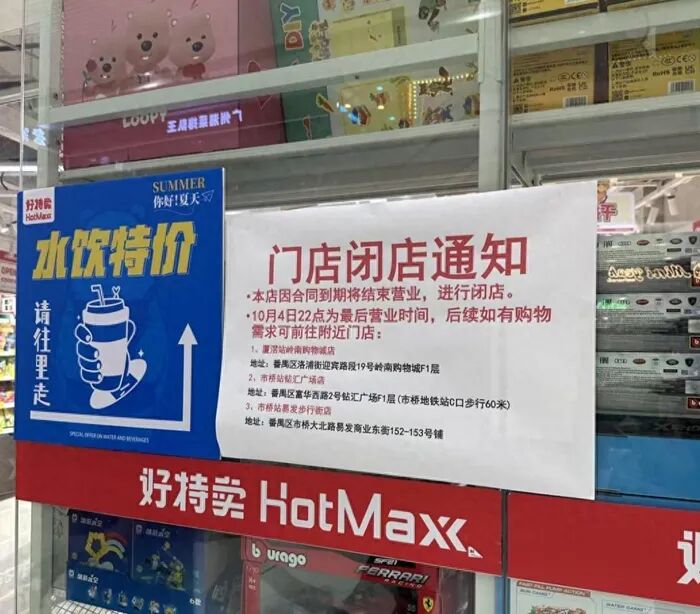
4年时间门店从0增至960家,全国开店的零食品牌,如今陷入闭店争议!官方回应:主动放缓是策略,不是叫停加盟
Mei Ri Jing Ji Xin Wen· 2025-12-28 15:47
Core Viewpoint - The discount retail chain Haotemai is facing store closures in multiple cities, with new franchise opportunities being halted in some areas, indicating a significant slowdown in its expansion plans [1][2]. Group 1: Store Closures and Franchise Halts - Consumers have reported that Haotemai is closing stores in major cities such as Guangzhou, Changsha, Hangzhou, and Beijing, with a notable reduction in new store openings planned for 2025 [1]. - Haotemai claims that the closures are a normal operational choice by franchisees or direct stores, with an overall closure rate of less than 5% for the year [2]. - Internal sources indicate that closures are primarily due to issues like high rental costs, lease expirations, and poor performance of certain stores [2]. Group 2: Company Background and Expansion - Established in 2020, Haotemai has rapidly expanded, opening nearly 1,000 stores within four years and securing five rounds of financing from various investors [3]. - By April 2023, Haotemai had over 500 stores across 32 cities and aimed to add approximately 50 new stores monthly, targeting 100 cities by the end of the year [7]. - As of December 18, 2025, the number of Haotemai stores is approximately 954, indicating a significant slowdown in growth [7]. Group 3: Competitive Landscape and Pricing Issues - The discount snack market has become increasingly competitive, with major players like Meituan, JD.com, and Hema entering the space, putting pressure on Haotemai's market position [7]. - Many of Haotemai's snack prices are reported to be similar to those in regular supermarkets, diminishing its competitive edge [8]. - Consumer complaints regarding product quality have surfaced, with reports of expired or spoiled items being a significant concern [10]. Group 4: Product Diversification and New Ventures - In response to competition, Haotemai has increased its beauty product offerings, with the SKU proportion rising from 10% to 14% and revenue share from 11% to 15% between 2020 and 2024 [14]. - Haotemai has also ventured into the warehouse discount sector, opening its first super warehouse in Nanjing in November 2024, expanding its product range to include clothing, beauty, and luxury items [16].

Revolve Group (NYSE:RVLV) 2025 Conference Transcript
2025-12-03 17:47
Revolve Group (NYSE: RVLV) 2025 Conference Summary Company Overview - **Company**: Revolve Group - **Business Model**: Founder-led and data-driven fashion retailer targeting next-generation consumers with a focus on social media platforms like Instagram and TikTok [7][8] Key Points Business Strategy and Differentiation - **Founder Ownership**: Co-founders Mike and Michael own approximately 44% of the business, fostering a long-term growth mindset [7] - **Data-Driven Approach**: The company utilizes data for inventory management, marketing, and overall decision-making, which has been integral since inception [8] - **Consistent Growth**: Revolve has demonstrated profitable growth over the past 20 years, positioning itself as a leader in the fashion e-commerce space [8] Consumer Landscape - **Consumer Resilience**: Despite economic challenges, consumer spending remains resilient, particularly among higher-income brackets [10] - **Q4 Performance**: October sales showed mid-single-digit growth, translating to a 16%-18% increase over two years, indicating a recovery towards double-digit growth [12] Revenue and Growth Strategies - **Revenue Deceleration**: Q3 saw a 4% year-over-year growth, attributed to tough comparisons and strategic promotional cuts that improved gross margins by 350 basis points [13][14] - **Future Growth Initiatives**: New brand launches, including Sofia Richie Grainge and Halo, are expected to drive revenue growth in 2026 [15] Owned Brands Performance - **Increase in Owned Brand Revenue**: Owned brands accounted for 18% of revenue in 2024, up from 36% in 2019, with expectations for continued growth [18] - **International Launches**: Successful exclusive owned brand launches in Mainland China, with net sales growth exceeding 50% year-on-year [21] AI and Technology Integration - **AI Utilization**: Revolve is leveraging AI for personalized customer experiences, inventory management, and operational efficiencies [24][26] - **Agentic Commerce**: The company is exploring agentic AI features, with a significant increase in AI referrals to the site [30] Physical Retail Expansion - **Physical Store Strategy**: Revolve is expanding into physical retail, with successful performance metrics from its Aspen store and plans for a new location at The Grove in LA [34][36] - **Market Testing**: The company is gathering data from its physical locations to inform future expansion strategies [36] Financial Performance and Projections - **EBITDA Margin Goals**: Targeting a return to double-digit EBITDA margins, with a goal of reaching 55% gross margin through owned brand expansion and tariff mitigation strategies [38][39] - **Marketing Efficiency**: The marketing strategy is evolving, with a focus on digital performance and brand marketing, aiming for increased efficiency and effectiveness [49][50] Tariff Impact and Pricing Strategy - **Tariff Mitigation**: The company has successfully mitigated most of the tariff impacts, with price increases in the mid-single digits expected to continue into 2026 [47][54] - **Demand Elasticity**: So far, price increases have not significantly affected demand, indicating a unique product offering that maintains customer interest [55] Investor Insights - **Underappreciated Aspects**: The founder-led nature of the business and its data-driven culture are key differentiators that may not be fully recognized by investors [63] Conclusion Revolve Group is strategically positioned for growth through its unique business model, data-driven approach, and expansion into both owned brands and physical retail. The company is navigating current economic challenges while maintaining a focus on profitability and customer engagement.

中金11月数说资产
中金· 2025-11-16 15:36
Investment Rating - The report suggests maintaining a high position in the market and focusing on specific sectors such as overseas expansion and Bay Area-related fields, including power grids, engineering machinery, innovative pharmaceuticals, home appliances, and non-ferrous metals [1][9]. Core Insights - Economic data for October shows a general slowdown in industrial, consumption, and investment growth, with retail sales related to trade-in programs declining by 2.2% and fixed asset investment down 1.7% year-on-year [1][2]. - CPI turned positive at 0.2% in October, while PPI narrowed to -2.1%. Expectations for 2026 indicate a potential rise in CPI to 0.5% and PPI to -1, which may benefit value-style sectors related to price increases [1][6]. - The financial data indicates a decline in social financing, credit, and M1, M2 growth rates, reflecting weak demand in the real economy, but a trend of deposit activation continues [1][13]. Economic Performance - Industrial value-added and service production indices decreased to 4.9% and 4.6%, respectively, while social retail sales growth fell from 3.0% to 2.9% [2]. - Fixed asset investment from January to October saw a cumulative year-on-year decline of 1.7%, with real estate investment showing a significant drop [5]. Sector Analysis - Most industries experienced a slowdown, with only a few, such as utilities and automotive, showing growth. The energy and metals sectors are under scrutiny, with oil processing remaining high and expected Brent crude oil prices around $65 per barrel in Q4 [3][11]. - The consumer sector is facing challenges, particularly in home appliances and automotive, with declines between 7% and 15% [4]. Market Strategy - The current market shows a divergence in performance, with a recommendation to maintain a balanced investment strategy focusing on sectors like batteries, chemicals, and aquaculture, while being cautious of market volatility [9][10]. - The bond market is expected to benefit from a weakening economy, with predictions of accelerated monetary easing towards the end of the year [10]. Future Outlook - The report anticipates that demand will remain weak in 2026, necessitating further policy support to stimulate effective demand and reduce ineffective supply [7][8]. - The light industry and beauty sector are expected to require policy stimulation, with a focus on solid growth segments like trendy toys and beauty products [17][20].
直通进博会 | 用创新生态重塑外资“吸引力法则” 进博会上“临港热”持续升温
Xin Hua Cai Jing· 2025-11-08 14:55
Core Insights - The eighth China International Import Expo (CIIE) has led to a surge in foreign investment projects in the Lingang New Area, showcasing the area's strong market appeal and unique advantages [1][5][6] Group 1: Foreign Investment Trends - A wave of foreign investment agreements has been signed in the Lingang area, including partnerships with companies like Anton Paar and APR Group, indicating a robust interest from high-tech and consumer sectors [2][3] - The beauty brand MISTINE's parent company, Baitwei, has chosen to establish a significant presence in the area, highlighting the success of new consumer enterprises in the Chinese market [2] - New players like Singapore's Kogoport have also committed to the Lingang area, enhancing their capabilities in global trade through digital solutions [2] Group 2: Institutional Innovations - The establishment of a dual-signing agreement by the U.S. startup Boweisen Technology during the expo reflects the Lingang area's innovative institutional framework, facilitating rapid growth and development for tech companies [3] - Boweisen Technology aims to expand its R&D headquarters and production base in Lingang, demonstrating the area's capacity for nurturing startups and accelerating their path to market [3] Group 3: Japanese Investment Attraction - The Japan SME Industrial Park, created in collaboration with Mizuho Bank, has successfully attracted numerous Japanese enterprises, showcasing Lingang's appeal to foreign businesses [4] - The park has established a service alliance with various Japanese service providers, enhancing its support for Japanese SMEs entering the Chinese market [4] Group 4: Competitive Advantages - Lingang's appeal to foreign enterprises is attributed to three core advantages: its strategic location as a global logistics hub, a diverse industrial ecosystem, and a business-friendly regulatory environment [5] - The area is positioned as a vital link between Shanghai, China, and the global market, fostering a dynamic environment for mutual benefits between domestic and foreign companies [6]

流量见顶时代的低成本增长引擎:“推三返一”裂变模式深度解析
Sou Hu Cai Jing· 2025-10-18 03:33
Core Insights - The "Push Three Return One" social裂变模式 is a key path for small and micro enterprises to break through, leveraging low participation thresholds, efficient dissemination, and low customer acquisition costs [1][3][12] - This model transforms consumers into dual-role value nodes through a "consumption equals promotion" mechanism, enabling exponential growth through user-driven dissemination [1][3] Fundamental Breakthrough - Unlike traditional "recommendation cashback" promotions, the "Push Three Return One" model establishes a sustainable裂变 ecosystem based on "consume first, rebate later" [3] - The model employs a tiered profit-sharing mechanism (e.g., 10%-20%-70% rebates) to create a positive incentive loop, allowing for geometric裂变 growth without active user acquisition by the enterprise [3] Strategic Innovation - The model offers three adaptable strategies for various business scenarios, allowing customization based on product price, industry characteristics, and operational goals [5] - Basic plans focus on activating general users with differentiated tiered rebate designs, while advanced plans introduce a ranking system to incentivize core users to form promotion teams [7] - Flexible plans can be adjusted during peak sales periods to enhance裂变 speed, such as increasing rebate percentages during major shopping events [7] Scenario Validation - The model has shown significant裂变 efficiency and performance growth in three key areas: online private domain, offline community, and vertical fields [9] - For instance, a beauty brand increased its private domain user count from 5,000 to 20,000 in 30 days, with a 33% rise in repurchase rate [10] Value Breakthrough - Compared to traditional marketing models, this approach achieves breakthroughs in four dimensions: cost, speed, stickiness, and efficiency [12] - Customer acquisition costs drop from 150 yuan to under 25 yuan, while user sharing rates increase from 15% to over 60% [12] Implementation Support - Effective implementation requires three system functionalities: automated commission settlement, real-time data dashboards, and flexible rule configuration engines [16] - Companies lacking technical capabilities can utilize third-party SaaS services to quickly establish systems for model design and implementation guidance [16] Conclusion - The "Push Three Return One" model creates a win-win ecosystem for users and enterprises, enabling low-cost, sustainable user裂变 and performance growth, particularly suitable for small and micro enterprises facing traffic shortages [18]

Jumia(JMIA) - 2024 Q4 - Earnings Call Transcript
2025-02-20 16:04
Financial Data and Key Metrics Changes - In Q4 2024, revenue was $45.7 million, down 23% year-over-year and down 2% on a constant-currency basis [30][31] - Adjusted EBITDA was negative $13.7 million for Q4 2024, compared to negative $0.6 million in Q4 2023 [15][39] - Cash burn for the quarter was $30.6 million, compared to $26.8 million in Q4 2023 [16] - The company ended 2024 with a liquidity position of $133.9 million, including $55.4 million in cash and cash equivalents [45] Business Line Data and Key Metrics Changes - Core marketplace business accelerated in Q4 2024, with physical goods orders growing by 18% year-over-year [9] - Marketplace revenue for Q4 was $22.8 million, down 31% year-over-year [32] - Revenue from first-party sales was $22.5 million in Q4, down 14% but up 8% on a constant-currency basis [33] Market Data and Key Metrics Changes - GMV declined 12% in USD but grew 13% year-over-year in constant currency [13] - Average order value for physical goods orders decreased from $45.5 in Q4 2023 to $35.5 in Q4 2024 [14] Company Strategy and Development Direction - The company is focusing on upcountry expansion and product assortment expansion to drive growth [19][21] - Jumia aims to improve operational efficiencies and achieve profitability by enhancing customer and seller experiences [24][27] - The company plans to leverage its logistics network and partnerships to reduce fulfillment costs [20] Management's Comments on Operating Environment and Future Outlook - Management noted macro headwinds affecting performance but expressed confidence in the company's growth trajectory [13][28] - For 2025, the company anticipates physical goods orders to grow between 15% and 20% year-over-year [50] - GMV is projected to be between $795 million and $830 million in 2025, reflecting a year-over-year increase of 10% to 15% [51] Other Important Information - The company streamlined operations by exiting non-strategic markets, consolidating warehouse footprints, and improving logistics capabilities [8][19] - The Net Promoter Score rose to 63 in Q4 2024, indicating improved customer satisfaction [12] Q&A Session Summary Question: What trends are being observed in Q1? - Management noted continued progress on order growth and usage, leading to confidence in the guidance of 15% to 20% growth year-over-year [54] Question: Is there anything preventing the company from increasing selection? - Management indicated that the challenge is more on the supply side than demand, focusing on increasing supply and improving value for money [57] Question: Can you elaborate on the mix between first-party and third-party sales? - Management acknowledged a decline in corporate sales affecting first-party sales and emphasized a pragmatic approach to the mix [62] Question: What is behind the physical order growth? - Growth is driven by country expansion, better assortment, and improved customer experience [66] Question: What efficiencies have been gained from consolidating the warehouse footprint? - Consolidation has led to better control over efficiency, staff productivity, and fulfillment costs [74] Question: What is the current fixed cost base as 2025 begins? - Management indicated that while costs have been reduced, there is potential for another 20% efficiency improvement [78] Question: How does the balance sheet look in terms of inventory strategy? - Management confirmed that working capital was increased to support better supply and vendor relationships, with expectations for moderation in future quarters [90]