
新型烟草

Search documents
思摩尔国际:业务多点开花、费用管控优异,HNB放量可期
Xinda Securities· 2026-03-19 10:24
Investment Rating - The report assigns a "Buy" rating for the company, indicating a strong performance relative to the benchmark index [13]. Core Insights - The company reported a revenue of 14.256 billion yuan for 2025, representing a year-on-year growth of 20.8%, while the net profit was 1.062 billion yuan, down 18.5% year-on-year. Adjusted net profit, excluding share-based payment expenses, was 1.530 billion yuan, reflecting a slight increase of 1.4% [1]. - The growth in revenue is attributed to the contribution from HNB (Heat Not Burn) products, steady growth of proprietary brands, and an increase in market share in Europe. However, profitability faced pressure due to changes in product mix, foreign exchange losses, and additional litigation costs [1][2]. - The company expects to continue supporting strategic clients in promoting high-end HNB products globally, with a projected revenue of over 1.2 billion yuan from HNB products. The medical nebulization segment is anticipated to start contributing to revenue in 2026 [3]. Financial Performance Summary - For the second half of 2025, the company achieved a revenue of 8.243 billion yuan, a year-on-year increase of 21.9%, with a net profit of 569 million yuan, down 8.2% year-on-year. Adjusted net profit for the same period was 795 million yuan, up 5.1% [1]. - The brand business generated 1.637 billion yuan in revenue for the second half of 2025, with significant growth in the U.S. and Europe, while the ODM (Original Design Manufacturer) business saw revenue of 6.605 billion yuan, reflecting a year-on-year increase of 22.3% [2]. - The company’s gross margin for 2025 was 34.1%, down 3.3 percentage points year-on-year, while the adjusted net profit margin was 10.7%, down 2.0 percentage points year-on-year. The sales, management, and financial expense ratios were 6.4%, 9.0%, and 10.7%, respectively [3]. Earnings Forecast - The company forecasts net profits of 1.16 billion yuan, 2.57 billion yuan, and 4.41 billion yuan for 2026, 2027, and 2028, respectively, with corresponding P/E ratios of 45.2X, 20.5X, and 11.9X [4][5].
思摩尔国际(06969):业务多点开花、费用管控优异,HNB放量可期
Xinda Securities· 2026-03-19 08:32
Investment Rating - The report assigns a "Buy" rating for the company, indicating a strong performance relative to the benchmark index [1]. Core Insights - The company achieved a revenue of 14.256 billion yuan in 2025, representing a year-on-year growth of 20.8%. The net profit for the same period was 1.062 billion yuan, down 18.5% year-on-year, but adjusted net profit increased by 1.4% to 1.530 billion yuan [1][2]. - The growth in revenue is attributed to the contribution from HNB (Heat Not Burn) products, steady growth of proprietary brands, and an increase in market share in Europe. However, profitability was slightly pressured due to changes in product mix and foreign exchange losses [1][3]. Revenue Breakdown - Brand Business: In the second half of 2025, revenue reached 1.637 billion yuan, up 20.5% year-on-year, with significant contributions from the US and Europe [2]. - ODM Business: Revenue for the same period was 6.605 billion yuan, reflecting a 22.3% increase year-on-year, with Europe showing a remarkable growth of 475.4% in HNB contributions [2][3]. HNB and Medical Segment - HNB revenue surpassed 1.2 billion yuan, with expectations for improved profitability as the proportion of HNB cartridges increases. The medical nebulization segment is anticipated to start contributing to revenue in 2026 [3][4]. Cost Management - The company reported a gross margin of 34.1%, down 3.3 percentage points year-on-year, while the adjusted net profit margin was 10.7%, down 2.0 percentage points. Despite foreign exchange losses and litigation costs, the company has optimized its R&D and sales expense ratios [3][4]. Financial Projections - The company forecasts net profits of 1.16 billion yuan in 2026, 2.57 billion yuan in 2027, and 4.41 billion yuan in 2028, with corresponding P/E ratios of 45.2X, 20.5X, and 11.9X respectively [4][5].
华宝国际:深度报告:历尽千帆,涅槃重生-20260318
Guolian Minsheng Securities· 2026-03-18 07:45
Investment Rating - The report gives a "Buy" rating for the company, Huabao International, with a current price of 4.12 HKD [2][11]. Core Views - Huabao International has maintained its position as the leading flavor and fragrance company in China for 20 consecutive years and is the only Chinese company in the global top ten [7][9]. - The company is undergoing a significant business transformation, moving away from reliance on domestic tobacco flavoring due to regulatory pressures, while expanding its overseas operations, particularly in Indonesia [7][9]. - The year 2026 is projected to be a turning point for the company, with expectations of revenue and profit growth driven by overseas sales of new products like beads and heat-not-burn (HNB) materials [9][11]. - The company has launched an employee stock option plan, indicating management's confidence in future growth, with a strong cash flow position providing a safety margin [9][11]. Summary by Sections Financial Forecast and Indicators - Revenue is projected to grow from 3,373 million RMB in 2024 to 5,491 million RMB in 2027, with a significant increase of 28.1% in 2026 [1]. - The net profit attributable to shareholders is expected to turn positive in 2026, reaching 512 million RMB, and further increasing to 808 million RMB in 2027 [1]. - The earnings per share (EPS) is forecasted to improve from -0.12 in 2024 to 0.25 in 2027 [1]. Business Overview - Huabao International's product range includes tobacco flavors, food flavors, daily-use fragrances, and composite seasonings, with a strong focus on innovation and technology [7][14]. - The company has established a significant production capacity in Indonesia, with a focus on HNB products, which are expected to drive future growth [19][27]. - The company is diversifying its business model to reduce dependence on major clients, with a focus on expanding its non-tobacco business [9][11]. Strategic Transformation - The company is actively adjusting its strategy in response to regulatory changes in the domestic market, reducing reliance on major tobacco clients and increasing its international footprint [27][36]. - Huabao International has made significant capital investments in overseas production facilities, particularly in Indonesia, to support its growth strategy [19][38]. - The company has a strong cash position and has historically maintained a high dividend payout ratio, which supports its investment appeal [9][11].
华宝国际(00336):深度报告:历尽千帆,涅槃重生
Guolian Minsheng Securities· 2026-03-18 07:20
Investment Rating - The report gives a "Buy" rating for Huabao International (0336.HK) [2][11] Core Views - Huabao International has maintained its position as the leading flavor and fragrance company in China for 20 consecutive years and is the only Chinese company to enter the global top ten [7][9] - The company is undergoing a significant business transformation, moving away from reliance on domestic tobacco flavoring due to regulatory pressures, while expanding its overseas operations, particularly in Indonesia [7][9] - The year 2026 is projected to be a turning point for the company, with expectations of revenue and profit growth driven by overseas sales of new products like beads and heat-not-burn (HNB) materials [9][11] Financial Forecasts and Indicators - Revenue projections for Huabao International are as follows: - 2024: 3,373 million RMB (up 2.0%) - 2025: 3,395 million RMB (up 0.6%) - 2026: 4,348 million RMB (up 28.1%) - 2027: 5,491 million RMB (up 26.3%) [1] - Net profit forecasts indicate a recovery: - 2024: -386 million RMB - 2025: -281 million RMB - 2026: 512 million RMB - 2027: 808 million RMB [1] - Earnings per share (EPS) is expected to improve from -0.12 in 2024 to 0.25 in 2027 [1] Business Model and Strategy - Huabao International is diversifying its business model, reducing dependence on a single customer base, and entering a new growth phase [9][11] - The company is focusing on high-growth segments such as beads and HNB products, which are expected to see significant demand as the global market for these products expands [9][11] - The establishment of production facilities in Indonesia is a strategic move to enhance its international presence and meet regional market demands [19][37] Management and Governance - The company has implemented a stock incentive plan for its management, indicating confidence in future growth and aligning management interests with shareholder value [9][40] - Huabao International's ownership structure is concentrated, with the controlling shareholder holding 68% of the shares, which supports strategic decision-making [20][23] Market Position and Competitive Advantage - Huabao International is recognized as a "full-service" player in the global tobacco supply chain, leveraging its comprehensive capabilities in flavoring and raw materials [14][16] - The company has a strong technological foundation and has established itself as a leader in the production of HNB materials, positioning it well for future market opportunities [9][53]
新型烟草行业跟踪:英美烟草发布 FY2025 财报,新型烟草收入占比提升,25H2 增长加速
Changjiang Securities· 2026-02-13 11:06
Investment Rating - The investment rating for the new tobacco industry is "Positive" and maintained [8] Core Insights - British American Tobacco achieved total revenue of £25.61 billion in FY2025, a year-on-year decrease of 1.0% (an increase of 2.1% year-on-year at constant exchange rates). Revenue from new tobacco products reached £3.62 billion, a year-on-year increase of 5.5% (7.0% at constant exchange rates), accounting for 14.1% of total revenue, an increase of 0.9 percentage points year-on-year. In H2 2025, revenue from new tobacco products was £1.97 billion, a year-on-year increase of 10.6%, with a revenue share of 14.5% [2][6] Summary by Relevant Sections Traditional Tobacco Trends - The decline in traditional tobacco is evident, with a forecasted global cigarette volume decline of approximately 2% in 2026. New tobacco products are expected to be the core growth engine, with projected low double-digit growth in revenue for 2026 [6] Product Categories - **Heated Not Burned (HNB)**: Revenue for HNB products decreased by 0.7% year-on-year (an increase of 1.0% at constant exchange rates). The decline in cigarette sales was 3.7% year-on-year, primarily due to intensified market competition and resource allocation issues related to the early launch of Glo Hilo. Glo's global market share decreased by 1.5 percentage points to 14.9% [6] - **Oral Tobacco**: The modern oral tobacco segment saw a revenue increase of 47.4% year-on-year (48.0% at constant exchange rates). The market share for all oral products and new oral tobacco increased by 5.8 and 7.5 percentage points to 17.1% and 33.4%, respectively [6] - **Vaping Products**: Revenue from vaping products decreased by 10.4% year-on-year (8.6% at constant exchange rates). The decline in sales was 12.6% year-on-year, mainly due to illegal products in the U.S. and Canada, as well as regulatory changes in some European countries. Vuse maintained its global leadership with a market share increase of 0.6 percentage points to 38.8% [6] Investment Perspective - With the acceleration of the global new tobacco process, companies with core barriers or resource positioning in the industry present investment opportunities. Key focuses include four major international tobacco companies and two product categories (HNB and oral tobacco). Specific investment targets include Smoore International for HNB and vaping, and China National Tobacco for long-term positioning [6]

轻工制造行业事项点评:菲莫国际:提出三年规划,聚焦新烟成长
Xinda Securities· 2026-02-09 00:24
Investment Rating - The industry investment rating is "Positive" [2] Core Insights - The report highlights that Philip Morris International (PMI) has set a three-year growth plan focusing on new tobacco products, targeting a revenue CAGR of 6%-8% and an operating profit CAGR of 8%-10% from 2026 to 2028 [3] - PMI's revenue for 2025 reached $40.65 billion, a year-on-year increase of 7.3%, with new tobacco product revenue at $16.85 billion, growing by 15.0% [2][3] - The report anticipates significant growth in the U.S. market, particularly with the launch of IQOS ILUMA, which is expected to stimulate the heat-not-burn (HNB) segment [3] Summary by Sections Financial Performance - In Q4 2025, PMI's revenue was $10.36 billion, up 6.8% year-on-year, with new tobacco revenue at $4.35 billion, reflecting a 12.0% increase and accounting for 42% of total revenue [2][3] Market Dynamics - PMI's HNB sales reached 155.1 billion units in 2025, a growth of 11.0%, maintaining a global market share of approximately 76% [4] - In Japan, HNB product penetration reached 32.6% in Q4, with HNB revenue exceeding 50% in December [4] Product Growth - The report notes significant growth in smokeless products, with sales of oral tobacco and vaping products increasing by 18.5% and 100% year-on-year, respectively [5] - The U.S. market for oral tobacco has reached high single-digit penetration, with ZYN maintaining a market share close to two-thirds [5]

菲莫国际:提出三年规划,聚焦新烟成长
Xinda Securities· 2026-02-08 14:58
Investment Rating - The industry investment rating is "Positive" [2] Core Insights - The report highlights that Philip Morris International (PMI) has set a three-year growth plan focusing on new tobacco products, targeting a revenue CAGR of 6%-8% and an operating profit CAGR of 8%-10% from 2026 to 2028 [3] - PMI's revenue for 2025 reached $40.65 billion, a year-on-year increase of 7.3%, with new tobacco product revenue at $16.85 billion, up 15.0% [2][3] - The report anticipates significant growth in the U.S. market, particularly with the launch of IQOS ILUMA, which is expected to stimulate the heat-not-burn (HNB) segment [3] Revenue and Market Performance - In 2025, PMI's total revenue was $40.65 billion, with Q4 revenue at $10.36 billion, reflecting a 6.8% year-on-year increase [2] - The HNB segment achieved a global market share of approximately 76%, with annual sales of 155.1 billion units, marking an 11.0% increase [4] - In Q4, HNB sales reached 38.4 billion units, a 7.5% increase year-on-year, with Japan's HNB penetration rate reaching 32.6% [4] Product Growth and Strategy - The report notes that sales of oral tobacco and vaping products increased by 18.5% and 100% year-on-year, respectively, with Q4 growth rates of 7.3% and 91.4% [5] - The U.S. oral tobacco market, particularly the ZYN brand, continues to grow rapidly, maintaining a market share close to two-thirds [5] - PMI's vaping product VEEV has launched in 47 markets, showing a doubling growth trend and achieving the top market share in eight markets [5]
中金:日本HNB竞争加剧,技术壁垒驱动格局重塑
中金点睛· 2026-01-29 23:49
Core Viewpoint - Japan is the largest market for heated non-combustible (HNB) tobacco globally, with a strong growth momentum expected in the industry. The competition has intensified recently, but companies with core technological advantages and proprietary patents are likely to navigate through this competitive cycle successfully [4][6]. Group 1: Market Overview - Japan accounts for approximately 32% of the global HNB market, with a retail market size projected to reach about $11.92 billion in 2024 and expand to $17.76 billion by 2029, reflecting a CAGR of 8% from 2024 to 2029 [6][24]. - The penetration rate of HNB products in Japan has reached around 44% in 2024, with expectations to rise to 56% by 2029, driven by a shift from traditional cigarettes to HNB products among smokers [14][16]. Group 2: Competitive Landscape - The competition in the Japanese HNB market has intensified in the short term, particularly among international tobacco companies focusing on product pricing and distribution channels. British American Tobacco and Japan Tobacco are competing aggressively in the mid-range market, while Philip Morris International maintains a stable market share [4][29]. - The market is dominated by three major players: Philip Morris, Japan Tobacco, and British American Tobacco, with Philip Morris holding a significant market share of 69.8% in HNB products as of 2024 [30][35]. Group 3: Regulatory Environment - HNB products are the only legal category of new tobacco in Japan, while nicotine-containing e-cigarettes are subject to strict medical device regulations, limiting their market presence [18][19]. - The Japanese government has been adjusting the tax structure for HNB products to align more closely with traditional cigarettes, which is expected to stabilize the market and support industry growth [20][21]. Group 4: Pricing and Consumer Acceptance - HNB products are priced in the mid-to-high range compared to traditional cigarettes, with consumers showing a high acceptance level for these prices, which supports the growth of HNB penetration [26][28]. - The pricing strategy for HNB products is designed to encourage consumer retention, as the initial investment in heating devices can lead to lower marginal costs per use over time [26][28]. Group 5: Technological Barriers - The core technological capabilities and patent ownership are critical barriers to entry in the HNB market, with companies that can innovate and improve product performance likely to gain a competitive edge [4][44]. - The ongoing technological advancements in HNB products are expected to shape the competitive landscape, with companies focusing on product differentiation and user experience [33][42].

中烟香港(06055.HK):稀缺的烟草出海巨头 内生外延共构未来
Ge Long Hui· 2026-01-22 06:22
Core Viewpoint - China Tobacco Hong Kong is positioned as the exclusive operational entity within the China Tobacco system, focusing on international business expansion and capital market operations, with a long-term outlook for integrating quality overseas assets and pursuing external acquisition opportunities [1] Group 1: Business Operations - The Chinese tobacco industry operates under a governance system that generates significant revenue, with an expected total industry tax and profit of 16,008 billion yuan in 2024, accounting for 7% of fiscal revenue [1] - The company has exclusive rights to import and export tobacco leaves, with a pricing model that includes a regular import markup of 6% and export procurement price reductions of 1%-4% [2] - The company operates duty-free shops in Thailand and Singapore, covering over 200 duty-free and taxable retail points, with a pricing strategy that includes markups of 1%-5% [2] Group 2: Financial Performance - The company is projected to achieve a revenue and net profit compound annual growth rate (CAGR) of 10% and 12% respectively from 2016 to 2024, indicating a trend of operational growth [1] - The Brazilian business segment has shown significant growth, with revenue increasing from 315 million HKD in 2021 to 1.05 billion HKD in 2024, reflecting a CAGR of 49.4% [3] Group 3: Strategic Development - The company is expected to benefit from the global trend towards new tobacco products, with ongoing efforts to expand its market presence in Southeast Asia, the Russian region, the Middle East, and Europe [3] - The company has signed procurement agreements with various industrial companies in China, focusing on the sale of heated-not-burn (HNB) products to retailers outside of China [3] - The company aims to align its growth strategy with that of international tobacco giants like Philip Morris International, indicating a broad growth potential [4]
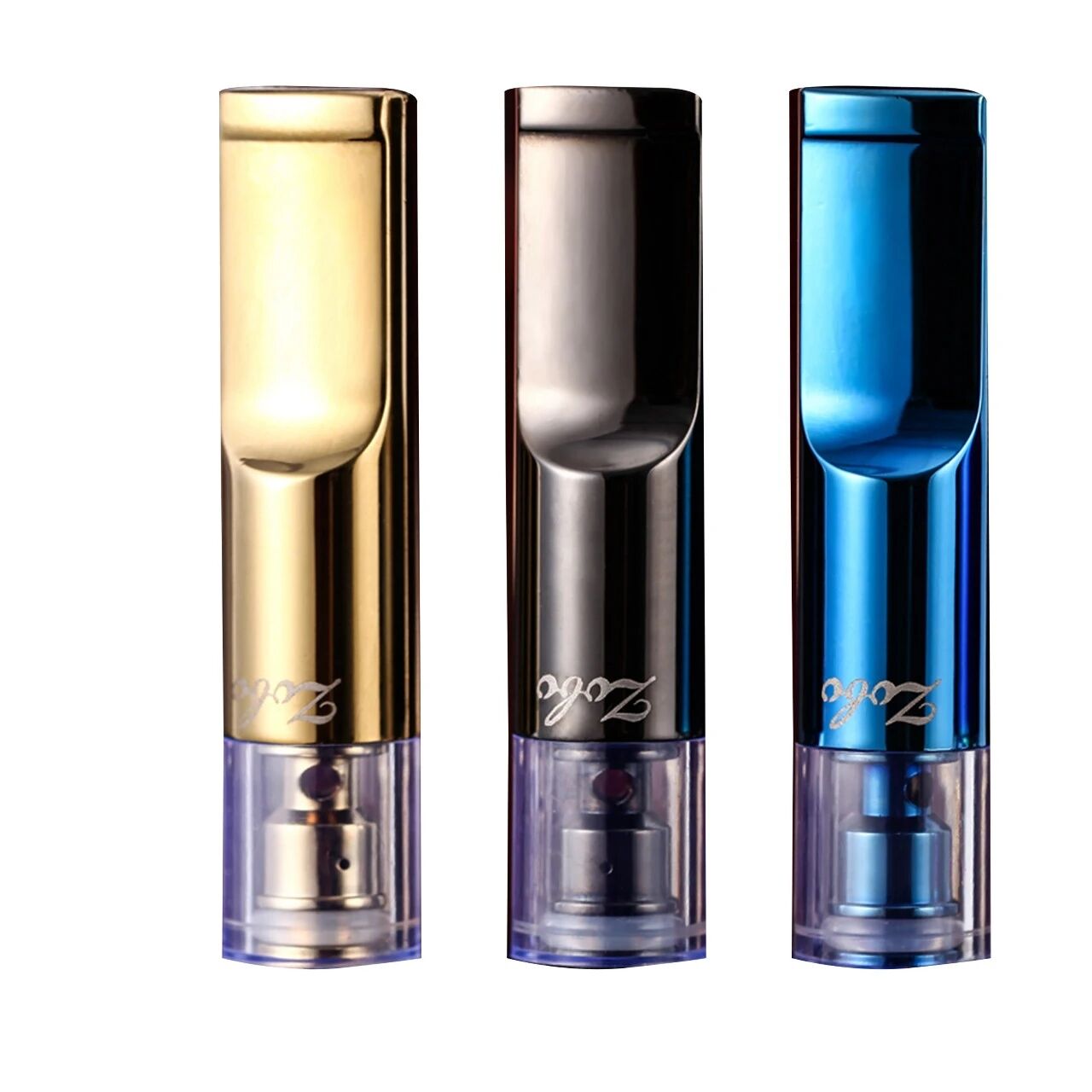
趋势研判!2026年中国陶瓷芯电子烟行业背景、产业链图谱、发展现状及未来发展趋势分析:合规发展筑牢根基,千亿赛道蓄势待发[图]
Chan Ye Xin Xi Wang· 2026-01-20 00:56
Core Insights - The ceramic core electronic cigarette has become a mainstream solution in the industry due to its advantages such as precise temperature control, leak-proof design, and low harm stability, with the atomization core being a key component for product experience [1][2] - China's electronic cigarette market has reached hundreds of billions of yuan, with the ceramic core segment expected to grow to 73.88 billion yuan by 2024, transitioning from a compliance "must-have" to a technology "preferred option" [1][12] - The industry is evolving towards high-end technology, concentrated market structure, and diversified product offerings, leveraging cross-domain technology integration to enhance product experience and expand into niche markets and overseas [1][12] Industry Overview - The ceramic core electronic cigarette utilizes a porous ceramic atomization core as the main heating medium, offering features like precise temperature control and long lifespan, which reduces harmful substance release and enhances flavor stability [2][3] - The industry has seen a series of regulatory policies aimed at eliminating outdated technologies and raising entry barriers, creating a compliant development environment for ceramic core electronic cigarettes [6][7] Market Dynamics - China's traditional cigarette production remains stable, while the new tobacco sector is rapidly adapting to regulatory changes, with an expected user base of over 30 million by 2025, primarily among urban middle-to-high-income individuals aged 25-40 [7][8] - The global new tobacco market is projected to grow to $95.15 billion by 2025, with electronic cigarettes capturing approximately 26.86% of the market share, while heated non-combustible (HNB) products dominate with a 46.39% share [12][13] Competitive Landscape - The industry value chain involves close collaboration among upstream suppliers of ceramic powders, batteries, and chips, midstream manufacturers centered in Shenzhen, and downstream market expansion through both online and offline channels [10][11] - The market is characterized by a trend towards high-end products driven by compliance, with a clear segmentation between high-end and low-end markets, leading to increased concentration among leading firms [15][16] Future Trends - The ceramic core electronic cigarette industry is expected to upgrade from single-function products to multi-experience offerings, integrating smart technologies and enhancing user experience [14] - Regulatory compliance will continue to shape market dynamics, with increased barriers leading to the exit of smaller firms and a concentration of resources among leading companies [15] - The industry will explore new growth avenues through diversified product applications and innovative business models, including localized operations in overseas markets [16]
