产能周期拐点

Search documents
苯乙烯价格易涨难跌
Bao Cheng Qi Huo· 2026-03-03 05:11
Report Summary 1. Industry Investment Rating - Not provided in the report 2. Core View - The styrene market is in a favorable cycle of geopolitical risks, production capacity gaps, demand recovery, and inventory destocking. The supply - demand pattern is shifting from surplus to tight balance, and the price center is likely to rise rather than fall. The domestic styrene futures are expected to maintain a volatile and upward - trending pattern in the future [2][7][8] 3. Summary by Related Catalog 3.1 Cost and Import Factors - Geopolitical risks drive up the price of styrene through two paths. Firstly, the cost of styrene production increases as it is closely linked to crude oil. Secondly, imports are tightened due to shipping disruptions in the Strait of Hormuz and overseas plant maintenance. In January 2026, domestic styrene imports were only 1.69 million tons, a year - on - year decline of 67.64% [3] 3.2 Domestic Supply - 2026 may be a key turning point in the styrene production capacity cycle, with the end of the high - speed expansion stage and the entry into a production vacuum period. The annual new production capacity is only about 900,000 tons, and the capacity growth rate is less than 0.5%. As of early March, the average operating rate of domestic styrene plants is about 71% - 74%. Although some plants restarted after the Spring Festival, spring maintenance in March - April will offset the marginal increase in supply [4] 3.3 Downstream Demand - The downstream of styrene mainly includes PS, EPS, and ABS, accounting for over 80% of total consumption. After the Spring Festival, the weighted operating rate of downstream industries has rebounded to over 40%. ABS has the strongest performance with an operating rate of 65% - 70%, PS has an operating rate of around 55%, and EPS has an operating rate of about 12% - 15% but will see a rapid demand recovery in March [5] 3.4 Inventory - In 2026, the styrene inventory cycle shows a good pattern of "accumulation during the Spring Festival with limited amplitude and destocking in March". As of the end of February, the inventory at East China ports is about 158,100 tons, and the factory inventory is about 209,100 tons. The inventory pressure is controllable, and the tightening of spot liquidity during downstream restocking will drive up the futures price [6]
橡胶周报:产能收紧,重心有望提高-20260111
Hua Lian Qi Huo· 2026-01-11 13:11
1. Report Industry Investment Rating - Not provided in the content 2. Core Viewpoints of the Report - The inflection point of the long - term supply cycle has arrived. On the demand side, interest rate cuts support demand, policies and replacement cycles are beneficial for heavy - truck demand, while the real estate sector is the main drag. The supply - demand contradiction is not significant, and the current valuation is not high. Inflation and the inflection point of the production - capacity cycle have raised the lower limit. It is predicted that the center of the rubber price will increase. Investors are advised to buy at an appropriate time, with the reference trading range of ru being 14,000 - 18,000 yuan/ton, and the short - to - medium - term support for nr being 12,400 - 12,600. The position of the arbitrage strategy of going long on ru and short on nr should be reduced [6]. 3. Summary by Relevant Catalogs 3.1 Macro - environment - There are policy expectations for the real estate market, which is yet to stabilize. Domestically, there is a trend of anti - involution. Externally, the Fed's interest rate cuts are beneficial for the capital market, but the spill - over effect of a potential U.S. recession should be guarded against. The U.S. aims to increase its GDP to $40 trillion by 2030, implying an average annual nominal GDP growth rate of about 5.5% in the next five years, which will be supported by inflation [6]. 3.2 Supply - The long - term inflection point has arrived. Raw materials are prone to price increases and difficult to decline. Rubber farmers' inventories were cleared at a high level in 2024 - 2025. High prices will stimulate output with high elasticity, while low prices may lead to inaction or hoarding. Price has the greatest impact on output, followed by weather. The strength of raw materials and basis reflects the current market strength, but the weak spread between latex and cup lump reflects the relative weakness. The enthusiasm for rubber tapping is acceptable at the current price. This year's natural rubber growing areas have average weather conditions with more rainfall, and there were floods in southern Thailand in November, making raw materials relatively firm, but the processing sector is in the red. The global production is expected to increase by 0.75% this year. Crude oil is relatively sluggish, synthetic rubber is at a medium - low level relative to crude oil, and natural rubber is relatively high compared to synthetic rubber. The substitution space of synthetic rubber for natural rubber is approaching the top [6]. 3.3 Inventory - Qingdao's inventory is around the median level, having increased significantly compared to 2016, and the inventory - to - sales ratio is not low. However, considering the significant increase in imports this year and the high proportion of exports from producing areas to China, the inventory is not considered high overall, with a neutral evaluation. Attention should be paid to the seasonal peak of inventory accumulation. Due to the diversion of concentrated latex and production - capacity issues in Thailand, Vietnam, and China, the output of full - latex rubber is squeezed, and the exchange warehouse receipts are at a ten - year low. The inventory of butadiene rubber is relatively high. The inventory of full - steel truck tires is lower than last year; the inventory of semi - steel tires is marginally decreasing from a high level, but considering the market expansion, it is evaluated as neutral [6]. 3.4 Demand - In 2025, real estate data continued to deteriorate, dragging down the market. The current new construction area is less than one - third of the peak. Given the long real - estate cycle and the unfavorable population situation, it will take time for a turnaround. Affected by the sharp decline in physical construction work in the real - estate sector, the recovery of road freight volume is difficult. It caught up with the 2019 level in 2024 and continued to grow in 2025. However, heavy - truck sales are still supported by policies and replacement cycles. Domestic passenger - car sales (including exports) performed well under policy stimulus, domestic substitution, and overseas market penetration, but the marginal growth rate has shown signs of fatigue. Overseas automobile sales are oscillating weakly, and overseas markets rely more on tire replacement demand. The Fed's interest rate cuts are conducive to stimulating demand. Rubber demand follows the macro - environment, and it is expected that the global demand will grow by about 2% in 2026 [6]. 3.5 Strategy - The supply - side long - term inflection point has arrived. On the demand side, interest - rate cuts support demand, and policies and replacement cycles are beneficial for heavy - truck demand, with real estate being the main drag. The supply - demand contradiction is not large, and the current valuation is not high. Inflation and the inflection point of the production - capacity cycle have raised the lower limit. It is predicted that the center of the rubber price will increase. Investors should buy at an appropriate time, with the reference trading range of ru being 14,000 - 18,000 yuan/ton, and the short - to - medium - term support for nr being 12,400 - 12,600. The position of the arbitrage strategy of going long on ru and short on nr should be reduced [6].
中金公司油气化工2026年展望:曙光已现 景气回暖
Zhi Tong Cai Jing· 2025-12-17 00:24
Core Viewpoint - The petrochemical industry has been in a downturn for approximately 3.5 years, with capital expenditure continuing to decline and outdated overseas capacity exiting the market, leading to a low growth phase for industry capacity. The industry is expected to see a cyclical turning point due to favorable supply-side factors and rapid growth in demand from sectors like new energy [1][2]. Group 1: Industry Performance - The chemical price index and profit margins are currently at low levels, with a 10.3% decline in China's chemical product price index from early 2025, placing it at the 10.4% percentile since 2012. The profit margin for chemical raw materials and products was only 4.14% from January to October 2025, the lowest since 2017 [1]. - The capital expenditure of petrochemical companies is projected to decrease by 18.3% in 2024 and 10.1% in the first three quarters of 2025, with construction projects down by 13.2% year-on-year in Q3 2025 [2]. Group 2: Supply and Demand Dynamics - The exit of outdated overseas capacity, particularly in Europe and Japan, is expected to alleviate global supply-demand imbalances for related products [2]. - The demand growth for bulk chemical products remains resilient, with expectations that the real estate sector will have a diminishing impact on chemical product demand growth by 2026 [2]. Group 3: Key Segments and Future Outlook - Early-cycle products such as chemical fibers are expected to see rapid consumption growth from 2020 to 2024, with chemical fibers projected to be among the fastest-growing bulk chemical products by 2026 [3]. - The industry is anticipated to experience a turning point in the capacity cycle, driven by favorable supply-side factors and rapid growth in demand for materials in the new energy sector [3]. - The company is optimistic about leading chemical firms with low valuations and expects significant profit growth in the chemical fiber supply chain, as well as in sectors like lithium battery materials and emerging industries related to AI and robotics [3].

【市场探“涨”】近十年新高!硫磺现货涨势难休?
Shang Hai Zheng Quan Bao· 2025-12-08 14:57
Core Viewpoint - The recent surge in chemical and industrial product prices, particularly sulfur, is driven by tight overseas supply and high international prices, raising questions about the sustainability of this price increase and its impact on the industry [2][5]. Group 1: Price Trends and Market Dynamics - As of December 5, the price of granular sulfur at Zhenjiang Port reached 4,115 yuan/ton, marking a nearly ten-year high [3]. - The sulfur market is expected to maintain a high-level consolidation trend in the short term, with procurement activities slowing down among end-users and traders due to the high prices [3][5]. - The international sulfur market is experiencing upward pressure, with Qatar and Kuwait announcing December contract prices at FOB 495 USD/ton, a significant increase of 95 USD/ton from the previous month [5]. Group 2: Supply Chain and Dependency - China's sulfur import dependency exceeds 40%, with annual imports consistently above 8 million tons [6]. - The supply of sulfur is expected to decrease by 1 million tons by Q4 2025 due to reduced exports from Russia, which has shifted from a net exporter to a net importer of sulfur [5][6]. - The global energy transition is limiting the growth of new sulfur production capacity, as traditional oil and gas demand declines [6]. Group 3: Impact on Related Industries - The rising sulfur prices are affecting multiple industries, including phosphate fertilizers, nylon, titanium dioxide, and metal smelting [8][9]. - The price of sulfuric acid has increased by approximately 50%, with current prices ranging from 1,080 to 1,210 yuan/ton [9]. - Phosphate fertilizer producers are facing significant pressure, with production rates dropping to 53.95% and losses exceeding 600 yuan/ton [9]. Group 4: Future Outlook - The sulfur market is anticipated to exhibit a volatile upward trend due to limited supply growth and steady demand release [11]. - The demand for sulfur is expected to increase, particularly from the phosphate fertilizer sector and the burgeoning nickel-cobalt metallurgy industry in Indonesia [12]. - Analysts predict that the price of sulfur may remain high through early 2026, supported by recovering production in the phosphate fertilizer industry and seasonal demand [11][12].
建筑材料、银行等防御类ETF逆市领涨丨ETF基金日报
2 1 Shi Ji Jing Ji Bao Dao· 2025-11-21 03:09
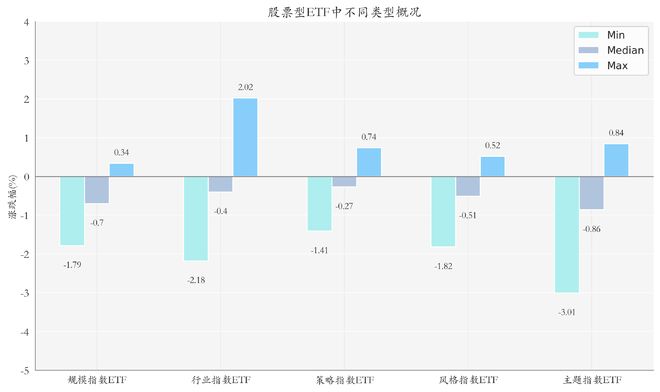
Market Overview - The Shanghai Composite Index fell by 0.4% to close at 3931.05 points, with a high of 3967.97 points during the day [1] - The Shenzhen Component Index decreased by 0.76% to 12980.82 points, reaching a peak of 13226.04 points [1] - The ChiNext Index dropped by 1.12% to 3042.34 points, with a maximum of 3137.07 points [1] ETF Market Performance - The median return of stock ETFs was -0.67% [2] - The highest performing scale index ETF was the China Southern Shenzhen 100 ETF with a return of 0.34% [2] - The top industry index ETF was the China Tai Zhongzheng All Index Building Materials ETF, yielding 2.02% [2] - The highest return among strategy index ETFs was the China Tai Baichuan Zhongzheng Dividend Low Volatility ETF at 0.74% [2] - The best performing thematic index ETF was the Yinhua Zhongzheng Mainland Real Estate Theme ETF, with a return of 0.84% [2] ETF Performance Rankings - The top three ETFs by return were: - Guotai Zhongzheng All Index Building Materials ETF (2.02%) [4] - Fuguo Zhongzheng All Index Building Materials ETF (1.56%) [4] - Huabao Zhongzheng 800 Real Estate ETF (1.52%) [4] - The worst performing ETFs included: - Penghua SSE Sci-Tech Innovation Board New Energy ETF (-3.01%) [4] - Yifangda SSE Sci-Tech Innovation Board New Energy ETF (-2.91%) [4] - Fuguo SSE Sci-Tech Innovation Board New Energy ETF (-2.78%) [4] ETF Fund Flows - The top three ETFs by fund inflow were: - Southern Zhongzheng 500 ETF (7.6 billion) [6] - Huaxia SSE Sci-Tech Innovation Board 50 Component ETF (7.59 billion) [6] - Southern Zhongzheng 1000 ETF (4.18 billion) [6] - The largest outflows were from: - Huabao Zhongzheng Bank ETF (4.33 billion) [6] - Huatai Baichuan SSE 300 ETF (4.07 billion) [6] - Huabao Zhongzheng Financial Technology Theme ETF (3.25 billion) [6] ETF Margin Trading Overview - The highest margin buy amounts were: - Huaxia SSE Sci-Tech Innovation Board 50 Component ETF (5.56 billion) [8] - Guotai Zhongzheng All Index Securities Company ETF (4.8 billion) [8] - Yifangda ChiNext ETF (4.78 billion) [8] - The largest margin sell amounts were: - Southern Zhongzheng 500 ETF (37.88 million) [8] - Huatai Baichuan SSE 300 ETF (37.87 million) [8] - Huaxia Zhongzheng A500 ETF (25.01 million) [8] Institutional Insights - Huafu Securities suggests that the building materials capacity cycle may reach an inflection point due to accelerated expectations of "anti-involution" [9] - The combination of declining interest rates and monetary support for housing may stabilize the real estate market, potentially boosting post-cycle demand [9] - Debon Securities highlights that undervalued financial stocks, such as insurance and banks, possess defensive allocation value amid a weak market [10]

中国石化(600028):硫磺供需矛盾致炼油板块回暖
HTSC· 2025-11-17 10:32
Investment Rating - The investment rating for the company has been upgraded to "Buy" with a target price of RMB 7.60 / HKD 6.26 [7][5] Core Views - The report highlights a significant increase in sulfur prices due to supply-demand imbalances, with prices rising by 152% to RMB 3930 per ton as of November 14, 2025. This trend is expected to benefit the refining sector of the company [1][4] - The report anticipates an 8.6% year-on-year growth in sulfur consumption in China for 2024, driven by demand from various sectors including lithium batteries and new materials [1][2] - The company is positioned as the largest sulfur supplier in China with an annual production capacity of 8.88 million tons, which is expected to enhance its profitability amid rising sulfur prices [4][5] Summary by Sections Supply and Demand Dynamics - Global sulfur supply is facing constraints due to peak crude oil processing in China and reduced overseas supply, while demand is steadily increasing from sectors such as phosphate fertilizers and new materials [1][2] - In the first nine months of 2025, China's apparent sulfur consumption reached 16.75 million tons, a 6.1% increase year-on-year, with imports accounting for 47% of the total [2] Refining Sector Insights - The refining sector's growth is being challenged by structural changes in natural gas supply and a decline in independent refinery operations, leading to limited growth in sulfur production from crude oil [3] - The report notes that geopolitical factors, such as the Russia-Ukraine conflict, have tightened international sulfur supply due to reduced refinery operations and export bans [3] Financial Projections and Valuation - The company is expected to report a net profit of RMB 36.8 billion for 2025, with upward revisions for 2026 and 2027 net profit forecasts to RMB 46.3 billion and RMB 54.6 billion, respectively [5][11] - The report provides a valuation based on a price-to-earnings (P/E) ratio of 20.0x for A-shares and 15.0x for H-shares for 2026, reflecting the company's integrated advantages and transformation into new materials and non-oil businesses [5][12]

中金11月数说资产
中金· 2025-11-16 15:36
Investment Rating - The report suggests maintaining a high position in the market and focusing on specific sectors such as overseas expansion and Bay Area-related fields, including power grids, engineering machinery, innovative pharmaceuticals, home appliances, and non-ferrous metals [1][9]. Core Insights - Economic data for October shows a general slowdown in industrial, consumption, and investment growth, with retail sales related to trade-in programs declining by 2.2% and fixed asset investment down 1.7% year-on-year [1][2]. - CPI turned positive at 0.2% in October, while PPI narrowed to -2.1%. Expectations for 2026 indicate a potential rise in CPI to 0.5% and PPI to -1, which may benefit value-style sectors related to price increases [1][6]. - The financial data indicates a decline in social financing, credit, and M1, M2 growth rates, reflecting weak demand in the real economy, but a trend of deposit activation continues [1][13]. Economic Performance - Industrial value-added and service production indices decreased to 4.9% and 4.6%, respectively, while social retail sales growth fell from 3.0% to 2.9% [2]. - Fixed asset investment from January to October saw a cumulative year-on-year decline of 1.7%, with real estate investment showing a significant drop [5]. Sector Analysis - Most industries experienced a slowdown, with only a few, such as utilities and automotive, showing growth. The energy and metals sectors are under scrutiny, with oil processing remaining high and expected Brent crude oil prices around $65 per barrel in Q4 [3][11]. - The consumer sector is facing challenges, particularly in home appliances and automotive, with declines between 7% and 15% [4]. Market Strategy - The current market shows a divergence in performance, with a recommendation to maintain a balanced investment strategy focusing on sectors like batteries, chemicals, and aquaculture, while being cautious of market volatility [9][10]. - The bond market is expected to benefit from a weakening economy, with predictions of accelerated monetary easing towards the end of the year [10]. Future Outlook - The report anticipates that demand will remain weak in 2026, necessitating further policy support to stimulate effective demand and reduce ineffective supply [7][8]. - The light industry and beauty sector are expected to require policy stimulation, with a focus on solid growth segments like trendy toys and beauty products [17][20].
中金2026年展望 | 油气化工:曙光已现,景气回暖(要点版)
中金点睛· 2025-11-08 01:07
Core Viewpoint - The chemical industry has been in a downward cycle for over three years, with low chemical price indices and industry profit margins. The price index for Chinese chemical products has decreased by 10.3% from early 2025 to now, currently at the 10.6% percentile since 2012. The profit margin for chemical raw materials and products was only 4.14% from January to August 2025, the lowest since 2017. The gross and net profit margins for petrochemical companies in Q2 2025 were 16.05% and 4.63%, respectively, also at low levels in recent years [2][5][20]. Group 1: Industry Downturn and Recovery Potential - The chemical manufacturing industry has faced a downturn for over three years, with increasing midstream chemical production capacity and pressure on downstream demand, alongside falling prices of upstream commodities like oil and coal [2][5]. - Capital expenditures in the petrochemical sector have continued to decline, with a year-on-year decrease of 18.3% in 2024 and 15.1% in the first half of 2025. The industry has seen a consistent decline in capital expenditures for seven consecutive quarters since Q4 2023 [3][9]. - The exit of overseas production capacity, particularly in Europe, is expected to alleviate global supply-demand imbalances. A total of 11 million tons of chemical production capacity is set to exit Europe between 2023 and October 2024 [3][9]. Group 2: Policy and Market Dynamics - The industry is experiencing a shift in policy aimed at controlling new refining capacity and managing the pace of new ethylene and PX production capacity to prevent overcapacity in coal-based methanol [3][10]. - The basic chemical sector's price-to-book ratio was 2.07x as of October 22, 2025, at the 32.6% percentile since 2012, indicating potential for long-term investment opportunities as favorable supply-side factors accumulate [3][20]. - The demand for bulk chemicals remains weak globally, but emerging manufacturing sectors related to AI, humanoid robots, and solid-state batteries are driving rapid growth in material demand [20][16].