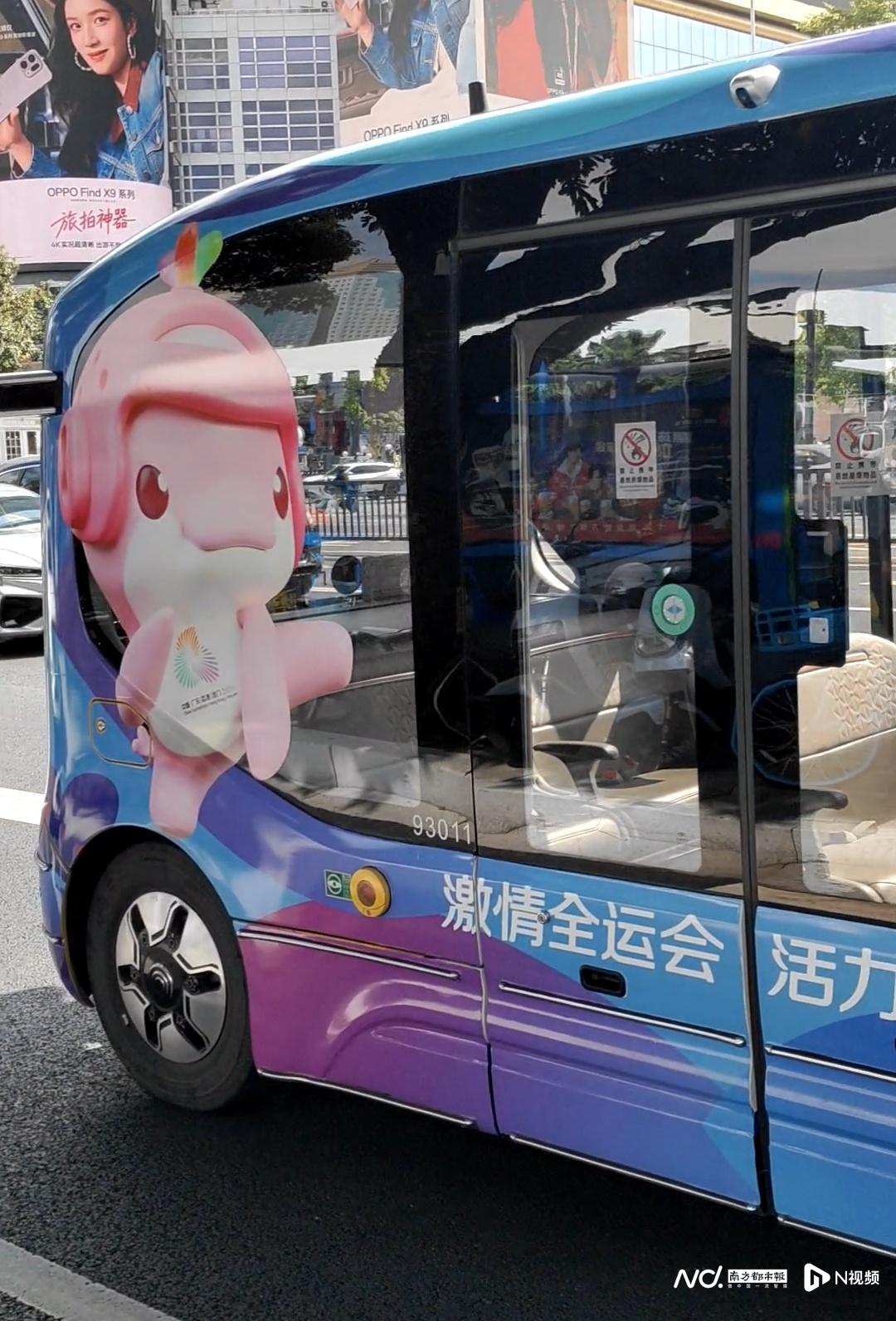
自动驾驶小巴

Search documents
文远知行2025年Robotaxi收入增210%、全年净亏损收窄近35%:5年内部署数万辆Robotaxi
IPO早知道· 2026-03-23 13:55
Core Viewpoint - WeRide (NASDAQ: WRD, HKEX: 0800) has reported significant growth in its financial performance for the fourth quarter and the full year of 2025, highlighting its leadership in the autonomous driving sector and the rapid expansion of its Robotaxi business [3][6][7]. Financial Performance - In 2025, WeRide achieved total revenue of 690 million yuan, a substantial increase of 90% year-on-year, marking a historical high; Q4 revenue reached 314 million yuan, up 123% year-on-year, setting a new record for the highest quarterly revenue since the company's inception [6]. - The core Robotaxi business saw explosive growth, with annual revenue of 150 million yuan, a year-on-year increase of 209.6%; Q4 revenue grew by 66.4% year-on-year to 50.6 million yuan, with domestic Robotaxi registered users increasing by over 900% year-on-year in a single quarter [6][7]. Profitability and Cost Management - WeRide's gross margin for the year reached 30%, with gross profit of 210 million yuan, an increase of 86.8% year-on-year; net loss significantly narrowed, decreasing by 34.2% year-on-year [7]. - The company reported a 15.5% year-on-year reduction in operating losses, indicating improved operational efficiency and cost management [7]. Global Expansion and Market Presence - WeRide's autonomous driving products are now operational in 12 countries and over 40 cities, making it the company with the widest global business coverage in the autonomous driving sector [8]. - The global Robotaxi fleet has reached 1,125 vehicles, with plans to deploy 2,600 vehicles by the end of 2026 and potentially tens of thousands by 2030 [8]. - The service area for Robotaxi in major cities like Beijing and Guangzhou has expanded to over 1,000 square kilometers, including key transportation hubs [8]. Strategic Partnerships and Product Diversification - WeRide has initiated a national-level strategic partnership with ELEVATE Slovakia, marking the first large-scale autonomous driving commercialization project in Slovakia [14]. - The company has also accelerated the commercial deployment of autonomous minibuses, with related revenue growing by approximately 190% year-on-year [17]. - WeRide has launched the W5 autonomous freight vehicle and has deployed autonomous sanitation vehicles in major cities [17]. Recognition and Market Position - WeRide has received recognition from major international banks such as JPMorgan and Macquarie, indicating strong market confidence and potential for growth [18][19]. - The company is positioned among the top five holdings in ARK Invest's Autonomous Technology & Robotics ETF, reflecting significant investor interest [19]. - Macquarie emphasizes the importance of first-mover network effects and scalable profitability models as key factors for success in the Robotaxi industry, praising WeRide's overseas expansion strategy [21].


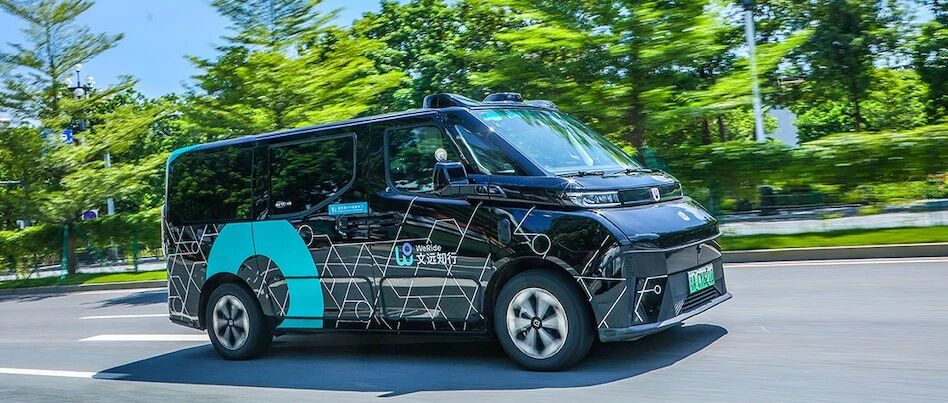
商业化落地提速!文远知行获麦格理首评“跑赢大市”,目标价46港元
Jin Tou Wang· 2026-02-12 07:33
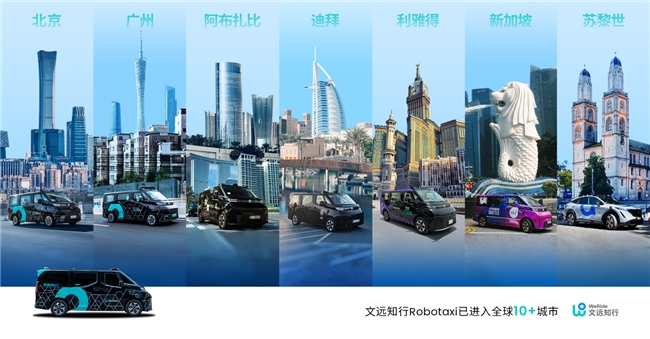
Core Viewpoint - Macquarie has initiated coverage on WeRide (WRD.US, 0800.HK) with an "Outperform" rating, setting target prices of HKD 46 for its Hong Kong stock and USD 17.5 for its U.S. stock, recognizing the company's core competitiveness and growth potential in the global autonomous driving sector [1] Group 1 - WeRide's core advantages lie in its diversified L4 autonomous driving product matrix and strong strategic partnerships, positioning it favorably in building a scalable and global autonomous driving service network [1] - The company is the only tech firm globally to hold autonomous driving licenses in eight countries, including China, UAE, and Singapore, and has developed a comprehensive product matrix that includes autonomous taxis, minibuses, freight vehicles, sanitation vehicles, and L2 driver assistance systems [1] - WeRide's global layout is supported by its extensive application scenarios in smart mobility, smart freight, and smart sanitation, establishing a solid foundation for its international expansion [1] Group 2 - WeRide's recent overseas expansion efforts have gained momentum, with a partnership with Uber announced on February 6 to deploy at least 1,200 Robotaxis in the Middle East by 2027, covering key markets such as Abu Dhabi, Dubai, and Riyadh [2] - WeRide has a four-year first-mover advantage in Abu Dhabi, where its Robotaxi fleet is nearing single-vehicle breakeven and has initiated fully autonomous commercial operations, becoming a benchmark in the Middle East's autonomous driving sector [2] Group 3 - As of January 12, 2026, WeRide's global Robotaxi fleet has reached 1,023 vehicles, operating in over ten major cities worldwide, with successful fully autonomous commercial operations launched in Guangzhou, Beijing, and Abu Dhabi [5] - WeRide is the first autonomous driving tech company to be dual-listed on both U.S. and Hong Kong stock exchanges, gradually realizing its commercial value through proprietary technology, diverse product offerings, and global expansion, gaining significant attention and recognition from the capital markets [5]
APEC中国年聚焦“亚太共同体”:强调多元合作,筑牢增长引擎
2 1 Shi Ji Jing Ji Bao Dao· 2026-02-10 14:04
Group 1: APEC Meeting Overview - The 33rd APEC Leaders' Informal Meeting will be held in Shenzhen, Guangdong, on November 18-19, marking China's third time as the host [1] - APEC is crucial for regional cooperation, with the Asia-Pacific region accounting for one-third of the world's population and over 60% of global economic output [1] - The meeting aims to address challenges such as unilateralism and protectionism while promoting regional cooperation and consensus [2][3] Group 2: Key Themes and Priorities - The theme for the 2026 APEC meeting is "Building the Asia-Pacific Community, Promoting Common Prosperity," focusing on three priority areas: openness, innovation, and cooperation [4][13] - Openness aims to create an open economy, counter protectionism, and facilitate trade and investment [4] - Innovation focuses on driving new productive forces and creating new growth points for APEC cooperation [4] Group 3: China's Role and Contributions - China is positioned as a key leader in APEC, advocating for a balanced approach to the needs of both developed and developing economies [4][12] - The country emphasizes the importance of multilateralism and provides a platform for dialogue and cooperation among APEC members [2][12] - China's development practices, including high-level openness and innovation, serve as a reference for other economies in the region [12][13] Group 4: Economic Cooperation and Trade - During the "14th Five-Year Plan" period, trade between China and APEC economies reached 125.49 trillion yuan, a 39.4% increase from the previous period [12] - China's commitment to free trade and investment liberalization is expected to enhance economic cooperation and benefit all APEC members [12][14] - The integration of APEC with other trade agreements like RCEP and CPTPP is seen as a way to promote trade facilitation and reduce compliance costs for businesses [6][12] Group 5: Technological Innovation and Sustainability - APEC discussions include significant topics such as technological innovation, regulatory coordination, and digital economy transformation [8][9] - The focus on green and low-carbon transitions aims to address climate change and promote sustainable development [7] - China's advancements in technology, particularly in AI and digital platforms, are highlighted as examples of innovation that can benefit the region [10][11]
APEC中国年聚焦“亚太共同体”:强调多元合作 筑牢增长引擎
2 1 Shi Ji Jing Ji Bao Dao· 2026-02-10 13:58
Group 1 - The APEC informal leaders' meeting will be held in Shenzhen, China, on November 18-19, marking China's third time as the host [1][12] - The Asia-Pacific region accounts for one-third of the world's population, over 60% of the global economy, and nearly half of global trade, highlighting its significance as a growth engine [1] - China aims to promote a more inclusive, sustainable, and high-quality development direction for APEC cooperation, providing a "Chinese solution" for the future agenda [3][12] Group 2 - The theme for the 2026 APEC meeting is "Building the Asia-Pacific Community and Promoting Common Prosperity," with three priority areas: openness, innovation, and cooperation [4][12] - China emphasizes the importance of balancing the needs of developed and developing economies in the region, addressing potential imbalances in key areas such as digital economy innovation and supply chain security [4][5] - The APEC high-level meetings serve as a crucial platform for policy exchange and cooperation, facilitating discussions on technology innovation, regulatory coordination, and digital transformation [8][11] Group 3 - China's leadership in APEC is characterized by its commitment to high-level openness and integration with regional trade agreements like RCEP and CPTPP, which enhances trade and investment facilitation [11][12] - The APEC cooperation mechanism has evolved to include new areas such as digital governance and green transformation, reflecting the changing dynamics of global trade and cooperation [11][12] - The APEC high-level meetings are seen as a central platform for fostering collaboration and consensus among member economies, crucial for addressing global challenges and enhancing regional integration [8][11]
从汽车智造到自动驾驶:广州开发区的智能网联突围之路
Xin Lang Cai Jing· 2025-12-12 08:56
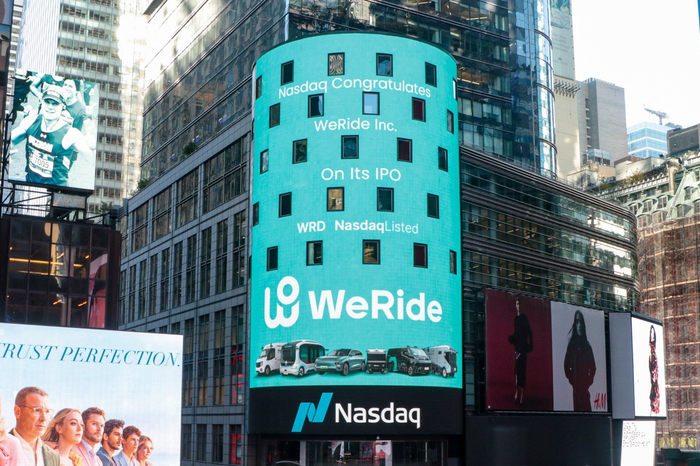
Core Insights - Guangzhou's Huangpu District is accelerating the construction of a modern industrial system, focusing on strategic emerging industries and future industries, reflecting China's ambition to seize global technological leadership [1] - The district has become a hub for autonomous driving technology, with WeRide becoming the first company globally to receive a pure driverless license from Switzerland and achieving dual listing in Hong Kong and the US [1][3] Industry Development - The automotive industry is a pillar in Huangpu, with a historical foundation dating back to the 1990s when joint ventures were introduced, leading to a robust supply chain of key component manufacturers [3][4] - In 2025, the automotive sector in Huangpu is projected to sign 25 projects with an estimated total investment of approximately 6.196 billion yuan, generating an expected annual output value of about 14.96 billion yuan [4] - From January to October 2025, 80 automotive enterprises in the district achieved an output value of 106.76 billion yuan, with a year-on-year growth rate of 7%, leading the city [4] Technological Innovation - The shift from manufacturing to intelligent manufacturing in the automotive sector is driven by technological innovation, flexible production, and product iteration [5] - The "old-for-new" policy has significantly boosted sales, with automotive and parts retail enterprises achieving sales of approximately 41.02 billion yuan from January to October, a year-on-year increase of 66.3% [5] - Huangpu's automotive brands, such as XPeng and GAC Honda, are increasing their export volumes, with total automotive exports reaching 3.217 billion yuan from January to September, including 2.008 billion yuan in pure electric passenger vehicles, a year-on-year increase of 184% [5] Policy Support - Huangpu has established a supportive policy environment for autonomous driving, facilitating multiple "national firsts" in the sector, including the launch of China's first commercial Robotaxi service and the first fully driverless sanitation vehicle [8][9] - The establishment of the Intelligent Connected and New Energy Vehicle Industry Development Office has been pivotal in promoting the sector's growth and attracting new enterprises [9] Company Highlights - XPeng Motors has achieved significant milestones, producing its one-millionth vehicle in just 14 months, and plans to launch seven new models by 2026 [10][11] - The company operates a smart manufacturing facility that adheres to Industry 4.0 standards, integrating fully automated processes across various production stages [14] - The flexible production capabilities of companies like Mingluo Equipment have positioned them as key players in the automotive supply chain, serving major global automotive brands [16][18] Semiconductor and Sensor Development - Huangpu is nurturing semiconductor companies like Yuanchip Electronics, which has become a leading supplier of high-precision positioning products for various industries, including automotive [20][21] - The company has established partnerships with over 30 major automotive manufacturers, with projected revenues of 300 million yuan in 2024, expected to reach 700 million yuan this year [23]
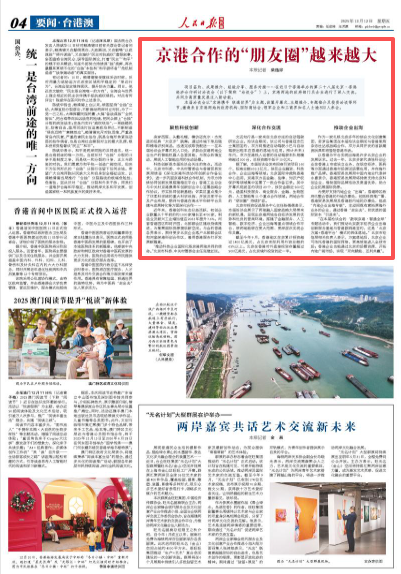
京港合作的“朋友圈”越来越大
Ren Min Ri Bao Hai Wai Ban· 2025-12-11 22:49
Core Insights - The 28th Beijing-Hong Kong Economic Cooperation Seminar focused on high-quality development and featured over 800 participants from government and business sectors in both regions [1] Group 1: Technology Innovation - The seminar highlighted technology innovation, with a focus on the signing of a memorandum to deepen cooperation between Beijing and Hong Kong in scientific and technological innovation [2] - The number of startups in Hong Kong has increased from approximately 1,000 a decade ago to 4,700, with a 7.6% rise in the added value of manufacturing and emerging industries in 2023 [2] - The Hong Kong Science Park is set to open, providing new space for international resource aggregation, and there is an expectation for more Beijing enterprises to establish operations in the Northern Metropolis and the Hong Kong-Shenzhen Innovation and Technology Cooperation Zone [2] Group 2: Deepening Cooperation - Beijing's autonomous driving company, WeRide, signed an agreement with Hong Kong's Kwoon Chung Bus Holdings to deploy over 500 autonomous vehicles in Hong Kong within three years, with a total investment of no less than 1 billion yuan [4] - The seminar announced 160 investment projects with a total investment amount of 60.32 billion yuan, covering areas such as enterprise financing, technology cooperation, and international expansion [4] - A total of 29 projects were signed during the opening ceremony, involving nearly 56 billion yuan across 11 key cooperation areas, including technology services and artificial intelligence [4] Group 3: Promoting Internationalization - Many Beijing enterprises are looking to use Hong Kong as a platform for international expansion, with several tech companies listing or establishing operations in Hong Kong over the past year [6] - The Hong Kong government has formed a task force to support mainland enterprises in expanding overseas, integrating various offices to attract businesses interested in international markets [7] - A partnership was established between Beijing's digital economy enterprises and Hong Kong's Cyberport to facilitate international market entry, exemplifying the "Beijing solution + Hong Kong platform" model [7] Group 4: Investment Statistics - As of September this year, Hong Kong's cumulative investment in Beijing exceeded 140 billion USD, accounting for over 65% of Beijing's actual foreign investment [5] - Beijing's direct investment stock in Hong Kong exceeds 50 billion USD, representing nearly half of Beijing's overseas investments [5]
上市不办庆功宴,文远知行韩旭砸500万顶薪抢人:人才才是穿越周期的核心
Jin Tou Wang· 2025-12-01 07:27
Core Viewpoint - The CEO of Wenyan Zhixing, Han Xu, emphasizes that talent acquisition is more critical than celebrating the company's dual listing in the US and Hong Kong, stating that "listing is not the end, talent is the core to traverse cycles" [1] Group 1: Talent Acquisition Strategy - The company has launched a "Talent Plan" with starting salaries of 3 million and a cap of 5 million, aiming to attract top talent [1] - Han Xu believes that recruiting the best people is essential for the company to become a leading enterprise, advocating for a nurturing environment rather than restrictive management [2] - The company has established a fair and transparent evaluation system, allowing talent to focus on core challenges without redundant management [2] Group 2: Business and Market Position - Wenyan Zhixing operates in over 30 cities across 11 countries and holds autonomous driving licenses in eight countries, providing a comprehensive practice scenario from technology development to commercialization [2] - The autonomous driving industry is entering a critical growth phase, with major players like Tesla, Huawei, and Xiaopeng entering the market, positioning Wenyan Zhixing among the top tier of the industry [2] - The company’s competitive edge in the autonomous driving sector offers significant growth opportunities for talent, allowing them to participate in revolutionary changes in human mobility [3] Group 3: Company Culture and Growth Environment - The dual listing enhances the company's recruitment advantages, ensuring that the commitment to talent development is backed by solid guarantees [2] - The company fosters an open and inclusive culture, which is crucial for attracting top talent who seek to grow and excel in hard technology [3] - The starting salary of 3 million is seen as a sincere commitment, while the opportunity for practical growth in a thriving industry is the core attraction for global top talent [3]
RoboTaxi双雄港股遇冷 生态整合决定终局
Zheng Quan Shi Bao· 2025-11-19 17:56
Core Insights - The recent IPOs of Xiaoma Zhixing and Wenyuan Zhixing in Hong Kong have raised over 10 billion HKD, but their stock prices have declined significantly, raising concerns about the future of the autonomous driving sector [1][2] - The low stock performance is attributed to the high cash burn nature of the autonomous driving industry, with investors adopting a cautious stance due to the current unfavorable market environment for tech companies [1][2] Company Analysis - Xiaoma Zhixing focuses on providing autonomous driving technology and solutions for global mobility and logistics, while Wenyuan Zhixing has a broader service portfolio covering RoboTaxi, autonomous minibuses, freight vehicles, and sanitation vehicles [2] - Both companies are in the early stages of technology validation and commercialization, with profitability dependent on multiple factors including technological maturity, policy openness, cost control, and market demand [2][3] Market Dynamics - The RoboTaxi industry is facing intense competition, with major players like XPeng Motors and Baidu entering the market, which increases the pressure on existing companies [4][5] - The entry of large corporations is leading to a market reshuffle, with smaller players like AutoX suspending operations due to the competitive landscape [5] Future Outlook - The global RoboTaxi market is projected to grow from 4.4 billion USD in 2025 to 88.9 billion USD by 2034, with a CAGR exceeding 50%, and China expected to become the largest single market [6] - Policy support is crucial for the development of the RoboTaxi industry, with new regulations in China set to facilitate commercial operations [6] Strategic Considerations - Differentiated strategies are essential for companies to navigate the competitive landscape, with Xiaoma Zhixing focusing on major domestic cities and Wenyuan Zhixing pursuing global expansion [6][7] - The ability to integrate technology, establish stable traffic sources, and produce low-cost vehicles will be key to achieving sustainable profitability in the long term [7]
视频丨运动有了新体验!智能科技为体育带来这些改变
Yang Shi Xin Wen Ke Hu Duan· 2025-11-13 00:49
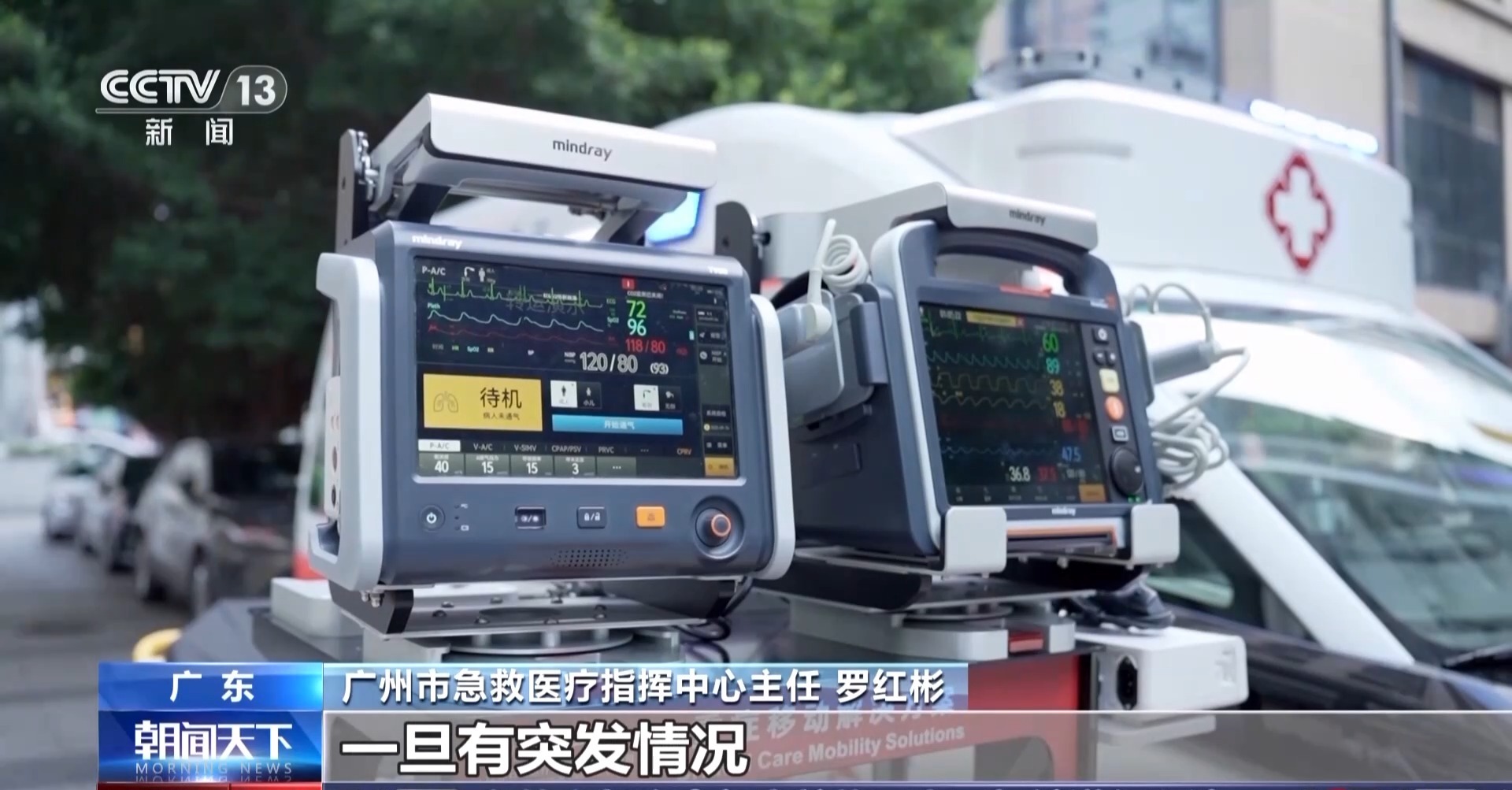
Core Insights - The 15th National Games showcases the integration of technology in sports, enhancing both competitive and recreational aspects of athletics [1][2] - Technological innovations are driving significant growth in the sports industry, with a focus on smart equipment and enhanced event management systems [4][8] Group 1: Technological Innovations in Competitive Sports - The introduction of the domestically developed "Super Perspective" live broadcast system enhances the viewing experience of popular sports like basketball and badminton [4] - Guangzhou has deployed new intelligent ambulances specifically designed for large events, ensuring rapid response to emergencies through a visualized smart dispatch system [6] - The city has also launched multiple autonomous vehicle routes, including 19 self-driving minibuses, to facilitate quick transportation for attendees [7] Group 2: Growth in Recreational Sports and AI Integration - The popularity of sports among the public is rising, with individuals like office workers increasingly utilizing smart sports facilities for relaxation and fitness [8][9] - AI-driven sports equipment, such as smart tennis ball machines, is becoming prevalent, allowing users to analyze their performance through data collection and backend analysis [13] - In Shenzhen, the procurement of AI smart devices in the fitness industry has reached 35%, with an annual growth rate of 40% [15] Group 3: Opportunities in the Sports Industry - The dual forces of rising public interest in sports and technological advancements in top-tier events are propelling China's sports industry into a "golden period" of rapid development [16] - The sports equipment industry in China has grown significantly, with over 63,000 production enterprises and an industry output value increasing from 1.12 trillion yuan in 2015 to over 1.5 trillion yuan, a 34% growth over ten years [18] - The industry is witnessing the emergence of leading companies, with eight listed manufacturers reporting annual revenues exceeding 10 billion yuan, and a total of 146 "little giant" enterprises recognized for their specialization [18]
实测广州自动驾驶小巴:无需预约直接上车,系安全带才能启动
Nan Fang Du Shi Bao· 2025-11-11 08:30
Core Points - Guangzhou Public Transport Group has launched multiple autonomous driving minibuses during the National Games, providing new travel experiences for citizens and tourists [1][13] - The minibuses are designed with a focus on safety and convenience, featuring various payment options and real-time safety monitoring [5][6][9] Group 1: Autonomous Minibus Operations - The autonomous minibuses operate on several routes including the Tianhe Sports Center demonstration line and the Nansha Sports Center circular line [1][13] - The minibuses are equipped with safety features such as seat belts, emergency buttons, and a safety officer on board [5][11] - The minibuses have a maximum capacity of 6 passengers and require adult supervision for children under 12 [6][11] Group 2: Passenger Experience - Passengers can use the "Yancheng Tong" mobile payment system, with a fare of 2 yuan per person [3][5] - The minibuses provide a comfortable ride with large windows for sightseeing, and passengers can interact with an AI voice assistant for information [9][12] - Feedback from passengers indicates a positive experience, highlighting the spacious design and safety features [9][12] Group 3: Operational Details - The minibuses are currently in a trial phase, operating from November 3 to December 15, with schedules subject to change based on event requirements [12][13] - Some routes have limited service frequency and shorter operating hours compared to previously established autonomous lines [13]