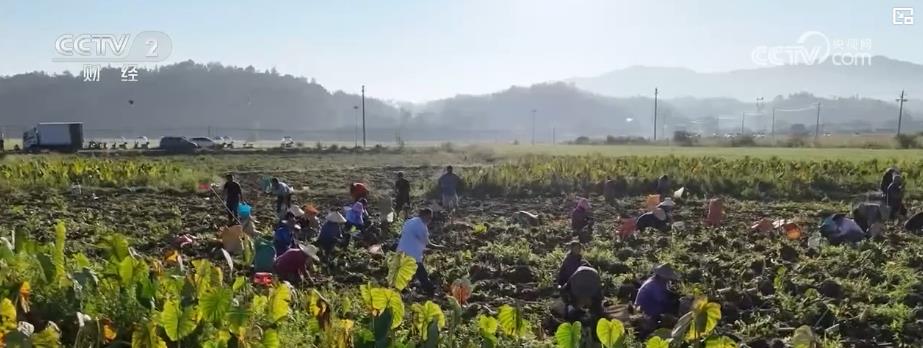
芋圆

Search documents
奶茶小料“黑榜”上热搜 现存奶茶相关企业超28.7万家
Xin Lang Cai Jing· 2026-02-14 01:56
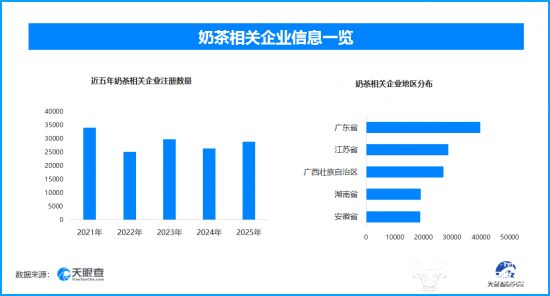
Group 1 - The core issue in the milk tea industry is the safety and consumer experience concerns related to certain ingredients like crushed peanuts, which pose choking hazards for children and the elderly, and high sugar content in red beans and raisins, leading to potential health risks [1][2] - Brands are shifting towards a "tea base + fresh milk" style, reducing the use of heavy toppings and promoting healthier options, indicating a strategic adjustment in response to changing consumer preferences [2] - As of now, there are over 287,000 milk tea-related enterprises in China, with approximately 28,000 new registrations expected by 2025, showing a fluctuating growth trend since 2021 [2] Group 2 - The ability of brands to adapt to consumer preferences is crucial, and assessing the backgrounds of key personnel in product development and quality control can provide insights into their capacity for continuous product optimization [1] - The regional distribution of milk tea enterprises shows Guangdong, Jiangsu, and Guangxi as the leading provinces, with over 39,000, 28,000, and 26,000 enterprises respectively [2]

盒马、沃尔玛等新零售渠道成新增长极,千味央厨C端战略显成效
Quan Jing Wang· 2026-01-30 02:16
Core Insights - The pre-prepared food market is transitioning from an efficiency solution in the restaurant industry to a regular choice for family daily and festive needs, driven by the younger generation's changing consumption habits [1] - The market penetration of pre-prepared foods in China is currently only 10%-15%, compared to over 60% in mature markets like the US and Japan, indicating significant growth potential [1] Industry Overview - The development of the pre-prepared food industry is driven by both supply and demand sides, with the industrialization and standardization of restaurant kitchens and the rising demand for convenient cooking at home [1] - The upcoming national standards for pre-prepared foods signify a speeding up of industry normalization, benefiting leading companies with strict quality control systems [1][4] Company Strategy - Qianwei Central Kitchen (千味央厨) has established a dual-driven development strategy focusing on strengthening its B-end business while expanding into the C-end market through e-commerce and new retail channels [2] - The company has successfully introduced its products into mainstream new retail channels such as Hema, Walmart, and Yonghui, positively impacting its overall revenue [2] Financial Performance - In the first three quarters of 2025, Qianwei Central Kitchen achieved total revenue of 1.378 billion yuan, a year-on-year increase of 1%, with the third quarter revenue reaching 492 million yuan, up 4.27% year-on-year [2] - The performance of direct and new retail channels has outperformed distribution channels, with significant contributions from new retail clients like Hema [2] Market Positioning - Qianwei Central Kitchen is leveraging a multi-brand matrix to segment and cover the market, with brands like "Xingkefang" and "Yuzhicao" establishing flagship stores on major e-commerce platforms [3] - The company has the potential to enter high-end membership supermarkets like Sam's Club, which require high product differentiation and stable quality [3] Future Outlook - With the impending implementation of national standards, the trend towards industry normalization and increased concentration is expected to become clearer, enhancing Qianwei Central Kitchen's competitive advantages in the C-end market [4] - The company's growth potential is anticipated to be further released as it expands into more C-end new channels, indicating promising long-term growth opportunities [4]
桂林香芋变“金芋”,撑起亿元大产业
Nan Fang Nong Cun Bao· 2025-12-25 07:33
Core Viewpoint - The development of Guilin taro has transformed it into a billion-dollar industry, driven by its cultural significance and the government's support for rural revitalization [10][12][14]. Industry Overview - Guilin is a renowned production area for taro, particularly the Lijiang taro, which is highly favored by consumers [10][11]. - The peak season for Guilin taro is December, coinciding with the demand for winter delicacies [10][11]. - The "14th Five-Year Plan" emphasizes the cultivation of characteristic rural industries to enhance farmers' income [12][14]. Economic Impact - The Guilin taro industry has expanded significantly, with core production areas covering over 180,000 acres, yielding more than 300,000 tons annually and generating over 3.5 billion yuan in value [46]. - Taro has evolved from a staple crop to a valuable asset for farmers, symbolizing hope for wealth and prosperity [47][48]. Brand Development - The Lijiang taro has become a leading brand, recognized as the first agricultural product in Guangxi to obtain origin certification [53]. - The brand has received multiple accolades, including being designated as a special product for the Beijing Olympics and achieving a brand value of 2.626 billion yuan by 2024 [56][58]. - Other emerging brands like Anhe and Qinglong taro are gaining recognition, contributing to the overall growth of Guilin's agricultural products [69][81]. Processing and Value Addition - The industry is shifting from fresh sales to deep processing, enhancing the value of Guilin taro products [88][89]. - The development of frozen products and processed goods like taro paste and taro balls is expanding market opportunities [95][97]. - Companies are also exploring health and wellness markets by developing medicinal and dietary products based on taro's nutritional benefits [108][111]. Future Prospects - The Guilin taro industry is positioned for further growth, supported by government policies, technological advancements, and market expansion [117][118]. - The upcoming promotional event in Beijing aims to strengthen market connections and enhance the visibility of Guilin taro [119].

芋满桂林,香传天下!桂林香芋“出山入海”圈粉大湾区
Nan Fang Nong Cun Bao· 2025-12-06 15:05
Core Viewpoint - The promotion of Guilin sweet potato in the Greater Bay Area represents a significant opportunity for agricultural development and rural revitalization, showcasing the integration of traditional agriculture with modern consumer markets [5][7][90]. Group 1: Event Overview - The "Guilin Sweet Potato Industry (Guangzhou) Promotion Conference" was held on December 6, 2025, in Guangzhou, marking a significant event for the introduction of Guilin sweet potatoes to the Bay Area market [5][10]. - The event featured a vibrant market atmosphere, with consumers eagerly purchasing and tasting the sweet potatoes, indicating strong market interest [3][30][32]. Group 2: Agricultural Development - Guilin has developed a comprehensive industrial chain for sweet potatoes, including standardized planting, large-scale processing, and brand marketing, transforming the product from a local specialty to a recognized industry [20][22]. - The sweet potato industry has become a powerful engine for agricultural efficiency, farmer income growth, and rural revitalization, with a planting area exceeding 180,000 acres and an annual output of over 300,000 tons, generating more than 3.5 billion yuan in value [41][42]. Group 3: Product Characteristics - Guilin sweet potatoes are known for their unique flavor and texture, attributed to the region's favorable climate and geological conditions, making them a sought-after agricultural product [38][40]. - The industry has produced geographical indication products and has developed various processed forms, including sweet potato slices and powders, which are gaining popularity among consumers [68][70]. Group 4: Market Expansion - The promotion event facilitated connections between producers and buyers, enhancing market access for Guilin sweet potatoes and other local agricultural products, such as the Carrot Tomato [89][92]. - The collaboration between Guilin and the Greater Bay Area is expected to strengthen agricultural synergies and expand the market reach of Guilin's specialty products [90][92].
小马蹄“踏”出大产业 平桂农产品香飘厦门闯世界
Zhong Guo Jin Rong Xin Xi Wang· 2025-09-30 13:34
Core Insights - The "Fanglin Water Chestnut" and "Hezhou Sweet Potato" have emerged as star products at the 23rd China International Meat Exhibition, showcasing the potential of regional agricultural products [1][8] - The Fanglin Water Chestnut has a brand value of 5.019 billion yuan and has been recognized as a national geographical indication product, contributing significantly to local farmers' income [1][6] - The Hezhou Sweet Potato has also received national geographical indication protection and is being developed into various products for diverse markets [7][8] Group 1: Fanglin Water Chestnut - The Fanglin Water Chestnut is a national geographical indication product with a brand value of 5.019 billion yuan, ranking among the top 100 regional brands in China for two consecutive years [1][6] - In 2024, the planting area for Fanglin Water Chestnut is expected to reach 80,000 acres, with a total output of 160,000 tons and a production value of 450 million yuan, benefiting 15,800 farming households [1] - The product has a strong export market, with 85% of its products sold outside Guangxi, generating annual export earnings of 80 million USD [5][6] Group 2: Hezhou Sweet Potato - The Hezhou Sweet Potato has been developed into over 30 products, including sweet potato strips, powder, and balls, catering to various sectors such as catering and baking [7] - The product has also been granted national geographical indication protection, enhancing its marketability as a high-quality agricultural product [8] - The local government is actively promoting the brand and expanding its market reach through participation in trade fairs and strategic marketing initiatives [8]

特色产业铺就“富芋”路!订单农业畅通销路 带动农户就业增收
Yang Shi Wang· 2025-09-21 03:48
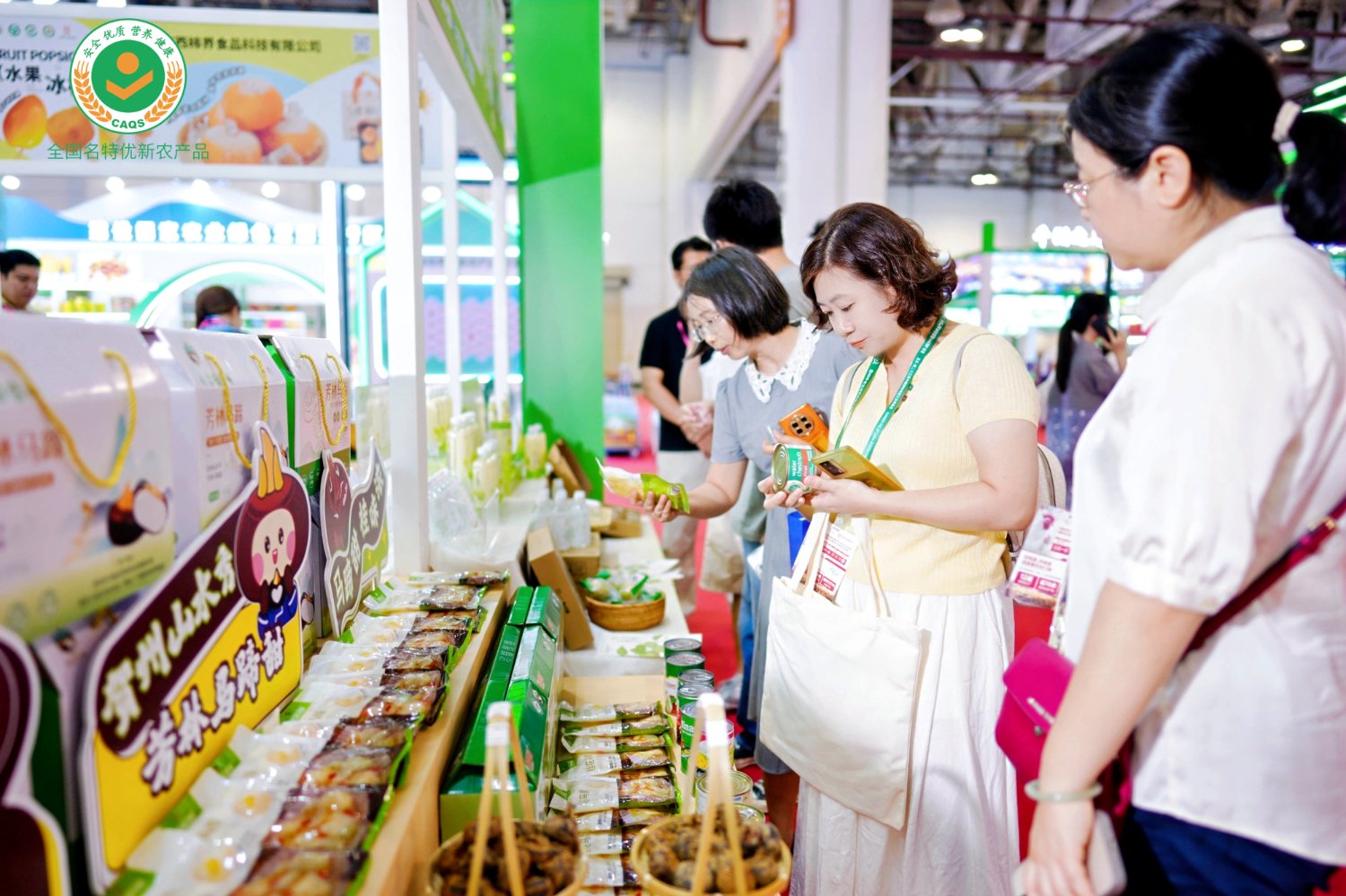
Core Insights - The red taro from Yanshan County, Jiangxi, is experiencing a harvest period with over 100,000 acres being cultivated, leading to increased activity among local farmers [1][3] Group 1: Industry Overview - The red taro industry in Yanshan County has faced challenges such as variety degradation and reduced yields, prompting the development of superior new varieties [5] - Current planting yields have increased by over 25%, with an average yield exceeding 2,100 kilograms per acre [5] - The industry has stabilized with a planting area of 102,000 acres, generating an annual output value exceeding 1 billion yuan, and providing employment for over 30,000 people [6] Group 2: Market Demand and Processing - The red taro is known for its delicate texture and is used in various processed products such as red taro rice cakes, taro balls, and milk tea [6] - The market demand is particularly strong in regions like Jiangsu, Zhejiang, and Shanghai, with farmers operating on an order-based model, transporting approximately 60 to 70 tons daily [5]