茉莉奶白

Search documents
茉莉奶白元旦假期迎销售高峰 跨年当日全国售出近190万杯
Zheng Quan Ri Bao Wang· 2026-01-04 14:17
Core Insights - The New Year holiday has significantly boosted the consumption of new tea drinks, particularly the Jasmine Milk Tea, which saw impressive sales figures driven by both the "New Year effect" and the launch of new products [1] Sales Performance - On December 31, 2025, nearly 1.9 million cups were sold nationwide, with 1.53 million cups sold on New Year's Day, indicating sustained consumer interest [1] - Shanghai, Chengdu, and Hangzhou ranked as the top three cities in terms of sales revenue [1] International Expansion - The Jasmine Milk Tea has also performed well in overseas markets, with a new store opening in Toronto's CF Fairview Mall during the New Year period, achieving an average daily sales of 3,500 cups [1] - Several stores in the United States have also shown strong performance, highlighting the brand's popularity and growth potential in international markets [1] Product Performance - The signature product "Jasmine Milk Tea" and popular fruit milk products "Strawberry King" and "Grape King" led in sales, collectively contributing over 40% of total sales [1] Store Performance - Multiple stores located in tourist attractions and transportation hubs have become key drivers of revenue growth, with notable performances from the Shanghai Qianguqing Scenic Area store, Xi'an Longhu Changle Tianjie store, and Shanghai Haichang Ocean Park store, each showing nearly 300% month-on-month sales growth [1] - Stores in Kashgar and Huzhou, which cater to tourism and travel, also experienced strong sales [1]
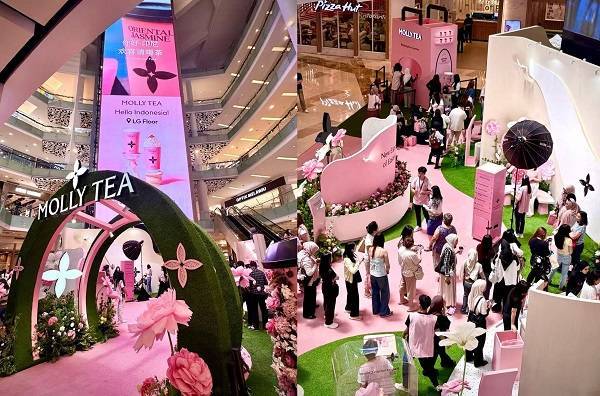
茉莉奶白出海再提速:东方摩登茶如何触达全球消费者的心?
3 6 Ke· 2025-12-05 06:48
Core Insights - The core viewpoint of the article emphasizes that the globalization of Chinese consumer brands, particularly in the tea beverage sector, is not merely about store expansion but involves a comprehensive capability that includes product strength, operational efficiency, and cultural expression [3][4][10]. Group 1: Global Expansion - The tea brand Jasmine Milk White has officially entered Indonesia, marking its expansion into the sixth country globally [1][4]. - In its first three days of operation in Indonesia, the two new stores generated over 7 billion Indonesian Rupiah (approximately 280,000 RMB) in revenue, selling nearly 17,000 cups, indicating high operational efficiency [4][5]. - Indonesia's non-alcoholic beverage market is projected to grow from $15.0167 billion in 2023 to $28.3949 billion by 2033, with tea expected to reach a market size of $10.7242 billion at a compound annual growth rate of 6.28% over the next decade [4]. Group 2: Market Strategy - Jasmine Milk White's success in Indonesia is attributed to its localized strategy, incorporating local cultural elements into its branding and product offerings [7]. - The brand has engaged in various offline activities, such as flash events and giveaways, to connect with young consumers who value lifestyle and experience [7]. - The brand's approach in the U.S. market includes a gradual expansion strategy, focusing on core areas with concentrated target demographics before broadening its reach [10][11]. Group 3: Brand Identity and Aesthetics - Jasmine Milk White aims to convey modern interpretations of Eastern culture through its product offerings and brand aesthetics [14][18]. - The brand's name, which includes "Jasmine," resonates with both Eastern and Western cultural perceptions, enhancing its global recognition [16]. - Collaborations with global cultural and sports IPs, such as becoming an official partner of the NBA's Brooklyn Nets, have significantly boosted the brand's visibility [18]. Group 4: Operational Excellence - The brand has established a dual-track supply chain model, combining cross-border and local sourcing to ensure product quality and consistency across its global outlets [10]. - In the U.S., Jasmine Milk White has achieved a monthly average GMV of approximately $500,000, with a record single-day sales of $35,000 and over 5,000 cups sold at its Salt Lake City location [11][13].


茉莉奶白出海再提速:东方摩登茶如何触达全球消费者的心?
36氪未来消费· 2025-12-04 07:22
Core Viewpoint - The article emphasizes that globalization for brands like Jasmine Milk White is not merely about store expansion but involves a systematic capability that includes product strength, operational efficiency, and cultural expression [3][4]. Group 1: Global Expansion Strategy - Jasmine Milk White has chosen to enter the U.S. market as its first international destination, diverging from the common practice of starting in culturally similar Southeast Asian countries [1][3]. - The brand's approach to globalization is characterized by a gradual and systematic strategy, focusing on building a solid operational foundation before expanding to other markets [14][15][18]. Group 2: Market Performance in Indonesia - The brand opened two stores in Jakarta, Indonesia, achieving a revenue of over 7 billion Indonesian Rupiah (approximately 280,000 RMB) within three days, with total sales nearing 17,000 cups [6]. - The Indonesian non-alcoholic beverage market is projected to grow from $15.0167 billion in 2023 to $28.3949 billion by 2033, with tea expected to reach a market size of $10.7242 billion at a compound annual growth rate of 6.28% [6]. Group 3: Localization Strategy - Jasmine Milk White's success in Indonesia is attributed to its deep localization strategy, incorporating local cultural elements into its store design and product offerings [9]. - The brand has launched exclusive products for the Indonesian market, such as jasmine-themed souvenirs, enhancing emotional connections with local consumers [9]. Group 4: U.S. Market Insights - The U.S. market is crucial for Jasmine Milk White, with a population of over 330 million and a GDP per capita exceeding $70,000, indicating strong consumer spending potential [13]. - The brand has opened four new stores in the U.S., bringing its total to 12, and has achieved a monthly average GMV of around $500,000 in its first year [13][16]. Group 5: Brand Aesthetics and Cultural Expression - Jasmine Milk White aims to convey modern interpretations of Eastern culture through its branding and product offerings, emphasizing the importance of aesthetic appeal [20][24]. - The brand's name, "Jasmine," resonates with both Eastern and Western consumers, serving as a recognizable symbol that evokes a sense of elegance and cultural connection [22]. Group 6: Future Outlook - The article suggests that Jasmine Milk White's model could serve as a reference for other Chinese consumer brands aiming for systematic global expansion, highlighting the potential for "Eastern modern tea" to become a modern lifestyle choice across cultural boundaries [24].

雅加达年轻人喝的“茉莉奶白”,和上海静安寺那杯有什么不同?
Ge Long Hui· 2025-12-01 13:49
Core Insights - The article highlights the successful entry of the Chinese tea brand Jasmine Milk White into the Indonesian market, achieving significant sales within a short period, indicating a strong demand for high-quality tea beverages in Southeast Asia [1][2] - The brand's strategy focuses on a "high-quality overseas expansion" approach, differentiating itself from competitors by emphasizing value over scale in a rapidly evolving market [1][3] Market Potential - Indonesia, with a population of 280 million and a median age below 30, presents a vast young consumer market that is open to new experiences and has a high frequency of small purchases [2][3] - The Indonesian tea market is undergoing a consumption upgrade, moving away from low-quality, sugary drinks to a demand for premium tea experiences, with a projected 87% growth in the mid-to-high-end tea market in 2024 [3][9] Competitive Landscape - The entry of Jasmine Milk White into Indonesia disrupts the existing low-price competition dominated by brands like Mixue Ice City, which has over 2,500 stores in the country [1][9] - The brand's pricing strategy positions it in the mid-to-high-end market, with an average customer price of 12-18 RMB, three times that of competitors, demonstrating the potential for premium offerings [9][10] Expansion Strategy - Jasmine Milk White employs a "global standard + local integration" model, ensuring quality through a dual supply chain that combines global sourcing with local partnerships [4][5] - The brand's operational model includes a thorough preparation phase of 6-12 months before entering new markets, focusing on supply chain efficiency and local market adaptation [4][11] Product Adaptation - The brand retains its core product offerings while making localized adjustments to cater to Indonesian tastes, such as increasing sweetness and introducing limited edition flavors [6][10] - This strategy of "classic base + local fine-tuning" allows the brand to maintain its identity while appealing to local preferences, enhancing acceptance among diverse consumer groups [6][10] Cultural Marketing - Jasmine Milk White emphasizes cultural resonance in its marketing, creating immersive experiences that connect consumers with Eastern tea culture, rather than relying solely on product promotion [7][12] - The brand's collaboration with local influencers and cultural events has significantly boosted its visibility and consumer engagement in the Indonesian market [7][12] Long-term Vision - The company plans to establish a local processing facility in Indonesia by 2026 to enhance supply chain localization and reduce dependency on imports [11][12] - The overall strategy reflects a shift in the tea industry from price competition to a focus on quality, culture, and sustainable growth in international markets [11][12]
7家消费公司拿到新钱;霸王茶姬三季度GMV79.3亿元;2026年我国即时零售规模将破万亿|创投大视野
36氪未来消费· 2025-11-29 12:23
Group 1: Investment and Financing Activities - "Bixing Coffee" completed a Series B financing round of several tens of millions, led by Suzhou Agricultural Development Industry Science and Technology Fund, following previous rounds in 2022 and 2024 [4][5] - "Tuozhu Technology" is nearing completion of a new financing round with a valuation potentially reaching $10 billion, although the company has denied the accuracy of this information [6] - "Ruiyun Cold Chain" recently completed an A+ round financing of nearly 100 million RMB, aimed at enhancing cold chain logistics efficiency through digitalization [7] - "TianTian BaiYing" completed a Series A financing round of several tens of millions, focusing on providing intelligent maintenance services to B-end clients [8] - "Laimou Technology" completed a Series A+ financing round of several tens of millions, marking its fourth round of financing since 2025 [9] - "Hypershell" completed two financing rounds totaling $70 million, with a post-investment valuation approaching $400 million [10] - "Smart Doubling Digital Human" received strategic investment from Zhiyuan Robotics [11][12] Group 2: Company Performance and Market Trends - "Bawang Tea Ji" reported a GMV of 79.3 billion RMB in Q3 2025, with a year-on-year decline of 4.5%, while overseas GMV grew by 75.3% [13][14] - "Mandi International" submitted an IPO application to Hong Kong Stock Exchange, aiming to become the first stock focused on hair loss prevention, with a projected revenue growth from 9.82 billion RMB in 2022 to 14.55 billion RMB in 2024 [15] - "Jasmine Milk White" has expanded its overseas presence, opening new stores in Indonesia and the US, with total stores exceeding 2000 globally [16][17] - "Lucky Coffee" announced its global store count surpassed 10,000, achieving rapid growth in the coffee market [18] Group 3: Industry Insights and Future Projections - The instant retail market in China is projected to exceed 1 trillion RMB by 2026, with a compound annual growth rate of 12.6% during the 14th Five-Year Plan period [21] - Global luxury goods consumption is expected to grow at a rate between -1% and 1% in 2025, with a recovery anticipated in 2026 [22] - High-net-worth individuals are shifting their gift-giving behavior, with travel becoming the preferred way to celebrate success, rising from 50% in 2024 to 64% in 2025 [23]

全球化再提速:印尼双店三日GMV超28万元,美国市场连开四店
Sou Hu Cai Jing· 2025-11-27 06:19
Core Insights - The Chinese tea brand, Jasmine Milk Tea, has opened two new stores in Jakarta, Indonesia, marking its entry into the sixth overseas market and demonstrating its global expansion strategy [1][3] - The brand has also opened four new locations in the United States, indicating simultaneous growth in both hemispheres [1] Expansion in Southeast Asia - The entry into the Indonesian market is based on a thorough analysis of the Southeast Asian market, with Indonesia being the largest economy in the region and having a young population that aligns with the brand's target demographic [3] - The brand's rapid expansion into culturally similar markets like Indonesia follows its successful entry into Thailand, showcasing a shift towards a more coordinated regional strategy [3] Localization Strategy - Jasmine Milk Tea emphasizes a "global standard + local integration" operational model, blending Eastern aesthetics with local elements in its store designs and marketing campaigns [5] - The brand's marketing activities, such as the "Molly Tea Garden" pop-up event in Indonesia, aim to immerse consumers in the unique charm of Eastern aesthetics [5] Product Innovation - The brand has adapted its product offerings to cater to North American consumer preferences by adjusting tea extraction ratios to enhance the "tea flavor" experience [7] - It maintains a balance between global quality and local adaptation by offering a selection of proven products alongside its classic tea series [7] Supply Chain Development - Jasmine Milk Tea employs a "cross-border + local" dual-track model for supply chain management, partnering with local suppliers to source ingredients like fresh milk, which helps reduce logistics costs and improve operational efficiency [9] - The brand integrates global quality control standards into its local supply chain to ensure consistent product quality across international locations [9] Global Expansion Progress - The brand's global store count has surpassed 2,000, with over 30 locations outside of China, covering markets such as the United States, Canada, Australia, the UK, Thailand, and Indonesia [9] - The brand's first store in the U.S. has achieved a stable monthly GMV of approximately $500,000, demonstrating sustainable operational capabilities in mature markets [11] Cultural Confidence and Future Plans - Jasmine Milk Tea's global journey represents not only store expansion but also the output of Chinese brand innovation and cultural confidence [11] - The brand plans to continue its steady overseas market development, aiming to introduce more consumers to the unique appeal of Eastern tea beverages [11]