
莱赛尔纤维

Search documents
13个标志性重大外资项目上新
第一财经· 2026-03-18 15:01
Core Viewpoint - The National Development and Reform Commission (NDRC) has launched a new batch of 13 significant foreign investment projects with a planned investment of $13.4 billion, focusing on manufacturing and increasing support for the service sector, including logistics for the first time [3][5]. Group 1: Investment Projects - The newly selected projects are primarily concentrated in manufacturing sectors such as electronics, chemicals, automotive, and electrical machinery, promoting the accelerated development of industrial clusters [5]. - The cumulative investment in significant foreign investment projects has reached $108 billion, demonstrating a notable demonstration effect in attracting foreign capital [3]. Group 2: Policy and Market Environment - The NDRC aims to expand market access and open fields with a focus on the service sector, enhancing the attractiveness of foreign investment in advanced manufacturing, modern services, high-tech, and energy-saving sectors [3][9]. - The government work report for this year emphasizes the need to deepen reforms in the foreign investment promotion system, ensuring national treatment for foreign enterprises and promoting local production [9][11]. Group 3: Foreign Investment Trends - Recent data indicates that nearly 60% of surveyed U.S. companies plan to increase their investment in China, reflecting China's long-term attractiveness as a fertile ground for foreign investment [6]. - The NDRC and the Ministry of Commerce have released the "Encouragement Directory for Foreign Investment (2025 Edition)," effective from February 1, 2026, to guide foreign investment towards advanced manufacturing and modern services [10]. Group 4: Regional Initiatives - Various regions, including Shanghai, Shandong, and Jiangsu, are actively deploying strategies to stabilize foreign investment, focusing on project implementation and enhancing service guarantees for foreign enterprises [12][13]. - Shanghai has prioritized manufacturing investment, aiming to build a modern industrial system around advanced manufacturing, with ongoing efforts to attract global resources and enhance project landing [13].

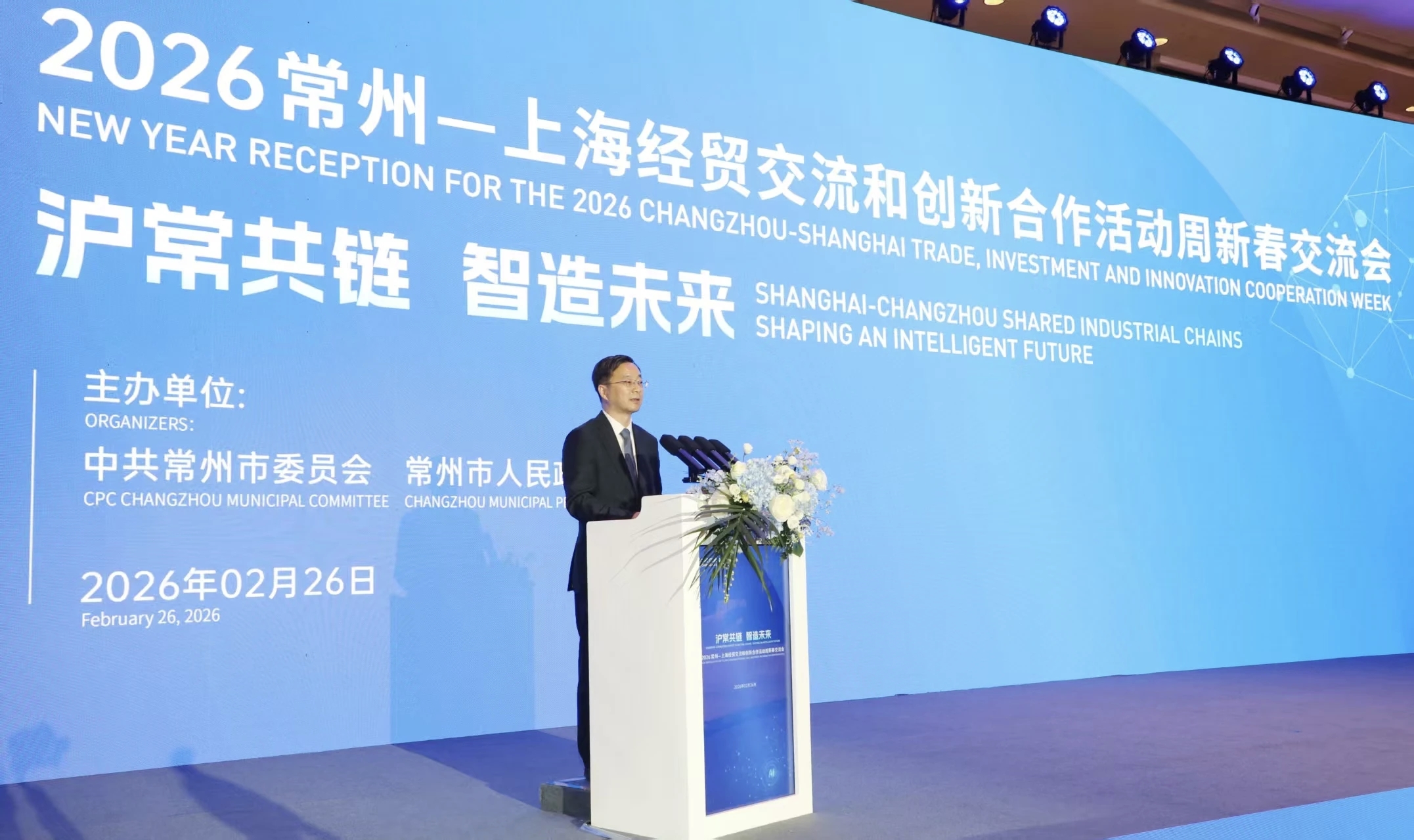
常州连续20年赴沪招商!今年活动周预计达成合作项目28个,总投资近200亿元
Guo Ji Jin Rong Bao· 2026-02-27 06:31
Group 1: Economic Cooperation and Investment - The "2026 Changzhou-Shanghai Economic and Trade Exchange and Innovation Cooperation Activity Week" is being held in Shanghai, marking the 20th consecutive year of such events, with 28 cooperation projects expected to be reached and a total investment exceeding 19.4 billion yuan [1] - Changzhou's GDP reached approximately 1.12 trillion yuan in 2025, with a growth rate of 5.2%, and a public budget revenue of 71.55 billion yuan, with tax revenue accounting for 85.5%, which is 8 percentage points higher than the provincial average [4] - Changzhou aims to establish itself as an "International Intelligent Manufacturing City and Innovation High Ground in the Yangtze River Delta," focusing on modern industrial systems and enhancing the real economy [5] Group 2: Industry Development and Innovation - Changzhou is accelerating the construction of a "1028" modern industrial system, targeting over 1.2 trillion yuan in output value for the new energy industry by 2030, and aims to strengthen intelligent equipment and new materials industries [6] - The city has over 310,000 enterprises, with more than 70,000 industrial companies, and high-tech industries accounting for over 62% of the total output value, ranking first in Jiangsu Province [6] - Changzhou is enhancing its innovation platforms and supporting enterprises in establishing R&D institutions to address common technological challenges in industrial development [6] Group 3: Foreign Investment and Collaboration - The German Chamber of Commerce has recognized Changzhou's strong industrial foundation and favorable business environment, with nearly 290 German companies operating in the city [10] - The American Chamber of Commerce highlighted Changzhou's impressive development path and its ability to integrate advanced technology into manufacturing, with significant investments from member companies [11] - Companies like Arlanxeo have invested nearly 1 billion USD in Changzhou, with over 90% of that investment directed towards the city, showcasing a commitment to long-term growth [12] Group 4: Corporate Expansion and Confidence - Leading companies in Changzhou, such as Suyuan Electric, are expanding their operations, with significant contracts and production milestones achieved [13] - The Gold Eagle Group expressed confidence in Changzhou's strategic direction and commitment to advanced technology and core projects [14] - The signing of the third phase of the Lyocell fiber project by Sateri in Liyang represents a significant investment of nearly 5 billion yuan, further solidifying Changzhou's position in the new materials industry [15]

南京化纤获批重组,主业“改头换面”能否扭转颓势?
Shen Zhen Shang Bao· 2026-02-14 07:07
Core Viewpoint - Nanjing Chemical Fiber has announced a significant asset restructuring plan involving the acquisition of 100% of Nanjing Gongyi Equipment Manufacturing Co., Ltd. through asset swaps, share issuance, and cash payments, aiming to enhance its business focus and financial health [1][2][3] Group 1: Transaction Details - The transaction involves an asset swap where Nanjing Chemical Fiber will exchange its assets and liabilities for a portion of Nanjing Gongyi's shares, specifically 52.98% [1][2] - The total transaction price for the assets being divested is set at 729.27 million yuan, while the assets being acquired are valued at 1.6066757 billion yuan [2] - Nanjing Chemical Fiber plans to raise up to 440 million yuan from specific investors to support this transaction, with the issuance not exceeding 30% of the company's total shares prior to the transaction [1][2] Group 2: Business Transformation - The company aims to shift its core business from producing viscose short fibers and other products to developing and manufacturing rolling functional components, which are essential for high-end equipment manufacturing [2][3] - This new focus aligns with national strategies for technological innovation and is considered a key area for government support [2] Group 3: Financial Performance and Challenges - Nanjing Chemical Fiber has faced significant financial difficulties, reporting net losses for four consecutive years from 2021 to 2024, totaling approximately 4.49 billion yuan in 2024 alone [4] - The company has also experienced continuous losses in its net profit excluding non-recurring items over the past seven years, amounting to around 1.662 billion yuan [4] - Despite previous attempts to alleviate financial pressure through acquisitions, the performance of acquired companies has negatively impacted Nanjing Chemical Fiber's financial results [5] Group 4: Future Outlook - The company anticipates continued losses in 2025, projecting a net loss between 74 million and 111 million yuan, with expected revenues between 27 million and 33 million yuan [7] - The stock may face delisting risk warnings following the disclosure of the 2025 annual report, as per the Shanghai Stock Exchange regulations [8]

南京化纤:目前业务海外营收的金额和占比不大
Mei Ri Jing Ji Xin Wen· 2026-02-04 08:42
Core Viewpoint - The company, Nanjing Chemical Fiber (600889.SH), indicated that its main products include viscose staple fiber, lyocell fiber, and PET structural core materials, with limited overseas revenue and export activities to Europe in the past two years [1] Group 1 - The company's primary products are viscose staple fiber, lyocell fiber, and PET structural core materials [1] - The overseas revenue generated by the company is currently small in both amount and proportion [1] - Investors are advised to refer to the company's periodic reports for more detailed information [1]
济宁:奋力突破工业经济“头号工程”
Da Zhong Ri Bao· 2026-01-22 06:18
Group 1 - The core focus of Jining is to build a strong industrial city by enhancing the industrial economy, emphasizing the importance of the real economy and manufacturing [1] - Jining plans to implement tailored industrial development action plans for 85 "chain master" enterprises, promoting innovation and collaborative development with small and medium-sized enterprises [1][2] - The city aims to cultivate high-quality enterprises and promote the integration of five industrial chains to release multiplier effects [1] Group 2 - Jining will intensify efforts to elevate its "232" advantageous industrial clusters, focusing on high-end equipment, high-end chemicals, new energy, new materials, new generation information technology, modern food, and modern medicine [2] - The high-end equipment cluster will concentrate on engineering machinery, automotive parts, and specialized equipment, aiming to create a leading smart manufacturing equipment hub [2] - The new energy cluster will expand the scale of energy storage batteries, power batteries, and photovoltaic components, with a goal to establish the largest new energy battery production base in Northern China [2] Group 3 - Jining will promote the upgrading of traditional industries such as coal, paper, tires, building materials, and textiles while also focusing on emerging industries like low-altitude economy and intelligent connected vehicles [3] - The city plans to develop high-quality industrial parks with a comprehensive development layout and enhance productive service industries through initiatives in commerce and logistics [3] - Jining aims to support the growth of service sectors such as research and design, accounting, legal services, and human resources, while fostering headquarters and building economies [3]
万亿进阶之路,看济宁如何以“三大定位”锻造发展实力
Feng Huang Wang Cai Jing· 2026-01-14 06:26
Core Viewpoint - Shandong province has successfully entered the 10 trillion yuan economic club in 2025, with Jining city exemplifying innovative transformation from a resource-based economy to a high-quality development model [1] Group 1: Economic Development - Jining port achieved a cargo throughput of 116 million tons in 2025, marking a 19.6% year-on-year increase, becoming the first inland port in northern China to reach this milestone [2] - The city has established 360 kilometers of high-grade waterways, accounting for 58% of the province's inland waterways, and 103 berths for vessels over 1,000 tons, representing 68% of the province's total [3] - Jining's industrial economy saw a year-on-year growth of 7.8% from January to November 2025, with the manufacturing sector growing by 10.2%, contributing to 61% of the industrial output [9] Group 2: Infrastructure and Logistics - Jining is developing a multi-modal transport system with a focus on high-grade waterways and dedicated railway lines, enhancing its position as a northern inland shipping hub [3] - The city is implementing a "front port - middle production - back garden" model, establishing seven major logistics parks to integrate port operations with local industries [4] - Jining's logistics network now covers 20 provinces, 152 cities, and extends to 19 countries, marking a significant leap in its port and shipping capabilities [5] Group 3: Industrial Transformation - Jining is focusing on a "number one project" in industrial economy, emphasizing the importance of the manufacturing sector and green, low-carbon development [6] - The city has initiated a three-year action plan for technological upgrades, with 251 projects included in the provincial key directory, maintaining the highest number in the province for four consecutive years [8] - New energy projects and smart manufacturing initiatives are being developed, including a significant investment in industrial robots and low-altitude economy sectors [8] Group 4: Cultural and Tourism Development - Jining is transforming its cultural tourism sector, with the launch of immersive experiences that attract significant visitor numbers, such as the "Ru Water Source" night show [10][11] - The city aims to build a "world cultural tourism city," leveraging its rich cultural heritage to drive high-quality development [11] - Jining's tourism service system is being enhanced to improve the overall quality of visitor experiences, with expectations of receiving over 100 million domestic tourists in 2025 [13]
南京化纤:公司目前业务的主要产品是粘胶短纤、莱赛尔纤维、PET结构芯材等
Zheng Quan Ri Bao Wang· 2026-01-09 13:40
Group 1 - The core business products of the company include viscose staple fiber, lyocell fiber, and PET structural core materials [1] - The company has not exported to EU countries in the past two years [1]
南京化纤:目前业务的主要产品是粘胶短纤、莱赛尔纤维、PET结构芯材等,近两年没有出口欧盟国家
Mei Ri Jing Ji Xin Wen· 2026-01-09 09:07
Core Viewpoint - Nanjing Chemical Fiber (600889.SH) has not exported to EU countries in the past two years, focusing on domestic markets for its main products, which include viscose staple fiber, lyocell fiber, and PET structural core materials [1]. Group 1 - The main products of Nanjing Chemical Fiber are viscose staple fiber, lyocell fiber, and PET structural core materials [1]. - The company has not engaged in exports to EU countries over the last two years [1].
2026年“第一审”:晨光电机首发上会,南京化纤“脱胎换骨”
Di Yi Cai Jing Zi Xun· 2026-01-04 09:13
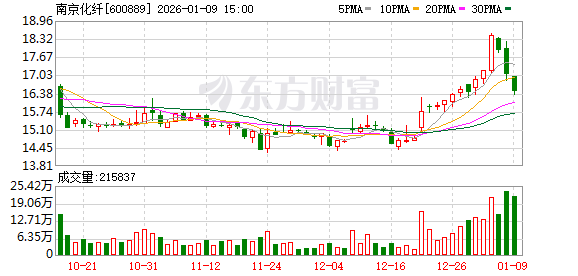
Group 1: Morning Light Electric Machine - Morning Light Electric Machine's IPO application will be reviewed on January 5, 2026, by the Beijing Stock Exchange Listing Committee [1] - The company specializes in the research, production, and sales of micro-special motors, primarily used in cleaning appliances like vacuum cleaners [2] - Revenue figures for Morning Light Electric Machine from 2022 to the first half of 2025 are as follows: 495 million, 712 million, 827 million, and 437 million yuan, respectively; net profits for the same period were 58.27 million, 99.33 million, 78.63 million, and 43.24 million yuan [2] - The company has faced scrutiny regarding the necessity of its fundraising projects and the rationality of fund usage, with a focus on its production capacity utilization rate declining from 85.89% to 76.76% between 2023 and the first half of 2025 [3] - Issues related to financial internal controls have been identified, including improper fund transactions and missing documentation [3] - A warning letter was issued by the Zhejiang Securities Regulatory Bureau due to undisclosed related party transactions amounting to 6.2448 million yuan [4] Group 2: Nanjing Chemical Fiber - Nanjing Chemical Fiber's asset acquisition plan will be reviewed on January 7, 2026, by the Shanghai Stock Exchange's M&A Review Committee [5] - The company, established in 1964, is transitioning from its original business of producing viscose short fibers and PET structural core materials to focus on the research and production of rolling functional components [5][6] - The rolling functional components are essential for various high-end manufacturing sectors, aligning with national innovation strategies and policies [6] - The restructuring plan includes a significant asset swap and the issuance of shares to acquire 100% of Nanjing Process Equipment Manufacturing Co., Ltd. [6][7] - Nanjing Chemical Fiber plans to raise up to 440 million yuan through a share issuance to specific investors, with a minimum of 100 million yuan to be subscribed by its controlling shareholder [7] - As of December 31, 2025, Nanjing Chemical Fiber's stock closed at 16.90 yuan per share, with a market capitalization of 6.2 billion yuan [7]
山东夏津:“智改数转”赋能传统纺织业焕新
Xin Hua Cai Jing· 2025-12-01 02:01
Group 1 - The core viewpoint of the articles highlights the transformation of the textile industry in Shandong Province, particularly in Xiaojin County, through digitalization and smart manufacturing, leading to significant improvements in production efficiency and cost reduction [1][2]. - The implementation of "smart transformation" has resulted in a 50% increase in production efficiency, a 36% reduction in energy costs, and a decrease of 1500 yuan per ton in yarn production costs [1]. - Xiaojin County has established a specialized team to promote the transformation of traditional textile industries towards high-end, intelligent, and green production methods, involving collaboration across multiple departments [1]. Group 2 - Companies like Kaiwei (Xiaojin) Textile Technology Co., Ltd. have upgraded their power distribution facilities to meet the high reliability demands of their automated production lines, which can produce around 45 tons of cotton yarn daily [2]. - The local power supply company has implemented a "project long system" to support textile enterprises, providing a green channel for electricity services and promoting 12 measures to enhance efficiency and reduce costs [2]. - Over the past two years, the local power supply company has completed over 30 line renovations with a total investment of 241 million yuan, resulting in cost savings of over 7.7 million yuan for textile enterprises [3]. Group 3 - More than 70% of the large-scale textile enterprises in Xiaojin County have installed distributed photovoltaic power generation equipment, leading to a 20% reduction in electricity costs per ton of yarn [3]. - The establishment of a carbon service platform and the creation of a "carbon label" for Xiaojin yarn are part of efforts to enhance carbon energy management and support enterprises in expanding their market reach [3].