蔬果

Search documents
钱大妈正式开启上市之路,港股生鲜板块再添新军
Sou Hu Cai Jing· 2026-02-25 02:57
Core Viewpoint - Qian Dama has officially submitted its IPO application to the Hong Kong Stock Exchange, marking a significant step towards entering the capital market and contributing to the development of the community fresh food industry [1] Group 1: Company Overview - Qian Dama's product matrix covers key categories such as animal protein, fruits and vegetables, and refrigerated prepared foods, fully meeting residents' daily fresh food needs [1] - As of September 2025, Qian Dama plans to achieve a nationwide layout with stores leading in core regions such as South China, Central China, and Southwest China, maintaining a leading position in industry transaction scale [1] - The scale and industry position of Qian Dama reflect the results of its long-term efforts and validate the maturity and effectiveness of its business model [1] Group 2: Business Model and Operations - Qian Dama adheres to a "daily fresh" model, ensuring freshness through a principle of daily clearance and same-day sales, which has garnered consumer recognition [3] - The company implements a "timed discount" mechanism to achieve zero inventory, allowing consumers to enjoy savings while reinforcing the brand's commitment to not selling overnight meat [3] - Qian Dama has built a comprehensive supply chain system tailored to community fresh food needs, forming its core competitive advantage [5] Group 3: Market Potential - The community fresh food market in China is experiencing rapid growth, with the market size expected to exceed 1.7 trillion yuan in 2024 and maintain a compound annual growth rate of 15.5% over the next five years [8] - Qian Dama is positioned to leverage its long-established brand value, proven business path, and comprehensive supply chain system to enhance market competitiveness [8] - The company aims to continue playing a benchmark role in the industry, providing consumers with better experiences and making fresh living more accessible [8]

【年味麻城】新春盛典乡村年味格外浓
Xin Lang Cai Jing· 2026-02-12 11:18
Core Viewpoint - The event "2026 Village Spring Festival" held in Shiqiao Village aims to create a vibrant rural celebration that integrates culture, industry, and livelihood, showcasing local products and cultural performances to enhance community engagement and economic vitality [1][10]. Group 1: Cultural and Economic Integration - The Spring Festival features a variety of cultural performances, including dragon and lion dances, and showcases local agricultural products through direct sales from farmers and cooperatives [1][3]. - The event includes a "Rural New Year Goods Market" that offers local specialties and fresh produce, allowing visitors to purchase all their New Year goods in one visit [3]. - Traditional food interactive areas allow visitors to experience and taste local culinary traditions, enhancing cultural appreciation and community involvement [3][10]. Group 2: Community Engagement and Social Services - The festival includes interactive games and activities for all ages, promoting community participation and enjoyment [7]. - Volunteer initiatives provide educational support for children and assistance to elderly residents, fostering a sense of community and care [7][9]. - Special events such as collective birthday celebrations for villagers and communal meals for the elderly promote social cohesion and warmth within the community [7][10].

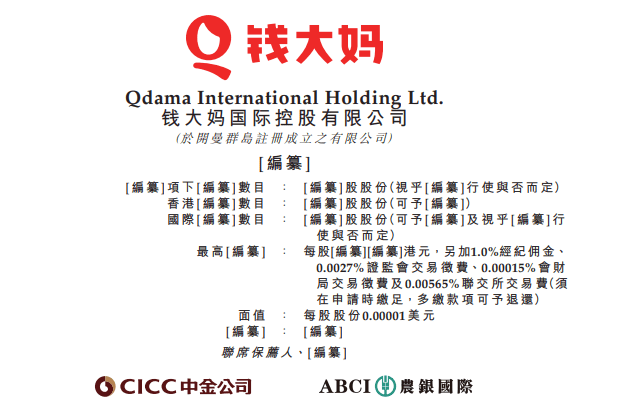
钱大妈日清模式“双刃剑”:高GMV光环背后,1159家加盟商集体出逃
Sou Hu Cai Jing· 2026-02-11 10:11
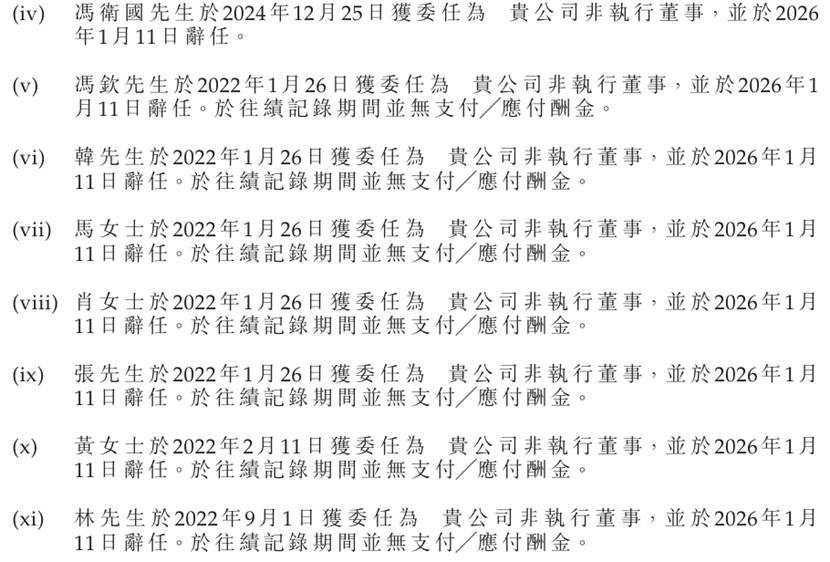
Core Viewpoint - Qian Dama, a community fresh food giant with nearly 3,000 stores, has submitted its IPO application to the Hong Kong Stock Exchange, aiming to become the first community fresh food stock. However, the founder's exit and the resignation of eight non-executive directors have raised concerns about the company's governance and operational stability, especially as it faces financial difficulties despite high gross merchandise volume (GMV) [1][2][3]. Group 1: Capital Changes Before IPO - The founder, Feng Jisheng, began to divest from Qian Dama in 2024, cashing out 110 million yuan through a company buyback and later transferring all his shares to his sister, Feng Weihua, for zero consideration, which could be worth tens of billions based on the company's valuation [2][3]. - The resignation of eight non-executive directors, including Feng Jisheng's brother, has been interpreted as a forced restructuring of the company's governance structure before the IPO [1][2]. Group 2: Business Growth and Challenges - Qian Dama has grown from a small pork stall in Dongguan to the largest community fresh food chain in China, with 2,938 stores as of September 30, 2025, and a GMV of 13.5 billion yuan in 2024, holding a 2.2% market share in the community fresh food sector [4][7]. - Despite impressive GMV figures, the company's revenue growth has stagnated, with revenues of 11.744 billion yuan in 2023 and 11.788 billion yuan in 2024, showing a decline of 4.2% in the first three quarters of 2025 [8][9]. Group 3: Financial Performance and Debt - The adjusted net profit was 215 million yuan, but under Hong Kong accounting standards, the company reported a net loss of 288 million yuan, primarily due to changes in the fair value of redeemable preferred shares. The debt-to-asset ratio surged to 196.7% by September 2025, indicating significant short-term repayment pressure [9][15]. - The company's revenue from product sales, which constitutes 97% of total revenue, has low gross margins, with rates of 7.8% in 2023, 8.1% in 2024, and 9.0% in the first three quarters of 2025, significantly lower than competitors [13][14]. Group 4: Franchise Model and Operational Issues - Qian Dama's business heavily relies on franchise stores, with 98.6% of its stores being franchises as of September 30, 2025. However, the relationship with franchisees has become strained, leading to a significant number of closures and a loss of over 1,100 franchise partners since 2023 [15][20]. - The "daily clearance" model, which involves aggressive discounting, has resulted in many franchisees reporting losses, as customers tend to wait for discounts, leading to a paradox where sales do not translate into profitability [16][20].
营养专家私藏的年货清单!附6类食品选购攻略
Xin Lang Cai Jing· 2026-02-09 14:04
Core Viewpoint - The article emphasizes the importance of selecting healthy traditional foods for the Chinese New Year, providing a guide to choosing nutritious options while maintaining festive flavors [1][3]. Group 1: Fruits and Vegetables - Freshness is key when selecting fruits and vegetables, with a recommendation to include over 10 varieties weekly, such as leafy greens, root vegetables, and fruits [4][5]. - The 2022 Dietary Guidelines for Chinese Residents suggest adults should consume 300-500 grams of vegetables and 200-350 grams of fruits daily, advising against long-term storage to prevent nutrient loss [5]. Group 2: Nuts - A diverse selection of nuts is recommended, with a preference for raw varieties to avoid added salts and flavors, which can be detrimental to health [6]. - Different nuts offer varying nutritional benefits, such as peanuts being high in protein and pistachios aiding in vitamin B1 intake [6]. Group 3: Meat - When purchasing meat, a focus on low-fat options is advised, with a balance between red and white meats, favoring the latter [7][8]. - Freshness indicators for pork include a bright red color and minimal liquid, while beef should be dark red with clear fibers, and lamb should be evenly colored and not overly pungent [7][8]. Group 4: Sweets and Snacks - Candy should be consumed sparingly, primarily for taste rather than nutritional value, as it generally lacks health benefits [10]. - Traditional pastries are often high in calories and low in nutritional value, so simpler recipes with fewer ingredients are preferred [12][16]. Group 5: Beverages - Low-sugar options are recommended for drinks, with a suggestion to make homemade beverages for better health [11]. - Alcohol consumption should be moderated, with a preference for pure grain spirits and limited intake of high-alcohol content beverages [15].

威海农贸市场:“岁末忙年”节奏开启
Xin Lang Cai Jing· 2026-02-03 16:43
Core Viewpoint - The article highlights the bustling atmosphere of the agricultural market in Weihai during the pre-New Year period, emphasizing its role as a vital supply hub for agricultural products in the city [2] Group 1: Market Dynamics - The Weihai agricultural market operates 24 hours, reflecting a peak in activity as the New Year approaches [2] - The market serves as the main supply hub for fruits, vegetables, meat, and grains in Weihai, indicating its importance in the local food supply chain [2] Group 2: Cultural Significance - The article captures the vibrant local culture and community engagement within the market, showcasing the traditional and modern aspects of shopping experiences [2] - The presence of both traditional vendors and trendy market experiences illustrates the evolving nature of consumer preferences in agricultural markets [2]
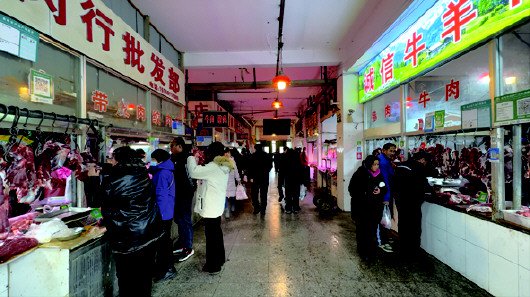
钱大妈IPO净利润率仅2.4%,“社区生鲜”还是一门好生意吗?
Xin Lang Cai Jing· 2026-02-02 09:47
Core Viewpoint - Qian Dama International Holdings Limited has established a regional monopoly in Guangdong with its fresh and low-priced offerings, achieving annual revenue exceeding 10 billion RMB and a net profit of nearly 300 million RMB. The company has recently submitted its prospectus for an IPO in Hong Kong to expand its operations and enhance its supply chain capabilities [2][29]. Group 1: Financial Performance - Qian Dama is the largest community fresh food chain in China, with a revenue of 11.744 billion RMB in 2023, 11.788 billion RMB in 2024, and 8.730 billion RMB in the first nine months of 2025, with net profit margins of 1.4%, 2.4%, and -3.4% respectively [28][41]. - The main revenue source is product sales, accounting for 97.6% in 2023, 97.5% in 2024, and 97.3% in the first nine months of 2025, with total sales of 114.6 billion RMB, 114.91 billion RMB, and 81.32 billion RMB respectively [3][31]. - The gross profit margin for product sales is relatively low, at 7.8%, 8.1%, and 9% across the periods, which is attributed to the company's business model [10][34]. Group 2: Business Model and Operations - Qian Dama has pioneered the "Discount Daily Clearance" sales model, ensuring that all fresh products are sold on the same day they arrive at stores, which has led to a unique consumer shopping habit [7][36]. - The company operates 16 comprehensive warehouses, achieving a product turnover time of less than 12 hours, significantly better than the industry average of 2 to 4 days [8][37]. - The company has a membership base of over 28 million, with members shopping more than five times a month on average, which is higher than the industry average of three times [9][38]. Group 3: Market Position and Expansion - Qian Dama's stores are primarily located in Guangdong, with 2017, 2029, and 2014 stores in the province across the respective years, representing 69.2%, 69.4%, and 68.6% of total stores [21][22]. - The company has established a comprehensive sales network that includes both offline and online channels, with a significant portion of revenue coming from franchise sales [14][15]. - Despite recent stagnation in store growth, Qian Dama continues to expand its presence outside Guangdong, with a total of 838, 826, and 852 stores in other regions of mainland China [19][21].

江苏太仓最新食品抽检结果出炉,这些不合格
Xin Lang Cai Jing· 2026-02-02 08:43
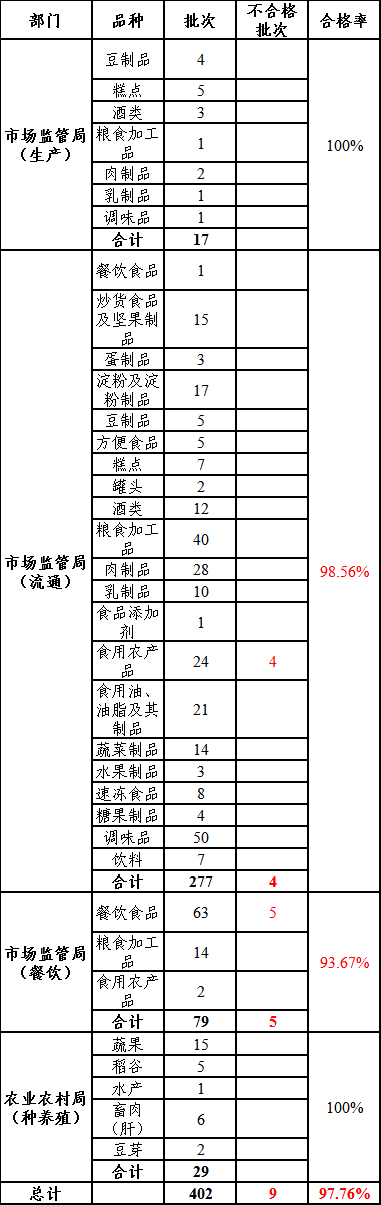
Core Insights - The food safety inspection results for December 2025 in Taicang show a high compliance rate of 97.76%, with 393 out of 402 food samples passing the tests [2][5] - Specific non-compliance issues were identified in 9 samples, including pesticide residues and bacterial contamination [3][6] Group 1: Inspection Results - A total of 402 food samples were tested, with 393 passing, resulting in a compliance rate of 97.76% [2][5] - The inspection covered various categories, including edible agricultural products, processed foods, and beverages [1] Group 2: Non-compliance Details - Non-compliant items included 4 batches of edible agricultural products and 5 batches of catering food, with issues related to pesticide residues such as bifenthrin and bacterial contamination [3][6] - Specific non-compliance cases included pesticide residues exceeding the maximum limits set by national food safety standards [8][9] Group 3: Compliance by Category - The compliance rates varied by category, with the highest being 100% for tofu products and 98.56% for meat products [4][5] - The inspection results indicate that while most categories performed well, certain food types like catering products had a lower compliance rate of 93.67% [5]
这7种食物看似没坏但可能“有毒”,快检查你家有没有
Xin Lang Cai Jing· 2026-01-20 12:46
Group 1 - The article highlights the potential health risks associated with consuming certain foods that may appear safe but can lead to food poisoning [1][4][6] - It emphasizes the dangers of improperly stored nuts, which can develop harmful toxins like aflatoxin and cyanide from bitter almonds [1][3] - The article warns against consuming long-soaked wood ear mushrooms due to the risk of mycotoxin poisoning, particularly from the bacteria producing heat-resistant toxins [4][5] Group 2 - It discusses the hazards of eating sprouted potatoes, which contain solanine, a natural toxin that increases significantly when potatoes sprout or turn green [6][7] - The article points out that bitter fruits and vegetables can contain cucurbitacin, a toxin that affects the nervous system and is not destroyed by cooking [7][8] - It advises against consuming partially rotten or moldy fruits and vegetables, as they can harbor harmful bacteria and toxins like nitrites and mycotoxins [8][9] Group 3 - The article mentions the risks associated with red-hearted sugarcane, which indicates mold contamination and the presence of 3-nitropropionic acid, a potent neurotoxin [9][10] - It warns about the dangers of consuming dead crabs, which can accumulate histamines that remain toxic even after cooking, leading to allergic reactions [11][12]
钱大妈上市大消息,解决了损耗,却困住了自己?
Zhong Guo Ji Jin Bao· 2026-01-17 07:19
Core Viewpoint - Qian Dama, a community fresh food chain, has submitted its application for an IPO on the Hong Kong Stock Exchange, indicating its ambition to overcome growth challenges and adapt to a competitive market landscape [1][4]. Company Overview - Qian Dama was founded in 2012 in Dongguan, China, introducing the "no overnight meat" concept and the "discount day clearance" model, which effectively addresses the high spoilage rates typical in the fresh food industry [6]. - The company has expanded rapidly, reaching over 3,700 stores at its peak, but has faced challenges in northern markets, leading to the closure of all stores in Beijing within a year [8]. Market Position - Despite being a leader in the community fresh food sector, Qian Dama operates in a highly fragmented market with low concentration, where the top five players hold only 7.3% of the market share [17]. - Qian Dama's market share is approximately 2.2%, with a GMV of 13.5 billion yuan in 2024, maintaining its position as the top community fresh food chain in China for five consecutive years [10][18]. Financial Performance - The company has faced declining revenue, with a 4.25% year-on-year decrease in revenue for the first three quarters of 2025, amounting to 8.359 billion yuan [15]. - Qian Dama's gross profit margins are significantly lower than competitors, with margins of 9.8% in 2023 and 10.2% in 2024, compared to around 30% for peers like Dingdong Maicai [12]. Strategic Challenges - The company is experiencing growth challenges due to increased competition from instant retail platforms and community discount supermarkets, which dilute its geographical advantages [19][21]. - The fixed discount mechanism of the "discount day clearance" model limits profitability, as it compresses the contribution of gross profit per item sold [15]. Future Strategies - Qian Dama aims to enhance its supply chain efficiency and product offerings through a multi-faceted strategy, including the "Product+" initiative to introduce higher-margin products and optimize its profit structure [24][26]. - The company plans to utilize funds from its IPO to improve store networks, diversify product offerings, upgrade supply chains, and enhance digital capabilities [26].
钱大妈,上市大消息!解决了损耗,却困住了自己?
Zhong Guo Ji Jin Bao· 2026-01-17 05:45
Core Viewpoint - Qian Dama, a leading community fresh food chain in China, is seeking to go public on the Hong Kong Stock Exchange, reflecting its challenges in growth and market competition [2][5]. Company Overview - Qian Dama International Holdings Limited submitted its listing application to the Hong Kong Stock Exchange on January 12, with CICC and Agricultural Bank of China International as joint sponsors [2]. - The company operates under the "no overnight meat" principle and has pioneered the "discount day clearance" model, which has helped it maintain a competitive edge in the market [6]. Market Challenges - Despite being a market leader, Qian Dama faces significant challenges, including sluggish growth, slowed store expansion, and regional development imbalances [4]. - The rise of instant retail and community discount supermarkets has posed substantial threats to the community fresh food chain model [4][18]. Financial Performance - Qian Dama's overall GMV (Gross Merchandise Volume) reached 14.8 billion yuan in 2024, maintaining its position as the top community fresh food chain in China for five consecutive years [10]. - The company's revenue has been under pressure, with a reported decline of 4.25% year-on-year for the first three quarters of 2025, amounting to 8.359 billion yuan [14]. Business Model and Strategy - Qian Dama's business model includes a focus on animal protein, fruits and vegetables, and refrigerated processed foods, with a total of 775 standardized product units offered as of September 30, 2025 [12]. - The company has implemented a "Product+" strategy to enhance its profit model and growth trajectory, focusing on high-margin categories and optimizing its product mix [20]. Supply Chain and Operational Efficiency - Qian Dama has established 16 temperature-controlled warehouses across the country, achieving 100% cold chain coverage from warehouse to store [19]. - The company aims to enhance operational efficiency and product freshness through direct sourcing and a streamlined supply chain [19]. Market Position and Competition - The community fresh food market is highly fragmented, with Qian Dama holding only a 2.2% market share among the top five players, which collectively account for 7.3% of the market [15][16]. - The competition from instant retail platforms and community discount supermarkets is intensifying, as these alternatives offer a broader product range and leverage fresh food as a traffic driver [18].