
计算芯片

Search documents
北京君正(300223) - 300223北京君正投资者关系管理信息20260330
2026-03-31 10:08
Group 1: Company Overview and Market Conditions - Beijing Junzheng Integrated Circuit Co., Ltd. is experiencing tight supply in the storage industry, particularly in DRAM, with new capacity expected to be released in over 18 months [1] - The company has increased inventory to nearly 3 billion yuan by the end of 2025, significantly higher than the previous cycle [1] - The company is focusing on enhancing communication with upstream manufacturers to secure more capacity [1] Group 2: Pricing and Profit Margins - Storage chip gross margins are expected to stabilize from Q4 2024, with gradual improvements in gross margins and revenue reflecting price increases starting in 2026 [2] - Price increases for DRAM products are anticipated, with domestic prices rising significantly, while overseas prices will increase at a slower rate [2] - Flash memory prices have been adjusted, with domestic increases starting in Q3 and Q4 of the previous year, while overseas adjustments began in Q1 of this year [3] Group 3: Customer Demand and Supply Chain - The automotive sector is experiencing pressure due to supply constraints, with some Tier 1 manufacturers struggling to secure supplies [4] - The company is prioritizing support for high-quality customers amid tight DRAM supply, which may affect overall automotive demand [4] - The delivery cycle for automotive-grade storage products varies, with some orders potentially extending to Q3 due to supply constraints [8] Group 4: Future Growth and Strategic Plans - The company aims to leverage the current cycle to enhance its market position, particularly in the automotive and industrial sectors [6] - The company is expanding its DRAM R&D team and has initiated a domestic Flash R&D team to capitalize on growth opportunities [6] - The company is positioned to improve its market share in the automotive DRAM sector, currently ranked fourth globally [6] Group 5: Financial Outlook - The company cannot provide specific revenue guidance for 2026 but anticipates strong growth in storage chip business due to robust market demand [10] - Overall, the company expects to achieve significant growth in operating scale and gross margins for the year [11] - The focus on technological advancements and product development will drive long-term growth beyond the current market cycle [11]

华安研究2026年3月金股组合
Huaan Securities· 2026-02-28 13:05
Group 1: Financial Performance - The projected net profit for 2024A, 2025E, and 2026E for MicroPort is -642 million, -205 million, and -107 million respectively, indicating a significant improvement in profitability over the years[1] - The expected revenue growth for MicroPort is 37% in 2024A, 68% in 2025E, and 47% in 2026E, reflecting strong market demand[1] - The EPS for MicroPort is projected to improve from -0.7 in 2024A to -0.1 in 2026E, showing a trend towards profitability[1] Group 2: Market Trends and Risks - The surgical robot sector is identified as one of the fastest-growing fields in the global and Chinese medical device markets, driven by high clinical value and strong demand[1] - The white cardboard paper industry is experiencing a price increase of 200 yuan per ton, which is expected to enhance profitability for leading companies like Bohui Paper[1] - Risks include potential delays in overseas sales for MicroPort and competition in the surgical robot market, which could impact revenue growth[1] Group 3: Industry Insights - The lithium industry is expected to benefit from a supply-demand driven price increase, with Ganfeng Lithium projecting significant revenue growth from -2074 million in 2024A to 9379 million in 2026E[1] - Huayou Cobalt is positioned to benefit from rising nickel and cobalt prices due to supply-side changes, with projected revenues increasing from 4155 million in 2024A to 9268 million in 2026E[1] - The phosphoric chemical industry is experiencing a recovery in demand, with Xingfa Group's revenue expected to rise from 1601 million in 2024A to 2078 million in 2026E[1]
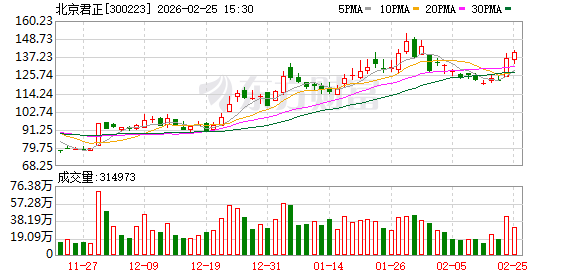
北京君正:DRAM涨价幅度相对较大,Nor Flash也有不同程度的价格调整
Zheng Quan Ri Bao· 2026-02-25 12:07
Group 1 - The company indicated that there has been a significant increase in DRAM prices [2] - There have also been varying degrees of price adjustments in NorFlash [2] - The prices of computing chips have also risen [2]

RoboX-产业奇点已至-规模化应用加速
2026-02-10 03:24
Summary of RoboX Industry Conference Call Industry Overview - The RoboX industry is experiencing a significant shift towards industrialization, with a focus on the deployment of Robotaxi and other autonomous vehicle applications. The penetration rate of L2 and above intelligent functions in passenger cars is rapidly increasing, leading to the mass production of core components like LiDAR and computing chips, resulting in significant cost reductions [1][2]. Key Insights and Arguments - **Cost Reduction**: The price of LiDAR has decreased from 20,000 RMB in 2020 to around 2,000 RMB by 2024, providing substantial cost-saving opportunities for the RoboX industry [1][5]. - **Profitability of Robotaxi**: Robotaxi can achieve profitability by reducing labor costs, with gross margins expected to rise from 20% to over 60%. The market for Robotaxi is projected to reach a scale of 100 billion RMB by 2030, with a global market size potentially growing to over 350 billion USD by 2035 [1][8]. - **Urban Deployment**: Cities like Beijing, Guangzhou, Shenzhen, Chongqing, and Wuhan have begun full commercial operations of Robotaxi, marking a significant step towards the commercialization of autonomous driving technology [1][12]. - **Logistics Cost Structure**: Last-mile delivery accounts for 60% of total logistics costs, making it a critical area for efficiency improvements. Unmanned delivery solutions are expected to significantly reduce fulfillment costs and address future labor shortages [1][13]. Additional Important Content - **Market Size Projections**: The domestic last-mile delivery vehicle market is expected to grow to 12.8 billion RMB by 2025 and 97.7 billion RMB by 2030 [1][13]. - **Policy Support**: The Chinese government has implemented numerous supportive policies for the development of intelligent connected vehicles, including the establishment of 17 national-level autonomous driving demonstration zones and the issuance of over 10,000 testing licenses [6][21]. - **Industry Collaboration**: The dry logistics sector is characterized by a collaborative model involving autonomous driving companies, OEMs, and logistics firms, focusing on enhancing operational efficiency and safety [3][20]. - **Challenges in Dry Logistics**: The dry logistics sector faces challenges such as limited operational efficiency, compressed profit margins, increased safety risks, and a structural gap in the driver workforce [3][16]. - **Future Recommendations**: The industry is advised to focus on the three core application areas of Robo Taxi, Robo Van, and Robo Truck, leveraging strong policy support and technological advancements to drive commercialization and market potential [22][23]. This summary encapsulates the key points discussed in the RoboX industry conference call, highlighting the current state, future projections, and strategic recommendations for stakeholders in the autonomous vehicle sector.

行业深度 | RoboX:产业奇点已至 规模化应用加速【国联民生汽车 崔琰团队】
汽车琰究· 2026-02-03 16:03
Core Insights - The RoboX industry is approaching a commercialization inflection point, driven by strong policy support, increasing demand for cost-effective and safe autonomous driving solutions, and significant reductions in core component costs [2][6][11]. Group 1: RoboX Overview - RoboX encompasses various forms of autonomous driving applications, including Robotaxi, Robovan, and Robotruck, designed to adapt to different transportation scenarios through modular design [8]. - The industry is experiencing rapid advancements in technology, with the penetration rate of L2 and above autonomous features in passenger vehicles expected to exceed 90% by 2030, significantly driving down costs for key components like LiDAR and computing chips [9][11]. Group 2: Robotaxi Insights - Robotaxi is projected to achieve an operational cost of $0.2 per kilometer by 2027, a 50% reduction compared to traditional ride-sharing platforms, primarily due to the remote safety operator model and economies of scale [3][17]. - The global Robotaxi market is expected to reach a valuation of $352.6 billion by 2035, with the Chinese market anticipated to grow from $200 million in 2025 to $179.4 billion by 2035, indicating strong growth potential [23][28]. Group 3: Robovan Insights - The demand for Robovan is driven by labor shortages and high costs in last-mile delivery, with its capabilities making it a key solution across e-commerce, retail, and food delivery sectors [4]. - The cost of Robovan is expected to drop significantly, from 500,000-600,000 yuan to around 20,000 yuan, due to economies of scale and increased penetration of L2 and above features in passenger vehicles [4][11]. Group 4: Robotruck Insights - Robotruck applications are expanding from closed environments to long-haul logistics, with a market potential reaching hundreds of billions, focusing on stable freight demand and high operational value [5]. - The adoption of "virtual drivers" in Robotrucks is expected to significantly reduce the operating costs of electric trucks, enhancing their commercial viability [5]. Group 5: Policy Support - Since 2020, the Chinese government has implemented numerous policies to support the development of intelligent connected vehicles, establishing a robust regulatory framework for the industry [11][13]. - By 2025, 17 national-level testing demonstration zones have been established, with over 32,000 kilometers of testing roads opened, facilitating the transition from technology validation to commercial operation [11][13]. Group 6: Investment Recommendations - Companies involved in autonomous driving solutions and operations are expected to benefit directly from the commercialization of RoboX, with a projected rapid increase in penetration rates between 2026 and 2027, unlocking a market potential of hundreds of billions [6][28]. - Recommended companies include WeRide, Cao Cao Mobility, and XPeng Motors, with a focus on intelligent component manufacturers like Horizon Robotics and Bertelson [6].



国联民生证券:自动驾驶受益于RoboX规模化商用 规模化应用加速
Zhi Tong Cai Jing· 2026-02-03 03:14
Group 1: RoboX Industry Insights - RoboX is accelerating its industrialization, transitioning from technology validation to large-scale deployment, driven by strong policy support and urgent demand for cost reduction and efficiency improvement [1] - Since 2020, the Chinese government has introduced numerous supportive policies, enhancing institutional guarantees for RoboX's development [1] - The penetration rate of L2 and above intelligent functions in passenger vehicles is rapidly increasing, leading to significant cost reductions in core components like lidar and computing chips [1] - The demand for intelligent driving solutions is fueled by multiple factors, including cost reduction, safety enhancement, and labor shortages, positioning RoboX as a core driver of this industrial transformation [1] Group 2: Robotaxi Market Dynamics - Robotaxi's core advantage lies in its significant cost reduction, with operational costs expected to be $0.2 per km by 2027, a 50% decrease compared to traditional ride-sharing platforms [2] - The reduction in human error is anticipated to significantly lower accident rates, enhancing safety, with the global market projected to reach a trillion-dollar scale by 2030 [2] - The decline in hardware costs and improved operational efficiency are key factors driving the commercialization of Robotaxi, with Tesla entering the market using a pure vision approach [2] - Full autonomous commercialization is gradually being implemented in major cities in China, transitioning from technology validation to a commercial closed loop [2] Group 3: Robovan Demand and Supply - The demand for Robovan is driven by labor shortages and high costs in last-mile delivery, making it a critical solution for various high-frequency scenarios [3] - The price of unmanned delivery vehicles is expected to drop significantly from 500,000-600,000 yuan to around 20,000 yuan due to economies of scale in core components [3] - The penetration rate of L2 and above functions in passenger vehicles is projected to exceed 90% by 2030, facilitating the mass production of essential components [3] - Policy support is accelerating with the introduction of hard indicators for deploying unmanned vehicles, promoting the transition from demonstration to large-scale application [3] Group 4: Robotruck Commercialization - Robotruck applications are primarily in closed environments like ports and mines, as well as trunk logistics, with the market size expected to reach a trillion yuan [4] - The successful implementation of L4 in closed scenarios demonstrates the capability for high-intensity operations, while trunk logistics is becoming a core commercial direction [4] - Robotruck utilizes a "virtual driver" to significantly reduce the operating costs of electric tractors, enhancing its commercial viability [4] - National support is clear, but local authorities remain cautious due to the high accident risks associated with heavy trucks, with integrated vehicle-road-cloud trials expected to accelerate cross-province collaboration [4]

智能驾驶系列报告四:RoboX:产业奇点已至,规模化应用加速
Guolian Minsheng Securities· 2026-02-03 00:25
Investment Rating - The report maintains a recommendation rating for the RoboX industry, indicating a positive outlook for investment opportunities in this sector [1]. Core Insights - RoboX is approaching a critical point of industrialization, transitioning from technology validation to large-scale deployment, driven by supportive policies, increasing supply of key components, and strong demand for intelligent driving solutions [7][19]. - The report highlights three main applications of RoboX: Robotaxi, Robovan, and Robotruck, each with distinct market dynamics and growth potential [10][19]. Summary by Sections 1. Investment Focus: RoboX Accelerating Towards Industrialization - RoboX encompasses various forms of autonomous driving applications, including Robotaxi, Robovan, and Robotruck, designed for different transportation scenarios [10]. - The report emphasizes the modular design of RoboX, allowing for adaptability across various transport needs [10]. 2. Robotaxi: Scaling Point Evident, Fully Autonomous Commercialization Gradually Landing - Demand Side: Robotaxi can significantly reduce operational costs, with projected costs of $0.2 per kilometer by 2027, a 50% reduction compared to traditional taxi services [21]. - Supply Side: Continuous reduction in hardware costs is facilitating the scaling of Robotaxi applications, with the sixth-generation vehicle costs dropping by 60% compared to previous models [35]. - Policy Side: The gradual implementation of fully autonomous commercial operations is supported by clear regulations regarding accident liability [21][15]. 3. Robovan: Strong Demand for Unmanned Delivery, Cost Advantages Driven by Core Component Price Reductions - Demand Side: There is a strong need for unmanned delivery solutions in the last-mile logistics sector, covering key application scenarios such as e-commerce and fresh food delivery [3]. - Supply Side: The cost of core components is decreasing, enhancing the price competitiveness of unmanned delivery vehicles [3]. - Policy Side: Continuous opening of road rights and pilot projects is accelerating the deployment of unmanned delivery vehicles [3]. 4. Robotruck: Transitioning from Closed Scenarios to Mainline Logistics, Cross-Province Testing Implemented - Demand Side: Robotruck applications are expected to reach a market scale of hundreds of billions, focusing on stable freight demand in complex environments [4]. - Supply Side: Successful implementation of L4 in closed scenarios is validating the operational capabilities of Robotrucks [4]. - Policy Side: National support is clear, but local policies are cautiously opening up due to the high risks associated with heavy-duty trucks [4]. 5. Investment Recommendations - The report suggests that companies involved in RoboX commercialization, such as WeRide, Cao Cao Mobility, and XPeng Motors, will directly benefit from the scaling of RoboX applications [19]. - It also recommends focusing on intelligent component manufacturers like Horizon Robotics and Desay SV, which are expected to show performance elasticity [19].
奕斯伟计算继续冲击「RISC-V第一股」,已成功将130余款产品商业化
IPO早知道· 2026-01-30 13:03
Core Viewpoint - Beijing Yiswei Computing Technology Co., Ltd. is advancing its IPO process on the Hong Kong Stock Exchange, aiming to become the first publicly listed company focused on RISC-V architecture in China [2] Group 1: Company Overview - Founded in 2019, Yiswei Computing utilizes a new generation of RISC-V computing architecture to provide system-level solutions globally, with a focus on specialized algorithms and IP modules [2] - The company has developed two main business matrices: smart terminal chips and embodied intelligence chips, catering to various applications including home, office, automotive, and industrial scenarios [2] Group 2: Market Potential - The global RISC-V main control chip market is projected to grow from 1.1 billion in 2020 to 56.5 billion by 2024, with a compound annual growth rate (CAGR) of 166.6%, and further to 440.4 billion by 2029 at a CAGR of 38.7% [3] - RISC-V's penetration in the smart terminal chip market is expected to rise from 0.1% in 2020 to 1.3% in 2024, and further to 11.8% by 2029 [3] - In the embodied intelligence chip market, penetration is anticipated to increase from 0.4% in 2020 to 6.4% in 2024, reaching 19.1% by 2029 [3] Group 3: Product and Financial Performance - As of September 30, 2025, Yiswei Computing has commercialized over 130 products and serves more than 110 global clients, making it the largest provider of RISC-V mass-produced chips in China by product quantity [4] - The company's revenue for 2023 and 2024 was 1.752 billion and 2.025 billion respectively, showing year-on-year growth; revenue for the first three quarters of 2025 increased by 22.4% to 1.541 billion compared to the same period in 2024 [4] - Adjusted net losses have decreased from 1.704 billion in 2023 to 1.440 billion in 2024, and further to 854 million in the first three quarters of 2025, indicating a clear improvement trend [4] Group 4: Funding and Future Plans - Yiswei Computing has completed four rounds of financing totaling over 9 billion RMB, with notable investors including IDG Capital and others [4] - The funds raised from the IPO will primarily be used to enhance smart terminal and embodied intelligence solutions, improve hardware and software capabilities, pursue strategic acquisitions, expand marketing networks, and support general corporate purposes [4]

北京君正(300223.SZ):公司部分计算芯片价格也已有调整
Ge Long Hui· 2026-01-30 07:14
Group 1 - The core point of the article is that Beijing Junzheng (300223.SZ) has announced adjustments in the prices of some of its computing chips on the investor interaction platform [1] Group 2 - The company is actively engaging with investors regarding its product pricing strategies [1]
A股盘前市场要闻速递(2026-01-30)
Jin Shi Shu Ju· 2026-01-30 01:27
Group 1: Industry Developments - China plans to develop more "Space+" future industries, focusing on commercial aerospace and related applications, with initiatives including space resource development and space tourism [1] - The State Council issued a plan to accelerate the cultivation of new growth points in service consumption, targeting key areas such as transportation, home services, and inbound consumption [3][4] Group 2: Company News - Guizhou Moutai denied rumors of participating in SpaceX's Series A financing, with its stock closing at 1437.72 CNY per share, up 8.61%, and a market cap exceeding 1.8 trillion CNY [2] - Jiangbolong expects a net profit of 1.25 billion to 1.55 billion CNY for 2025, representing a year-on-year growth of 150.66% to 210.82% due to rising storage prices driven by AI server demand [2] - BlueFocus anticipates a net profit of 180 million to 220 million CNY for 2025, recovering from a loss of 290 million CNY in the previous year, supported by growth in overseas business [3] - Sichuan Gold forecasts a net profit of 420 million to 480 million CNY for 2025, a year-on-year increase of 69.23% to 93.4%, attributed to increased sales of gold concentrate and rising gold prices [7] - Green Harmony expects a net profit of 115 million to 130 million CNY for 2025, reflecting a growth of 104.74% to 131.45%, driven by the recovery in the industrial robot market and expansion in overseas markets [8] - Shengyi Technology predicts a net profit of 3.25 billion to 3.45 billion CNY for 2025, with an increase of 87% to 98% due to rising sales of copper-clad laminates [9] - China Shipbuilding anticipates a net profit of 7 billion to 8.4 billion CNY for 2025, representing a growth of approximately 65.89% to 99.07%, driven by improved operational efficiency and high-value ship deliveries [10] - Century Huatong expects a net profit of 5.55 billion to 6.98 billion CNY for 2025, a significant increase of 357% to 475%, supported by continuous revenue growth and successful overseas expansion [11]