
资产购买计划(APP)

Search documents
欧央行维持三大关键利率不变 市场宽松预期降温
Xin Hua Cai Jing· 2026-02-05 14:00
Core Viewpoint - The European Central Bank (ECB) decided to maintain its three key interest rates unchanged, confirming that inflation is expected to stabilize at the 2% target level in the medium term [1][4]. Economic Context - The Eurozone economy shows resilience amid a complex global environment, supported by low unemployment, robust private sector balance sheets, and increasing public spending in defense and infrastructure [1][2]. - The ECB emphasizes that the monetary policy stance will be data-dependent and assessed at each meeting, with no commitment to a specific interest rate adjustment path [1][4]. Monetary Policy Decisions - The deposit facility rate, main refinancing operations rate, and marginal lending facility rate remain at 2.00%, 2.15%, and 2.40%, respectively [1]. - The Asset Purchase Program (APP) and Pandemic Emergency Purchase Program (PEPP) holdings are being reduced at a measurable and predictable pace, with no reinvestment of principal repayments from maturing securities [1][3]. Market Implications - The decision to keep rates steady stabilizes current financing costs in the Eurozone, positively impacting the real economy and financial markets [2][3]. - The unchanged rates reduce upward pressure on Eurozone government bond yields, benefiting bond market sentiment and suppressing volatility [3]. - The ECB's commitment to adjust all monetary policy tools within its legal framework aims to ensure smooth monetary policy transmission and protect against market volatility that could threaten the Eurozone's monetary policy [2][3]. Overall Assessment - The ECB's decision reflects a balance between controlling inflation and stabilizing growth, indicating confidence in returning inflation to the 2% target while remaining cautious about economic uncertainties [4]. - Future interest rate adjustments will be guided by key economic indicators such as inflation, employment, and economic growth, which will influence asset prices in the Eurozone [4].
欧洲央行声明全文:按兵不动,通胀预测上调、增长预期改善
Xin Lang Cai Jing· 2025-12-18 23:32
Core Viewpoint - The European Central Bank (ECB) has decided to maintain its key interest rates unchanged, aligning with market expectations, marking the fourth consecutive meeting without changes [1][5]. Interest Rates - The deposit facility rate remains at 2.00%, the main refinancing operations rate at 2.15%, and the marginal lending facility rate at 2.40% [3][7]. Inflation Outlook - The ECB's latest assessment confirms that inflation is expected to stabilize around the 2% target in the medium term. Forecasts indicate an average inflation of 2.1% in 2025, 1.9% in 2026, 1.8% in 2027, and 2.0% in 2028. Core inflation, excluding energy and food, is projected to average 2.4% in 2025, 2.2% in 2026, 1.9% in 2027, and 2.0% in 2028. The inflation forecast for 2026 has been revised upward due to expectations that service sector inflation will decline more slowly than previously anticipated [2][6]. Economic Growth Projections - Economic growth forecasts have been upgraded compared to September's predictions, driven by domestic demand. Growth rates are now projected at 1.4% for 2025, 1.2% for 2026, 1.4% for 2027, and expected to remain at 1.4% in 2028 [2][6]. Policy Tools and Market Stability - The ECB is prepared to adjust all policy tools as necessary to ensure inflation stability at the 2% target and to maintain the smooth functioning of monetary policy transmission. The Asset Purchase Program (APP) and Pandemic Emergency Purchase Program (PEPP) portfolios are being reduced in an orderly and predictable manner, as the euro area no longer reinvests the principal of maturing securities. Additionally, transmission protection tools may be employed to address unjustified market volatility that poses a serious threat to monetary policy transmission across the euro area [4][7].
货币政策转向精细化:主要央行政策分化凸显 贸易与通胀成核心变量
Xin Hua Cai Jing· 2025-10-31 00:43
Core Insights - Major central banks, including the European Central Bank (ECB), the Federal Reserve (Fed), the Bank of Japan (BoJ), and the Bank of Canada, are adopting different monetary policy strategies amid stable inflation paths and high external uncertainties, indicating a new phase of data dependency and risk assessment in global monetary policy [1] Group 1: European Central Bank (ECB) - The ECB decided to keep the deposit facility rate unchanged at 2.00%, with the main refinancing rate and marginal lending rate also held steady at 2.15% and 2.40%, respectively, marking the third consecutive meeting without changes [2] - The ECB emphasized that its policy stance will rely on data and be assessed at each meeting, without pre-setting the interest rate path [2] - The ECB's asset purchase programs are being reduced in an orderly and predictable manner, as the euro system has ceased reinvesting the principal of maturing securities [2] Group 2: Federal Reserve (Fed) - The Fed announced a 25 basis point reduction in the federal funds rate target range to 3.75%–4.00%, marking the second consecutive rate cut, which aligns with market expectations [3] - The Fed noted that economic activity is expanding at a moderate pace, with employment growth slowing and the unemployment rate slightly rising, while inflation remains relatively high [3] - The Fed plans to end its balance sheet reduction operations by December 1, 2025, marking the conclusion of a three-year quantitative tightening period, during which its securities holdings decreased by $2.2 trillion [3][4] Group 3: Bank of Japan (BoJ) - The BoJ decided to maintain its policy rate at 0.5%, with a vote of 7 in favor and 2 against, amid increasing calls for rate hikes from some committee members [5] - The BoJ's governor stated that Japan's economy is experiencing moderate recovery but still shows signs of weakness, with inflation exceeding the 2% target for 41 consecutive months [5] - The timing of any future rate hikes will be based on data rather than a predetermined schedule, with upcoming wage negotiations being a key variable for assessing sustainable consumption and inflation [5] Group 4: Bank of Canada - The Bank of Canada lowered its key overnight rate by 25 basis points to 2.25%, the lowest level since July 2022, in response to the impact of U.S. trade policies on the Canadian economy [7] - The Bank of Canada significantly revised its GDP growth forecasts downwards, projecting a growth rate of 1.2% for 2025 and 1.1% for 2026, while maintaining an inflation target of around 2% [7] - The governor indicated that monetary policy cannot fully offset the structural damage caused by trade wars, and the unpredictability of U.S. trade policies adds to economic forecasting uncertainty [7] Group 5: Policy Divergence and Economic Outlook - Central banks are implementing differentiated strategies to address their unique structural challenges, emphasizing "no preset paths" and "data dependency," reflecting a cautious approach to economic outlooks [8] - The upcoming December meetings are expected to be critical observation points for potential shifts in policy direction as key economic data resumes publication [8]
欧央行维持利率不变,拉加德称去通胀进程已告一段落
第一财经· 2025-09-12 00:24
Core Viewpoint - The European Central Bank (ECB) has decided to maintain its interest rates, indicating a consensus on the current policy stance and signaling a pause in the rate-cutting cycle as inflation approaches target levels [3][5]. Interest Rate Decision - The ECB kept the deposit facility rate at 2%, the main refinancing rate at 2.15%, and the marginal lending rate at 2.40%, aligning with market expectations [3]. - This marks the second consecutive meeting where rates have been held steady following a pause in rate cuts since July [3]. Inflation Outlook - ECB President Lagarde stated that the process of reducing inflation has concluded, with current inflation levels nearing the bank's target [5]. - The ECB's latest forecasts predict Eurozone inflation to average 2.1% in 2025, 1.7% in 2026, and 1.9% in 2027, with core inflation (excluding food and energy) expected to be 2.4% in 2025, dropping to 1.9% in 2026 and 1.8% in 2027 [5]. Asset Purchase Programs - The ECB is gradually reducing its Asset Purchase Program (APP) and Pandemic Emergency Purchase Program (PEPP) portfolios at a stable and predictable pace [6]. - Lagarde noted that the sovereign bond market in the Eurozone is functioning orderly, and there was no discussion of the Transmission Protection Instrument (TPI) during the meeting [6]. Economic Growth Projections - The Eurozone's economic growth forecast for 2025 has been revised upward to 1.2%, from a previous estimate of 0.9%, reflecting improved business activity and consumer confidence [9]. - Growth expectations for 2026 have been slightly downgraded to 1.0%, while the 2027 forecast remains at 1.3% [9]. External Risks - Market participants believe the ECB has entered a period of policy observation, with a less than one-third chance of another rate cut this year [8]. - There are concerns regarding external risks, including potential impacts from U.S. monetary policy and geopolitical uncertainties, which could affect the Eurozone's economic recovery [8][9].

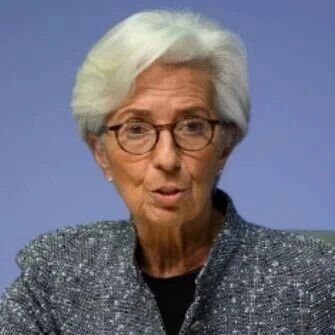
欧央行维持利率不变,拉加德称去通胀进程已告一段落
Di Yi Cai Jing Zi Xun· 2025-09-12 00:20
Core Viewpoint - The European Central Bank (ECB) has decided to maintain its key interest rates, indicating a consensus on the current policy stance and signaling a pause in the rate-cutting cycle as inflation approaches target levels [1][2] Interest Rate Decision - The ECB kept the deposit facility rate at 2%, the main refinancing rate at 2.15%, and the marginal lending rate at 2.40%, aligning with market expectations [1] - This marks the second consecutive meeting where rates have been held steady following a pause in rate cuts in July [1] Inflation Outlook - ECB President Lagarde stated that the process of reducing inflation has concluded, with current inflation levels nearing the bank's target [2] - The latest forecasts predict Eurozone inflation to average 2.1% in 2025, 1.7% in 2026, and 1.9% in 2027, with core inflation (excluding food and energy) expected to be 2.4% in 2025, dropping to 1.9% in 2026, and 1.8% in 2027 [2] Asset Purchase Programs - The ECB is gradually reducing its Asset Purchase Program (APP) and Pandemic Emergency Purchase Program (PEPP) portfolios at a stable and predictable pace [2] - Lagarde noted that the sovereign bond market in the Eurozone is functioning orderly, and there was no discussion of the Transmission Protection Instrument (TPI) during the meeting [2] Economic Growth Projections - The Eurozone's economic growth forecast for 2025 has been revised upward to 1.2% from 0.9%, reflecting improved business activity and consumer confidence [4] - Growth expectations for 2026 have been slightly downgraded to 1.0%, while the 2027 forecast remains at 1.3% [4] - Recent data indicates that Eurozone business activity continued to expand in August, with German business confidence reaching its highest level since 2022, showcasing resilience amid trade tensions and geopolitical challenges [4] External Risks - Market participants believe the ECB has entered a period of policy observation, with a low probability of further rate cuts this year [3] - However, there are mixed internal views, with some officials suggesting potential rate cuts in December if the Euro continues to strengthen or external uncertainties increase [3] - External challenges include anticipated rate cuts by the Federal Reserve, which could reignite Euro appreciation, and new U.S. tariffs and immigration policies that may heighten economic uncertainty in Europe [3]
欧央行声明全文:按兵不动 未来政策悬而未决
Jin Shi Shu Ju· 2025-07-24 13:09
Core Points - The European Central Bank (ECB) decided to maintain the deposit facility rate at 2%, the main refinancing rate at 2.15%, and the marginal lending rate at 2.40%, aligning with market expectations [1][2] - Following the decision, traders maintained their bets on ECB rates, anticipating a further rate cut of 22 basis points by 2025 [1] - The ECB is committed to ensuring inflation stabilizes at the medium-term target of 2%, with monetary policy decisions to be made based on data assessments [1] Interest Rate Policy - The deposit facility rate, main refinancing rate, and marginal lending rate remain unchanged at 2.00%, 2.15%, and 2.40% respectively [2] Asset Purchase Programs - The Asset Purchase Program (APP) and Pandemic Emergency Purchase Program (PEPP) portfolios are being reduced at a steady and predictable pace, with no reinvestment of principal from maturing securities [3] - The ECB is prepared to adjust all policy tools to ensure inflation stability at the 2% target and maintain the smooth functioning of monetary policy transmission [3] - The Transmission Protection Instrument is available to address unreasonable and chaotic market dynamics that threaten effective monetary policy transmission across Eurozone countries [3]
7月24日电,欧洲央行表示,资产购买计划 (APP) 和大流行紧急购买计划 (PEPP)投资组合正在以可衡量且可预测的速度下降,因为欧元体系不再将到期证券的本金再投资。
news flash· 2025-07-24 12:19
Core Viewpoint - The European Central Bank (ECB) indicates that the Asset Purchase Program (APP) and the Pandemic Emergency Purchase Program (PEPP) are decreasing at a measurable and predictable pace due to the euro system no longer reinvesting the principal of maturing securities [1] Group 1 - The ECB's asset purchase plans are being reduced as the euro system stops reinvesting maturing securities [1]
欧洲央行利率“七连降”稳定预期
Jing Ji Ri Bao· 2025-05-02 22:09
Core Viewpoint - The European Central Bank (ECB) has lowered its key interest rates by 25 basis points, marking the seventh rate cut since June 2024, indicating a shift in focus from controlling inflation to supporting growth amid persistent inflation and external risks [1][2]. Interest Rate Changes - As of April 23, the ECB's three key interest rates are now set at 2.25% for the deposit facility rate, 2.40% for the main refinancing rate, and 2.65% for the marginal lending rate [1]. - This decision reflects a consensus among market participants and policymakers regarding the complex economic situation [1]. Inflation and Economic Outlook - Recent data shows a decline in both overall and core inflation rates in the Eurozone, with service sector price increases easing significantly [2]. - Potential inflation indicators suggest that price trends are gradually aligning with the ECB's medium-term target of 2% [2]. - However, the overall growth outlook for the Eurozone remains challenging, with geopolitical conflicts and rising trade barriers suppressing business investment and consumer spending [2]. Economic Indicators - The S&P Global's April Purchasing Managers' Index (PMI) for the Eurozone fell to 50.1, indicating a stagnation in economic activity, primarily due to unexpected contractions in the service sector, particularly in Germany and France [3]. - The ECB's rate cut is viewed as a preemptive defensive measure aimed at stabilizing market expectations and mitigating economic downturn risks [3]. Policy Coordination and Structural Challenges - Despite the rate cut signaling a shift towards monetary easing, the ECB acknowledges existing structural constraints and calls for enhanced fiscal coordination among member states [4]. - The ECB emphasizes the need for governments to prioritize green transitions, technological innovation, and digital infrastructure development [4]. - The ECB's policy documents highlight the importance of a robust fiscal framework to bolster market confidence and complement monetary policy efforts [4].